



Meet Daily Point of Light Award honoree Daniel Wu. Read his story, and nominate an outstanding volunteer or family as a Daily Point of Light.
In 2024, 17-year-old Daniel Wu started Humanity Hyde Park, a school club designed to address food insecurity in Chicago. Access is often affected by policy, and he aims to help the people left behind while advocating for change. Each Saturday, he brings 20 to 25 student volunteers to the Hyde Park-Kenwood Food Pantry, and he’s donated more than 80,000 pounds of fresh groceries through his organization. He even started a monthly newsletter where he writes about food access, culture and health.
But Daniel’s interest in food doesn’t stop there. Near the end of the pandemic lockdown, his passion for baking led him to launch a small-batch bakery and donate a portion of the profits.
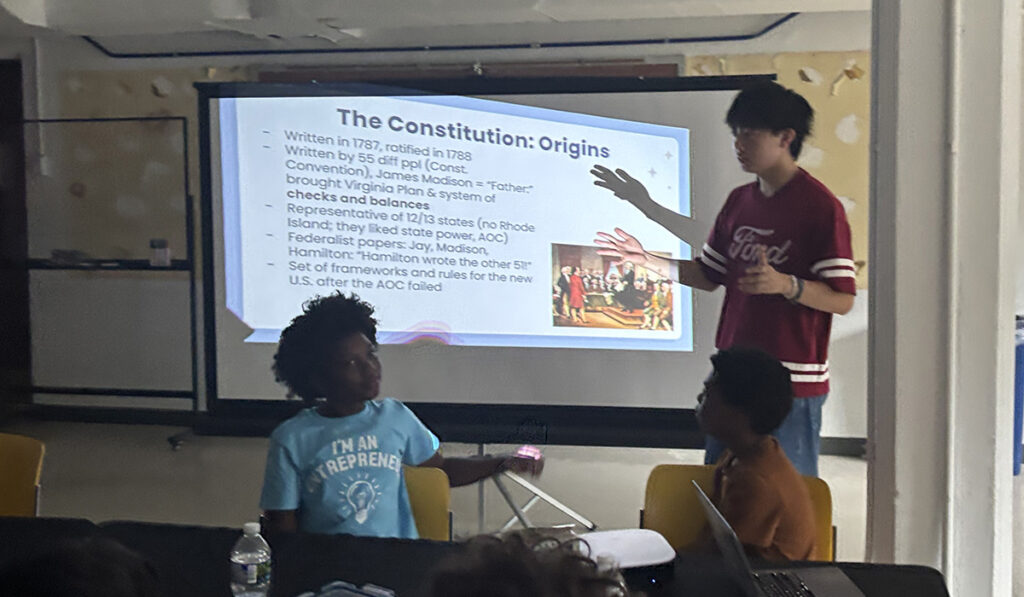
Recognizing the daily effects of policy, he also encourages civic engagement through his criminal law and policy program designed to empower diverse students to entertain careers in law and government. Daniel developed the curriculum with educators and attorneys and has now taught more than 70 students. This fall, he plans to pursue a degree in public policy.
What inspires you to volunteer?
Initially, it was my school service requirements. We’re required to do 30 to 40 hours in order to graduate. During my sophomore year, I was volunteering at Hyde Park Neighborhood Club, an afterschool program for kids, as well as at food pantries and a place called Plant Chicago. I really enjoyed it.
Also, my grandparents experienced famine and social movements like the Cultural Revolution when they lived in China. I’ve seen how that trauma was passed down through generations. It impacted their relationship with food and the government. I live on Chicago’s South Side, a historically redlined community, which had a big impact on food access. And I love to cook, something not everyone has access to.
Tell us about your volunteer role with Humanity Hyde Park and beyond.
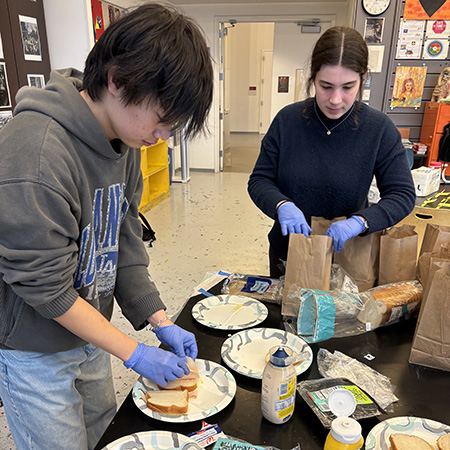
We do “Service Saturdays” where my co-president and I bring a group of volunteers to the food pantry. We’ll sort through donations and walk our neighbors around who are receiving food or pass it out ourselves. We also donate when we can.
We work with The Love Fridge, a group that sets up community fridges around Chicago. They’ve asked us to help repaint the one we help stock. We do fundraisers like bake sales and GoFundMe’s for money to buy ingredients to make packed lunches–250+ for The Love Fridge. Recently, we raised around $350, which we’re planning to use to make and serve hot meals at the Night Ministry, a shelter for unhoused people. I also organize engagement events like hosting a booth at the Wicker Park Farmers’ Market. And I designed and currently run our website and social media.
Outside of HPH, I run a small-batch bakery. I sell cookies and donate 15% of the proceeds to the Food Research and Action Center. They’re focused on food policy research, which is what I want to do in college. With each order, I send a pamphlet about food access and how to get involved.
What inspired you to get started with this initiative?
One of the things that really stuck out at the Hyde Park Neighborhood Club—especially with all the government cuts—was how consistent the educators were in making sure the kids were fed, maybe even paying out-of-pocket to do so. Sometimes, it was one of the only meals the kids would eat all day.
There wasn’t an organization at my school dedicated to food security or access at the time. It impacts 12 to 13 million Americans, even a block away from us, and I wanted to do something about it.
What’s been the most rewarding part of your work?
Everyone is amazing. Once, at the food pantry, I was walking around with one of our Nigerian neighbors receiving food who didn’t speak much English. I don’t know much about Nigerian cuisine, but I know about fufu and egusi. So, when we got to a table with cassava, one of the ingredients for both, I pointed at it and said the names of the dishes. He got really excited and gave me a hug, lifting me in the air. He and his wife asked for my phone number and if I could come over for dinner one day.
You get to meet and talk to some really kind and funny people. That’s been my favorite part of volunteering.
Is there something that people should know about food insecurity that might not be common knowledge?
People sometimes misunderstand what food insecurity is. Food insecurity can manifest in many forms. It’s not just about not having access to food but not having access to nutritional food. That’s a big problem in food deserts.
In Garfield Park, for example, the only big supermarket, one that prioritizes quality at low prices, has been closed. The City shut it down to build a big new complex that was supposed to have a grocery store in it, but the plan hasn’t come to fruition.
It’s left residents in the area without a way to access nutritious and clean food.
So, what do you do? You end up going to nearby fast-food chains. You don’t eat healthy, because it’s not accessible or affordable anymore. You have to spend more time, money and energy finding a grocery store further away. That’s an example of a policy move that’s detrimental to food access and public health.
What do you want people to learn from your story?
They tell you in kindergarten to treat other people the way you want to be treated, but somehow, we keep forgetting. Through volunteering, I’ve been able to meet and talk with many people from different walks of life. Often, we become so desensitized to things that we begin to lose empathy. We begin to think food insecurity and other inequalities just happen. But it doesn’t have to be that way.
Having empathy, especially right now, is really important. If more people volunteered and really tried to engage with their community, they could build that skill.
Do you want to make a difference in your community like Daniel? Find local volunteer opportunities.