
Meet Daily Point of Light Award honoree Jonas Anderson-Joyner. Read his story, and nominate an outstanding volunteer or family as a Daily Point of Light.
Content Warning: Points of Light is proud to share the following uplifting and inspiring story. However, we acknowledge that a small portion may be difficult for some readers. We encourage you to please care for your own well-being above all.
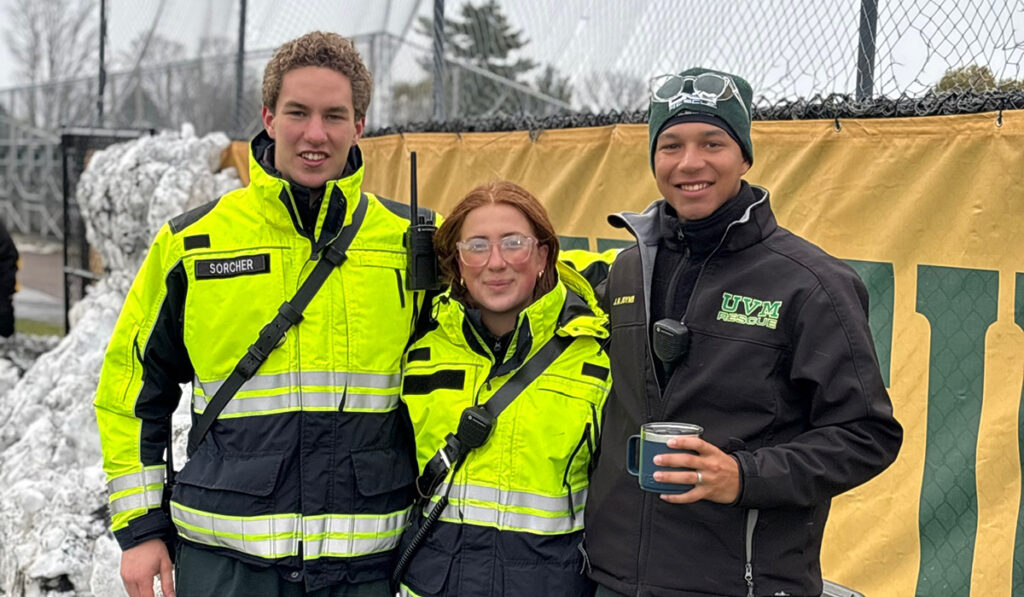
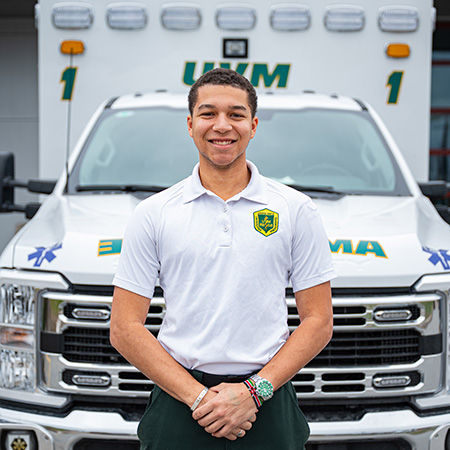
By day, Jonas Anderson-Joyner is a college student juggling 18 credits, homework and exams. By night, the 21-year-old is responding to 911 calls – treating cardiac arrests, responding to mental health crises and transporting patients as a volunteer EMT.
Jonas, a junior at the University of Vermont, has spent the last three years serving with UVM Rescue, a 100% student-led emergency response team. Dedicating between eight and 20 hours each week, he and other volunteers respond to medical emergencies on campus and the wider Burlington community.
What began as a curiosity during freshman orientation quickly became a defining part of his college experience and changed his vision for the future.
What inspired you to start volunteering with UVM Rescue?
I saw a flyer during freshman orientation, and it caught my eye. There were a lot of people walking by, so I was too nervous to stop and scan it. But later, someone told me more about the program, and I decided to check it out.
I came to UVM not knowing anything about CPR or emergency medicine. But after doing observation hours and seeing the station, meeting the people and watching how close-knit the team was, I immediately felt like I needed to be part of it.
We operate advanced life support level, 24/7, 365. We’re the only collegiate ambulance in the nation that is 100% student operated, so we don’t have any paid positions at all. Everyone is here because they genuinely want to be. That was what really drew me in—the idea that every person is here out of the goodness of their heart.
What kinds of calls do you typically respond to?
A lot of people assume ambulances are nonstop life-or-death rescues. That’s not always the case. We do see cardiac arrests and serious trauma, but a large portion of our calls involve patient transports, mental health crises, overdoses, breathing issues or intoxicated students.
Because we serve a college campus, there’s a powerful peer-to-peer aspect. I’ve responded to suicide attempts involving students my age—people who could easily be sitting next to me in a lecture hall. Being able to look someone in the eye as a peer, not just a provider, makes a difference.
Sometimes it’s also the small things—giving someone a bandage at a sports game or simply being present so people know help is nearby.
Is there a call that stands out as especially meaningful?
One call over the summer involved a serious car accident just outside the medical center. The driver had suffered major injuries, including a broken leg with exposed bone. There were multiple emergency units on scene.
Amid the chaos—sirens, firefighters cutting open the vehicle, radios going off—I realized the patient wasn’t just in pain. He was scared.
I grabbed his hands, called him by name and focused on helping him breathe. We’re trained in psychological first aid, and in that moment, I saw it working. Even with everything happening around us, we were able to connect.
Later, after transporting him, we returned to the hospital to bring back a watch we had removed during the trauma assessment. When he saw me again, his eyes just opened up. I’d never seen anything like that. He started tearing up a bit, saying, “Oh my God. You’re the one who brought me to the hospital.” He reached out for my hands, squeezed them really tight and thanked me. That moment made me realize that this job is a very beautiful way to connect with people.
What keeps you going, especially while balancing school and night shifts?
Sometimes I look at my schedule—18 credits, teaching CPR, instructing EMT classes, volunteering dozens of hours—and think, “What am I doing?”
But it’s the little moments that keep me going. A simple “thank you.” A student feeling safe enough to call for help. Knowing we’re there when something goes wrong.
There’s something special about volunteering without a paycheck attached. When someone expresses gratitude, it feels pure. It reminds you why you’re there.
And the people in the department—the friendships, the guys at the Burlington Fire Department who feel like uncles or older brothers—they make it worth it too.
How has volunteering shaped your future plans?
I originally came to school to study forestry. Through this experience, I changed my major to Health and Society with a minor in Emergency Medical Services.
Now, I’m considering medical school. Three years ago, I never would have imagined saying that. But I’ve seen firsthand how healthcare can change someone’s life in a single moment. Why not aim to make that kind of impact long term?
What is the biggest lesson you’ve learned through volunteering?
This work has taught me that tomorrow isn’t promised. When you respond to emergencies, that becomes very real. So if tomorrow isn’t guaranteed, I want to make today count by showing up and connecting with someone, even if they’re a complete stranger. No matter our differences—age, race, background—there’s always something human that connects us. Volunteering has taught me to look for that connection and to value it.
What advice would you give to someone considering volunteering?
Just try it. There’s less pressure than people think. You don’t have to commit forever—just give it a shot. And if you do volunteer, give it your all—but also take care of yourself. Service is powerful, but balance matters too.
Also, get CPR certified. You never know when you might need it.
Do you want to make a difference in your community like Jonas? Find local volunteer opportunities.