



Meet Daily Point of Light Award honoree Bruce Matos. Read his story, and nominate an outstanding volunteer or family as a Daily Point of Light.
On any given week, Bruce Matos can be found coaching Kung Fu students as a first-degree black belt, training with his high school track team as co-captain, diving into neuroscience research or teaching himself piano and music production. As a rising senior balancing academics, athletics and hobbies, his schedule is packed. And yet, somehow, he still finds time to volunteer.
In eighth grade, Bruce discovered Joshua’s Heart Foundation (JHF), a youth-led nonprofit dedicated to fighting food insecurity. What stood out to him wasn’t just the mission to address hunger, but the structure. Students weren’t simply volunteering at events; they were leading meetings, brainstorming solutions and being entrusted with real responsibility.
Soon after getting involved, Bruce co-founded JHF’s Connecticut Junior Advisory Board, helping expand the organization’s reach beyond South Florida and mobilize youth volunteers in his home state. Over time, he stepped into the role of Head of Partners & Sponsors, where he presents to corporate donors, builds long-term partnerships and mentors fellow student leaders.
Through it all, Bruce has shown that leadership doesn’t require waiting for adulthood, and that meaningful change can start at any age.
What inspires you to volunteer?
I’ve seen how much a single missing piece can impact someone’s future. If a family is worried about their next meal, it can be hard for their student to focus in school, and if there’s no support system in place, even small obstacles can feel overwhelming.
This is really what pushes me to volunteer. It’s not about checking a box to say “I contributed.” It’s about stepping in when something basic is missing and doing what I can to help. To me, service isn’t extra. It’s part of being responsible for the community I’m lucky to be part of. It’s a mindset I learned on my journey to becoming an Eagle Scout.
Tell us about your volunteer role with Joshua’s Heart Foundation.
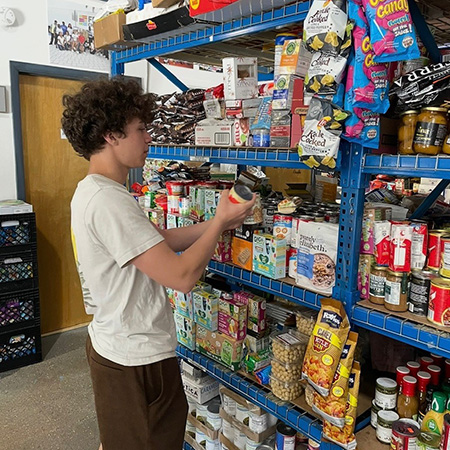
I started volunteering with Joshua’s Heart Foundation (JHF) in eighth grade. At first, I just wanted to help along with my older brother. But pretty quickly, I realized I wanted to get involved more and create something bigger. That’s when I co-founded the Connecticut Junior Advisory Board. We organized food drives and collected books and school supplies for under-resourced schools. It was hands-on and it felt very meaningful to me.
Eventually, I found my voice within JHF. I stepped into the role of head of the Partners and Sponsors team, and with the support of my mentors, it pushed me outside my comfort zone. I started learning to present to corporate sponsors and learning how to engage with leaders of major organizations. I had to figure out how to tell our story clearly and build real, lasting relationships.
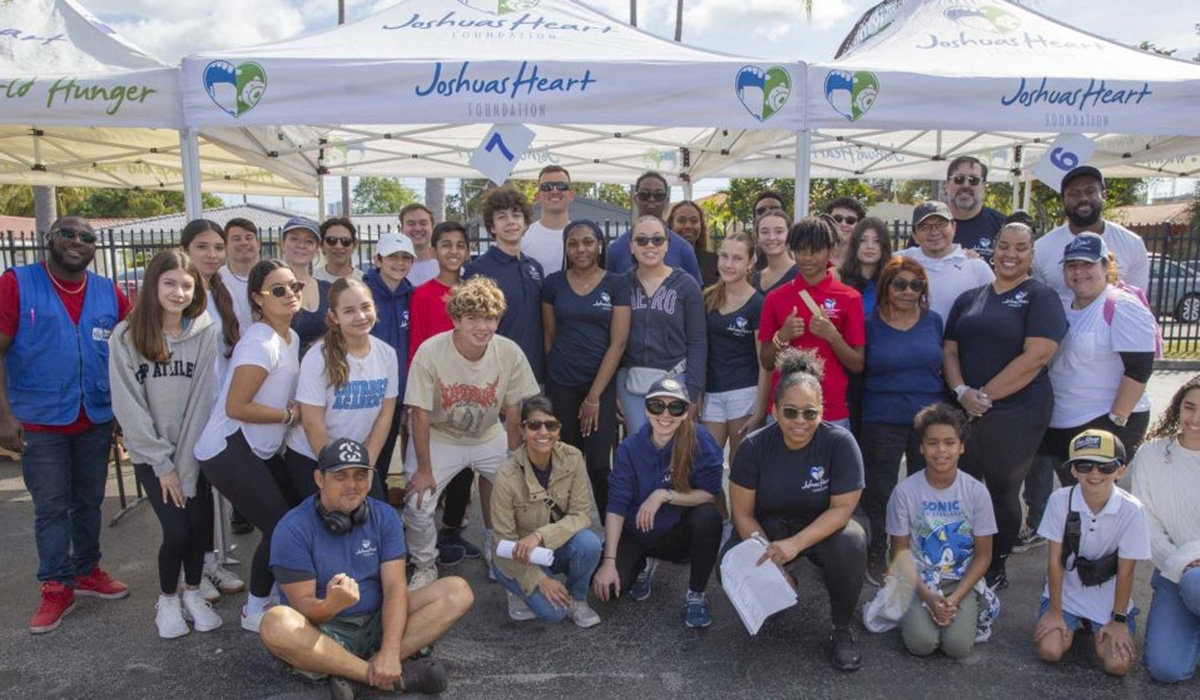
But what really made it special was that we were all students. These were my peers and we were learning together, how to run food distributions, hopefully smoothly, how to organize outreach, how to lead with confidence even when we were still figuring things out. I think I can credit JHF for how much my confidence grew during this time. I learned how to coordinate teams, communicate with different audiences and turn ideas into something tangible that helps families facing food insecurity.
What inspired you to get started with this initiative?
What first caught my attention was that it wasn’t just adults organizing everything behind the scenes. It was, and still is, the students who are actually leading the conversations. They were coming up with ideas, solving problems and being trusted to make real decisions. That mattered to me!
Food insecurity isn’t some distant issue you read about in a headline; It’s visible and urgent. I didn’t want to join something where I’d just show up and take instructions. I wanted to be in a place where young people had a real voice and real responsibility.
Joshua’s Heart gave me that opportunity. It gave me the chance not just to volunteer, but to grow as a leader while making a tangible impact.
What was your most impactful project?
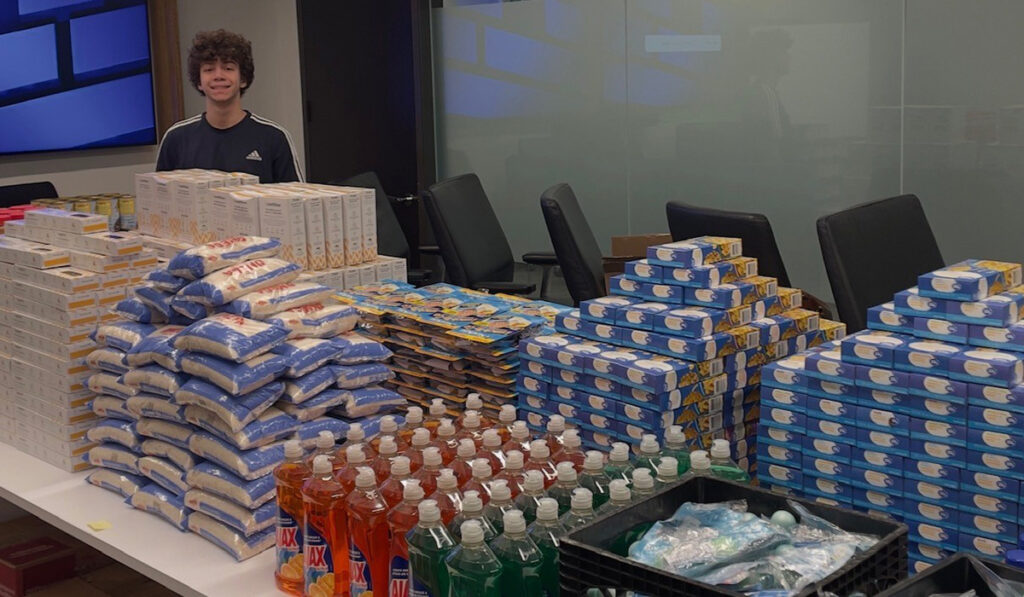
One project that really shaped me took about a year to pull together. It started out as a simple idea to organize a food drive, but then it slowly grew into something much bigger than I anticipated. In that year, my P&S team and I built partnerships, reached out to sponsors and rallied peer volunteers. I was able to raise $12,000, which allowed us to purchase and collect more than 12,000 pounds of food. Through all the planning, I learned quickly that big goals require patience and collaborative effort.
But the day we distributed the food in South Florida made all of it worth it. We were able to serve more than 1,300 people that weekend. Seeing families walk away with full bags and a little less stress on their faces really impacted me. It reminded me that leadership isn’t about the numbers you report, and you see quickly that food insecurity isn’t abstract. It’s very personal.
What are your long-term plans or goals for this organization?
In the long term, I hope to help expand youth leadership pipelines within the organization. I hope to become part of the National Advisory Board where I can help raise awareness and hopefully expand JHF to my college campus and town.
I hope to study global public health in college and I’m also interested in integrating education into food distribution efforts, such as nutritional literacy workshops for younger students. I think that sustainable impact requires meeting immediate needs and investing in future opportunities.
What’s been the most rewarding part of your work?
Honestly, the best part has been watching younger volunteers grow. I’ve seen my peers show up on their first day quiet and unsure of where to stand, and I’ve seen them evolve, much in the same way that I did, into confident youth leaders. It’s the hidden superpower that we all have within and that JHF helps us discover.
What have you learned through your experiences as a volunteer?
One of the biggest things I’ve learned is that you have to listen before you try to fix anything. Every community is different. What works in one place might not work in another. If you aren’t flexible and learn to adapt, then you will usually miss what people are actually saying.
I’ve also learned that service depends on the small things most people don’t see. There’s a lot of work behind the scenes that most people don’t see, like being organized, communicating clearly and staying humble. Leadership in this space isn’t about standing in front of a crowd. It’s about being the person others can count on. Most of all, it’s really listening because people don’t need assumptions. They need respect.
Tell us about future partnerships, programs or events that you are excited about.
I’m really excited about building stronger connections with schools and youth organizations. There’s so much potential when students come together across different communities, sharing ideas and taking action. I’m also looking at ways to combine service with learning — whether that’s through health, neuroscience, or STEM programs. Recently, I was honored with the Hispanic Heritage Foundation Youth Award Gold Medal for community service (red region) and named a Hormel Foods 10 Under 20 Food Hero. These experiences have opened doors to amazing organizations and leaders. I’m looking forward to deepening those relationships, learning from their approaches and exploring ways to collaborate to fight food insecurity in even bigger, creative ways and more sustainable ways.
Why is it important for others to get involved with causes they care about?
Because change doesn’t happen by accident. When you care about something and actually do something about it, you start to see the world differently. You grow more empathetic, patient and aware. Even small actions make a difference. And when lots of people step up, those small actions add up into real change.
Change happens when people, especially young people, are encouraged, trained and supported to take action. We’re the next generation, and giving us the tools and guidance to lead means a stronger, more caring future for everyone.
Any advice for people who want to start volunteering?
Don’t wait to feel ready, just do it. You don’t need a fancy title or tons of experience. Show up, pay attention, get involved, ask questions and stick with it. Being reliable opens doors, and that’s often where real leadership starts.
What do you want people to learn from your story?
I hope people realize that leadership and service go hand in hand. You don’t have to put your academics, sports or research on hold to make a difference, and you certainly don’t have to wait until you’re an adult to start. Taking initiative now, as a student, not only helps your community, it also shapes you into a better person: more thoughtful, resilient and capable. Leadership isn’t a position. It’s a habit.
Do you want to make a difference in your community like Bruce? Find local volunteer opportunities.