
Amplifying Underrepresented Voices in Modern Classical Music
Meet Daily Point of Light Award honoree Hana Tsai. Read her story, and nominate an outstanding volunteer or family as a Daily Point of Light.
Hana Tsai started playing the violin at age four after hearing a recording of one of her now favorite musicians playing Tchaikovsky’s Violin Concerto. She was moved. She was also delighted when her dad used to play for her as a child.
Now 17, Hana attends Juilliard Pre-College on Saturdays where she has violin lessons as well as music theory and ear-training instruction that helps her understand the technical side of music. She plays in an orchestra there and participates in chamber music coaching through the New York Youth Symphony. Playing a lot of music with many different people is her passion.
That passion has been key to the success of Clexical, an organization Hana co-founded in 2023 that works to make contemporary classical music—particularly by female composers—accessible. They started with a podcast, inviting composers to talk about their work. Hana developed the guidelines, and she continues to coordinate interviews. Together, she and other volunteers have spoken to more than 60 guests. Dedicating 25-30 hours each month to her role, Hana has helped Clexical reach thousands of listeners engaged hundreds of local community members through in-person outreach events.
What inspired you to start Clexical?
My interest in starting Clexical began with the realization that the traditional classical music canon presents a narrow view of who is recognized and valued as a composer. I took a class at Juilliard Pre-College about women composers. The most widely recognized figures in classical music are traditional, male, Western composers, such as Mozart and Beethoven. They’re amazing, but throughout the hundreds of years classical music has been alive, the narrative of who’s making the “best compositions” has totally ignored women and composers of color. Many students seemed uninterested in learning modern classical music, and I felt a kind of injustice when hearing people talk badly about composers I knew they’d love if they gave them a chance.
At an orchestra rehearsal, composer Reena Esmail was talking about the inspiration for one of her pieces, and I had an epiphany. With so many of the other pieces I play on violin, I’d never be able to have a conversation face-to-face with their composers, unlike modern classical composers who are alive at the same time as me.
Tell us about your volunteer role.
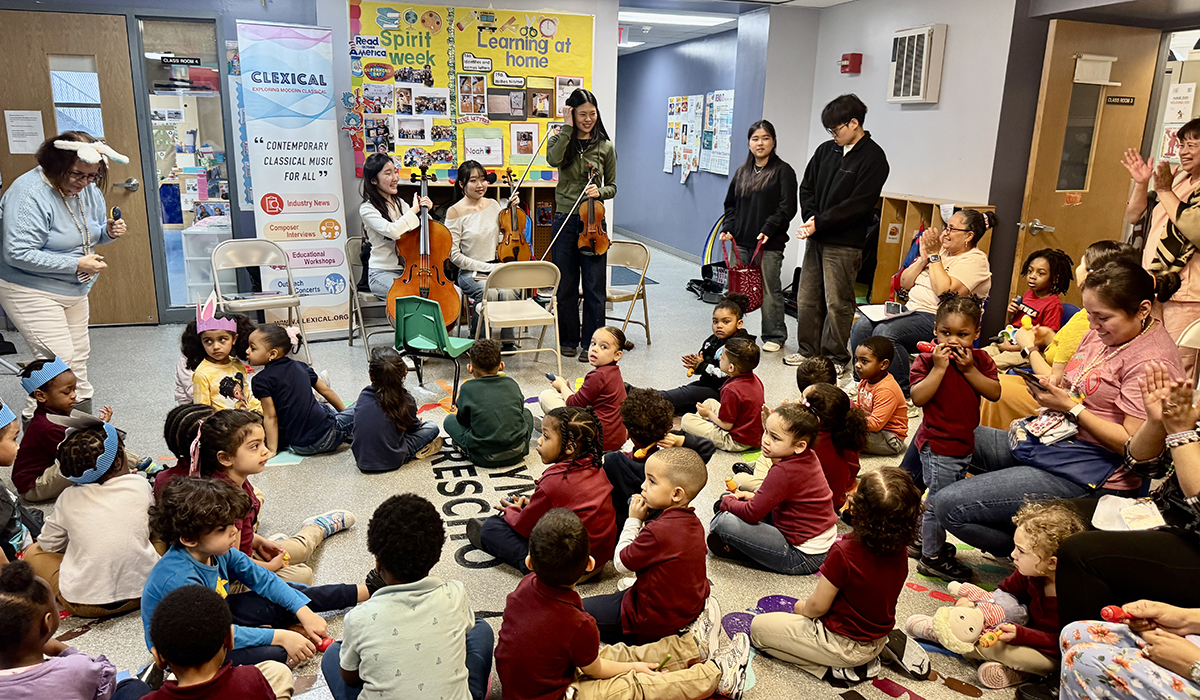
I design educational outreach programs tailored to different audiences. Today, I was coordinating meetings with other Clexical members who brainstorm engaging ways to make younger musicians or a wider audience more interested in modern classical music. Four other members and I are going to be performing for really young kids soon and talking about some cool composers that are living right now. We’ll ask them questions, and I might even bring some hand puppets. Kids love it and are eager to learn more. Of course, they love pop music, but we remind them that classical music production also never ends.
As the director of outreach, I coordinate partnerships. I work with the rehabilitation center near me, preschools and community organizations.
What are your long-term plans or goals for the organization?
I want to perform a program of modern classical music at Juilliard someday. And I want to continue learning how I can integrate more women’s composing into classical music curriculum. Many music teachers have a traditional repertoire they believe kids need to learn before they can move on to pieces that they’re interested in or that need more representation. I hope I can be part of changing classical music education. I’m working on convincing my chamber group to play a female composer’s modern classical piece, so hopefully we’ll be able to perform that before the school year ends.
What’s been the most rewarding part of your work?
It’s when I see somebody’s hesitation about modern classical music shift into interest. I love seeing people become more open-minded with music and being a small part of that.
What have you learned through your experiences as a volunteer?
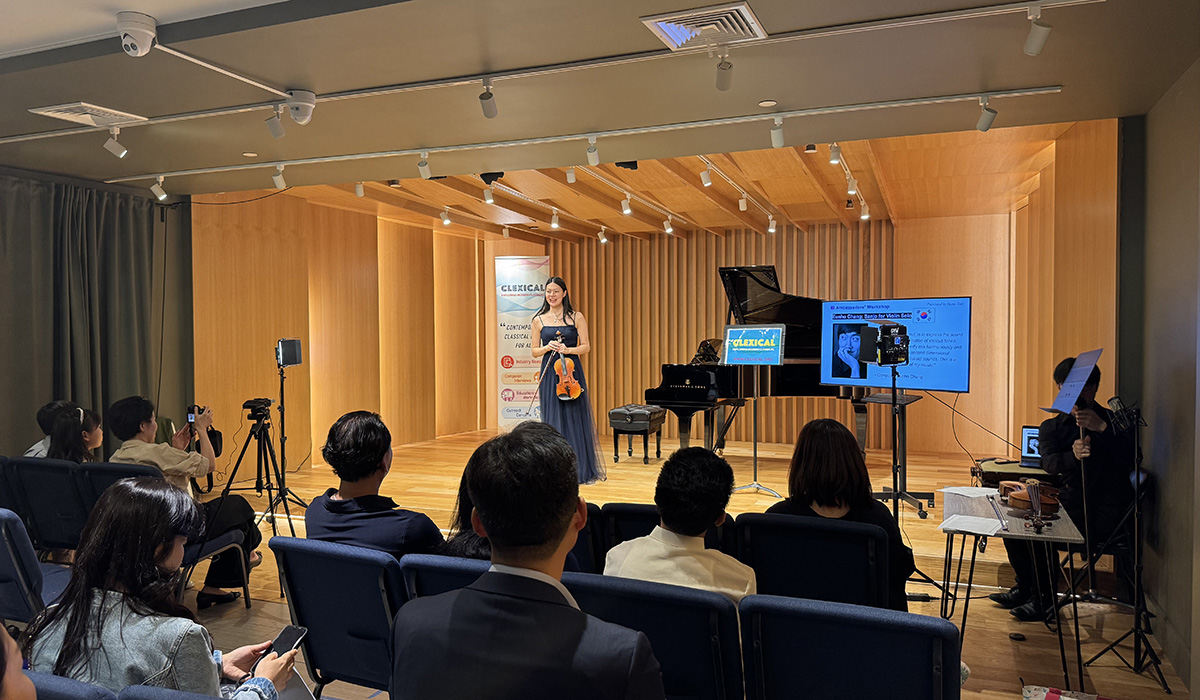
Interviewing composers has given me perspective on the composition process, how new technologies and more current ideas join together to make their pieces. I’ve learned how to adapt information I want to convey to my audience, making it fun and engaging for them. That’s helped me with school presentations and in day-to-day life. And I’ve learned how to work with people better. There are a lot of logistics behind the workshops, performances, rehearsals and more. It can get chaotic, especially because everybody is so busy, and I want to respect their time.
I’ve also learned to be more flexible with getting my message across when it doesn’t seem like it’s clicking. I’m more comfortable branching out from my original plan.
Why is it important for others to get involved with causes they care about?
It allows the community to grow. Nothing will happen if they keep hoping it will. They have to take the initiative. Engage people in a conversation or presentation by showing that you’re passionate. People are instinctually interested in what other people are interested in.
How can people take steps to highlight this type of music where they live?
There are many modern composers trying to get their work out, but there’s this stigma that it’s difficult to listen to, or it’s difficult to attend their concerts. A simple YouTube search is a step towards learning more about modern classical music.
I won a competition using a piece I found on YouTube. I cold emailed the composer, and he was happy to provide me with the music and suggestions about how to phrase certain parts. These composers want to share their music with the world. They want to help you out, especially if you’re a musician. Never be afraid of a cold email.
What do you want people to learn from your story?
I want them to be more curious. Before a few years ago, I’d never played any pieces by female composers. I’m female. How did I not notice that? I’m passionate about Clexical, because I feel like I’m part of redefining the canon of classical music.
Do you want to make a difference in your community like Hana? Find local volunteer opportunities.
Share this post
