
Meet Daily Point of Light Award honoree Sabrina Welch. Read her story, and nominate an outstanding volunteer or family as a Daily Point of Light.
Sabrina Welch, a 17-year-old high school senior, has always been interested in science, often mixing concoctions of dirt, grass and water to “cure cancer” as a child. Her parents took note and—aside from preventing her from sampling her yard potions—directed her towards educational experiences to nurture her curiosity.
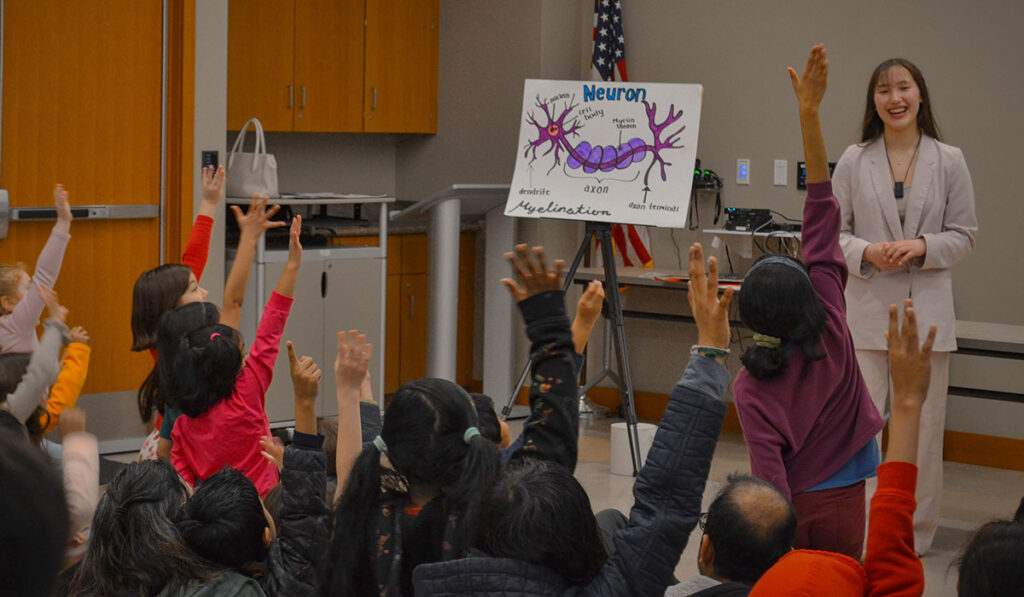
In 2022, Sabrina decided to use her passion for neuroscience to inspire other kids like her. She founded Mind Tricks to teach advanced neuroscience concepts through free magic shows at museums and libraries. To the delight of seniors, she also performs in assisted living and nursing homes. The organization has grown to encompass 150+ members worldwide with 15 chapters. Together, they’ve directly reached over 10,000 people through the program.
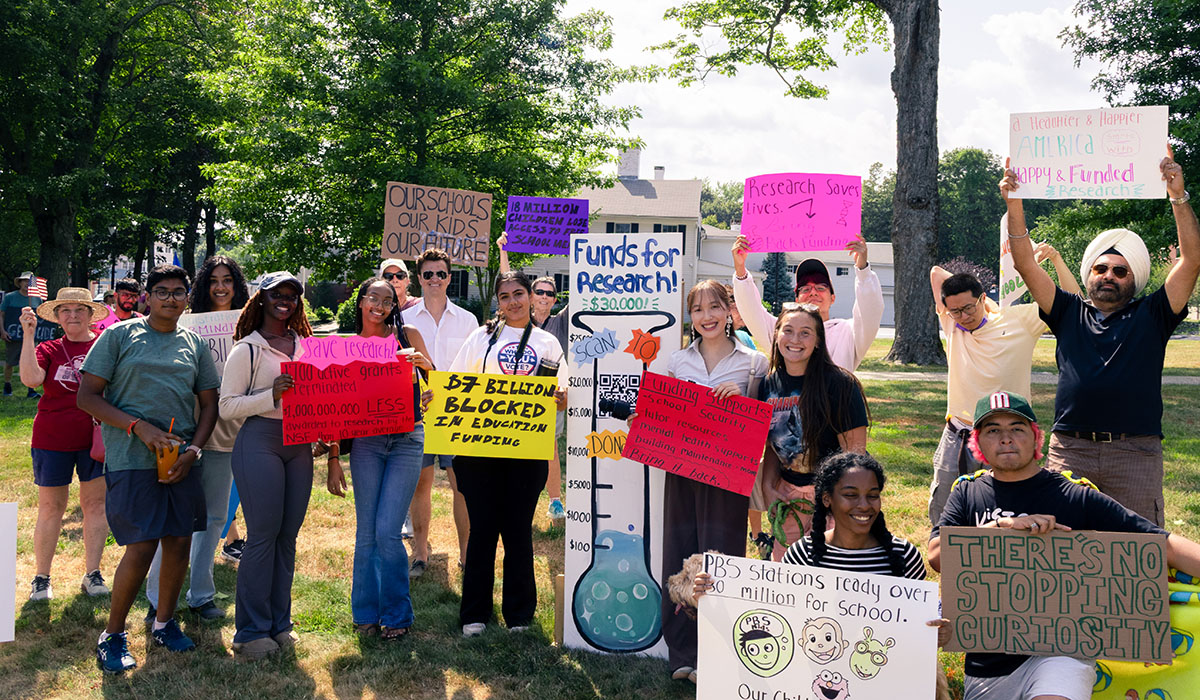
That passion sparked another when federal funding for medical research and education was cut in 2025. Sabrina used Mind Tricks to fundraise for PBS’s children’s media, and she founded PEACE Youth Educational Advocacy Organization, an endeavor meant to bring attention to the importance of supporting both. As a research intern for Chai Laboratory, part of Brigham and Women’s Hospital and Harvard Medical School, she saw firsthand the difference research can make.
Using a podcast and public speaking opportunities, she highlights important issues and lifts up youth voices. While she would like to pursue a career in neurosurgery, she notes the need to advocate for policies that create access to healthcare before patients can be effectively treated and is open to addressing related policy issues before going into medicine.
What inspires you to volunteer?
When I was a kid, I was welcomed into the science community. The events for older kids would have minimum age requirements, but whenever my mom would ask for me to be allowed in, it was always a positive and welcoming energy. I want to make that more accessible. I don’t think there’s a lack of enthusiasm within the science community for youth to get involved. Youth just don’t know it’s there for them.
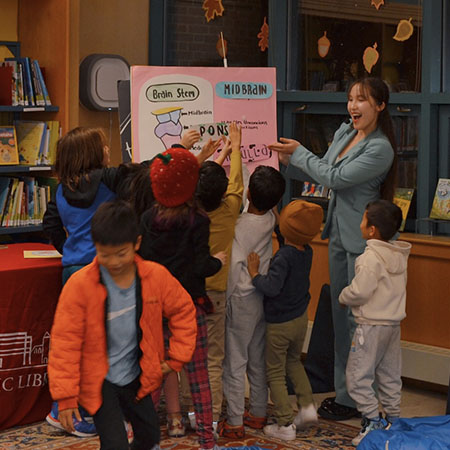
Tell us about your volunteer role with Mind Tricks: The Magic of Neuroscience.
I’m the founder and CEO. As the only magician in the Massachusetts chapter, I present the show. The biggest part of my role is scheduling. Onboarding chapters and teaching other people how to do the show effectively in their own region is a big commitment as well.
A lot of it is also social media outreach and managing my local team of 25. Prior to onboarding our new assignments manager, I created weekly assignments for members–finding new show spots, planning fundraisers, social media outreach, onboarding new members and more.
Now that we’re more established, we do a lot of community and school events. We do MIT Cambridge Science Festival, the carnival part and now the tabling event. We also collaborate with youth organizations like Moon Foods, which talks about how nutrition affects your brain. And there’s a large street performing culture in Cambridge, so I perform on the street, too. It’s one of my favorite parts.
What inspired you to get started with this initiative?
When I was young, my mom helped me find opportunities to explore STEM with two types of events on Eventbrite; one that targeted younger audiences and the other that was lecture-style for patients with a disorder or illness to learn from doctors and explore treatment options.
When I started my organization, I wanted to create a resource for kids to explore the advanced science that I found from the lectures but to experience it in an engaging way, like the kid events. Neuroscience is my personal passion, and I loved going to magic shows as a kid. Magic is really interesting at the neurological level. When you view a trick, the dorsolateral prefrontal cortex activates in your brain, and it’s processed as a reward. When you pair that with a lesson, it helps with learning retention.
I created PEACE because of my work with Mind Tricks and seeing how important it is to support research, especially in fields that don’t receive a lot of funding or that aren’t as popular to research. It started with hosting a mile-long walk for peace in my community that launched a community-based fundraiser to support medical research. I spent most of my summer going door to door, building interest.
My mom suffers from chronic kidney disease. Whenever there’s a new article about an upcoming kidney study, it always brings hope to my family. I want to help give other families hope for a brighter future.
What’s been the most rewarding part of your work?
It’s an unexplainable feeling to be able to see how you’ve had even a small impact on someone’s life. Maybe you’re able to spark a kid’s interest in neuroscience. My favorite thing is when a kid stays after the show to ask questions. Maybe you explain what neuroscience is to someone for the first time. It’s also just nice to add a little bit of positivity into someone’s life, like a magic show. Maybe it brightens someone’s day. This cycle of passion and science is consistently perpetuated, and I get to participate.
What have you learned through your experiences as a volunteer?
I’ve learned a lot about myself and, of course, neuroscience. But I’ve also learned about people’s lives. I met a Nepalese man who leads tours of Mount Everest while street performing on his first day in America. He thanked me for sharing American culture with him and shared a bit about Nepal. I’ve also learned about logistics and how to organize and lead people.
What do you want people to learn from your story?
Founding an organization or being a leader in the youth demographic can feel very out of reach. I’d love for every kid to understand that everything they see other people doing is something they can also do. They just have to have the motivation and the ability to hold themselves accountable. Whether you’re a kid or an adult, you can start right now, and it can come to fruition in a beautiful way.
Do you want to make a difference in your community like Sabrina? Find local volunteer opportunities.