
Military Spouse Turns Her Experience into a Lifeline for Others
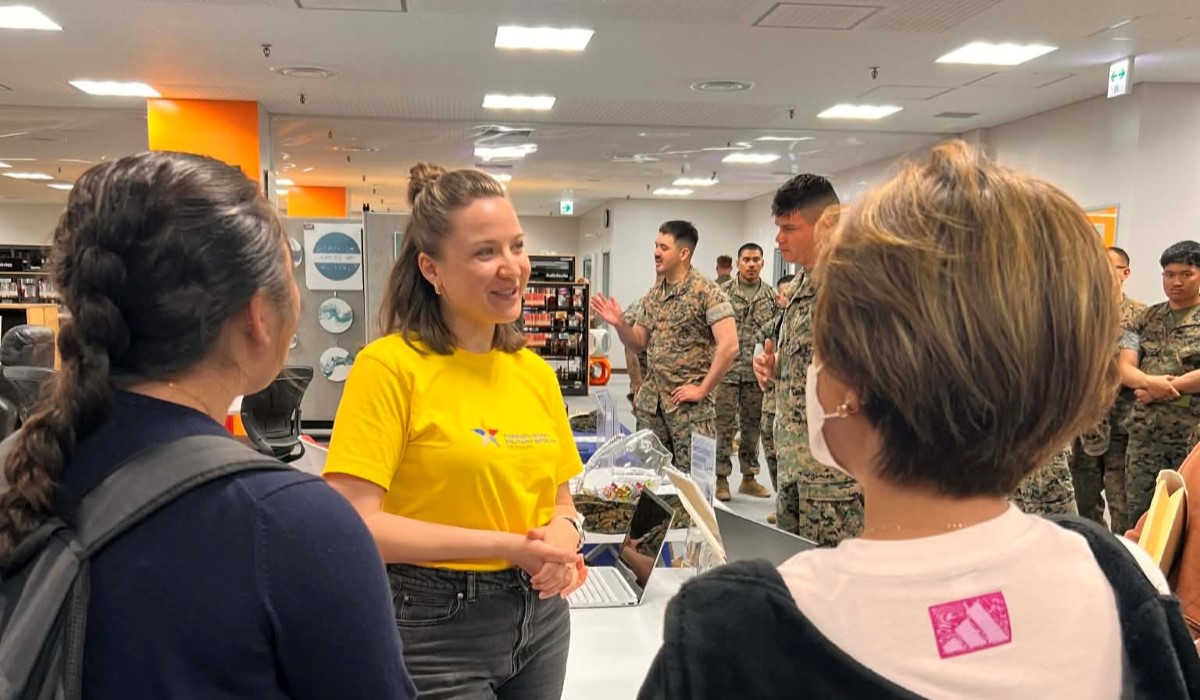
Meet Daily Point of Light Award honoree Liudmila Frank. Read her story, and nominate an outstanding volunteer or family as a Daily Point of Light.
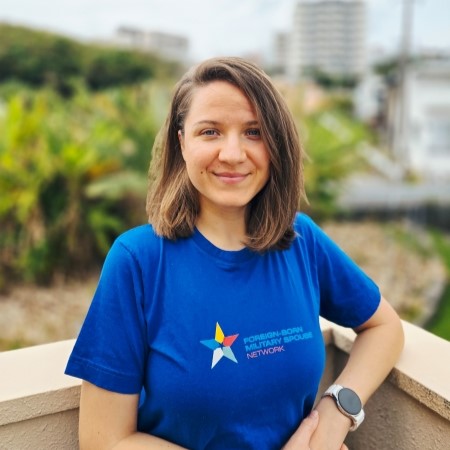
Born in Belarus and raised in Italy, Liudmila Frank met her husband in Italy and has spent the past four and a half years living on U.S. military bases in Japan. She holds a master’s degree and built a career in HR before her life as a military spouse brought everything to a halt — she couldn’t work for two and a half years while waiting for her green card and, later, citizenship.
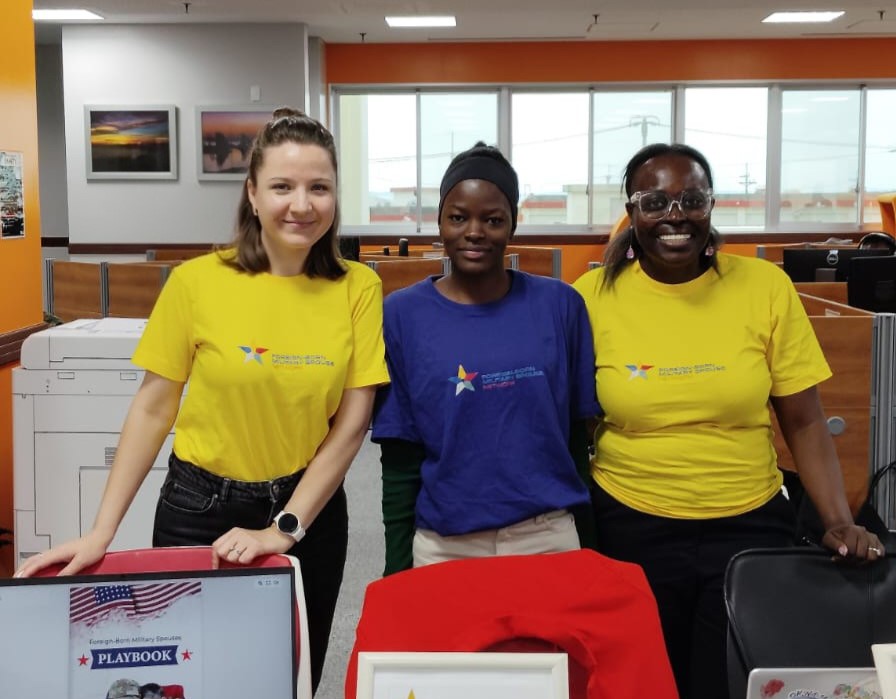
That experience — the isolation, the stalled career, the feeling of starting over from zero — is exactly what drove her to volunteer with the Foreign-Born Military Spouse Network (FMSN), a community of more than 5,800 spouses from around the world. As Events Manager, she organized virtual workshops on everything from career development to mental health to cultural adaptation.
More recently, she transitioned into a Career and Education Coordinator role, meeting one-on-one with spouses to help them navigate resumes, job searches and the often-confusing process of getting foreign credentials recognized in the U.S. As a fellow foreign-born military spouse herself, she draws on her own experience navigating life in a new country to help others find their footing.
What inspired you to start volunteering with the Foreign-Born Military Spouse Network?
I always loved helping others — it’s something I enjoy and it feels natural to me. But when I learned about FMSN and their mission, I really connected with it. As a foreign-born military spouse myself, I understand the many struggles this community faces. I thought that through FMSN, I could use my own experience and my professional background to support not just one person I’d met, but many more spouses. I wanted to turn my wish to help others into something more meaningful and more organized.
What are the particular challenges that foreign-born military spouses face?
A lot of foreign-born military spouses were highly educated and had established careers in their home countries. When they move to a new country to be with their spouse, they have to start from zero — their education or credentials may not be recognized, their English may not be strong and the cultural shock can be intense. They feel lonely, isolated, not understood.
And it becomes even harder when the spouse has to leave for a deployment or a TDY. Now they’re alone in a new environment, having to learn and adjust to a whole range of new things. If they have kids, they also have to manage the children and explain why their parent isn’t there. It can be very hard.
What kinds of events did you organize as Events Manager?
I organized events on career readiness, curfew safety, cultural integration and mental health — because mental health is something a lot of spouses really struggle with. We hosted speakers over Zoom, usually with 45 minutes of presentation followed by a Q&A. I also coordinated with partners who came to talk about the resources they offer, like degree evaluation services, which is so important for foreign-born spouses whose education may not automatically be recognized in the U.S.
One of my favorite events was on mental health. The speaker was a foreign-born military spouse herself, and she described the struggles of adapting to military life in a foreign country so well. People saw themselves in what she was saying. We came out of that event with more resources and a clearer sense of how to approach those difficulties. Every event is also a connection — we create opportunities for spouses to meet each other and share experiences.
Tell us about your new role as Career and Education Coordinator.
Now I get to use my HR background directly. I meet with foreign-born spouses one-on-one over Zoom to talk about their goals, their experience, and what they’re struggling with. I help them with things like resume reviews, job searches, certification options and understanding how to get their previous education or credentials recognized in America. A lot of them don’t even know where to start, so I try to guide them and help them figure out the next steps.
We also have partners who provide additional resources — things like degree evaluation or certification programs specifically for foreign-born spouses. And sometimes if a spouse speaks Italian or Russian, I can communicate in their language. But mostly we work in English, and if someone doesn’t speak it well, we can always find someone in our network who speaks their language.
What has been the most rewarding part of this work?
When a spouse says, “Now I feel less alone,” or “Now I know what my next step is,” that is a moment that feels very special to me. I joke with my colleagues sometimes that I feel even more happy than the spouses do, because of how much joy it gives me to help them, to give them clarity, to give them some hope for the future.
FMSN makes sure that no spouse feels alone or left behind. We build community, we support each other, we share resources. And that feels very personal to me because I know what it is to need that.
What is the biggest lesson you’ve learned through volunteering?
I’ve learned that even a small gesture can make a big difference in someone’s life. Sometimes it’s just one conversation, one event, one piece of information — and it can completely change how someone feels about the future.
I’ve also learned that it’s very important to listen. Every spouse has a different story, a different culture, a different background. We cannot assume we know what they’re going through. Being patient, staying open and working as a team — that’s what allows us to really support this community.
What advice would you give to someone who wants to start volunteering?
Start small and start where you are. You don’t need a perfect plan or a lot of free time. Just a few hours can make a big difference for someone. Choose a cause that feels meaningful to you, and don’t be afraid to ask questions — the whole volunteering experience is a learning process. The most important thing is to show up, to care and to be consistent.
Do you want to make a difference in your community like Liudmila? Find local volunteer opportunities.
Share this post
