
What Service Looks Like, Beyond the Uniform
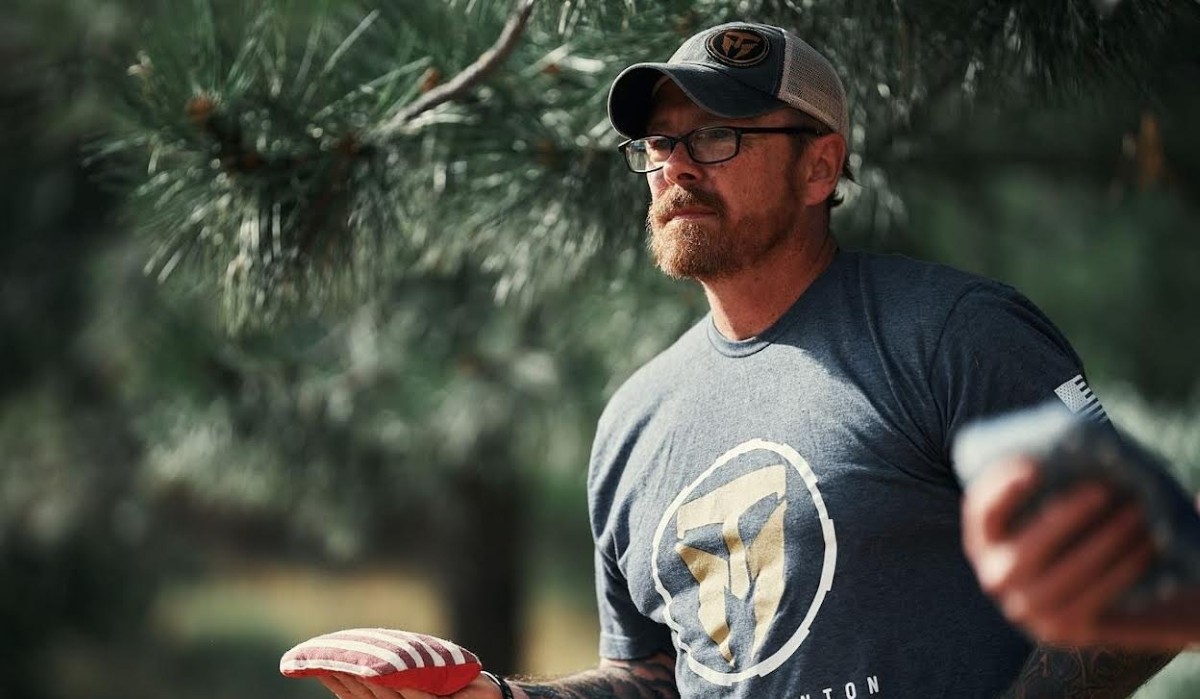
Meet Daily Point of Light Award honoree Aaron Hudgins. Read his story, and nominate an outstanding volunteer or family as a Daily Point of Light.
Content Warning: Points of Light is proud to share the following uplifting and inspiring story. However, we acknowledge that portions of this story may be difficult for some readers. We encourage you to please care for your own well-being above all.
For retired U.S. Army First Sergeant Aaron Hudgins, the call to serve didn’t end with his retirement after 26 years of military duty. Having completed combat tours in Iraq and Bosnia, as well as critical domestic missions during Hurricanes Katrina and Harvey, Aaron’s life has been defined by his commitment to others. However, it was a profound personal tragedy—the loss of his wife, Staff Sergeant Jari Hudgins, to suicide in 2018—that fueled his resolve for service. As a Gold Star spouse, Aaron has channeled his experiences into a leadership role within the Travis Manion Foundation’s Central Oklahoma Chapter. Here, he ensures that the sacrifice of the fallen is never forgotten.
Through his work as a volunteer leader, Aaron orchestrates “Operation Legacy” projects that mobilize hundreds of people across the state to serve foster children, veterans and underserved communities. He organizes the assembly of care packages and leads cemetery flag placements to honor his fellow service members. His “Honor Project” and “Letters of Legacy” initiatives create a living tribute to heroism through tangible community action. Dedicating an average of 60 to 80 hours per month to volunteer service, he has successfully led dozens of projects that have resulted in thousands of volunteer hours contributed to Oklahoma. He is a constant presence in local schools, delivering “Character Does Matter” presentations that mentor students and student-athletes.
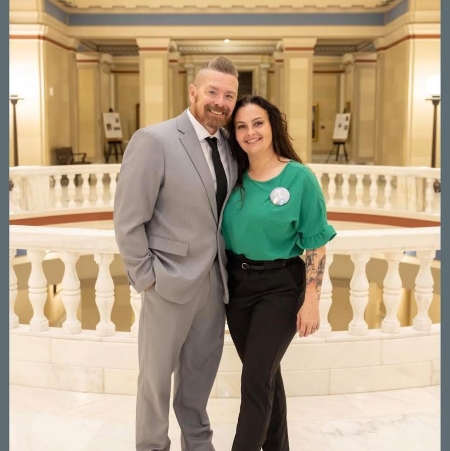
Aaron’s journey is an inspiring story of turning grief and tragedy to hope and action. Through volunteering, he continues to prove that while heroes may fall, their spirit lives on through the selfless acts of those they inspired. Read on to hear more of his inspiring story.
What inspired you to get started with the Travis Manion Foundation?
To understand why I even do what I do, you have to understand where I came from. I did 26 years in the United States Army, and about six years before my retirement, I was married to another fellow soldier. Her name was Jari. She was a Staff Sergeant in the United States Army. She had two combat tours herself. She’d been in 10 years, and she was getting ready for her third deployment when she broke her hip. At the time, it was an injury to the point where the Army was going to medical her out. When that happened, she rapidly started to deteriorate. We lost a lot of who she was. Her identity was wrapped up in her career, and that made it extremely difficult. She was also a star athlete in high school. And she wasn’t able to walk correctly anymore. With those things factored in, on April 29, 2018, she took her own life, leaving back a very large, blended, beautiful family that had to figure out why, and how do we move forward?
I was in that boat. I spent the first two or three years after her death, still in the Army, trying to figure out where I go and what I do. I felt lost; I needed something. Out of nowhere, I got an email from an organization called the Travis Manion Foundation. It wasn’t on my radar. It’s based around Lieutenant Travis Manion, who was killed on April 29, 2007, in Iraq while saving his fellow soldiers. When I learned that, I immediately wondered why that date, April 29, coincided with one that meant so much to me. That’s what led me to read about the organization. They take veterans and Gold Star families and they develop character in future generations. We teach kids and adults about character—what it means to have character and what it looks like—but we do it through service. We do a lot where we get involved in the community, all in honor of a fallen hero.
All these things spoke to me because I’m a veteran myself now, and I’m a gold star spouse. Those two elements were very vital to me because when I lost my wife, I found myself in a weird position. I wasn’t connected to the Army anymore, but I wasn’t connected to civilians either. It was hard to find that perfect medium. This organization sent me a random email, and that email has now cascaded to what I’m doing now. They’ve given me the opportunity to run a chapter in the state of Oklahoma, and that is exactly what I did when given the opportunity. All the people in the organization are either veterans or families of the fallen. It has been life-changing because I’m able to get involved in the community. Service is the most vital part. Jari’s legacy continues to live on. I get to share her story at many of the different events that we do. I always share a couple of things about her. But I also share other veterans and other fallen heroes as well. We’re constantly making sure legacy is continued forward.
Tell us about your volunteer role.
Some of the things we do include cleanups and organizing Meals on Wheels for seniors. We bring the kids in. For example, I’ll bring a soccer team in to do Meals on Wheels. Meeting with senior citizens, a high percentage of whom don’t get a lot of people coming to their house, is impactful. One time, when we brought the kids in to deliver their food, I wish you could have seen it. A lot of the seniors put their Sunday best on when they came to the door. They brought the whole team in, shared their families, their pictures, their history and the things they like to do now. The kids responded very well to it. We did it in the neighborhoods they are from; a woman might live three houses down from them and they had no idea. Now, when they see them, they stop and socialize. Now, they’re starting to pick up after them and offer to do yard work. Why is an 86-year-old woman trying to mow the lawn? We just cleaned up an senior man’s yard; he had about three years’ worth of leaves. It cost us nothing. It took an entire weightlifting team about an hour, and we cleaned up almost 80 bags of leaves so you could see his lawn again. That’s the service aspect. It’s so simple, yet so effective because it doesn’t cost anything to do it. Thirty kids knocked out an entire front and backyard in an hour.
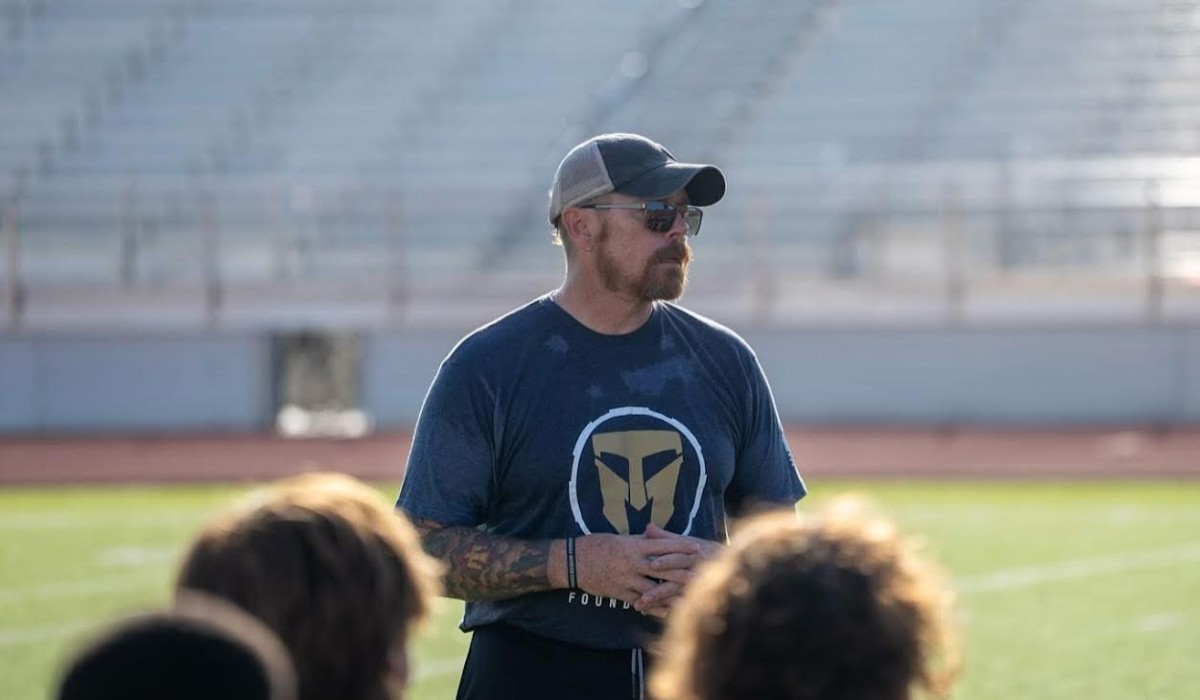
We also honor a fallen hero; we share their story, where they’re from, what they did and if they played the same sports as the kids. I try to tie it into something so they can connect with them. I find someone from their city or town so that their legacy continues on. That’s what we really want to bring—that legacy that continues to go long after they’ve paid the ultimate sacrifice.
Tell us about future partnerships, programs or events that you are excited about.
TMF is a national nonprofit organization. They have approximately 54 chapters nationwide. Texas has five of them. Oklahoma is just now coming on board. We have national events like the Honor Project coming up on Memorial Day, Veterans Day and a 9/11 Heroes Run that we do in September. We have regular national events on key days like Martin Luther King Day and Earth Day.
What have you learned through your experiences as a volunteer?
Community changes when a group of people decide to show up and do something about it. The more action people see you taking, the more they realize it is not just talk. They drive by a corner one day and all of a sudden the trash is all picked up, and they wonder when that happened. The more people see you doing it, the more they will decide they need to do something about it as well. It becomes this “reaction to action.”
What’s been the most rewarding part of your work?
The work that matters is legacy. We’re not just honoring those who serve; we’re making sure their stories, sacrifices and values influence how we lead and serve today. I’ve seen firsthand what happens when people feel disconnected from purpose, and I have also seen what happens when they find it. Bridging that gap between veterans and civilians through shared values, service, responsibility and community is crucial. That connection is where it’s at.
Why is it important for others to get involved with causes they care about?
The biggest reason is that volunteering is taking ownership. When people get involved in something they care about, they stop being bystanders and start becoming part of the solution. Communities don’t change because of one person; they change because people decide to show up. We all have something to give, whether it is time, skills or simply effort. When people step up, the collective impact becomes powerful.
Any advice for people who want to start volunteering?
Start small. Find something as simple as a need in your community—perhaps something that needs to be cleaned up—then organize it and do it. It doesn’t require money or networking. It requires action. Action is what defines us. You just have to start.
What do you want people to learn from your story?
After the death of my wife, I struggled for several years to figure out my direction. Then this took off. Service became an outlet to help myself get through the times I was struggling because I was helping other people who were in the same boat. Now my life has taken an amazing turn.
I live by a quote: “I’ve learned to love the very thing I wish never happened.” If it wasn’t for my wife’s death, I wouldn’t be having this conversation. I wouldn’t be talking about community service, legacy or how we’re going to help other people. That was not on my radar. It was not in the cards. Now here I am, and I wouldn’t change a thing. The reason it got to where it’s at is because it started with a tragedy I never would have wished for.
Do you want to make a difference in your community like Aaron? Find local volunteer opportunities.
Share this post
