
An Enduring Spirit of Service and A Lifetime of Dedication
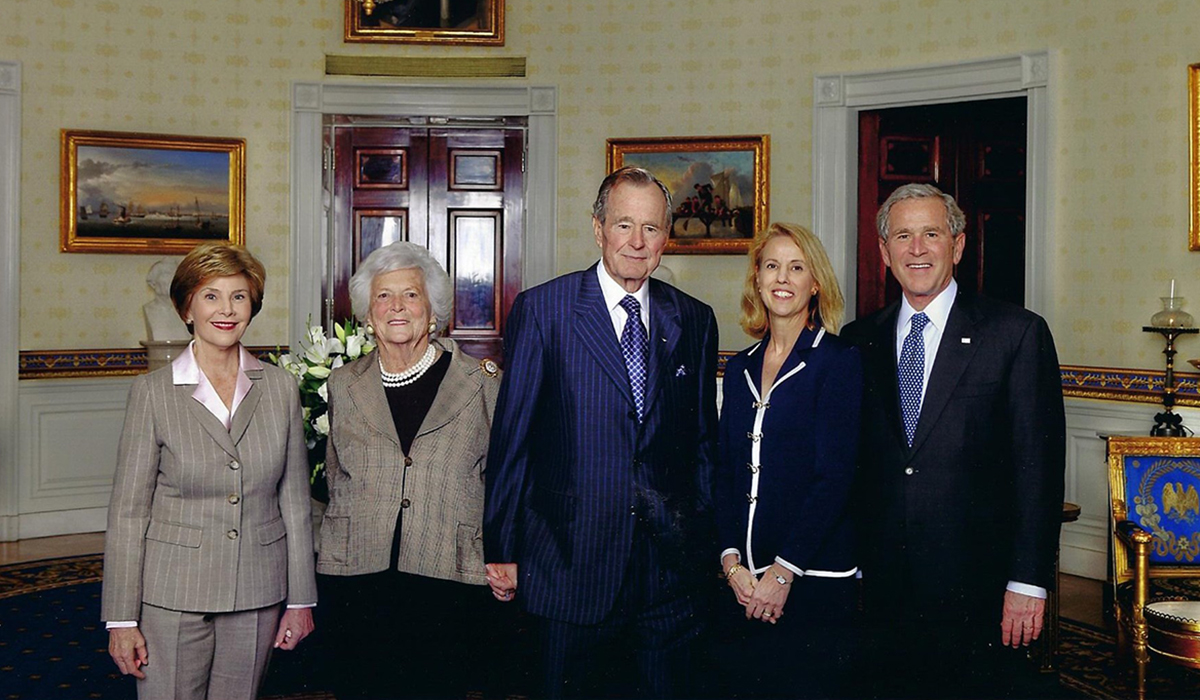
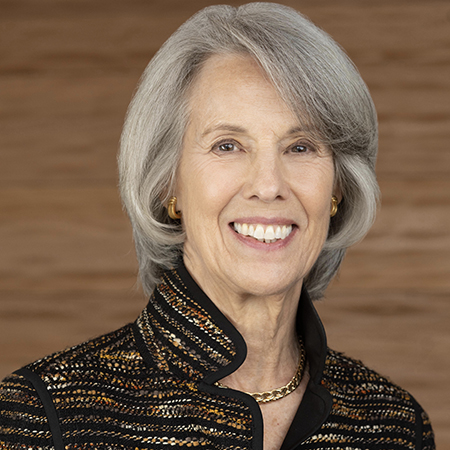
Meet Daily Point of Light Award honoree Marcia Bullard. Read her story, and nominate an outstanding volunteer or family as a Daily Point of Light.
For decades, Marcia Bullard has woven service into the fabric of both her professional life and her personal commitments. Her journey as a civic leader began to take monumental shape in 1992 when, as president & CEO of USA WEEKEND magazine, a publication reaching 22 million readers, she connected with Points of Light. This partnership birthed Make A Difference Day, a national day of volunteering held on the fourth Saturday of October. For nearly 20 years, it stood as the largest day of volunteer service globally. The ripple effect of this effort is still felt today, as many volunteer organizations and cities continue to honor the tradition.
Marcia’s dedication is rooted in the consistent, impactful contributions she has made through strategic leadership and personal mentorship. Over her 40+ years of service, she has generously shared her expertise on numerous boards, including a long tenure on the Points of Light board and as chair of America’s Charities. Her commitment to supporting underserved communities is further evidenced by her work as a board member of Heart of America since 2001, where she served as chair from 2016 to 2023, helping to renovate schools. Her dedication to civic duty is truly a lifelong pursuit.
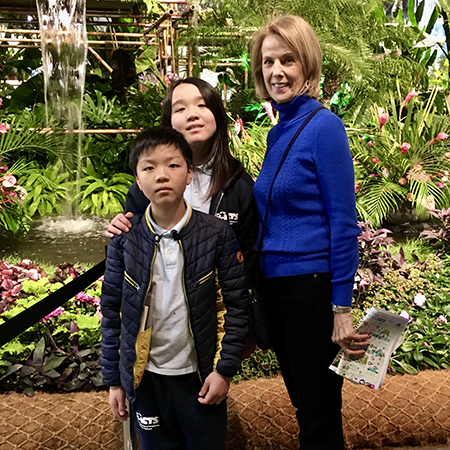
Perhaps the most heartfelt illustration of Marcia’s impact is the deep personal commitment she has made to mentoring young people in Philadelphia. For over 10 years, she has dedicated herself to a student, Xier, who immigrated from China at age 9. Marcia met Xier while volunteering at McCall Elementary School and has been a steady presence in her life ever since. Because Xier’s parents run a restaurant and work six days a week, Marcia stepped in to handle all school needs, including parent-teacher conferences, homework, SAT tutoring and the intensive college application process. Through this effort, Marcia secured multiple college grants, including one from the Philadelphia Foundation, helping Xier start her freshman year at Northeastern University this semester.
This incredible dedication continues today, with Marcia meeting with Xier two to three times a week to help with her studies, and also mentoring her younger brother, Jeffrey. Marcia’s story is a shining example of how a volunteer’s journey can span from creating a massive global movement to offering the intimate, personal support that changes a single life forever. Her enduring commitment—from the boardroom of national organizations to the kitchen table of a single
student—shows that the most significant acts of service are those given consistently and with the whole heart.
Tell us about your volunteer role.
My current volunteer activities involve serving on a number of boards. I’m on the board of Heart of America Foundation, which renovates libraries in schools in underserved communities. Education is an area that’s close to my heart, and I think it’s important for the country. Working for a nonprofit that provides educational materials and good spaces for children to learn is a huge value to society, and it’s inspiring, which is why I got involved.
I also serve on the advisory board of the Fund for Investigative Journalism, which I chaired for a couple of years. What I’ve learned about my volunteer service is that having worked in corporate America, my entire career gave me a lot of tools and learning that I can offer to nonprofit organizations that typically don’t have a lot of resources. Generally, nonprofits don’t have the funds for an HR department, a big finance operation or extensive marketing and communications. I’ve learned that I can provide significant value to them by lending expertise in the areas I developed during my career. I think a lot of corporate executives find the same thing: you can make a big difference in a nonprofit organization just by lending some of your specialized knowledge.
I’ve devoted a lot of my time over the past 10 years to serving as a mentor and tutor to a couple of students in Philadelphia. I first got involved with one student, Xier, when she was in fourth grade. I met her at the elementary school where I was volunteering as a tutor, helping the teachers, shortly after she came to the U.S. from China. She is now a freshman at Northeastern University in Boston. Her parents don’t speak fluent English and felt overwhelmed by the school system, so they didn’t feel they could adequately support their children. For Xier and her brother, Jeffrey, I became their substitute go-between.
I attended their parent-teacher conferences, helped them with their homework and took them places to show them a little bit of the world, as their parents were busy running two restaurants. For Xier, I helped her with the entire college application process, including those tough essays and the FAFSA forms. Her parents trusted me enough to send me all their necessary tax forms and materials, which was an honor. I’ve been with them so long that I’m an extension of the family. I helped her with all of that, took her on college tours and even took her to college orientation. This has taken a lot of time over the past few years, but it makes me really happy. I enjoy it. I work with Jeffrey now, too, on those same things.
What inspired you to get started with these initiatives?
I guess there were a couple of beginnings. In my family, my parents were always active in the community and in church. My mom made us visit nursing homes when we were kids, so I think the idea of helping other people has always been part of my family life. As an adult, I think I got involved when I first moved to Washington D.C. to help start the newspaper, USA Today. I think the appeal of journalism is that you feel like you can help people by giving them information they need to live better lives, and that you can shine a light on people’s problems or on communities where help is needed.
When you work at a local newspaper, you’re constantly connected to the community. You’re out meeting people, reporting on events and going into neighborhoods. But when you work for a national paper, you have no connection to the local community, and I felt that was a big lack when I got here. So, I started volunteering, first in adult literacy, and then I migrated to volunteering in schools with kids. Those experiences were really great for me, because I learned so much. They always say that as a volunteer, you get more than you give, and I think that’s really true. When I tutored adults in literacy, I assumed I was going to help them read the newspaper or their important mail, but what they often wanted to learn was how to understand how to play the lottery or read the Bible. That was a real light bulb moment for me. It never occurred to me that those were the drivers for some people.
The same thing happened when I started tutoring kids. I remember waiting with one girl after a Saturday morning session because she was waiting for her mom. I asked what kind of car her mom drove, and she said, “Oh, we don’t have a car.” I suddenly realized, “Duh.” Her mom was going to take a bus to pick her up. Later, when the mom was late, I asked if we could call her, and the girl said they didn’t have a phone. These kinds of things gave me an insight into the issues a lot of people face that I didn’t encounter in my fairly middle-class life. It’s been an important realization for me.
Then, when I was at USA WEEKEND magazine, we started a national day of volunteering called Make a Difference Day. It was a leap year one year, and we had the idea: “What should we tell people to do with their extra 24 hours?” We said, “Do something good for your neighbor and your community, and write to us about it.” With the help of Points of Light, we established an 800-number so people could call to find out how they could help in their community. We published it in the magazine and got thousands of letters and videos back. We published a special issue telling some of those stories and decided to make it an annual event. We started Make a Difference Day in 1992, and that is what connected me to Points of Light and really brought me into the world of nonprofits, which has led from one thing to another over the years.
Why is education, in particular, so important to you?
Reading and writing, being able to understand what’s going on around you, and knowing how to participate and have your voice heard—being able to operate effectively, whether as a worker or as a leader in your community—it all comes down to education.
A lot of kids don’t have access to great schools, or to the kind of support at home that I had, where parents are focused on your education and make you do your homework. I simply believe you have to have an educated populace in order to make a democracy work. Otherwise, how will people know what their opportunity is to have a voice in their government and their place in the world? I think education is just the key to a good life and to a good country.
What’s the most rewarding part of your work?
Certainly, seeing my student graduate from high school with close to a 4.0 GPA was very rewarding. Seeing her go to college is really exciting for me. It’s not easy for her right now; being a freshman in college and being away from home for the first time is tough, so it’s rewarding to me to be able to provide the support she needs. I’m sometimes the first person she calls when she needs help or has a hard question, whether it’s a personal problem or a question about her academic path, like, “Should I have a double major, or a single major and a minor?” When she taps me and tells me that I’m the person she turns to first, that is super rewarding.
Every year, even though Make A Difference Day is no longer nationally supported, I still Google it and see that people are still making it happen in their communities, in places like Green Bay, Wisconsin and elsewhere around the country. That’s really rewarding. I think we stopped doing it too soon. I think now more than ever, we need something like Make A Difference Day that’s not politically affiliated—it’s not Democrat or Republican—it’s just a nation coming together and helping each other. You see that need and reward in the wake of every natural disaster, when people find it unifying and important for our country to have that kind of common feeling that they share values together.
What have you learned through your experiences volunteering?
I’ve learned that I really do enjoy feeling like I’m helping to solve a problem. That was one of the appeals of Make A Difference Day. Sometimes people feel that the world is a little chaotic or that you can’t make a difference. But you learn that even by doing something simple, like picking up trash on the street or helping a kid read a book, you do make a difference. You make that child happy. You make them feel like they succeeded at something, and you may give them hope that they could do more. You make the neighborhood look a little better than it did before. I think that’s a really nice feeling of accomplishment. I’ve realized that I enjoy that; it makes me feel good.
Why is it important for others to get involved with causes they care about, through volunteering specifically?
I think that one-on-one connection with people is super important. During the pandemic, we couldn’t get out and volunteer together, and I think that was a loss, because you just don’t connect with people in the same way. As great a tool as Zoom is, it’s not the same as being there in person, being in a different surrounding where other people are having a shared experience.
It really is important to get out, whether in the community or with a nonprofit that’s committed to a cause you care about. You’re going to find people with like values, and you’re going to learn more. It’s like going to an office to work—you learn as much from the people around you as you do from reading books. That interconnection with people is really important.
Any advice for people who want to start volunteering?
As with all things, start small. Do something simple. If you feel like you want to reach out and try something, maybe start with a friend and do something together. Find an event you can go to or a way that you can help. It can be overwhelming to think about how to take that first step. There are resources, of course, but sometimes those can be hard to find if you don’t know where to look in the first place. Schools, churches and communities that you already belong to are really good sources of places where you can find other people who might also be looking for ways to reach out and do something.
I think these days, too, even though I’m not a big social media person, if you’re a younger person and on social media, there are ways of connecting to events and opportunities. You might just have to put yourself out there and try something once and see where it gets you. That was one of the appeals of Make A Difference Day, or any day of volunteering that exists now, where a lot of things going on are being publicized. That gives you more access and knowledge about where you might be able to help. It’s hard, especially if you’re shy or unsure if you’d be accepted, but just trying to take that first step is the big challenge.
Do you want to make a difference in your community like Marcia? Find local volunteer opportunities.
Share this post
