
Veteran Leads Nonprofit Guiding Heroes from Trauma to Growth
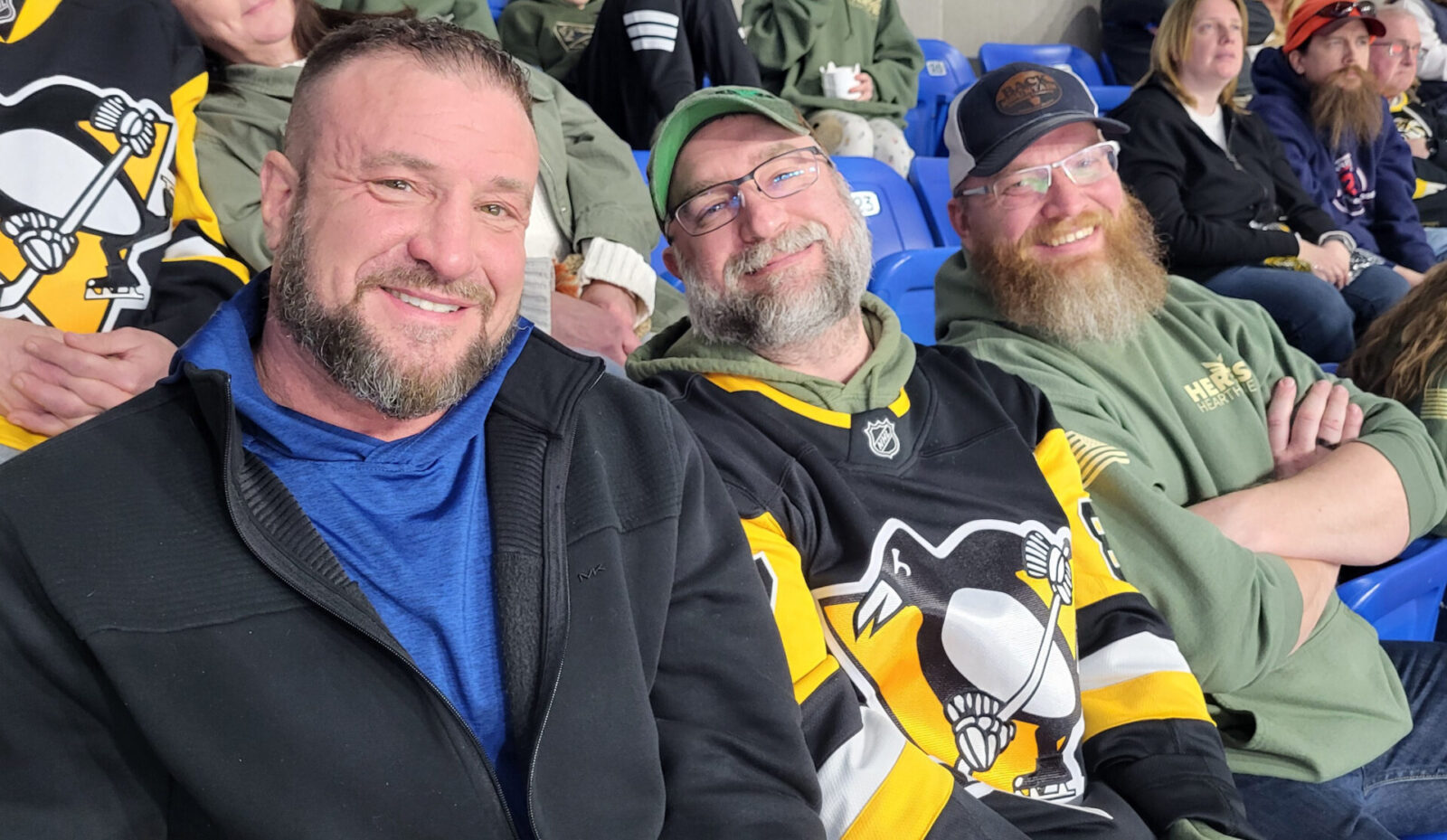
Meet Daily Point of Light Award honoree Allen Scott. Read his story, and nominate an outstanding volunteer or family as a Daily Point of Light.
When Allen Scott’s cousin Rick came home from combat, he did everything he was supposed to do to heal — and still struggled to find help. It took a program at the Boulder Crest Foundation for him to push through post-traumatic stress into what the organization calls post-traumatic growth. But there was nothing like it near home in northeastern Pennsylvania. So in 2021, with Allen’s encouragement and his promise to push him the entire way, Rick founded Heroes Hearthstone, a volunteer-run nonprofit guiding veterans, first responders, and their families from post-traumatic stress toward post-traumatic growth.
Allen, a veteran himself, has been there since the beginning, first as an executive board member and now as President. He leads the board, serves as the primary contact for community partners like The Luzerne Foundation, delivers programming such as the organization’s Kintsugi Wellness Workshop and manages its Community Goods Distribution Program — weekly pickups of donated goods from a local big-box store that have put more than 1 million pounds of food and supplies into the hands of veterans, a veterans homeless shelter, local food pantries, Lake Lehman High School, and fellow nonprofits such as Mama Bird and Rescue Pets.
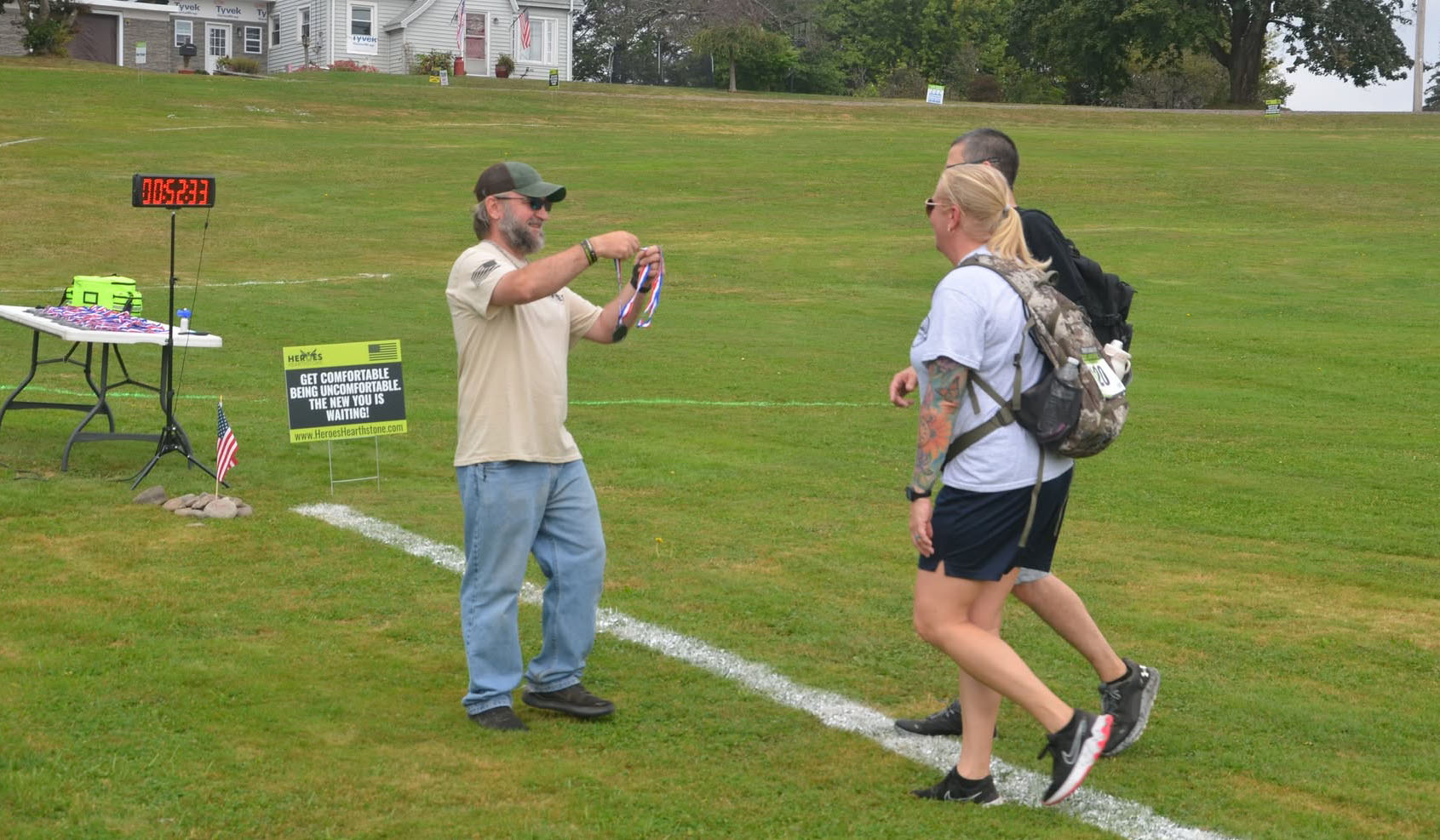
Between monthly Campfire and Coffee gatherings, tai chi in the park, visits to a local rehabilitation facility, and a new coffee group for Korean War and Vietnam veterans, Heroes Hearthstone reaches an estimated 100 to 150 veterans in Pennsylvania – with plans to take its programs national.
What inspired you to get involved with Heroes Hearthstone?
Well, I’m a veteran, so that kind of helps — although I was not a combat veteran. Pretty much my whole family joined the military, and the founder of Heroes is my cousin. He was a combat vet. He did all the things he was supposed to do to fix himself and couldn’t get help, then found the Boulder Crest Foundation that was able to help him and pushed through the trials and tribulations of trying to get better from PTSD into what we consider post-traumatic growth. We found out there was nothing like it in our area that could help people, so I said, well, let’s start your own thing, and I’ll be behind you. I’ll push you the entire way, and I’ll help you with whatever I can.
In 2021, he started Heroes Hearthstone, and I helped as much as I could as an executive board member. Come to find out, I don’t have PTSD, but I do suffer from anxiety. So the mission really resonated with me — if he could go start all this, what can I do to help myself as a veteran dealing with anxiety and past traumas? It just really hit home for me. That’s why I got involved and continue to stay involved, and I’m even more involved now.
How does Heroes Hearthstone build that sense of community for veterans?
A big thing that stems from PTSD is a loss of community. When you’re in the military, you have that brotherhood. Your food, your room, your friends, medical — everything’s taken care of for you. And then when you get out, they kind of drop you like a wet rag, and a lot of people just struggle at that point. So we’re trying to bring back that sense of community. The last Tuesday of every month, we have what we call Campfire and Coffee. Any veteran or first responder who wants to come, come on in, and we welcome you with open arms. It’s a very close group of people at this point, and it’s one of my favorite events — because who doesn’t like sitting around a campfire?
Tell me about the Community Goods Distribution Program.
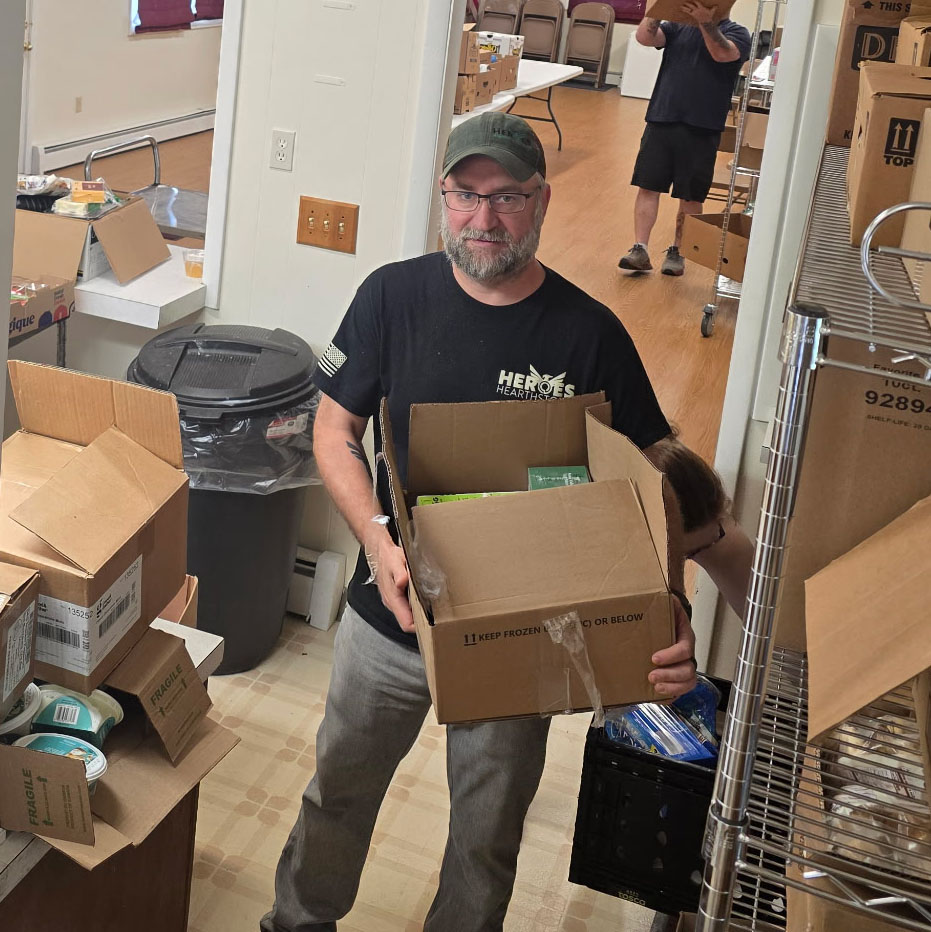
We partner with a big-box store, and instead of throwing things they pull off their shelves into a dumpster, they give them to us. Every week is different — sometimes it’s food, sometimes it’s baby supplies, snacks, drinks, diapers, paper towels. On the way to the food pantry we partner with, we stop at a veterans homeless shelter that houses upwards of 20 people and drop off what they can use. Then at the pantry, we call all the veterans we can possibly think of, and whatever they need, they take. Our staff and volunteers unload the trailer, sort and organize everything, and the veterans walk through and pick what they need.
Whatever they don’t take, we leave at the pantry so the church can help the local community as well. We also set things aside for other nonprofits around us — dog food, cat food, and litter go to Rescue Pets. Diapers, formula, and kids’ toys go to Mama Bird, which helps moms who are struggling. And we partner with our local high school: snacks for their refreshment breaks, supplies for the school nurse, Gatorade, and water for the sports teams. So we’re not just helping veterans — we’re helping the community as well.
What are some upcoming events or programs you’re excited about?
We’re in the process of developing three different programs, and we’re on the final stretch. Hopefully by the end of the year we’ll have them ready. Our first one coming out is called the Pathfinder program. It’s a 12-week curriculum — once a week, online, or in person — and we’ll work with you either way.
What we’re designing is a peer-to-peer support thing, not a clinical thing. We’re going to be very upfront: hey, we’re not doctors. We’re trying to tell you what helped us get to where we’re at and how our brains are working a little bit better through self-regulation practices — plus things you don’t get taught before you get out of the military, like how to set up a budget. In the first release, we’re going to take 10 or 12 local people through it, tweak the program, and hopefully by the end of next year we’ll be able to offer it to any veteran in the country. The cost will be completely free. We’ll send you the books, the workbooks, everything. You just have to supply us with a DD-214, the Certificate of Release or Discharge from Active Duty.
What’s the most rewarding part of your work?
The smiles on the veterans’ kids’ faces. A lot of veterans who come to the food pantry for help bring their kids with them so they can help too. As we’re loading the trailer, I’m personally looking for lollipops and candy. I found one little girl a headband with cat ears, and I kept it in the trailer so that when I saw her, I could say, hey, I found this for you — and she got a big smile on her face. We got bubble guns last week, so I gave her and her sister each one, and I said, this one’s for your dad so he can shoot back. They all got a kick out of that. It’s for the veterans ultimately, but it’s seeing the kids happy because daddy or mommy is not angry anymore. We give them that decompression time. You’re around veterans and first responders, we know what you’ve gone through, and you can let your guard down and have a little fun with us. The kids see that, and it’s like, oh, okay, this is fun.
What are your long-term goals for the organization?
Right now, we’re getting our programming up and going. Once we get through that, we’ll have more of an angle to get the grants we desperately want, so we can get our own brick and mortar. Our big thing is self-regulation, and not one thing works for everyone. I enjoy meditation — I do it every morning for 10 minutes — so we want a Zen garden where you can come do that. If that’s not really your jam and you like archery, we’re going to have an archery range where you can grab a recurve and shoot at the targets. You want a garden? We’re going to have a garden. We want a fully equipped gym. If you’re a veteran, come on in, you’re free. If you’re not a veteran, you can pay a membership, and all the proceeds cover the cost of the veterans who go there for free. Then we can move the food pantry to our location and host our events there, so we can grow our community with a home base. That’s our five-to-10-year plan.
Why do you think it’s important for people to get involved with causes they care about?
If they don’t, who will? If you feel strongly about something, you should get involved in it, because it’ll give you that sense of community and that sense of purpose. For me, it’s the veterans — that’s who I am. I am a veteran, and that’s who I want to help. My wife is a mother, and that’s how we got involved with Mama Bird. If you have a purpose and you feel passionate about it, you’re going to do whatever you can. As you get older, you realize community means more than things. Just being a part of that community is what drives me.
What do you hope people take away from your story?
I just want to bring more awareness to PTSD — and post-traumatic growth is the better way to describe it. You’re only going to get out what you put in. If you want to get better, it’s going to take work.
Do you want to make a difference in your community like Allen? Find local volunteer opportunities.
Share this post
