
How a Game Community Rallied to Raise Millions for Children’s Hospitals
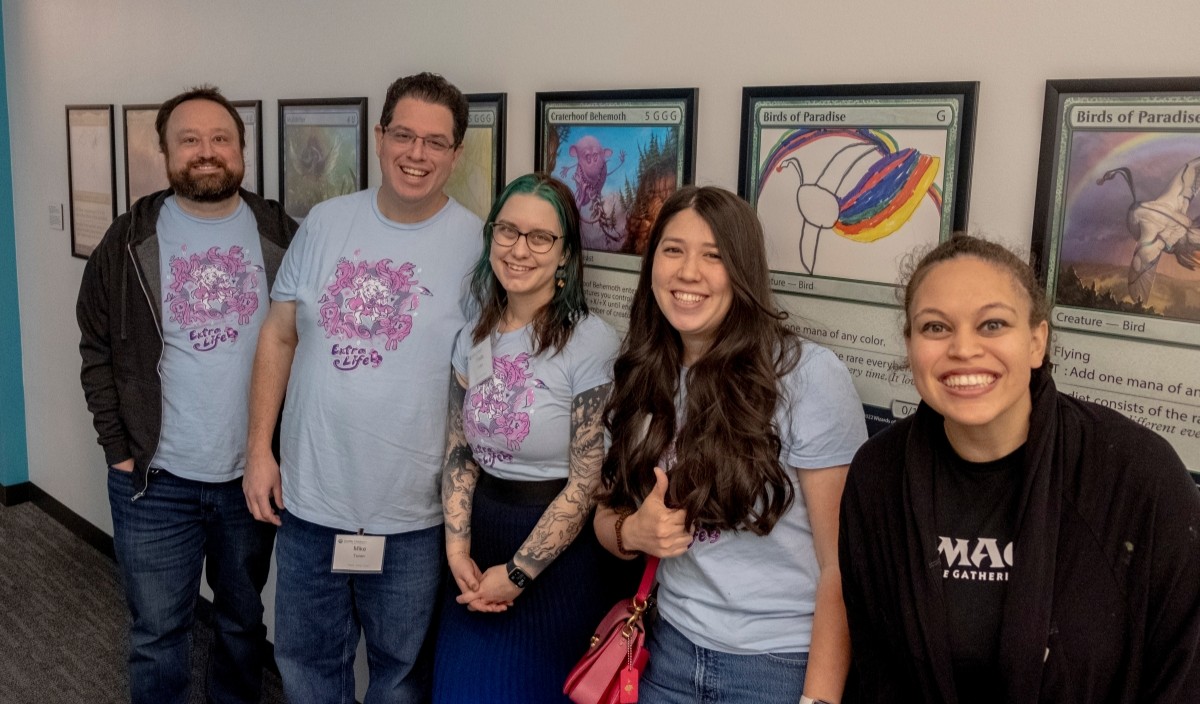
Meet Daily Point of Light Award honoree Mike Turian. Read his story, and nominate an outstanding volunteer or family as a Daily Point of Light.
Mike Turian got his start with a straightforward idea: you become what you do, and most of us could stand to do more. He’d been mulling it over after reading an essay called “Magic Saved My Life” by Jacob Van Lunen, which left him with a feeling he couldn’t quite shake. So he gave a presentation about the chance each of us has to make a difference, and the pull he felt to act on that rather than just think about it. Not long after, the opportunity showed up in a concrete form, and Mike took it.
Over a decade ago, Mike heard that a colleague was leaving Wizards of the Coast, a division of Hasbro. With the departure of his colleague, Mike saw the reins of the company’s Extra Life fundraising for children’s hospitals switching as well. Mike didn’t want the support for Seattle Children’s to lapse, so he stepped in alongside a few teammates and took over the Magic: The Gathering effort. What began small grew into something his team hadn’t pictured at the outset. In the early days they hoped to maybe someday make a single promo card; this year they produced a full game crossover, along with digital events on MTG Arena and Magic Online, plus merchandise from partners. His team’s annual total climbed from $47,000 in that first year to more than $650,000 this year — part of over $10 million raised across the span of his involvement.
Alongside the fundraising related to his career, Mike has additionally served on the board of the Safe Crossings Foundation since 2019, moving through roles as Treasurer, Vice-President, and President and chairing several committees along the way. The organization supports children working through the loss of a parent, a sibling, or someone else they love, and helps widen access to grief support services. Mike promotes the cause wherever he can, guided by a plain conviction: that no child should have to grieve alone. It’s the same instinct behind his Extra Life work — finding the people who are hurting and making sure help reaches them.
What keeps Mike at it is where the money goes once it leaves his hands. Seattle Children’s spent over $300 million last year on uncompensated care for kids and their families, and the funds his team raises go to people he doesn’t know and will most likely never meet, to ease their lives, and sometimes to save them. He tends to describe the whole thing without much fanfare. He saw a chance to do more, he took it, and year after year he keeps finding new ways to bring his coworkers and a global community of players along with him.
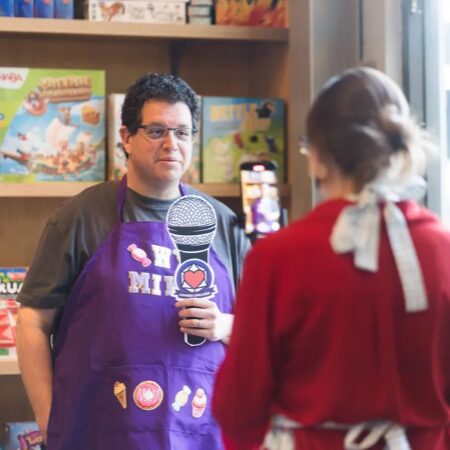
Tell us about your volunteer role with Extra Life.
There are a few different organizations I’ve become involved with. I’m going to start with Extra Life, because for me that was the origin of me getting involved. Wizards of the Coast makes both Magic: The Gathering and Dungeons & Dragons, and I’m the Senior Executive Producer for Magic. About 15 years ago, saw the Dungeons & Dragons team doing a lot of philanthropy work. They were involved with Extra Life. And I realized that Magic as a game was too big in the social space, too important, too much a part of the zeitgeist, to not also have a philanthropic contribution, a vision. I very much believe that you become what you do, and I just saw a lot of opportunity for Magic to do more with charity. Magic is a community-driven game, and this was an important aspect of community.
I got involved with Extra Life, which raises money for the Children’s Miracle Network. Because we’re in Seattle, our contributions mostly go to Seattle Children’s. The person leading that effort from the D&D team was leaving Wizards, and I thought, “Oh no, who is going to pick up this baton and carry on this awesome work?” And if you’ve ever had that thought in your life, the answer is, “You.” You are the answer, because nobody else is having that thought.
So I did. I created a small team. Our goal the first year was just to go live for Extra Life’s 24-hour game day stream and stay live for the 24 hours. If we did that, big win. We did that, and we did so much more. That first year I think we raised about $25,000, which is incredible. We made T-shirts, and those T-shirts really helped change the community. We sold them and gave them out internally. The next year we did the stream and raised $35,000, then $45,000, then it jumped to $55,000 or $75,000.
A huge breakthrough for Extra Life was when we started doing philanthropic products, which we call the Secret Lair products. Every year we do one, like the crossover Ponies: The Galloping. We work with our Secret Lair brand and sell it, and 50% of every sale goes to Seattle Children’s and the Wizards of the Coast Development Fund. Now we’ve announced that we’ve raised over $10 million for Seattle Children’s and the Children’s Miracle Network. So it’s really working. We also run employee streams, and our Wizards Play Network retailers can join in as part of the Wizards Super Team.
What inspired you to get started with this initiative?
Going back to that origin story: before I gave the talk at the Magic Studio offsite about how we make the rules and we need to pay it forward in our community, what caused me to give that speech was an article Jacob Van Lunen wrote called “Magic Saved My Life.” He talks about how Magic literally saved his life. I was reading it on a beautiful day on my back porch in Seattle, and I found myself crying because of the impact of it. This game that we make, that I love, is so meaningful. That was really powerful, and it started me on this journey.
There are other connections too. Seattle Children’s has the Autism Center, and we helped open the Magnuson Center. My mom is retired now but worked as a social worker at DT Watson Rehabilitation Center, working with kids with autism and all sorts of other issues in that space. She ran a sibling group, because it’s not just the kid who has autism and their parent who are impacted, but their siblings too. Wizards is located in Seattle, and with Seattle Children’s in the area, they’re a huge philanthropic organization. All the time, new people join and say, “When I was a kid…” or “My kid got services from Seattle Children’s…” So there’s a huge amount of connection there, in all the ways.
Tell us the Safe Crossings story.
Through my work at Wizards with philanthropy, I got the opportunity to join the board of the Safe Crossings Foundation. That was 2019, and I became board President last year, in 2025. Safe Crossings raises money, and the mission is making sure that no child grieves alone. In general, about one in 12 people under the age of 18 will have lost a parent by the time they become an adult. Grief in our society is something that’s not really talked about or embraced. There’s more of a “move on” mentality. So Safe Crossings is there to recognize this need, and hopefully have a lasting impact.
Wizards, through Sharon Cook, the VP of HR, always contributed to Safe Crossings, and she had become a board member. The board seat had been handed off a couple of times, and the person who had been on it, Ken Troop, is a good friend of mine. He recognized what I had done through Extra Life and said he’d love for me to take it on. Through the luncheon and my familiarity with the organization, I said, “Sure, this sounds like an awesome organization and a new challenge.” Wizards won their Bridge to Healing Award in 2020, after I’d joined the board, and it was amazing to be part of that. I’ve been part of that board and organization since 2019. I became Treasurer pretty early on and led the marketing and development committee, then became Vice President, and the other year became board President.
What are your long-term plans or goals for the organization?
With healthcare, the well is infinite. It’s not like you say, “We raised $10 million, that’s fantastic,” and you’re done. When you hear Seattle Children’s does a quarter billion dollars of philanthropic giving every year, you’re just floored. The need is tremendous, and the only way you ever meet it is through inspirational, large-scale change. To me, that’s about individual action and inspiration. It’s getting people to believe, “Yeah, I can make a difference, I will make a difference.” That’s a lot of why I was excited to be nominated for this: you need to put these stories into the world so other people read them and feel them, because when there’s an infinite need, you need an infinite response.
For Safe Crossings in particular, it’s about awareness and changing how the community responds to grief. If you look at hospice work, it’s being more privatized than ever. To me it’s about how people care, how they talk about loss and grief, and recognizing that it’s okay and good and healthy to talk about and respond to. Even after being involved for going on seven years, it’s still so difficult. We just had a board member lose one of their teenagers in a tragic accident, and even being steeped in a community that’s all about this, it’s so tragic and hard. Words just don’t suffice.
What’s been the most rewarding part of your work?
The thing I love about doing philanthropic work is how many people say yes. So often in life and business, you run into bureaucracy, challenges, hurdles. But when working on charity initiatives and volunteering, all of a sudden it’s, “Oh, it’s for the kids? Sure.” All of that melts away, because people really do want to help and make a difference. That’s refreshing, to get those immediate yeses and find that everybody’s on board and wanting to make a difference. Sometimes they just need to be asked.
What have you learned through your experiences as a volunteer?
So much. In my professional life, I have my job and my role, and this gives me a chance to expand beyond that and challenge myself in spaces I otherwise wouldn’t have access to. Working with charity organizations, you get to see behind the scenes and have conversations you just don’t have in your day-to-day. It really opens up a whole other aspect of opportunity to learn and grow, and I’ve really enjoyed tapping into that.
Tell us about future partnerships, programs or events that you are excited about.
For Magic, we’re continuing to support Extra Life. Every fall we do a stream. It’s not 24 hours anymore, but we bring in the community, play Magic, and fundraise with the employee stream. Magic Arena, our online game, runs events and promotions for it. We’re going to do another Secret Lair product that we haven’t announced yet, but it’s super cool.
One thing I’m really emphasizing this year is getting more of our retailers involved. Magic as a company doesn’t own the game stores — they’re independently run — but I want to set up more structure for stores that feel that same desire to get involved, so they can raise their hand and get their own communities tapped into Extra Life. I think there are 170-plus Children’s Miracle Network hospitals, so there’s one in almost every area that needs support.
Why is it important for others to get involved with causes they care about?
You impact your space. If what you can do is contribute in that way, great, do that. You don’t need to become President or a Senator first. People often have this view that they’re not important, so their actions aren’t important, and that what they need to do is become important in order for their actions to matter. But that’s backwards. You are important, and your actions do matter. So go do the thing, and then people will recognize you’re important, because you’re doing important things.
One of the great reasons to get involved is that you will make a difference, whether or not you see it or feel it in the immediate. It snowballs. That’s why I love to start with, “The first year we raised $25,000, and now we’ve raised over $10 million.” I didn’t think we’d raise $10 million when we raised $25,000, and I also didn’t care. I was just glad we accomplished something that year, and we’d accomplish more the next. That’s very much the attitude I’ve always embraced.
Any advice for people who want to start volunteering?
I would find the things in my life that I love and go explore that space. Figure out what you’re passionate about. You probably already know, whether it’s animals or people or the environment. Proximity is powerful, so go there. If it’s animals, go to your animal shelter. If it’s the environment, go to the National Park. And say, “I’m interested in doing this, here’s who I am as a person. Do you have a suggestion?” Then follow that suggestion.
There are tons of good excuses not to do volunteer work. Just ignore them.
Do you want to make a difference in your community like Mike? Find local volunteer opportunities.
Share this post
