
A Life Well-Lived
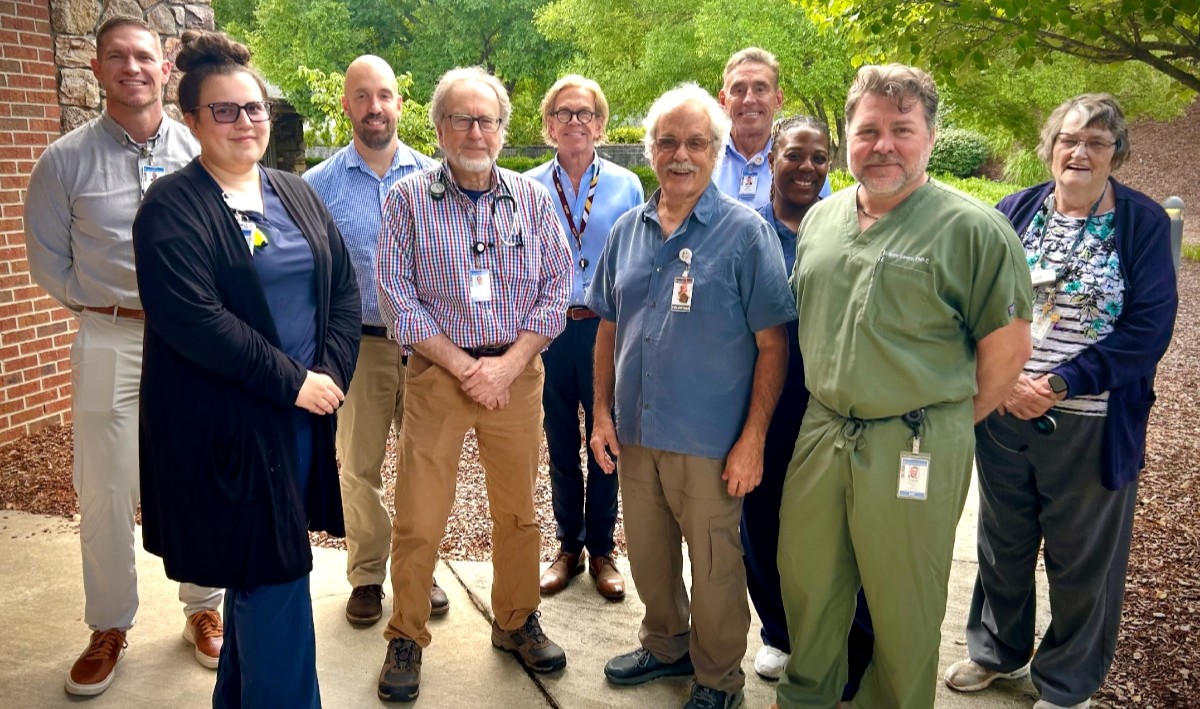
Meet Daily Point of Light Award honoree Peter Crawford. Read his story, and nominate an outstanding volunteer or family as a Daily Point of Light.
Peter Crawford, a 78-year-old set designer, is innately curious about people. He’s someone whose friendliness puts others at ease and whose openness makes him well-suited to working with people.
Nearly three years ago, Peter began the unique experience of volunteering at CarePartners Health Services – Solace Hospice supporting patients, their families, and friends as they navigate through their end-of-life journeys. Leading with empathy and respect, he introduces them to the facility and draws on training and natural interpersonal skills to be there for practical and emotional support. Staff praises his comfort level in challenging situations and his ability to pause, reflect, and evaluate before responding. In short, he respects each patient and honors the life they’ve lived.
Peter’s dedication is unquestionable both in the way he cares for patients and his commitment to stay as long as a situation requires. He is unconcerned with going beyond the two-hour ask the facility requests and averages over three times that, prioritizing patients and their remaining time.
What inspires you to volunteer?
I like helping people. I was a volunteer orderly when I was a teenager where my mother was a candy striper. Now, my wife and I work for Food Connection handing out meals created from restaurants with an excess of food. On one shift, we were handing out 450 meals in an hour. When Hurricane Helene happened, I volunteered with World Central Kitchen for five weeks, and they turned out 35,000 meals in one day.
Tell us about your volunteer role with Solace Hospice.
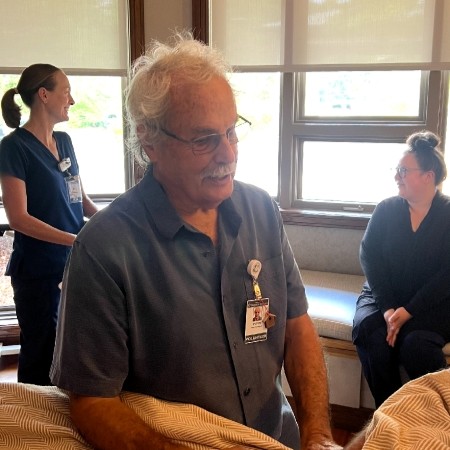
I introduce myself and assess whether the patient or family member needs time alone or if they’re craving company. I might offer to get them something to drink or a hot blanket. If they’re new, I introduce them to Solace and show them around.
My parents died at different times, but I’ve felt them visit me. That’s an experience I can share. I often open a dialog about what they might hear or see–a particular song, bird, or flower–that would connect them to their loved one after they pass. My cousin lost her son at 19. He was a Pittsburgh Steelers fan, and yellow is one of the team colors. Every time she planted these blue flowers she liked, a yellow flower would pop up.
I’m not there to fix anything. I’m just there to be present. I help people feel more comfortable being with a dying loved one and encourage discussion of issues around dying, death, and loss that help celebrate a family’s life together. I help patients spend time outside. Sometimes, there’s family who can’t be there, and it’s nice for them to know somebody is sitting with their loved one for a while.
The privilege of hospice is taking a situation where people are sad, and we provide them with a comfortable, non-judgmental environment where caregivers can release their responsibilities, sit and share stories, and just be a parent, daughter, brother, etc.
There was once a granddaughter whose grandmother, the patient, had bought her a wedding dress, but she wasn’t going to make the wedding. We decided to put one on, so we gathered flowers and called catering, etc. Two hours later, we wheeled the patient into our chapel and had a wedding. To me, it’s an indication of how special we think our responsibility is. It’s an opportunity that is so important to the family that, if we can make something like that happen, we do. There are magical things that happen all the time.
During my time with patients, I learn things that can help staff like a family dynamic that’s causing issues they don’t understand or if a patient is exhibiting some symptoms. If a patient’s family member is concerned about something, I take that to a nurse, too.
I often respond to call bells in patient rooms, because many times, they have a simple request I can take care of. Anytime I can take something off the staff’s hands to free them up for something more pressing is helpful: collecting laundry, serving meals, helping a patient eat. I’ve even fixed a couple of things like a hole punch and refilled printer paper.
What inspired you to get started with this initiative?
My daughter was preparing for gallbladder surgery and being interviewed by a trauma surgeon named Elaine Chan. It turned out she knew a neighbor of mine. I later got to know her, and she recommended I volunteer at Solace, where she provides hospice services outside of her role as a surgeon. It wasn’t something I’d considered, though my mom was sick from when I was 11 to age 21, when she finally died, so I had experience with death early on. I trusted Elaine’s understanding of me, so I met with Director of Volunteer Services Danny Johnson and never looked back.
What’s been the most rewarding part of your work?
It’s the trust that somebody I’ve never met gives me. It’s a gift to be invited or allowed into this precious period that a family is going through. I’ve seen reconciliations that have been years in the making. I’ve seen the reverse of that. I’ve seen people who wanted to talk about things that they’d never had anyone else to talk to about.
Every time I go, there’s a powerful moment of some kind. Every single person here is committed to creating this environment for you to make the transition we all eventually make. The goal is to find some part that’s joyful and loving.
What makes a good volunteer in the hospice environment?
Don’t shy away from emotional challenges. There’s a bit of reality that makes you in touch with your emotions, but I’m not afraid of that. Being interested in people, wanting to spend time with them, listening and being present are also good traits.
What do you want people to learn from your story?
I may be a point of light, but I’m just one in a galaxy. I love the message that it doesn’t matter how small a positive contribution you can make, just that you make it. Care Partners is doing so much good in this setting. I hope people feel more comfortable talking about death and understand what good hospice brings to your last days. It doesn’t take the pain of passing, but it also allows a beautiful story to happen.
Do you want to make a difference in your community like Peter? Find local volunteer opportunities.
Share this post
