
This Volunteer Provides Comfort During Cancer
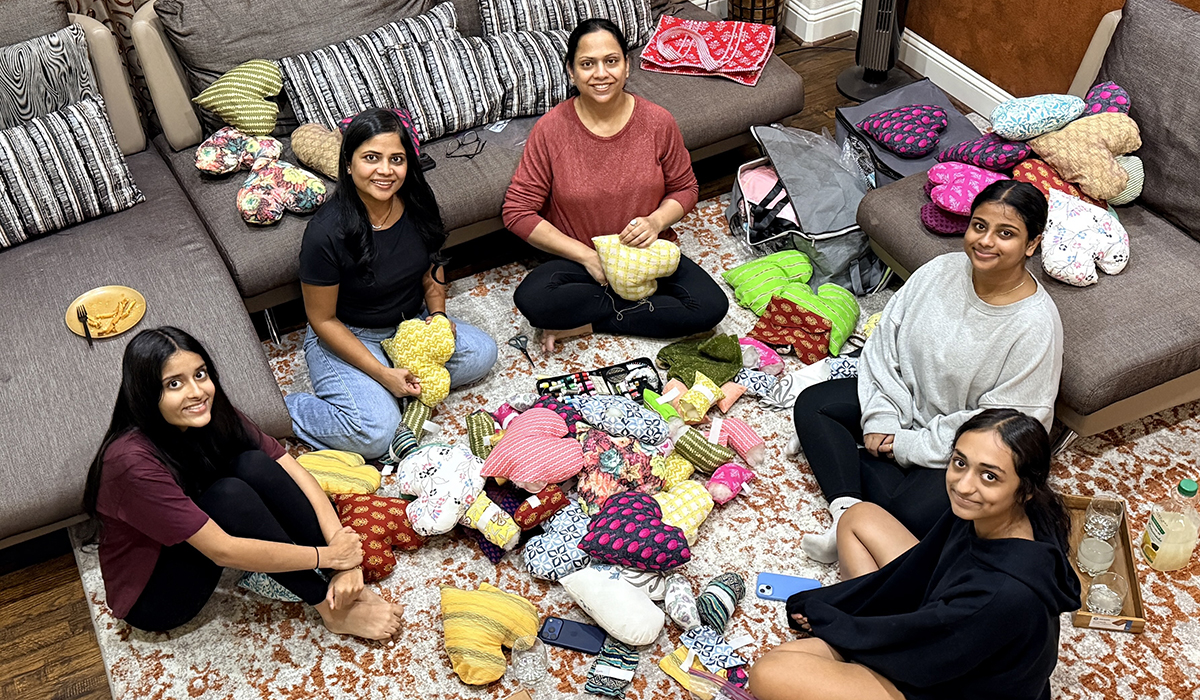
Meet Daily Point of Light Award honoree Anshika Goyal. Read her story, and nominate an outstanding volunteer or family as a Daily Point of Light.
In the United States, one in eight women will be diagnosed with breast cancer in her lifetime. 16-year-old Anshika Goyal’s mom was one of them. The experience, though ending with a positive outcome, wasn’t without its stress and fears. Empathizing with others going through it and touched by the thoughtfulness of volunteers when her mom was in the hospital, Anshika now dedicates over 50 hours each month to supporting breast cancer patients, survivors, caregivers, and their families through Stronger Than Cancer.
Her organization has delivered 1,200 comfort care kits, mobilized student and community volunteers who have put in a collective 6,000 hours of work, and distributed more than $60,000 of donated products and resources since 2025. They organize awareness events and educational resources to help people dealing with the disease.
Thanks to a routine mammogram, Anshika’s mom caught her cancer early. After surgery, she is now cancer-free. For this reason, Anshika is working hard to make such screenings—and other resources—more accessible with her new Resource Hub.
What inspires you to volunteer?
The first organization I ever volunteered with was Vibha, an organization that funds education for kids in India without access, when a neighbor got the kids on our street involved. I was 8 or 9 years old and didn’t really grasp what it was for. I was just excited to have a plant sale or a bake sale with friends. Then, my mom talked to me about it. In 2024, I accumulated over 100 volunteer hours with them and received the President’s Volunteer Service Award.
I realized that what I was doing was making an impact. It felt like a good community to be a part of and made me feel good about myself. Helping others uplifts you as well.
What inspired you to get started with Stronger Than Cancer?
My mom was diagnosed with breast cancer in October 2024, and her surgery was in January 2025. When she was in the hospital, her nurse navigator gave her a heart-shaped mastectomy pillow someone had donated, and I thought that was really cool.
I wanted to help other people going through cancer and support them in a way that made them feel as happy as she did. So, I started volunteering with the National Breast Cancer Foundation to see how they did it, get some ideas, make some connections, and help people. It was a really good community, and it was fun. That experience helped me develop my own nonprofit, which is what I focus on today.
Tell us about your role.
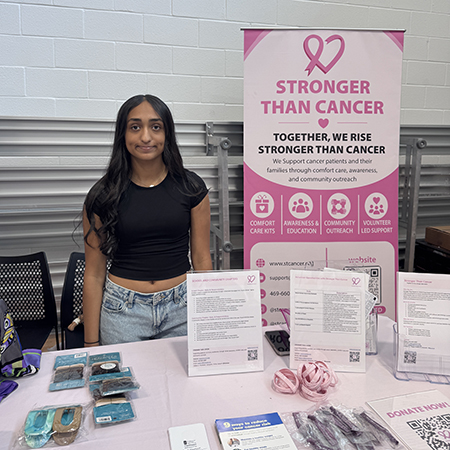
I’m the founder. I focus on getting everything set up. My mom helps me reach out to hospitals, cancer centers, and organizations to set up meetings. We partner with a lot of businesses who send donations for our kits. We include things like blankets, volunteer-made bracelets and cards and self-care items, and donate to hospitals, aiming for 100 each month. I coordinate drop-offs.
Sometimes, I recruit my friends. We also sew and stuff heart-shaped pillows, and a couple friends have organized fundraisers like bake sales and a lemonade stand. We set up a table at events like health fairs and talk about what we do. There’s lots of organizing and managing different parts. I support our other school and community chapters nationwide as well.
What is the Resource Hub?
The goal of the Resource Hub is to create an accessible one stop resource where patients, survivors, caregivers, and families can quickly find relevant support. It started because, at health fairs, we’ve come across underserved communities and people who didn’t have the financial resources to go for regular mammograms, which are vital for early detection. Through our work, we’ve discovered many free services that people aren’t aware of, because the information is fragmented across different websites.
So, we decided to put resources all in one place–financial assistance, legal support, mammogram and screening services, hospital information, transportation, counseling, support groups, and other patient services. You can sort by what you need, location, or stage of treatment. It’s just local options right now, but we’re hoping to expand.
What’s been the most rewarding part of your work?
Sometimes, when we talk about what we do, people open up about having had cancer or having a family member who currently has it. When we offer them a care kit or to ship one to a loved one, the look on their face is unforgettable. It makes me feel good knowing that they don’t feel as alone.
What have you learned through your experiences as a volunteer?
Volunteering may seem like a lot of work, and it can be. But even if you don’t have a lot of time, you can do something small, like making a couple cards to send off.
What is the best way to support a friend or family member dealing with cancer?
Talk to them and treat them like a normal person. A lot of times people may not want to talk about exactly what they’re going through. They may not want to be seen as just a cancer patient. Cancer can take not only a physical toll but a mental and emotional one. Having someone to talk to can make a big difference.
Tell us about future partnerships, programs, or events that you are excited about.
October is Breast Cancer Awareness Month. One of our chapter leads connected us with the American Cancer Society, and we’re trying to partner with them to do a 5K for breast cancer. We’ve only hosted one other 5K so far, for National Cancer Survivors’ Day in partnership with the YMCA. We might also host a health fair.
What do you want people to learn from your story?
There are many good people in the world trying to help. Find them. It’s important to help others and be kind. Even if you just compliment someone or ask them how their day was, it can go a long way to making someone feel better about themselves, feel heard, or feel cared about.
Do you want to make a difference in your community like Anshika? Find local volunteer opportunities.
Share this post
