
Tech Executive Leads Nonprofit Feeding Thousands in India
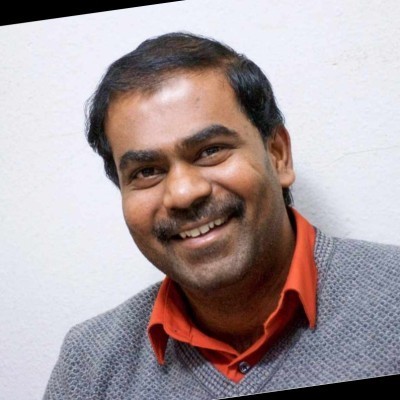
Meet Daily Point of Light Award honoree Alwyn Joseph. Read his story, and nominate an outstanding volunteer or family as a Daily Point of Light.
By day, Alwyn Joseph is a senior executive in the technology industry, living with his family in Suwanee, Georgia — a life made possible, he’ll tell you, by the opportunities the United States provided to him as a first-generation immigrant from India. But his evenings, weekends and a significant portion of his own money belong to something else entirely.
In 2020, when COVID-19 lockdowns stripped daily wage workers in India’s slums of their livelihoods overnight, Alwyn rallied friends across the U.S. and abroad to send monthly grocery packages to affected families. What started as an emergency response evolved into Abundance Kitchen, a volunteer-led nonprofit he formally co-founded in 2023 that now operates across 45 slums and villages in Tamil Nadu, India.
Built on three pillars — food, clothing and education — the organization delivers nutritious weekend meals to children whose government schools only feed them on weekdays, distributes clothing and school supply kits, and works to pull the most vulnerable students away from cycles of poverty before they’re lost to them. With 95% or more of every rupee going directly to beneficiaries — and Alwyn personally covering overhead costs — Abundance Kitchen’s reach already runs into the thousands. Its sights are set on a million lives by 2035.
What inspired you to start Abundance Kitchen?
I’ve been engaged in community service in different forms since my engineering school days in India, back in 2004, 2005. Even before I graduated, I started an organization focused on anti-corruption and social activism. After I moved to the States, that work continued more informally — helping people with school fees, college fees, finding jobs.
Then COVID hit in 2020. In India’s slums, most people are daily wage workers. When the government deployed stay-at-home orders, they lost their livelihoods overnight. These families have to work every single day just to feed themselves and their kids. So, I started rallying friends here in the States and around the world, and we supplied monthly grocery packages to close to 3,000 families. That’s when we really saw the depth of the need and decided to formalize it.
Can you walk us through what Abundance Kitchen does?
It started with food. Government schools in India typically feed kids breakfast and lunch on weekdays. But on weekends, those children are left to go hungry unless their parents can manage. So, we set out to fill that gap with consistent weekend meals.
From there we moved into clothing and school supplies. We collect gently used clothes and toys, clean and sanitize them, sort by age group and size, and distribute. Last year we reached 1,000 kids with full kits of clothing and school supplies. This year we’re targeting 2,000.
The third pillar we’re trying to venture into is education. There are plenty of organizations that support kids who are already doing well in school. But the pattern that we see in the slums is by the time a girl reaches ninth or tenth grade, family circumstances often pull her into household work and she gets stuck there. For boys, the pull is often toward the patterns of a parent who is in prison or involved in crime. We want to catch those kids before that happens and give them vocational skills like tailoring, electrical work, plumbing, something they can actually build a livelihood from.
Your co-founder, Clement Barnabas, actually lives among the communities you serve. Can you tell us about him?
He’s been doing community service for 15 years, and a few years ago he made the decision to move his entire life into the slums — gave up his home, lives among the people we serve. His wife has a good job, they could live very differently, but that’s the commitment he made. I’ve known him since our engineering school days, more than 20 years now. He’s much more intense than I am. These communities are not easy to navigate. There are people who try to take advantage, nonprofits that get lost trying to help. His being there gives us the confidence that we’re reaching the actual beneficiary and not getting fooled around.
You immigrated from India yourself. Why does this cause hit so close to home for you?
Childhood hunger is hard. I haven’t experienced a lot of it myself, but I’ve experienced some of it, and I had friends who experienced it deeply. I saw those hardships up close. Whenever I see a child go hungry or in dire need, I relate it back to my own two kids. That breaks my heart every time.
And logically, somebody has to break the cycle. It’s a vicious cycle that goes on generation to generation. By the grace of God, I’m in a position of power on the corporate side, I’m doing well. So I think it’s only right to channel those blessings into something like this. If you are blessed, it’s not just for you — it is for you to be a channel of blessing to others.
What do you hope for the children Abundance Kitchen is serving?
I’ll be very glad if even 10 or 15 percent of them break the cycle of poverty and go on to have extraordinary lives. Over a period of time, I believe the kids we’re helping today will become our volunteers in five or 10 years. There will be a pay-it-forward model. We’re building a critical mass right now, and in a decade, I think we’ll have thousands of people who are willing to pay it forward— and that network effect is what will make the mission grow faster than anything else.
What do you want people to understand about the communities you work in?
It’s very easy to judge from the outside. When you actually get close and see people’s lives, it’s a very different story. The struggles are real. The perspectives are different from what you imagine. Yes, there is crime, there is poverty — all of that is true. But these kids are innocent. They have the same potential as any of our children. What they lack is opportunity. If you want to be fair to them, give them an opportunity and see how they thrive.
What advice would you give to someone who wants to start their own nonprofit?
Just go do it. I know a lot of people have great intentions and then run a lot of worst-case scenarios in their minds before they ever start. The best way to learn — and to get truly hooked on this kind of work — is to just get hands on and do it. You’ll make mistakes. Every time, you’ll get better. You’ll learn how to serve more effectively, use money more wisely, identify the right beneficiaries. But none of that happens if you never begin. If you have the intention, go do it.
Do you want to make a difference in your community like Alwyn? Find local volunteer opportunities.
Share this post
