
A Family’s Journey to Serve Its Chicago Community
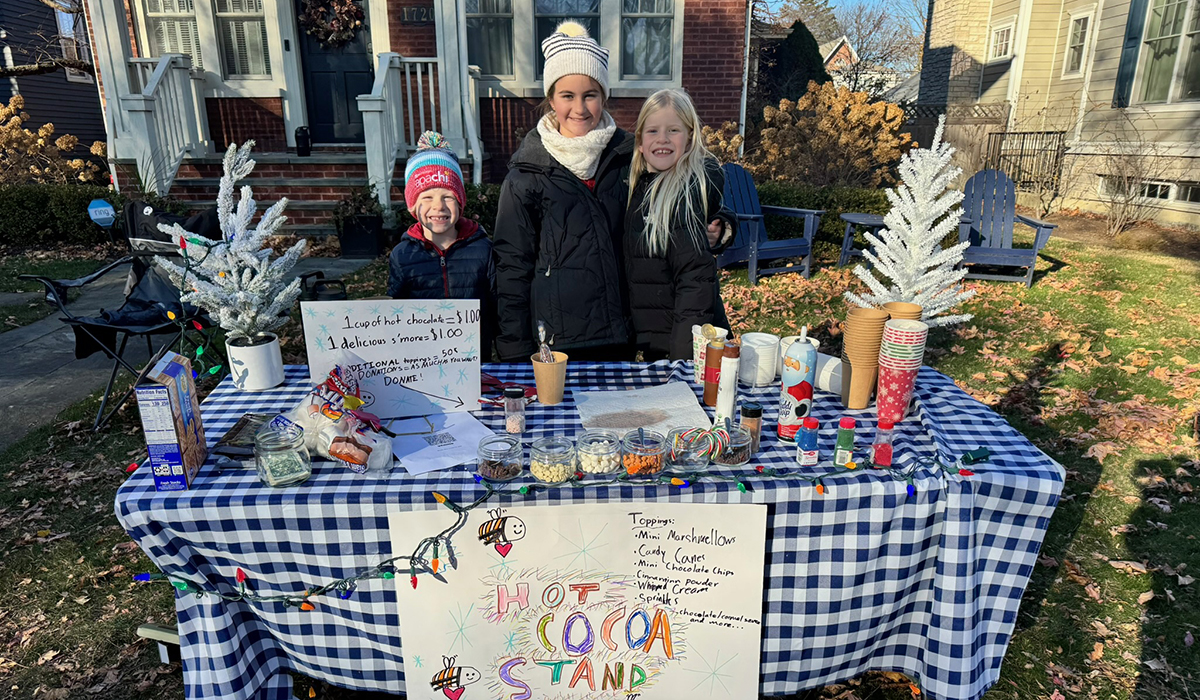
Meet Daily Point of Light Award honoree the Sorensen Family. Read their story, and nominate an outstanding volunteer or family as a Daily Point of Light.
For Jeff and Nicole Sorensen, the drive to serve stems from a deep appreciation of their own upbringing. Reflecting on how their parents prioritized community involvement, they felt a strong desire to instill those same values in their own household. In 2020, amidst the uncertainty of the pandemic, Jeff and Nicole found a pathway to do just that. They introduced their two children, Emme and Theo, to The Honeycomb Project, an organization dedicated to family volunteering. This sparked a journey of community engagement that would bring them closer together.
Their first mission involved grocery shopping for families facing resource limitations. After carefully selecting the items, the family drove to a recipient’s home to leave the supplies on the doorstep. As they pulled away, Jeff observed a poignant moment that resonated deeply during a time of isolation. When Emme and Theo saw the other family come outside to retrieve the groceries, the emotional gap closed instantly. Despite the physical distance required by the pandemic, the children made an immediate connection regarding the similarities between themselves and the neighbors they were helping.
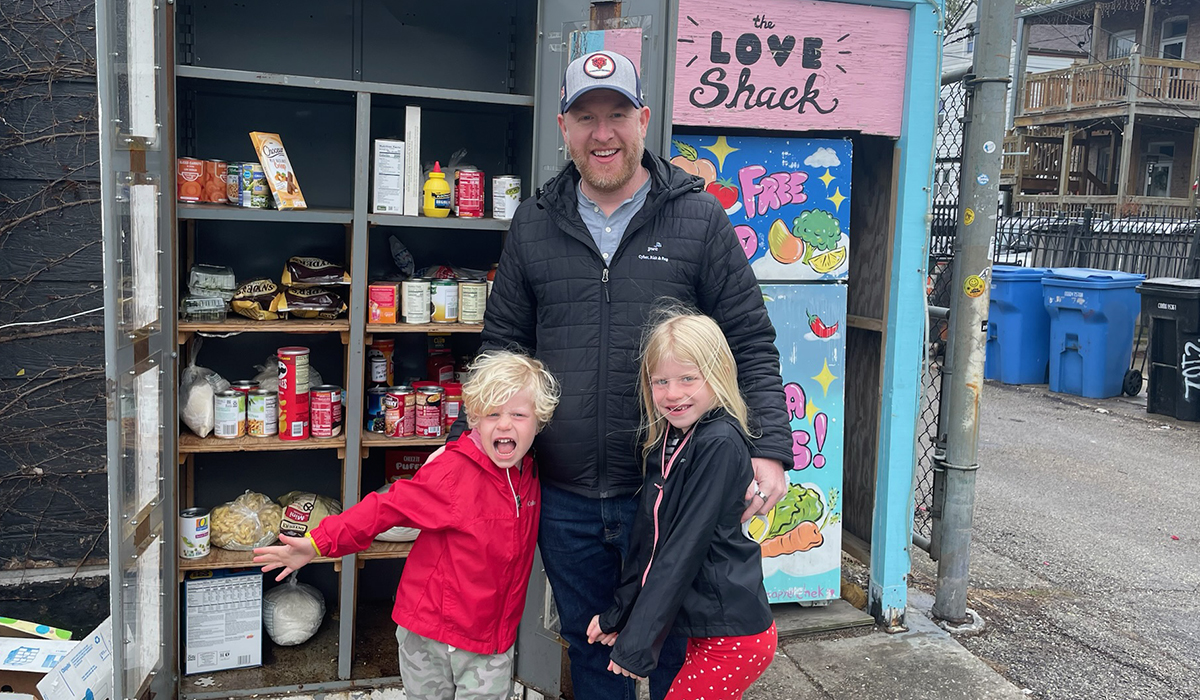
That initial experience ignited a passion for service that has since taken the family across the greater Chicago area. The Sorensens have turned volunteering into an opportunity to explore their city while aiding its residents. Their service portfolio has grown significantly, ranging from stocking shelves at local food pantries and caring for animals at shelters to contributing to the Love Fridge and working with Sew Crafty Studio. Each location offers a new lesson and a new way for the family to weave themselves into the fabric of their community.
Today, the family remains actively involved with The Honeycomb Project, making service a regular habit rather than a sporadic event. By prioritizing this time, Jeff and Nicole are not only supporting their city but are succeeding in their original goal: raising a generation of volunteers who understand that kindness is a powerful force in changing the world.
What inspired you to get started with Honeycomb?
Jeff: I work at a firm called PwC, and I was actually looking to get associated with a local organization and join a board. I came across The Honeycomb Project through a vetting process in partnership with PwC and loved it so much—it was my first priority. But in order to make sure I was making the right, informed decision, we decided as a family to volunteer and be a part of Honeycomb.
We actually started in the middle of COVID, so it was very different. It was the heart of the pandemic where you couldn’t really be within six feet of people. The event we signed up for was to shop for groceries and drop them off for a family in need, leaving them at the front door.
It was great for the kids to understand a little bit of what we’re doing and why. We used the toolkits that Honeycomb provided around having a dialogue. But the most impactful moment was as we were pulling away from the house. After we left the groceries, two kids—an older sister and a younger brother, just like we had, probably the same age—came out to get them.
I think our kids didn’t really realize that they were doing this to help kids that looked exactly like them, with that same older sister and younger brother dynamic. Our son turned to us and said, “Can we do that again tomorrow?” That was such a great feeling. He basically assumed we should do it every day. That was our first experience, and we’ve been hooked ever since.
Tell us about your volunteer roles.
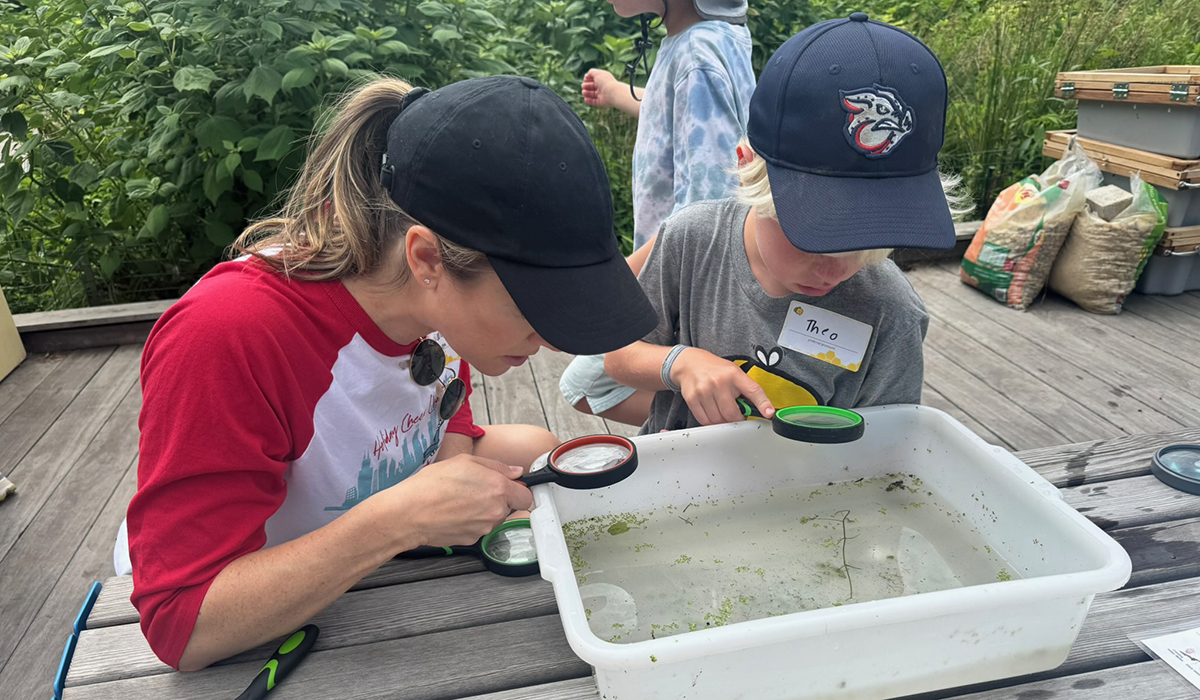
Nicole: We try to do a range of things, but it’s natural that some favorites seem to come to the top. One of our favorites is volunteering at a park district pretty close to our home. Our kids are really active and like to get out, move their bodies and help nature. It’s not something you get to do often when you live in the city or even the suburbs.
First, you learn about invasive species. Then you go out to pull weeds and cut things down and finally, you burn them in a bonfire. We did one event with the kids where you get muddy, get dirty and have very physical involvement. They liked it so much that we actually ended up sponsoring an event. We invited a bunch of friends and got other families involved. They were able to volunteer and do some of that forestry cleanup work with friends, which really makes a bigger impact for them. It shows that getting involved can be something fun. We have continued to support that project.
Jeff: Those events are high touch—the same as our first one. The kids can see a direct impact of what they’re doing. Like Nicole said, with pulling the weeds, from start to finish they can see a stretch of the nature preserve that we worked on, and they feel proud of the accomplishments.
I think any of the other events we do are similar. For example, where we’ve cleaned out a fridge—when we get there, it’s very dirty and doesn’t have a lot in there, but when we leave, it’s fully stocked. That instant high impact, where they can understand the work they do, why it’s important, and the impact it has, makes those some of our favorites because it just stays with them a little bit more.
What are your long-term plans or goals for volunteering as a family?
Jeff: It’s become a family tradition to try to do a diversity of projects throughout the year, like Nicole said. We try to sit down as a family to pick a new event or at least take turns. The brother and sister love to fight, so one of them gets to pick, and then the other picks the next time.
As part of Honeycomb, you also get to see a lot of the older high school kids, who have been doing this for a long time, run the events. This is a very long-lasting experience for kids. A goal of ours—and why we got involved in volunteering—is that it was something passed on by our parents to us, and we want to pass that on to them. Continuing this process and hoping that they pick this up on their own, and eventually want to run some of these programs themselves, is a great goal. We actually see those role models for the kids when we volunteer because they’re the ones running these programs.
Nicole: The high schoolers are 15, 16, 17 years old, and they’re so articulate about their experiences. They’re comfortable helping others, and confident about their volunteering. We want our kids to emulate that same kind of leadership and community focus, and seeing the teens at Honeycomb shows us that goal in action.
What’s been the most rewarding part of your work?
Jeff: We’re a very busy, active family. Life can get hectic, and you can get bogged down by the daily schedule. I think when we have an opportunity to step away from some of that and dedicate focused time, it’s not only to help others but to do that as a family together.
Sometimes Nicole will take one kid in one direction, I’ll take another to another activity and weekends can fly by. So volunteering is not only a time to get involved, but to spend quality time with each other. That’s really important, especially as they continue to grow older. They’ll have different interests, and it will be less and less of the four of us doing things together, but this, I think, will always be something that we can center ourselves on as a family.
What have you learned through your experiences as a volunteer?
Nicole: It’s interesting; the more we think about it, we tend to really gravitate toward ensuring people are fed. Thinking back on the different projects we’ve done, we’ve actually done quite a bit around food insecurity. I work in the food industry, so that’s maybe one reason why it’s always really sensitive to me. It’s one of those most basic needs.
Seeing people who live so close to you and struggling is impactful. We did an event in the neighborhood we lived in before we had kids. There were apartment buildings right next to where we used to live, and we couldn’t believe there were people living there who were food insecure. That’s probably one of the biggest lessons I learned: you just never know. You never know what people are going through or how close they might be to you. They are suffering in a way that is foundational to who they are and their survival.
Why is it important for others to get involved with causes they care about through volunteering specifically?
Jeff: Honeycomb is great about empowering us when we have conversations with our kids. We talk about how it’s not just about giving money—though that’s helpful—but it’s actually about giving our time and energy to the community.
That belief is rooted in both of our upbringings. We were raised by great parents who did the same thing for us and made sure we understood the power of getting involved through different community events.
Nicole: The results just feel more personal. To hear our son, who was three and a half years old, have a personal connection that drove him to want to do it again, showed us everything. What could be more powerful than that, versus donating through an electronic transfer of funds? You see the people, and you have more of that personal connection. It builds empathy. You realize we’re really not separated by much, when you are able to physically get involved.
Any advice for people who want to start volunteering?
Nicole: Find something that you love and tie it to how you volunteer. If you love being outside, pulling weeds or gardening, there are plenty of opportunities to do that. If you like sports, there are probably ways that you could coach. I would find something that you love first; that’ll make it a lot easier. The hurdle won’t feel so high if you can connect it to something that you already enjoy doing.
Jeff: There is often a lot of hesitation—people thinking, “Well, we aren’t experts.” But I would say 99% of the time, volunteers aren’t experts. They are there to give their time and energy however they can. It’s something you just have to embrace. It’s okay not to be an expert in those areas; you’re there to try your best.
What do you want people to learn from your story?
Nicole: I’d encourage people to get others involved. If you think someone else might enjoy something, invite them—they can always say no. A lot of people might be hesitant, but inviting friends is one of the key ways we’ve made an impact. We’ve gotten people we know and their families involved. It makes it more fun for ourselves, and it helps them find fulfillment as well.
Jeff: When someone is looking for something to do, if they can find someone to introduce them to these opportunities, it makes it that much easier for them to say yes. It’s rare that we’ve had somebody say no, because we’ve been able to say, “Hey, this is an opportunity, and we support it.” They usually respond, “All right, we’ll give it a try,” because they trust us. I think that helps bridge the gap a little bit more.
Do you want to make a difference in your community like the Sorensen Family? Find local volunteer opportunities.
Share this post
