



Meet Daily Point of Light Award honoree Bettina Lee. Read her story, and nominate an outstanding volunteer or family as a Daily Point of Light.
In January 2025, the Palisades Wildfire devastated Southern California. Beyond the destruction of land and impact to communities, it also exposed the severe health risks faced by those living in the nation’s most wildfire-prone region. Recognizing that firefighters, in particular, are chronically exposed to respiratory carcinogens, local high school student Bettina Lee took action by establishing Project Pulmonary. As the founder and executive director, she focuses on providing pulmonary rehabilitation and long-term health resources to fire crews.
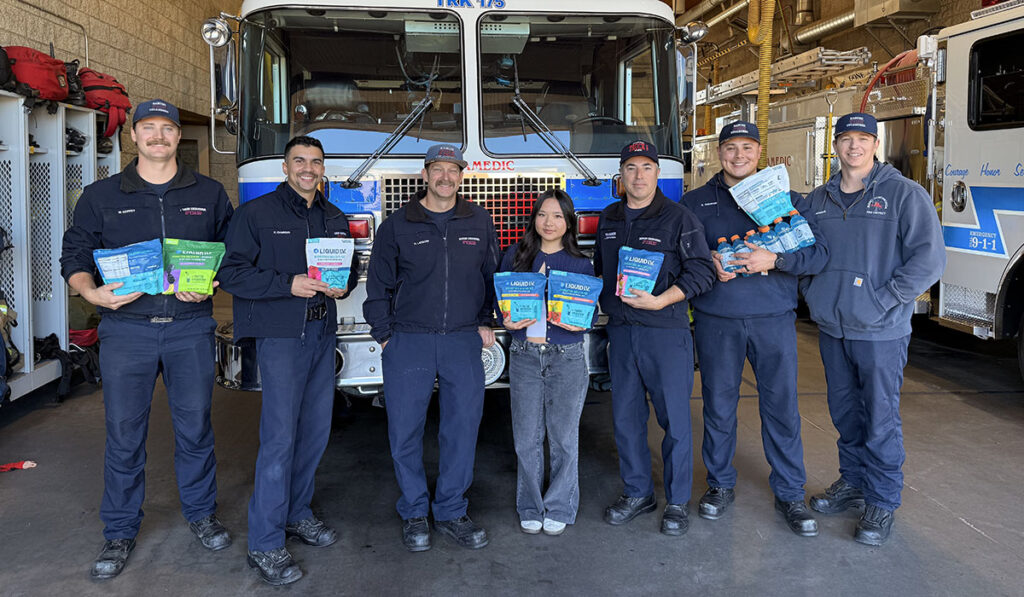
Bettina’s work addresses the immediate physical needs of these first responders, while also advocating for proactive lung health management. She’s received more than $25,000 in funding to install detoxification saunas at fire stations, allowing firefighters to remove toxins from their systems post-exposure. Additionally, she has managed nationwide hydration drives that distributed over 13,000 items, including water and sugar-free electrolyte packets, to crews in the field.
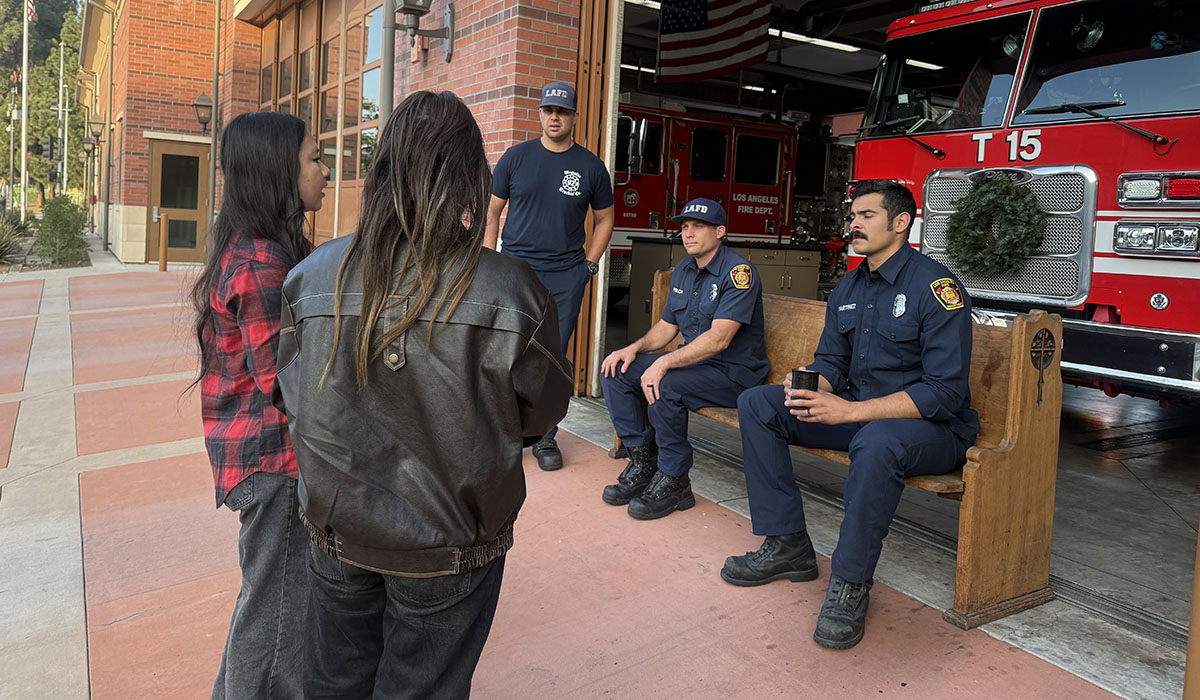
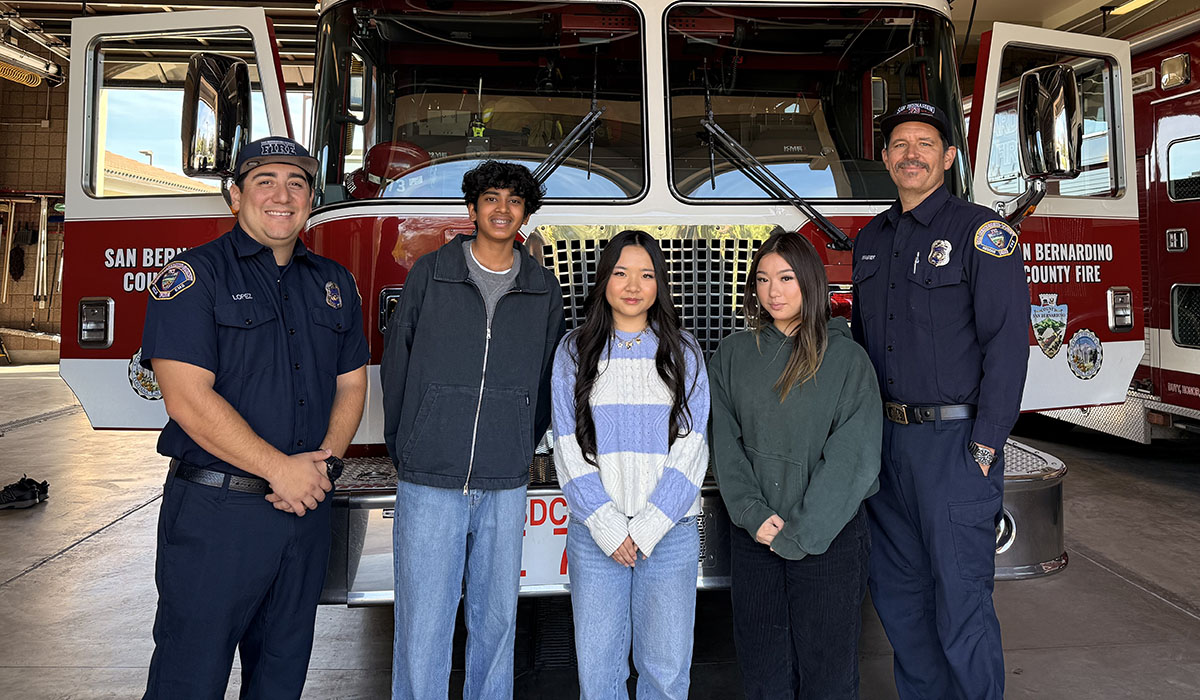
Bettina coordinates directly with fire departments to ensure that all donated resources and equipment align with the specific operational needs of each station. The organization also prioritizes community engagement and mental health through the Letters for Lungs initiative, which saw 400 volunteers write and deliver more than 2,000 handwritten cards to over 120 stations in Southern California. These messages provide community support while specifically encouraging firefighters to seek regular lung cancer screenings. To date, these efforts have reached more than 10,000 firefighters across 200 different stations.
Project Pulmonary continues its influence through legislative and public advocacy. Bettina has partnered with two legislators and hosted booths at major events with a combined attendance of 12,000 people, to raise awareness for respiratory safety. Through social media and local business partnerships, she has built a network of chapters that provide recovery resources to over 1,200 firefighters. Read on to hear more of her inspiring story.
Tell us about your volunteer role.
I’m the founder and executive director of Project Pulmonary, a youth-led 501(c)(3) nonprofit dedicated to protecting the long-term respiratory health of firefighters in wildfire-prone communities. My role looks different every single day. One afternoon I might be coordinating a hydration drive across multiple fire stations, and the next I am sitting across from a legislator trying to convince them to fund detoxification sauna installations. I write the grant proposals, manage our chapter network spanning 15+ states, run our social media and show up to every fire station visit personally. It is a lot for one person, but honestly, I would not have it any other way.
What inspired you to get started with this initiative?
When I was 8 years old, my house caught on fire. I remember the heat and the panic, and then a 6’4” firefighter ran into my home and carried me out without hesitation. He did not know me. He did not stop to think about the risk. He just came in and got me out.
Years later, watching my grandfather lose his battle with lung cancer while simultaneously learning about the carcinogenic realities of wildfire smoke, everything clicked. I realized that the same people who had saved my life were quietly being failed by the systems meant to protect them. I felt a moral responsibility to do something about it, and so Project Pulmonary was born.
Why is this issue so important to you?
Because I’ve seen what it looks like when it’s too late. My grandfather was diagnosed with terminal non-small cell lung cancer, and I held his hand as he slipped away. That is not something you forget. Living in Rancho Cucamonga, at the base of the San Gabriel Mountains, wildfire smoke is not an abstract concept for me. It’s the air I breathe. It is the orange sky I watched swallow my neighborhood during the Palisades Wildfire. Knowing that the firefighters who run toward those flames are quietly accumulating carcinogens in their lungs with every deployment, and that most of them will not find out until the damage is irreversible, is something I simply cannot sit with and do nothing about.
What are your long-term plans or goals for the organization?
My long-term vision for Project Pulmonary is to make prophylactic pulmonary care a standard part of firefighter protocol nationwide, not an afterthought. Right now we’re operating across 30+ chapters in 15+ states, but I want every wildfire-prone community in the country to have a chapter actively advocating for their local firefighters.
Beyond expansion, I want to push for policy change at the federal level that mandates post-exposure rehabilitation resources like detoxification saunas and PPE washers in every fire station. I also want to continue developing our educational outreach so that the next generation grows up understanding that lung cancer screening is not optional, it is preventative.
What’s been the most rewarding part of your work?
Honestly, it’s the small moments that hit hardest. It’s a firefighter telling you that nobody had ever brought them LiquidIV before and asking where we had been all these years. It’s an elementary schooler running up to you after Letters4Lungs to tell you they told their parents about lung cancer screening at dinner. It’s a station captain shaking your hand and saying he shared our letter with his entire crew. None of those moments make the news, but they are the reason I keep going. Every single one of them reminds me that this work is reaching people, and that it matters.
What have you learned through your experiences volunteering?
I have learned that good intentions mean nothing without precision. When we first started our hydration drives, donation bins filled up with bottled water because that is what people defaulted to. But fire stations already had water. What they needed was electrolyte replenishment, something most donors had never even considered. That experience completely changed how I approached service. I stopped asking what I wanted to give and started asking what people actually needed. I also learned that persistence is everything. Navigating fire district hierarchies, legislative review cycles and county procurement processes as a 17-year-old is not easy, but every closed door taught me how to find a window.
Why is it important for others to get involved with causes they care about?
Because waiting for someone else to fix the problem is how the problem never gets fixed. I think a lot of people assume that change is something that happens to communities rather than something communities create. But every single initiative within Project Pulmonary started with one person deciding that the gap they saw was worth closing. You don’t have to have all the answers or a perfect plan. You just have to care enough to start. And once you start, you realize pretty quickly that there are so many other people who care just as much and were waiting for someone to take the first step.
Any advice for people who want to start volunteering?
Start before you feel ready, because you will never feel ready. When I founded Project Pulmonary, I was a 5’1” high schooler walking into fire stations and legislative offices trying to convince professionals twice my age and twice my height to trust me. It was intimidating every single time. But I showed up anyway, and I kept showing up, and eventually the trust came.
Find something that genuinely breaks your heart, because that heartbreak is what will keep you going on the days when progress feels invisible. And do not underestimate the power of being young. People expect less from you, which means that every time you exceed those expectations, you leave a lasting impression.
Do you want to make a difference in your community like Bettina? Find local volunteer opportunities.