
Creating Resources for Healthier Relationships with Food
Meet Daily Point of Light Award honoree Diya Mankotia. Read her story, and nominate an outstanding volunteer or family as a Daily Point of Light.
Content Warning: Points of Light is proud to share the following uplifting and inspiring story. However, we acknowledge that a small portion may be difficult for some readers. We encourage you to please care for your own well-being above all.
Diya Mankotia, now 17, was in eighth grade when she was diagnosed with an eating disorder. On her long road to recovery, she quickly learned that there were limits to the support around her. The experience could have left her distraught, but instead, it drove her to be there for others and advocate for change.
In August 2024, Diya founded Project EDSA as a school club, later expanding to 90 student-led chapters across 13 countries. Her focus is on eating disorder prevention, support and awareness.
Recently, Project EDSA was awarded a $10,000 grant that will fund campaigns and events as well as volunteer training. Today, the organization has more than 400 volunteers supporting the mission.
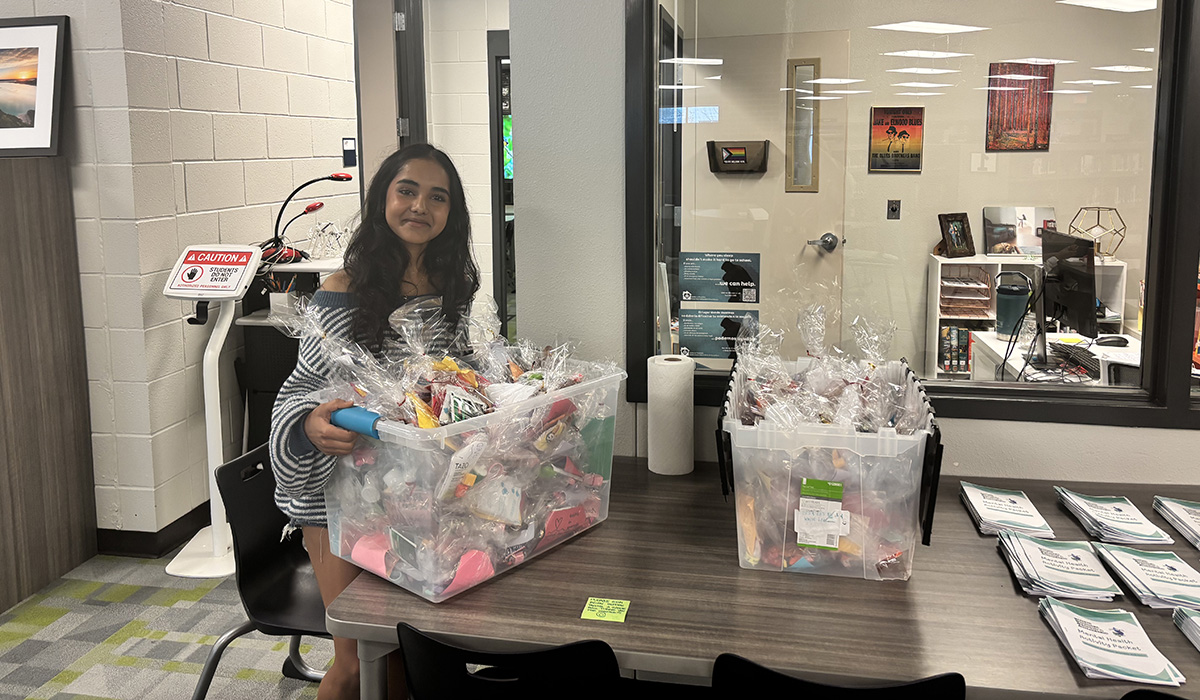
Diya goes above and beyond developing volunteers and running campaigns. Last year, she distributed over 150 mental health kits at her school during National Eating Disorders Week. They contained things like cards of encouragement, fidget toys and a 12-page self-designed mental health recovery book with hotline numbers and educational games. She’s even leveraged her research at Harvard STRIPED to fight for legislation banning the sale of diet pills to minors in three states.
After partnering with the National Association of Anorexia Nervosa and Associated Disorders (ANAD), America’s oldest eating disorder nonprofit, EDSA will become their official youth program in March. Together, they will continue to advance eating disorder advocacy and prevention among youth.
What inspired you to get started with this initiative?
I was diagnosed with anorexia in eighth grade. I’m from a South Asian family, and my parents are very traditional. For them, mental health–especially eating disorders–was all very new, because food is a largely-celebrated aspect of our culture.
It was difficult to have conversations, and it felt like I couldn’t properly communicate what I was experiencing. And even though I had supportive friends, I would sometimes notice them getting tired of my behavior. One day, I went to my school’s mental health website, and there were no resources for eating disorders. That was my first realization that there might be systemic absences in support.
That summer, I emailed relevant nonprofits to see how I could fundraise. ANAD responded by asking me to help develop their school ambassador program. I eventually became an ambassador myself, but after a year of piloting it at my school, I noticed the impact was due largely to the in-person chapter I’d formed, not virtual events. Project EDSA developed as an extension of that program to focus on mentoring students to lead their own prevention-based chapters.
Tell us about your volunteer role with Project EDSA.
As co-executive director, I mentor and guide our chapter leaders. Before onboarding, we train leaders on a module that we developed with ANAD to build their knowledge, skills and advocacy. Then, we provide them with ready-made tools and campaign kits to lead their own events.
We’ve also partnered with Stanford’s Stice Research Lab, where I’m a research intern. They’ve developed a prevention program called “The Body Project,” which effectively prevents over 63% of eating disorders with a two- to four-year follow up. It’s peer-led, and I’m trained to facilitate. We’re currently setting up training for our chapters, so I can teach them to become facilitators. When peers deliver intervention, it’s been shown to be more effective than when clinicians do.
We also meet with our volunteers weekly and run an internship program. Research interns do original research on eating disorders that we translate into youth-led guides.
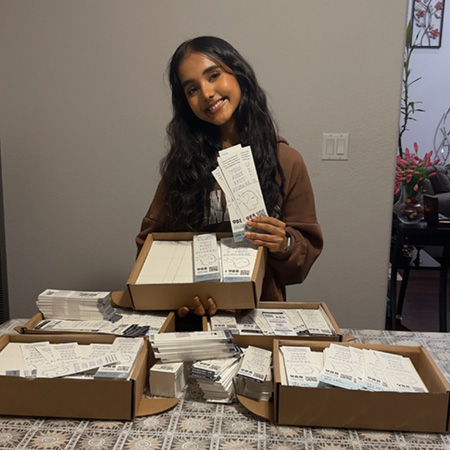
Over the summer, I worked on a suicide prevention campaign where I distributed over 10,000 bookmarks with the 988 Suicide & Crisis Lifeline. And this is my first year on the RRISD School Health Advisory Council made up of parents, district members and three students. We draft mental health policies based on gaps we see in our 56 schools then pitch them to the Board of Trustees.
What are the goals of your advocacy?
I’m interested in preventative science, which is tied to policy. Insurance policies associated with eating disorder treatment discriminate admission to inpatient programs through weight-based criteria. Eating disorders are mental health conditions. Weight changes are only symptoms. Many diagnosed individuals never get proper treatment because of that.
With prevention work, we can impact many people at once, rather than treating individual patients. And it ensures people don’t fall into a position where they have to depend on unfair treatment practices.
What’s been the most rewarding part of your work?
I’ve been in recovery for over two years now. The most rewarding part has been realizing that I’m not alone in my struggles. It’s inspiring to see students apply to start a chapter, because I know how much courage it takes. Talking about eating disorders in high school is difficult. I’m happy to be alongside them, giving them resources I wish I’d had when I started.
How can people reading this support people who might be at risk or have an eating disorder?
Educate yourself on what eating disorders actually are, the symptoms and how it affects someone. When a person is struggling with an eating disorder, their thoughts become disoriented. Be mindful of your words, and try to empathize. Just be there for them. These conditions take a long time to recover from, and it can be demotivating to see people give up on you because you don’t seem to be making progress. Be patient.
What do you want people to learn from your story?
I used to hide my eating disorder from my parents and even myself. Even after I was hospitalized, I would have never admitted that I was struggling. It wasn’t until I got my test results back that I was able to be honest with myself and the people around me.
Sometimes, I still have thoughts like that, but now I have a supportive community I can talk to. Sharing your story not only helps free yourself of these burdens, but it also makes other people feel like it’s okay to share their struggles, too. It creates community.
Do you want to make a difference in your community like Diya? Find local volunteer opportunities.
Share this post
