
Everyone Should Feel Safe at Home
Content Warning: Points of Light is proud to share the following uplifting and inspiring story. However, we acknowledge that a small portion mentions domestic and sexual violence and may be difficult for some readers. We encourage you to please care for your own well-being above all.
Meet Daily Point of Light Award honoree Sue Baarts. Read her story, and nominate an outstanding volunteer or family as a Daily Point of Light.
Four years ago, when Sue Baarts retired, she immediately began dedicating her time to an organization she had been donating her money to for years. Committee Against Domestic Abuse (CADA) is an organization that supports survivors of domestic and sexual violence through things like shelter, legal assistance, hospital visits and more. They serve 1,200 to 1,400 survivors each year, providing education and advocacy as well.
For around 35 hours each month, Sue does everything from leading a fundraiser at the organization’s annual Galentine Gala to watering plants. No task is too big or too small in service of the mission. Her positivity and eagerness to dive in wherever she’s needed uplifts staff and makes her a cherished member of the team. The work often becomes a family affair when Sue recruits her six sisters to help with the appeal mailings. All of them, in turn, bring friends, spreading awareness of the cause and turning relatively monotonous work into joyful afternoons.
Sue is married to a man she met her freshman year of high school, one she reunited with at their 30th class reunion. Enjoying her own healthy relationship, Sue’s compassion for those who find themselves in harmful situations continues to power her volunteerism.
What inspired you to get started with this initiative?
I would volunteer a little bit at church and give blood–my sisters and I are still pretty competitive. We’d ring the bells for the Salvation Army, but between work and home, I didn’t have time to do much more. This is my first full-time role. And I help once a week at Echo Food Shelf in Mankato.
CADA has opportunities to do many different things. I really wanted to work for them because their mission is so important. Whatever they ask of me, I do. I think everybody should be safe in their home.
Tell us about your volunteer role with CADA.
I lead a committee of about eight in organizing Galantine Gala. This is the fifth year, and I’ve been there for all of them. Last year, we had 250 women, ages 20 to 40, supporting CADA. They make donations, and we have games and trivia. They all dress up.
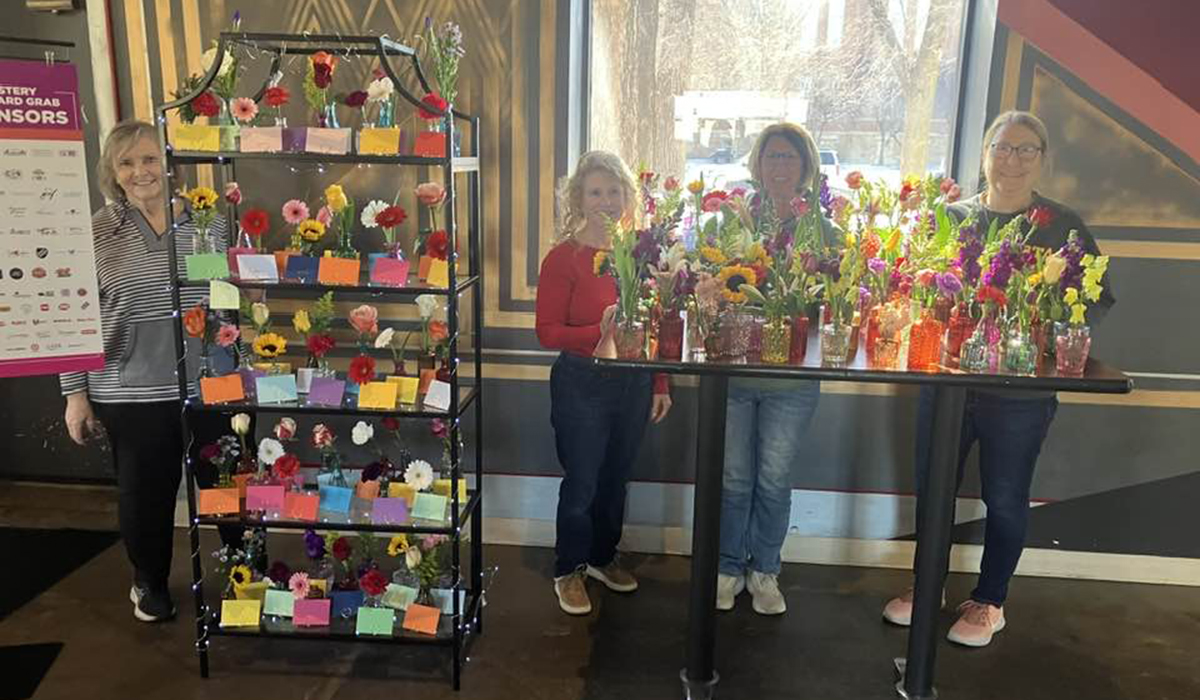
We have a mystery gift wall, and we get flowers and small vases donated. Then, people donate $20 per mystery gift card to take it home. The first year, we had 57. Last year, I suggested we do 200 in order to make $4,000 for the shelter. At the end of January last year, we had 129. By February 20, we had 210. It wasn’t just businesses that donated, but also all of the friends I tagged on social media.
We get some grants and some federal funding. We used to send out 1,700 appeal letters twice a year, but it’s down to 1,200 now. Last year, we made $29,000 through Galentine donations as well. It helps support our secure shelter and a space where kids can go for supervised visitation between parents.
In December, we have the Santa’s Elves program. We give toys and other items on their wish lists to people in the shelter and any who have had a connection with CADA. Maybe they’re out on their own now but just don’t have enough money.
At the office, I’m mainly in the front. If people come to the door with donations, I take them. We fill out forms. I pick up and organize donations, too. On Mondays, a Qwik Trip convenience store donates food that’s about to expire, because we have to feed people. We never know how many we’re going to have in our shelter.
I water the plants and clean the windows. I clean shared spaces, pick up mail and packages, take out garbage and recycling and stock supplies. Some days I come in, it’s quiet. Others are really busy and even stressful, depending on who comes to the door and how we need to handle it.
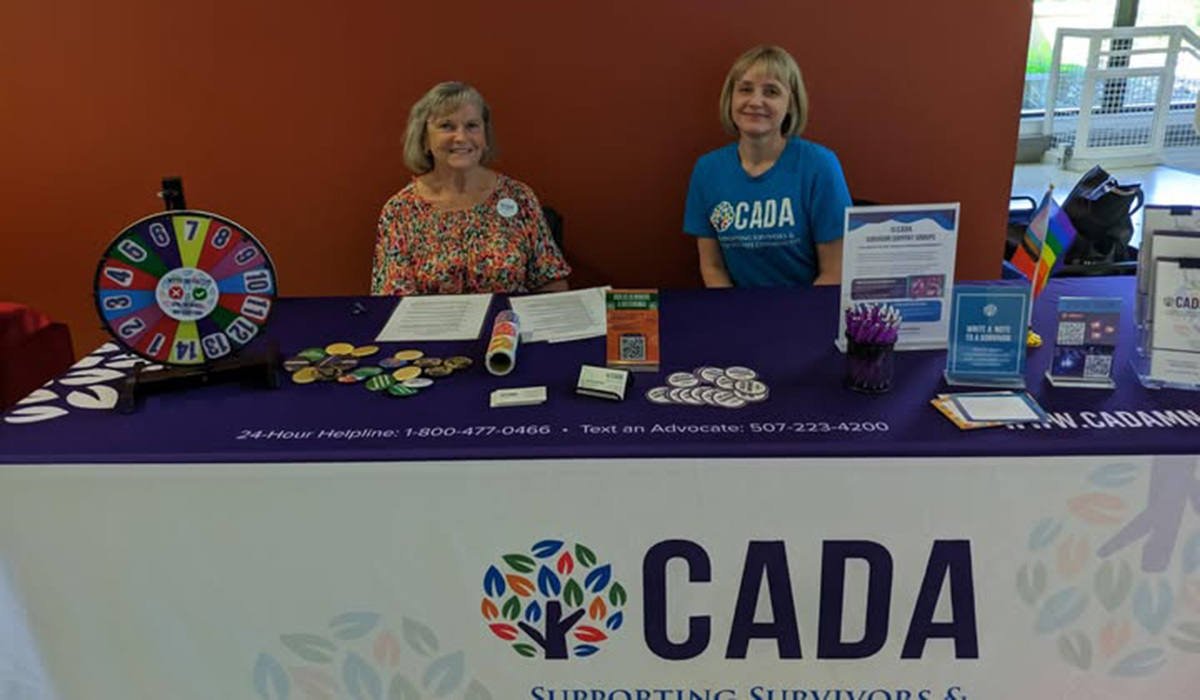
I also help at tabling events to raise awareness of CADA’s mission and services. At colleges, we hand out “10 signs of a healthy relationship” cards with “10 signs of an abusive relationship” on the back to start conversations. We’ll go to concerts like Rib Fest and fairs. A lot of people ask what they can do to help, and we might say, “We have babies in the shelter right now. We need diapers.”
Are there signs of abusive relationships people might not immediately think about?
Fear is pretty common. When someone is controlling, manipulating or isolating you. When someone makes you feel guilty. All of those things are signs. A healthy relationship is taking things at a comfortable pace, offering apologies, having fun, feeling safe and supported, having equality, independence and respect. That’s good to know, too.
What’s been the most rewarding part of your work?
As a community, we’re making a difference. It makes me feel good. I feel better physically and mentally when I’m doing something. I’ve met so many wonderful people, and I enjoy it. I feel needed and appreciated. And they’re really good about opening the floor for ideas. I’m also using organizational skills that I used to use for work.
What have you learned through your experiences as a volunteer?
I’ve learned to be less judgmental. At the beginning, someone came in and wanted food, and I thought, “That’s not this department. You should go to ECHO Food Shelf.” I would never say that out loud but wondered why they weren’t doing that.
When you think about it, maybe they couldn’t go there. Maybe they couldn’t sign up. Maybe if they didn’t have enough food, they’d get in trouble at home. You really have to think about situations from multiple angles.
What do you want people to learn from your story?
People should always feel safe at home. And everyone can make a difference if they just do a little to help. Try different things. See what fits.
Do you want to make a difference in your community like Sue? Find local volunteer opportunities.
Share this post
