
How This Student Is Rewriting South Africa’s Literacy Story
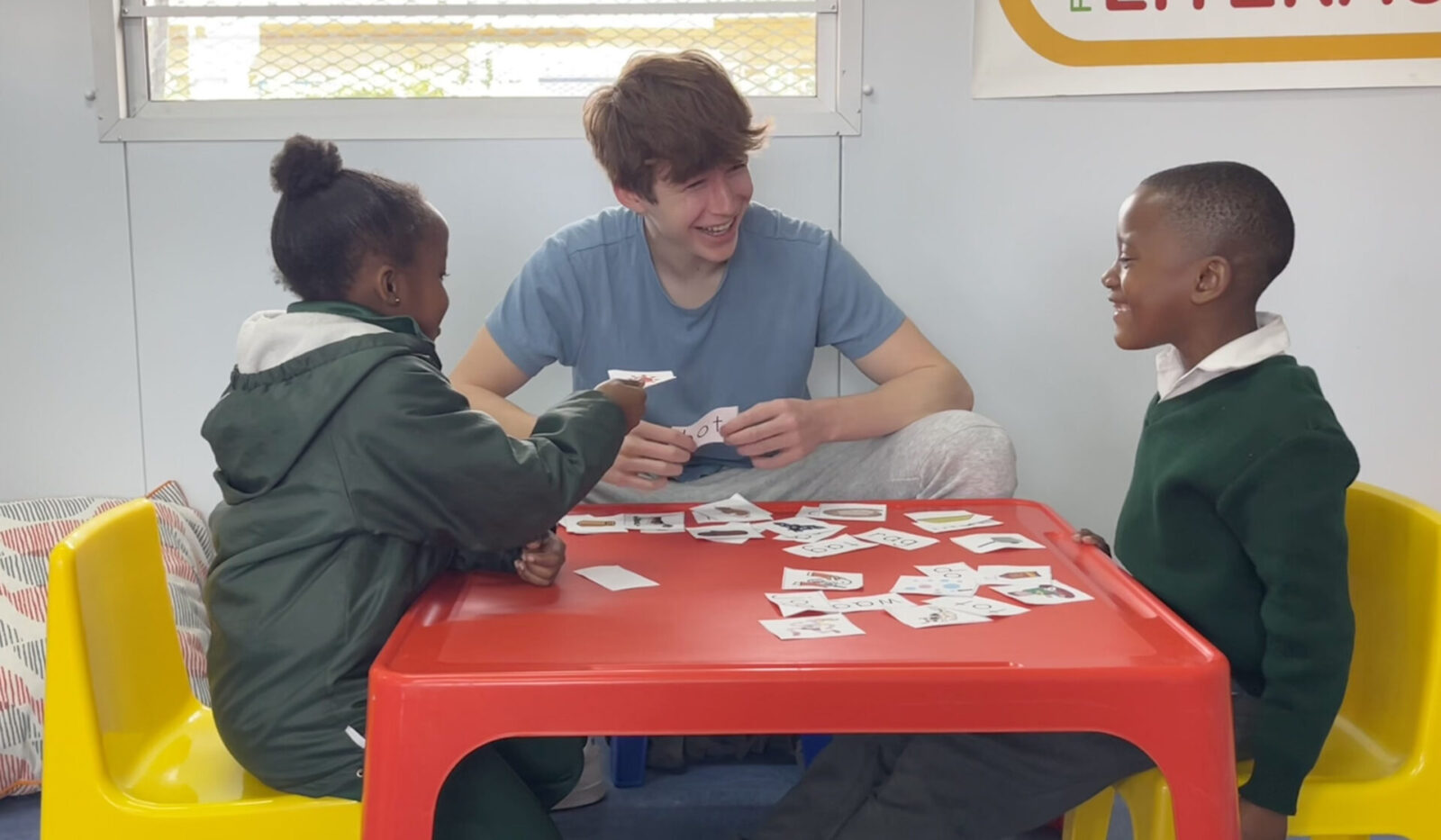
Meet Daily Point of Light Award honoree James Bloom. Read his story, and nominate an outstanding volunteer or family as a Daily Point of Light.
James Bloom has spent much of the last several years living between two countries and two callings. As a dual U.S.-South African citizen, James saw firsthand the depth of South Africa’s literacy crisis, where many schools operate without any dedicated library space or age-appropriate books. Rather than treat the problem as too large to tackle, James co-founded Libraries for Literacy and partnered with Breadline Africa to do something concrete about it: build libraries, one school at a time. Since 2020, that partnership has helped establish seven libraries at severely under-resourced schools, giving thousands of students a place to read, learn, and imagine for the first time.
Getting books onto those shelves has been just as demanding as building the shelves themselves. James has personally transported tens of thousands of English and African-language books to South Africa, often packed into his own luggage and checked bags, then unpacked, organized, and shelved by hand once he arrives. But as James dug deeper into the work, he noticed a critical gap. There simply weren’t enough early-reader books written in African languages. So… he wrote his own. His “African Folktales for Kids” series, now six books strong, has been translated into Zulu, Xhosa, Sepedi, and Xitsonga with the help of local school librarians, giving young readers stories that reflect their own languages and traditions.
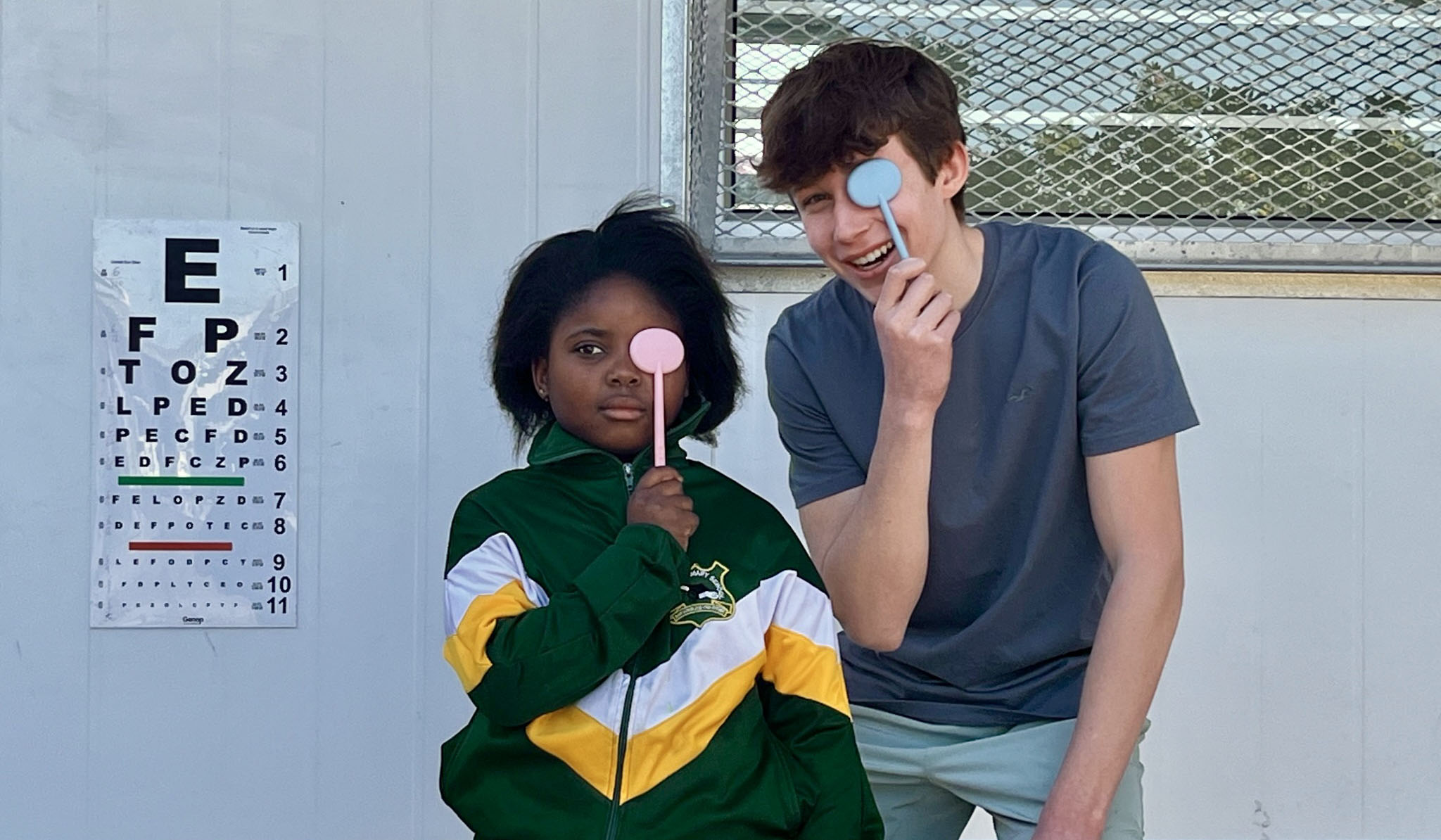
But James’s commitment to these students didn’t stop at literacy. While visiting the libraries, he discovered that some children were struggling not because they couldn’t read, but because they couldn’t see the words in front of them. In response, James partnered with OneSight Africa to bring free vision screenings and glasses to students who needed them, removing yet another barrier standing between kids and their education. It’s the kind of problem-solving that defines James’s approach: notice the obstacle, find the partner, and build the solution.
Today, James’s monthly involvement ranges from about 12 hours during quieter planning stages to more than 50 hours as a library installation date approaches. His responsibilities span fundraising, coordinating with partner organizations, sourcing books through schools and community sales, and working with local publishers to bring more African-language children’s books into print. Each summer, James returns to South Africa to volunteer in person at the libraries he’s helped build. For James, literacy isn’t just a skill, it’s a foundation for equity, and it’s one he continues to build, book by book, library by library.
Tell us about your volunteer role and organization.
sI’m the founder of Libraries for Literacy. Since 2020, I’ve helped establish seven school libraries in severely under-resourced township and rural schools across South Africa. So far, I’ve transported approximately 21,000 English- and African-language books to stock library shelves, serving 5,000 students each year.
We raise funds through initiatives like “Lemonade for Literacy” and “Brownies for Books” stands on NYC streets and I collect donated books from local schools and libraries. Months before a library opens, I reach out to the South African school principal to build a relationship and determine which reading levels, languages, and types of books their students actually need.
Because there is a severe shortage of children’s books in African languages, I’ve written a series of books called “African Folktales for Kids,” in which I retell African folktales in English and work with local librarians to translate them into languages including Zulu, Xhosa, Xitsonga, and Sepedi. I also manage our partnerships with organizations such as Breadline Africa, which provides pre-fabricated library buildings; Room to Read Africa, which offers librarian training; and OneSight Africa, which conducts vision screenings and eyesight testing, since good eyesight is essential to a child’s ability to learn to read.
My work continues after each library opens. I return to South Africa to work directly with librarians and students because I’ve learned that while providing books is important, the real work is building a culture of literacy in which those books are actually used.
Why is this issue so important to you?
I’ve always loved to read; I honestly cannot imagine what my life would look like without books. Growing up, I spent almost every spare moment of my school day in my lower school library, and I never went home without a book checked out. I’m also a dual South African-U.S. citizen and when I discovered that the majority of South African kids grow up in homes without a single book and that over 90% of South African schools don’t have libraries, it really shocked me. I was determined to do something.
What inspired you to get started with this initiative?
On one of our family trips to South Africa, my brother and I were walking through a grocery store in Johannesburg when we noticed that every package of food had pictures of its contents. “Why don’t the cans just say what’s inside?” I asked my dad. I was used to packaging with just words, like a can of Campbell’s tomato soup. My dad, who grew up in South Africa, explained that many South Africans couldn’t read. I was stunned. Even at a young age, I couldn’t imagine a life without reading. That grocery store visit was the first time I understood that literacy wasn’t something everyone could take for granted.
Any future partnerships, programs or events that you are excited about?
We’re excited to keep growing our partnership with OneSight Africa to provide eyesight testing (and free glasses for students who need them) at library openings. Literacy and vision are very much intertwined; a child can have all the books in the world, but if they can’t see the page clearly, none of it matters.
What are your long-term plans or goals for the organization?
Today, only 8% of South African public schools have libraries compared to 93% of US schools. My goal is to keep expanding Libraries for Literacy, province by province, and get more schools equipped with libraries stocked with age-appropriate books in both English and local African languages like Zulu or Xhosa. This might sound simple, but in reality, it is extremely difficult. The libraries are located in areas of extreme economic need and there’s also a severe shortage of children’s books published in African languages, even though most South Africans speak one at home.
That gap is why I started “African Folktales for Kids,” retelling traditional folktales and translating them into languages like Zulu and Xhosa. Scaling that up — to more titles, more languages, more printing partnerships — is a big part of where I want to take this next.
What’s been the most rewarding part of your work?
For me, it’s going back to work in the libraries. Opening a library for the first time is an incredible experience, but being able to return afterward to actually teach in that library, working directly with the kids, and watching them grow more confident as readers over time, shows the potential for the libraries to truly change lives.
What have you learned through your experiences volunteering?
Probably the biggest lesson has been to communicate more. When we opened our first library in Soweto, the principal told us she wouldn’t let children borrow the books — she was worried they’d be stolen and sold. That wasn’t the outcome we wanted, but it wasn’t our place to override her judgment. It taught me to communicate with the local leadership and to gain clarity before acting.
Why is it important for others to get involved with causes they care about?
I think people underestimate how far a small, consistent effort can lead. We started with 1,500 books in suitcases; that’s it. We’ve now opened seven libraries and supplied over 21,000 books. The hardest part in any project is starting.
Any advice for people who want to start volunteering?
Start with what’s already around you. You probably don’t need a big plan or a lot of money. Don’t wait for a perfect time; do something small today.
Do you want to make a difference in your community like James? Find local volunteer opportunities.
Share this post
