
Making Farm-to-Table Accessible for All
Meet Daily Point of Light Award honoree Mary Jess Holt. Read her story, and nominate an outstanding volunteer or family as a Daily Point of Light.
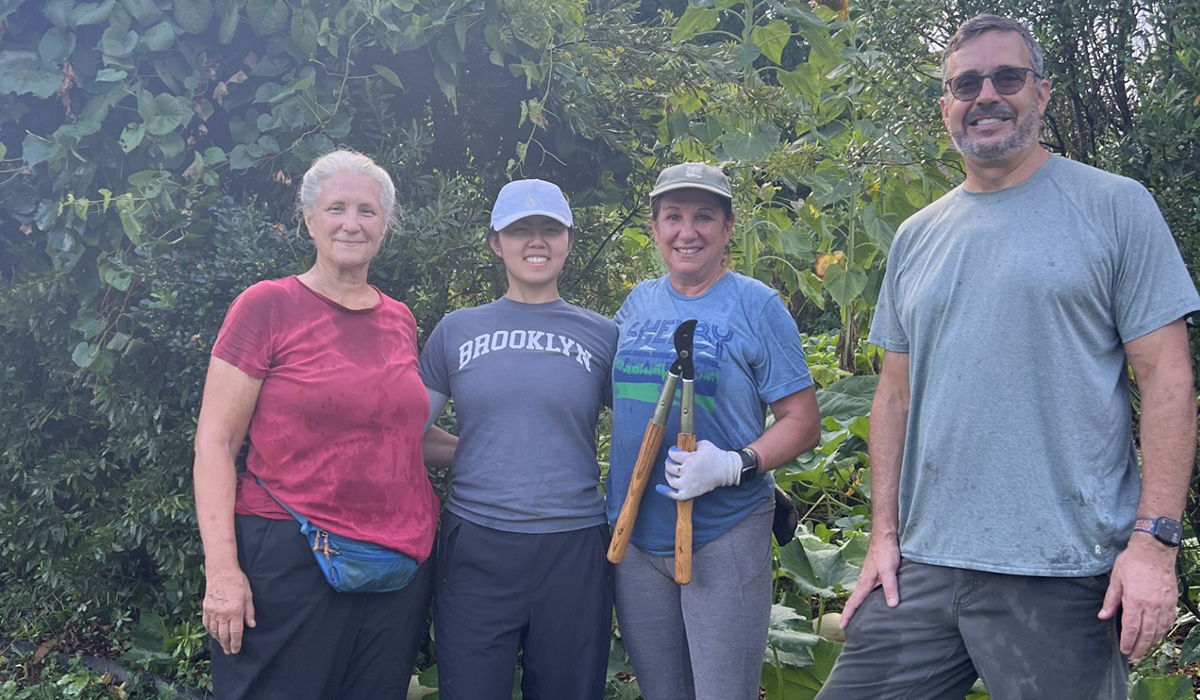
“Farm-to-table” is often marketed as a luxury – something you see printed across the menus of high-end restaurants, signaling freshness, sustainability and care. But in Nashville, that same concept is feeding people experiencing poverty, homelessness and food insecurity – and volunteer Mary Jess “MJ” Holt is making it happen.
At The Nashville Food Project, farm-to-table isn’t a trend. It’s a commitment rooted in the belief that all people should have access to the food they want and need. In a city where one in seven residents lack consistent access to enough food, while more than 40% of food goes to waste, the organization works to bridge that gap by growing organic produce, cooking made-from-scratch meals and sharing them in partnership with local community groups.
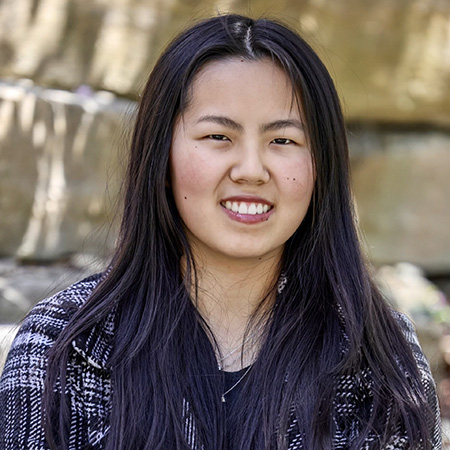
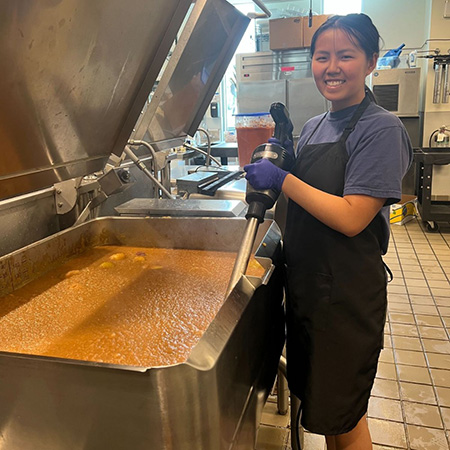
Since May 2025, MJ, a 20-year-old college sophomore, has logged more than 235 volunteer hours across the organization’s gardens and kitchens, often spending her summer break and class-free days volunteering. She might start the morning planting or harvesting crops in the garden, then head into the kitchen to chop vegetables, portion ingredients and assemble thousands of meals. Those meals are distributed to schools, homeless shelters and community centers across Middle Tennessee, and carefully prepared to accommodate a range of dietary needs, including low-sodium, gluten-free and vegetarian options.
Tell us about your volunteer role at The Nashville Food Project.
I first started in the garden at South End United Methodist. We were planting, weeding, harvesting, maintaining crops like cucumbers, okra, heirloom tomatoes. It was a great time. From the garden, the food is taken into The Nashville Food Project’s kitchens. There we serve about 6,000 to 7,000 meals weekly to probably 40-plus distributors in food-insecure communities.
When I walk into the kitchen, there are stations set up where you can cut vegetables, wash vegetables, portion food, assemble sandwiches — really anything you want. It’s kind of self-serve.
I actually became such a frequent volunteer that normally you sign up for shifts, but since I’m there so much, they’re like, “You can just come in.” I usually stay longer. When the regular volunteers leave, they’ll just tell me what to do — help with ovens, meal prep, maybe organize a refrigerator. Stuff like that.
What inspired you to get started with The Nashville Food Project?
I was really interested because of my interest in economics at school. As an economics major, we study inflation and we study supply chains. And something I was really curious about was how to fix rising grocery prices. I didn’t really understand how to tackle that issue.
I thought, what’s something I can get involved with to understand it better? We don’t really think about the farmers or where this food comes from. I felt like in order to connect these two realms — school and in-person contact — it would be through this work: harvesting, planting, tending, growing actual food… and not just learning about it.
What’s an example of a meal you’ve helped prepare?
I remember this one time we were cooking ratatouille. All of our produce is coming from the gardens or from supermarkets that donate food — places like Costco or Publix — and we really don’t know what we’re going to get.
One time we had so much eggplant, and we were like, “Oh my gosh, what are we going to do with this?” Our kitchen manager, Julia, said, “Let’s make ratatouille.” So, we chopped up all the eggplant, and we also had a lot of donated Parmesan cheese and tomato sauce.
We layered it in those silver containers — eggplant, zucchini, sauce, cheese — baked it, did another layer and baked it again. It was a really fun process. Very colorful — yellow and purple.
We also make sure meals are balanced. If someone needs vegetarian, low sodium, gluten-free — we have different meals directed toward those groups.
Do you have a favorite crop or task?
My favorite plant would be the heirloom tomatoes we grew — they’re called Purple Cherokee. They don’t look bruised, but they are very purple, and they smell great. And they’re delicious.
In the kitchen, I really enjoy organizing meals, like making salads. First the lettuce, then cucumbers, then tomatoes, then meat or cheese, then dressing — just this orderly fashion. And it’s very colorful at the end.
What has been the most rewarding part of your work?
Seeing how little acts accumulate into something much bigger than I would think.
For example, the first day in the garden, I planted okra. I had never grown okra before. Two months later, the plants were 10 feet tall — twice my height. Seeing something you planted grow that tall — it really shows how small acts grow over time.
What have you learned through your experiences as a volunteer?
Definitely patience. In the garden, things don’t grow overnight. It’s a practical skill — you show up every day, you take care of the plants, you watch them grow until they’re really big. This type of consistency teaches you that it’s not something you can do overnight.
Why is it important for others to get involved with causes they care about?
I believe when you volunteer, that’s when real change happens. You go from being an observer to actually participating.
When you take ownership and dedicate time and energy, it teaches you to be a better human being. Volunteering deepens your empathy. Even if you’re working locally on something like food insecurity, it helps you understand it as a bigger issue in society, too — and how to tackle that.
What advice would you give to someone who wants to start volunteering?
I would say just jump in. Be curious. What is something you want to solve? Is there anything that really strikes you in your community?
Then go volunteer. Find a place that matches your interests. Find more people like you. You’ll start something really great, and you’ll be part of something much larger than yourself.
What do you hope people learn from your story?
I would say putting in the effort and showing up consistently is what makes the largest impact.
When you care for something — when you tend and harvest and water — you see how it grows day by day. That’s a reflection of anything in life: studying, working out, building friendships. It all depends on how much effort you put into it.
What you put into it is what you’ll get out.
Do you want to make a difference in your community like Mary Jess? Find local volunteer opportunities.
Share this post
