
Providing a Global Lifeline to Men with Breast Cancer
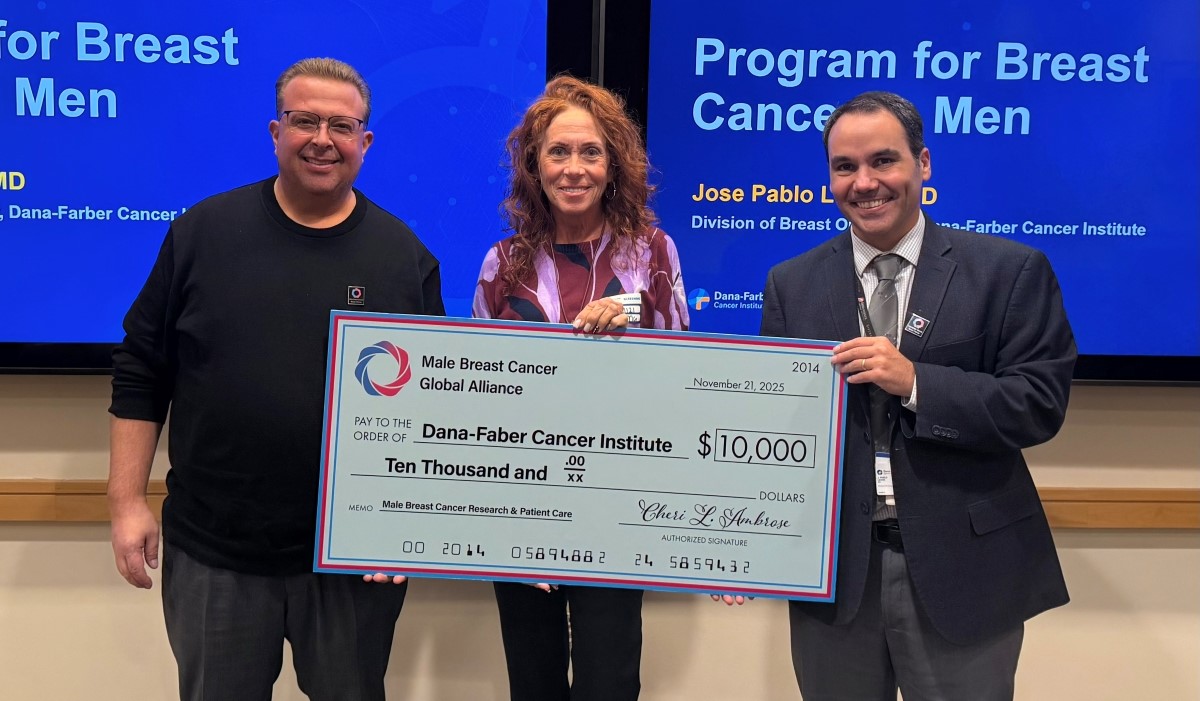
Meet Daily Point of Light Award honoree Cheri Ambrose. Read her story, and nominate an outstanding volunteer or family as a Daily Point of Light.
For a long time, Cheri Ambrose has walked a path few others dared to tread, illuminating a corner of the oncology world often left in the shadows. As the founder and president of the Male Breast Cancer Global Alliance (MBCGA), she has dedicated her life to supporting a demographic that’s frequently misunderstood and underrepresented: men diagnosed with breast cancer. What began as a localized spark of awareness has ignited into an international movement, driven by her belief that no patient should feel invisible or unsupported.
Cheri’s leadership within the alliance is a loud, hopeful call for inclusion. Under her guidance, the MBCGA has expanded its reach to more than 40 countries. Today, the organization connects over 500 men globally. These connections are often a lifeline for those who previously lacked a community of their own, or were too silenced by stigma to seek out support. By collaborating with leading cancer centers and research initiatives, Cheri is working to ensure that the male perspective is no longer an afterthought in education or awareness campaigns, but a vital part of the global conversation.
Cheri often clocks 80-90 hours per month to steer the organization’s strategy and fundraising efforts. She frequently engages in public speaking to dismantle the persistent stigma surrounding the disease, as well as building partnerships and overseeing programs that deliver resources directly to families in need. For Cheri, the goal has always been to transform the “pink” landscape into one that is inclusive of every person affected by the diagnosis, regardless of their biology. She has successfully advocated for the inclusion of men in breast cancer clinical trials and has been instrumental in revising breast cancer bills at both the state and federal levels to ensure gender-neutral language. Her dedication is helping to rewrite the narrative for thousands of families worldwide.
Tell us about your volunteer role with Male Breast Cancer Global Alliance.
I do just about everything; I’m chief cook and bottle washer! I run the organization, basically. Were an online, internet-based, social media-based organization, and the reason why we do it this way is because we have men from around the world all on different time zones. It gives me the flexibility because I’m retired now, and I actually can do this full-time.
We support men diagnosed with breast cancer throughout their whole journey. We also support their care partners, and when someone passes, we stay in touch with their family members. We have three different Facebook private groups: one for the men, one for the care partners and one for those who have lost somebody. I post on there for birthdays, remembrances and anniversaries, plus whatever information I come up with on a daily basis.
We actually work with men who have been newly diagnosed to see if there are clinical trials available for them. We have a really robust medical advisory board who help us with second opinions if something is needed, and we can make connections with them. Most of them are so busy that if you had to get an appointment with them, it would probably take you anywhere from three to six months, but they will get on a call or an email and talk to these guys. That’s how committed they are. So I really feel strongly about them being a wonderful asset to us.
We advocate on men’s behalf with state and local government, and also on the federal level, for inclusion in any type of breast cancer screening bills that may be changing or being put up. Also, for anything to do with genetic testing, we want to include men in that as well. Primarily, we’re looking to change the wording in anything that has to do with breast cancer from “women” to “individuals.” That covers the LGBTQIA+ community as well, because they also face these hurdles. We advocate with scientists, researchers and medical companies for men to be included in the language on any research and on clinical trials, again using “patients” or “individuals” rather than making it a gender-specific disease, because it is not.
What inspired you to get started with this initiative?
A very dear friend of mine had been diagnosed, and I got a phone call from his wife. She said, “Brian’s been diagnosed with breast cancer. We haven’t even told our son.” I knew about three or four men here in New Jersey who were also diagnosed, so it sparked me wanting to do more. I started setting up Google Alerts to see if there were stories of other men around the world telling their stories. What resonated with me was that when these men told their story to a news outlet or in an interview, they felt as if they were the only man on the planet who had breast cancer. That just didn’t sit right with me. Everybody should have a support system. Being that there was so much support for females with breast cancer, I decided nobody else is doing it, so I’m going to make something work with this. Here I am, 16 years later, still doing it.
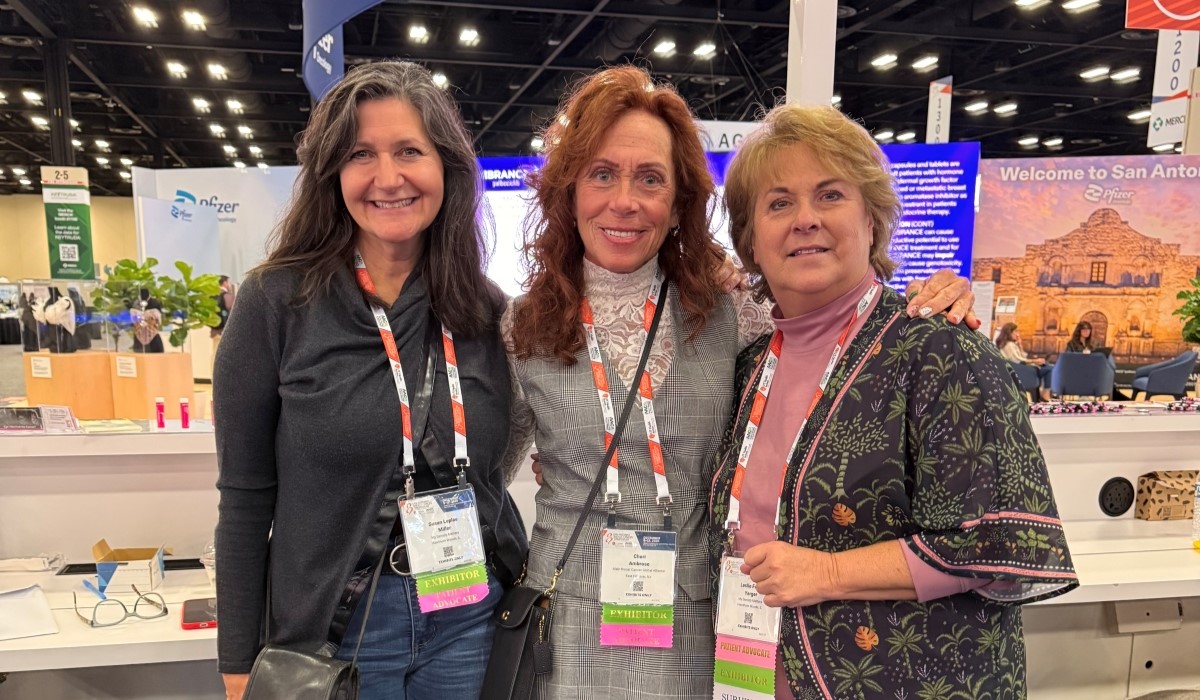
Tell us more about male breast cancer.
About 1 in 726 men are diagnosed with breast cancer in their lifetime. It is approximately 2,800 men just here in the United States. Unfortunately, because of no scanning, they don’t go for mammograms unless they find a problem. The stigma around breast cancer is that it’s a pink and fluffy thing. That could be no further from the truth; it is not a happy, fluffy disease. Because of the stigma, these men are going unchecked and ignoring signs. A lot of them are coming through as metastatic when they first realize they have a problem, because they find a problem in another organ that’s not working properly and then find out it was originally breast cancer.
The symptoms are exactly the same as in women. It could be leakage from the nipple, an inverted nipple or a lump—any type of lump, even under the arm where the lymph nodes are. If anything is swollen, or if the skin around the areola changes and looks like an orange peel or looks rough. Most times it’s not painful, so they think they just bumped themselves and they ignore it.
Men’s mortality rate with breast cancer is 19% higher than females. And that is strictly because of the stigma and lack of awareness.
What’s been the most rewarding part of your work?
The rewarding parts are when somebody sends me a random email or I look on social media and the comments we get are, “These people really care,” or “This organization really is looking out for us.” When we get a little bit of praise. You don’t look for it; I never started this because I wanted a pat on my back—but it means a lot.
Each one of these men has a profound impact on me. I don’t have siblings, and my mother was an only child. There are no aunts or uncles; it’s just me and my husband. They actually become like my family. I got word the other day that one of my men, who is in his 40s and just learned he was metastatic, is in the hospital and has only a few weeks to a month left. It’s like losing family, and it’s hard.
What have you learned through your experiences as a volunteer?
No one can do anything on their own. It does take a village. Even though I’m doing this by myself, I do have the support of other breast cancer organizations and foundations. I get on as many panels as I can to be the male voice, and they really do embrace our presence. To me, that’s one thing. My wish is that all these organizations could work together, because I’ve found that by working together, you get a lot further instead of just fighting for the little bit of money that’s available every year.
What are your long-term plans or goals you have with the organization?
My goal—one of my big wishes on my wishlist—is to have a CME-credited course on male breast cancer. We still have oncologists and techs at breast centers who, when they see a man, tell him, “I’ve never had a man before. I didn’t know men could get breast cancer.” That means to me that there’s teaching that needs to be done.
I would also like to see some type of annual check done on men. If someone were to do just a clinical breast exam on them annually, especially if there is a history of certain cancer in a man’s family, it would make a difference.
And actually, for it to be just called “breast cancer.” Females don’t have to specify, “I have female breast cancer.” I think everybody needs to realize it can happen to anyone and just call it breast cancer without having to put the “male” in front of it. That would be a huge step in de-stigmatization.
Why is it important for others to get involved with causes they care about?
Because if no one picks up a mantle and asks for change, nothing will ever change.
Any advice for people who want to start volunteering?
You have to be passionate about it. You can’t just jump into something you don’t really understand; you have to have a little bit of background or knowledge. But it makes you feel good at the end of the day when you can make a difference in one person’s life and get them to smile. It means a lot, and I would hope others feel the same way.
Do you want to make a difference in your community like Cheri? Find local volunteer opportunities.
Share this post
