Providing Hope Through Difficult Medical Diagnoses
Meet Daily Point of Light Award honoree Bhavya Uppalapati. Read her story, and nominate an outstanding volunteer or family as a Daily Point of Light.
Most Americans, at some point, have run into difficulties navigating the complicated–and expensive–American healthcare system. Fourteen-year-old Bhavya Uppalapati has had a front row seat on how those challenges affect people already dealing with life-altering conditions.
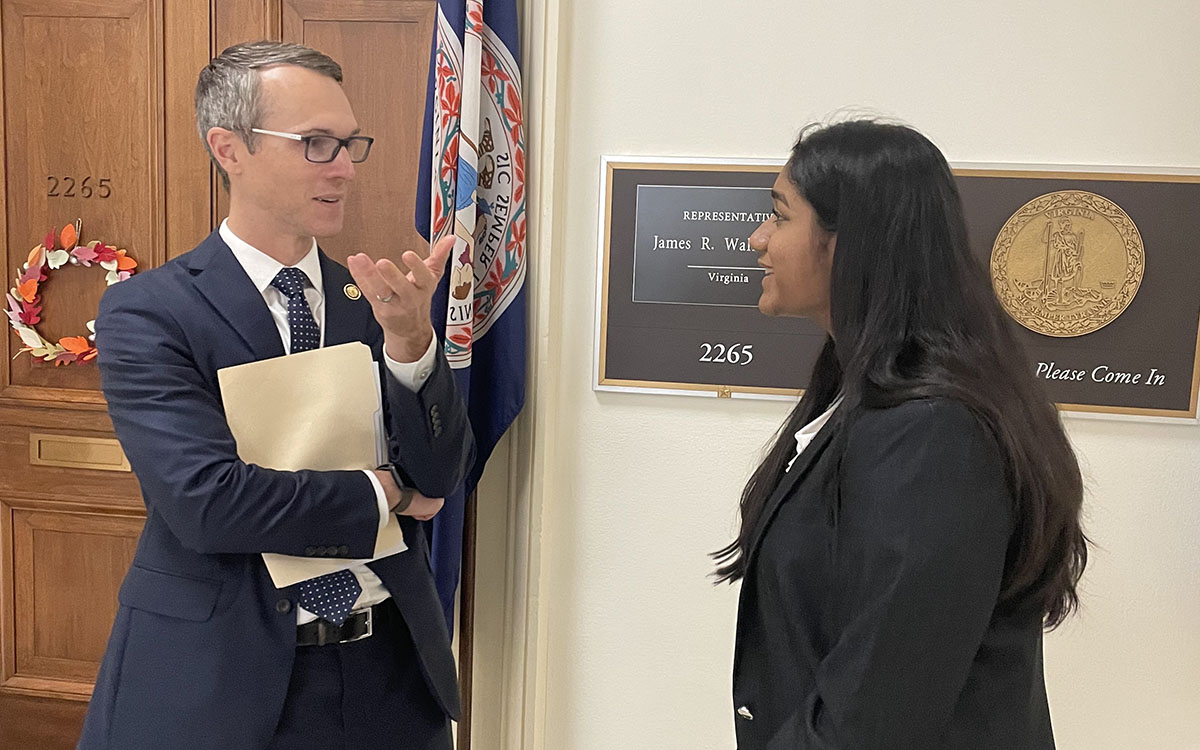
For the last two years, Bhavya has been leading efforts to support, educate and advocate for families affected by rare conditions with the Rare Disease Council of America (RDCA), an organization she founded to empower patients and give families like hers a louder voice in health policy. As executive director, her advocacy on Capitol Hill and beyond has led to increased visibility for funding priorities and ways for young people to engage.
Bhavya has raised over $25,000 through grants, sponsorships, partnerships and individual donations. Her coalition spans 20+ countries and connects patient families, researchers and policymakers. The organization produces educational materials that not only help families understand conditions but navigate diagnoses and access care. And their op-eds bring attention to associated issues.
What inspires you to volunteer?
I’ve watched people struggle, not just because resources don’t exist, but because they don’t know where to find them or how to navigate systems. That gap between what’s available and what people need–or can actually use–motivates me. Volunteering gives me a way to contribute solutions instead of just recognizing problems.
Tell us about your volunteer role with the Rare Disease Council of America.
Early on, I was involved in almost every part of the work–outreach, writing policy and briefs, researching issues and trying to get meetings with anyone willing to listen. A lot of it was learning by doing.
As we’ve grown, I’ve been more focused on leadership and long-term direction. One of my main responsibilities is overseeing the development of policy briefings. That involves identifying key issues in rare disease access, conducting research and translating that into clear, actionable recommendations that can be shared with policymakers and global health organizations. I’ve delivered more than 78 briefings to congressional offices, federal agencies and international bodies like the World Health Organization and the World Bank.
Another important part of my role is acting as a bridge between groups by making policymakers aware of patient experiences and helping researchers understand where there are gaps in care. I also strategize on building our chapter structures, creating systems for research and collaboration, and mentoring new members. It’s important to ensure our growth is sustainable and that the work can continue as leadership transitions.
What inspired you to get started with this initiative?
The rare disease was never theoretical for me; it was part of how my family experienced the healthcare system. I saw how much time, energy and persistence it took to get basic answers, a diagnosis, a specialist familiar with the condition and access to treatment.
At 12, I didn’t have the language to describe policy gaps or structural issues. I just understood that families were constantly trying to navigate something incredibly complex without support and that many of the decisions affecting them were being made in spaces they didn’t have access to. Starting RDCA was a way to give patients and families a voice.
What’s been the most rewarding part of your work?
What stays with me the most are the personal impacts. One example is when a family used one of our diagnostic navigation guides to successfully challenge an insurance denial and get the therapy their child needed. That kind of outcome puts everything into perspective. The work isn’t theoretical; it’s directly affecting people’s lives.
What other types of education materials do you create?
We build broader patient advocacy toolkits that walk someone through things like how to prepare for an appointment with a specialist or document symptoms in a way that’s useful. We put together policy explainers that break down things like Medicaid coverage, prior authorization or newborn screening in a way that doesn’t require a policy background to understand.
Another piece is template-based resources that include sample appeal letters, outreach emails and documentation formats that people can adapt to their own situation. We’ve also started creating shorter formats like one-pages and quick reference sheets meant to be easy to use in high stress situations where someone doesn’t have time to read long documents.
What have you learned through your experiences as a volunteer?
Initially, I thought that if I did research and presented strong data, it would be enough to drive change. Eventually, I realized that impact equally depends on how you communicate an issue. You can have the right solution, but if it’s not framed in a way that fits the priorities of the person in the room, it ultimately won’t go anywhere.
Why is it important for others to get involved with causes they care about?
The issues people care about don’t move on their own. Without people pushing, asking questions and staying involved, a lot of problems just stay where they are. The people closest to an issue usually understand it best, and when they get involved, they bring perspective that you can’t get from reports or data alone.
How can people help this cause in their own area?
Start by learning, so you can contribute in a way that’s actually helpful, not just well-intentioned. Rare diseases are complex, and each one is different, but there are common challenges across the board.
The most useful thing you can do is directly support patients and families. That could mean volunteering with advocacy organizations, helping with outreach or just sharing reliable information. Many families are navigating this without clear guidance, so connecting someone to the right resources matters.
What do you want people to learn from your story?
You don’t need to wait for the right moment or the right credentials to do meaningful work. When I started the RDCA, I didn’t have a clear roadmap or prior experience in policy. What mattered was recognizing a problem and being willing to take the first step. With consistency, small steps can grow into something much larger. If you can build something that empowers others to contribute and lead, that’s where lasting change happens.
Do you want to make a difference in your community like Bhavya? Find local volunteer opportunities.
Share this post
