
Teen Founder Gives Discarded School Supplies a Second Life
Meet Daily Point of Light Award honoree Grace Millard. Read her story, and nominate an outstanding volunteer or family as a Daily Point of Light.
When Grace Millard walked the halls of her Connecticut high school as a 14-year-old freshman, she noticed something that didn’t sit right with her: abandoned pencils, half-used notebooks and art supplies tossed aside in classrooms and cafeterias. At the same time, she knew that just a few counties away, schools and community centers were fundraising for basic materials their students couldn’t afford.
That disconnect sparked an idea. What if the excess in one community could become opportunity in another?
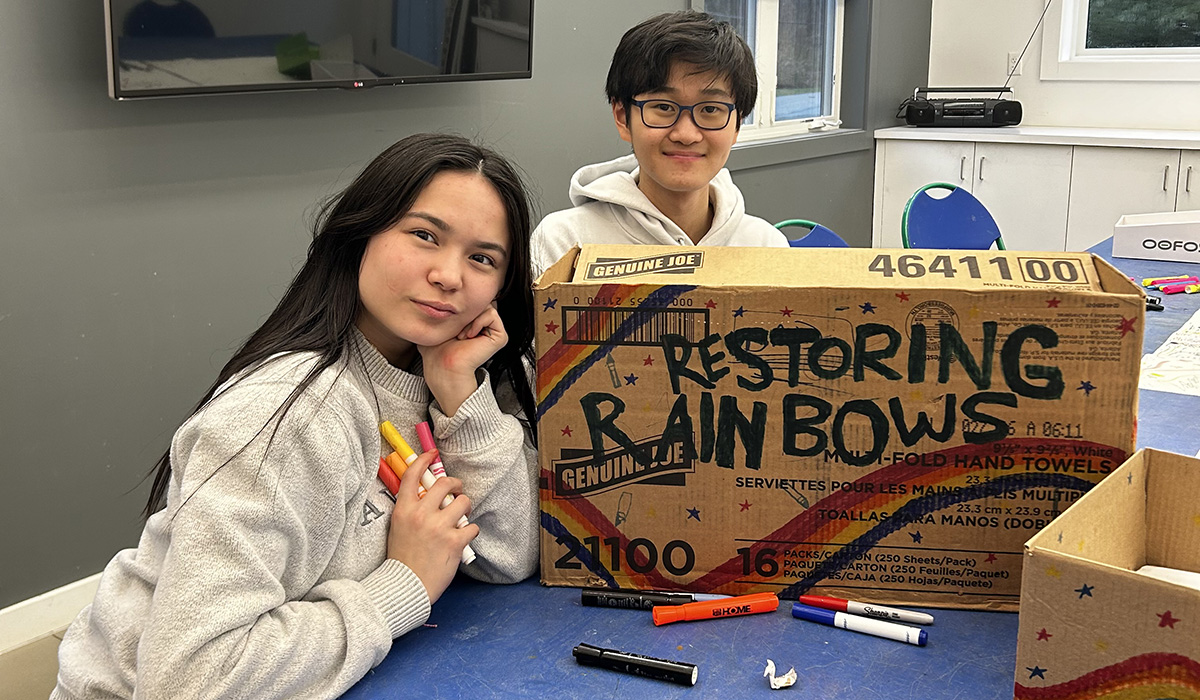
Together with her classmate and co-founder Jordan Chen, Grace launched Restoring Rainbows, a youth-led nonprofit that collects used school supplies, restores them and redistributes them to communities with limited resources. Two years later, at just 16 years old, Grace serves as co-CEO of an organization with more than 200 branches across 52 countries, powered by a network of 1,000 teen volunteers who have kept tens of thousands of restored supplies out of landfills and placed into the hands of children who need them most.
What inspired you to co-found Restoring Rainbows?
I’ve always grown up volunteering. My family has been very involved in our church, and from a young age I participated in food drives, clothing donations and community service projects. Even as a kid, I remember going to the grocery store with my parents and choosing items specifically to donate.
When I started high school, my co-founder and I connected over things that we were passionate about—art, sustainability and climate change. We noticed how many school supplies were being thrown away in our own school, while a few counties away, there were rec centers and school districts campaigning for more art supplies. So through exploring that and researching what it takes to run a nonprofit, we established Restoring Rainbows in 2023.
What does a typical donation and restoration process look like?
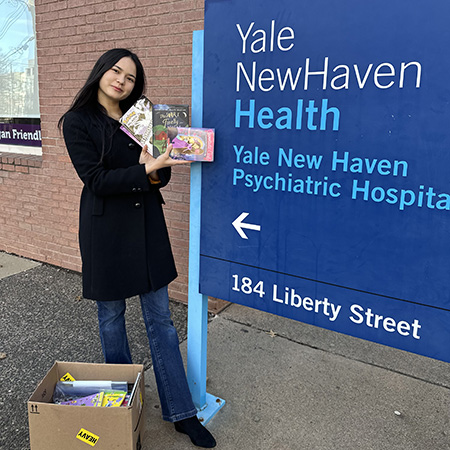
In our local community, we primarily collect supplies through donation boxes placed in museums, galleries and other public spaces. That allows people to donate easily and helps spread awareness.
Once supplies are collected, my co-founder and I do most of the restoration ourselves. We’ve been doing this for two years, so we have a lot of experience. We clean, repair and prepare each item so it’s ready to be used again, then distribute them to schools, after-school programs and community centers that need them most.
Do you have a favorite item to restore?
Definitely books. They’re very nostalgic for me. When restoring them, I’ll see familiar characters or handwritten names and doodles left behind by another child. It’s incredibly touching to know how loved those books once were.
We remove personal information for privacy, but I love knowing that a book that once brought joy to one child will now do the same for another. It feels like passing along a piece of wonder.
How did you build the organization from a small local project to an international nonprofit?
We started very small. We sent cold emails—about 30 at first—to local museums, schools, libraries and art galleries asking if we could set up donation bins. Once we collected our first supplies, we began restoring them ourselves, cleaning pencils, rebinding books and repairing materials so they could be reused.
After about six months, we started sharing our work on social media. That changed everything. Teens from all over the world began reaching out, asking how they could get involved. We created a branch program with digital guides, workbooks and video tutorials so young people could replicate what we were doing in their own communities. Social media really showed us how powerful connection can be when people our age want to come together to help others and reduce waste.
Why is art such an important part of your mission?
Art has a unique power to connect people. As a biracial person who is Korean and American, I’ve seen how creativity can bridge gaps in language and culture. Art helps children express emotions they might not yet have words for, and it builds confidence, empathy and joy. There’s nothing like watching a child light up—not just because they received supplies, but because they’re proud of what they can create with them.
What has been the most rewarding part of your work so far?
Seeing the impact on people. I love scrolling through social media and seeing photos and videos from places like El Salvador to India of children receiving supplies, volunteers setting up donation boxes with Restoring Rainbows written on them.
Restoring Rainbows is completely youth-led, and that’s incredibly powerful. Young people are often underestimated, but seeing teenagers around the world show up for their communities gives me so much hope for the future.
What are your long-term goals for Restoring Rainbows?
We want to continue expanding awareness so people know there are alternatives to throwing supplies away. Education around sustainability is just as important as donation numbers.
In terms of impact, we’re aiming to reach 100,000 school supplies donated by the end of this year and we’re on track to surpass that. More than anything, I want the organization to keep growing in ways that stay rooted in people and community.
How do you balance running a nonprofit with being a high school student?
Restoring Rainbows isn’t a phase or a hobby—it’s a passion. When you really believe in something, you find time for it. Whether it’s restoring supplies, attending Zoom meetings or answering emails, it feels meaningful because I know the impact it has.
I plan to continue working with Restoring Rainbows through college and beyond. And if there’s ever a time when I step back from leadership, we have plans in place to ensure the mission continues with capable, passionate young leaders.
What do you hope people take away from your story?
I hope people realize that if you have a passion or an idea, you shouldn’t wait until you feel “ready.” Fear of failure, judgment or being too young can hold people back, but there will never be a perfect time to start.
If you see a need and feel called to act, take that leap. You don’t have to have everything figured out to make a difference.
Do you want to make a difference in your community like Grace? Find local volunteer opportunities
Share this post
