
The Friendship That Inspired a Movement
Meet Daily Point of Light Award honoree Sriyan Daggubati. Read his story, and nominate an outstanding volunteer or family as a Daily Point of Light.
Sriyan Daggubati, 17, is a mythology enthusiast who enjoys a game of basketball and has been in a Bollywood dance troupe since second grade. At first glance, he seems like a typical high schooler, affable and well-rounded, but his dedication to volunteering is anything but ordinary.
Driven to learn about neurodivergence to help a friend, Sriyan’s extracurricular research has become so much more. NeuroGuidance became a central part of his life in eighth grade, garnering sponsorships from companies like Meta a year later. His mission is straightforward: improve educational access—particularly in STEM—and inclusion of neurodivergent youth around the world.
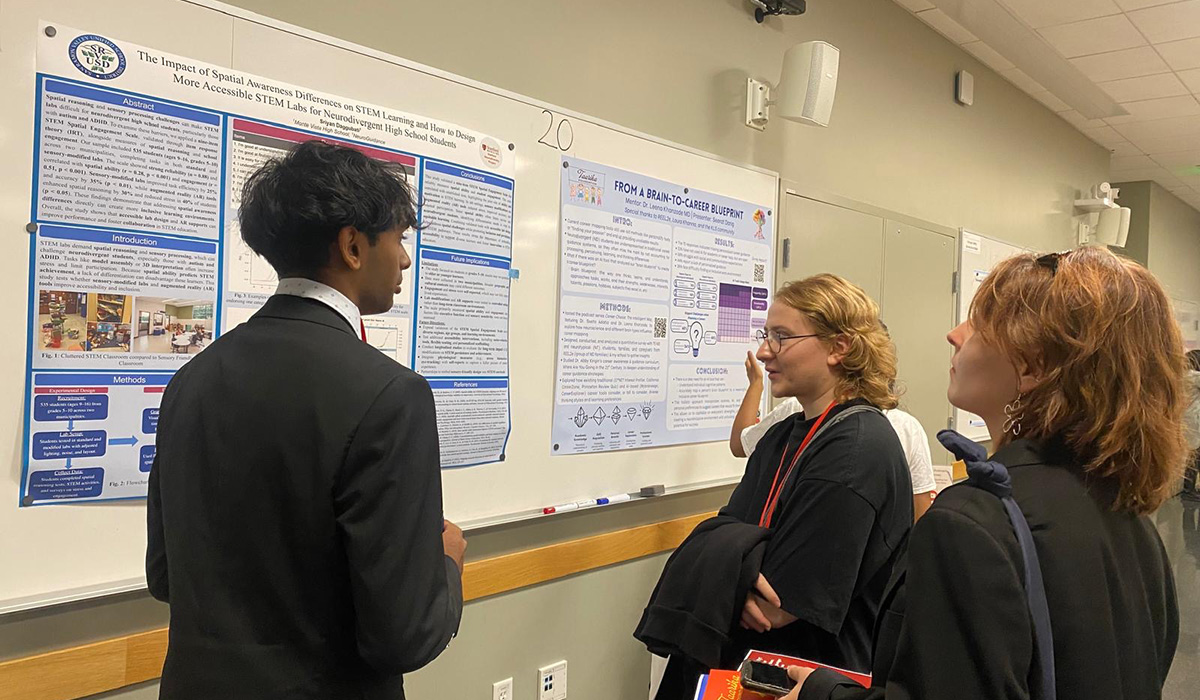
Now a senior in high school, Sriyan has formal partnerships with Stanford Neurodiversity Project, Harvard Public Health, Duke Neurodiversity, Michigan’s Center for Disability and UCSF Autism Center. He regularly speaks at schools to help teachers connect with their students and guide their teaching approach. NeuroGuidance has trained more than 50 teachers in the San Ramon Valley Unified School District in inclusive instructional practices. Sriyan presents his work at conferences across the country and manages a global leadership team of 250 officers.
For 10+ hours a week, Sriyan focuses on supporting neurodivergent youth… with no plans of slowing down. He’s even planning to major in neuroscience as he starts college next year.
What inspires you to volunteer?
I started Boy Scouts around fifth grade, and a lot of my volunteering was through that. NeuroGuidance began with an elementary school friend with ADHD and autism. I used to see him struggle a lot in school, and we didn’t have classrooms specifically for neurodivergent students, or so-called Rainbow Classrooms, until middle school.
At that age, I didn’t notice the barriers or stigmas that I do now. I would see teachers treat him differently, and his parents would ask me why he wasn’t doing well. I didn’t know how to answer.
In middle school, I started researching neurodiversity, and in seventh grade, I started creating and distributing handbooks with Rainbow Classroom teachers on what that is. The summer before eighth grade, I attended a program called Stanford Neurodiversity Project REACH (Research Education Advocacy Camp).
There, I found one of my mentors and the director of the project, Dr. Lawrence Fung. I learned that neurodivergent students lack spatial reasoning, which is the ability to visualize and understand 3D concepts, a vital skill in STEM.
We worked in small groups to create a slide deck aimed at solving a problem we saw in the neurodiversity scene. I presented an early version of NeuroGuidance as a way for neurodivergent students to build spatial reasoning, and Dr. Fung encouraged me to move forward with the idea.
Later that year, I started hosting workshops using what I learned from his program about how neurodivergent students actually acquire knowledge. I started connecting with teachers, creating flyers and posting them on my district website.
Now, in addition to workshops, we build augmented reality tools, which are like VR headsets and advanced apps that involve 4D visualization to help students learn concepts and use spatial reasoning via low-sensory simulations. We also host fundraisers, because they’re expensive.
By ninth grade, I’d established it in multiple schools in my district, and by the end of my sophomore year, it was statewide. In 11th grade, I qualified for the Regeneron International Science and Engineering Fair where the top 1,500 finalists worldwide competed in Ohio. Using the connections I made there, I’ve been able to open NeuroGuidance chapters in over 70 countries.
Tell us about your volunteer role with NeuroGuidance.
Initially, I prepped, hosted and taught a lot of the workshops myself. Now, I oversee multiple teams. The tech team creates the tools and apps we use in workshops. I help brainstorm ideas, and they bring them to life. Our social media team manages our socials and runs ads.
My main role is leading organizational strategy and getting more people involved. Since our expansion, I’ve been focusing on sponsors to help fund the shipment of tools across the world. I’ve also been recruiting people to manage our different chapters.
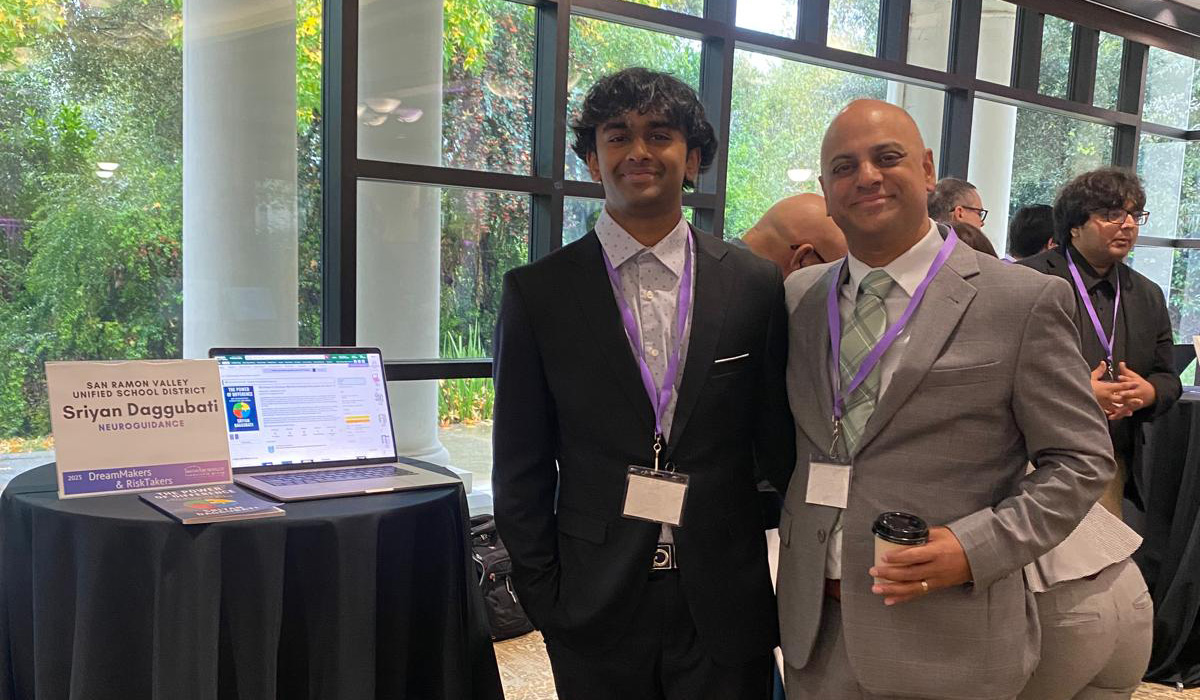
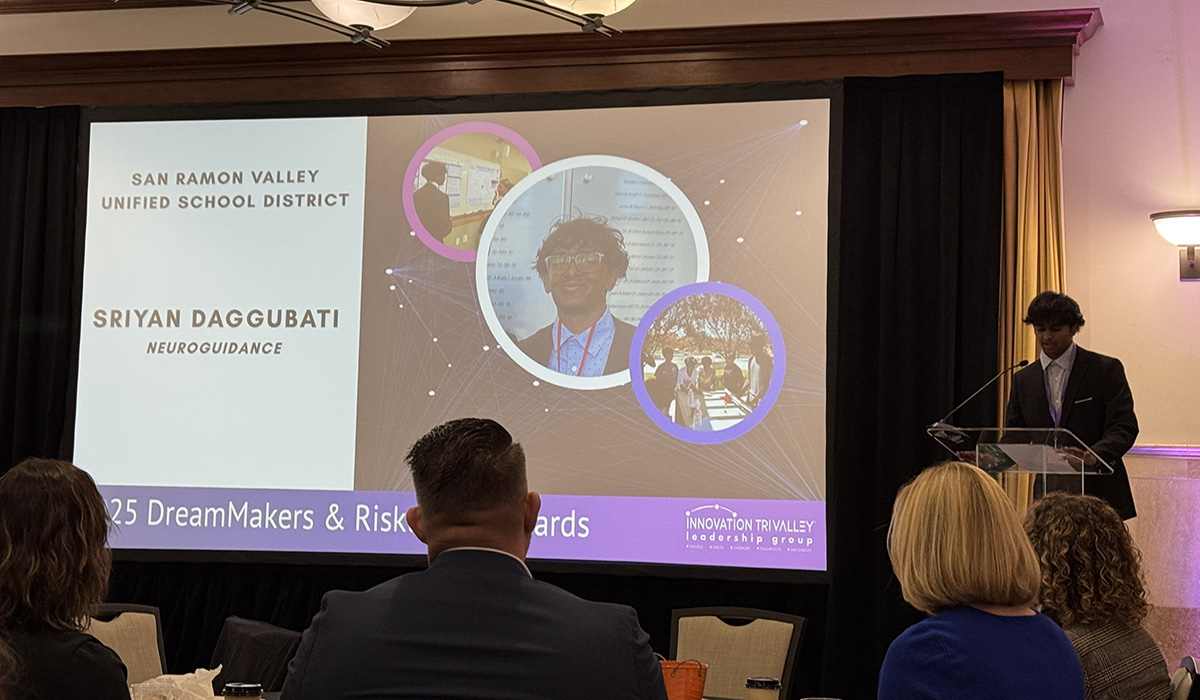
In September 2025, Dr. Fung, made me a keynote speaker at the Stanford Neurodiversity Summit, where I shared my work—and a book I published—with clinicians, psychiatrists and nonprofit CEOs doing similar things. Many of them later reached out about partnerships, funding and collaborations.
I have 10 to 15 meetings a day after school, to make sure everything is running smoothly. And I host a podcast that amplifies the voices of neuroscientists, educators, policy leaders and CEOs. We’ve hit 100,000+ global listens.
What changes would you like to see in policy or the classroom environment?
Science labs or STEM classrooms can be really cluttered with all the hands-on work that you do. I’d love to see them become more sensory-friendly. If you design something for a neurodivergent person, it can work for anyone. It’s the universal design principles for learning.
I’ve also been trying to eliminate masking, a term describing how neurodivergent people hide their struggles and feelings, which makes it harder to help. We need to create an environment where people are more comfortable expressing what they’re thinking, feeling or struggling with.
What’s been the most rewarding part of your work?
It’s been great seeing students’ confidence increase. We have a sub-series of workshops that help them get into research and science fair. Last year, when I was competing in my regional science fair, many of the students I mentor were there. They had some incredible projects and were winning prizes. I love seeing people succeed and overcome their fears.
How can people reading this take steps to push for change?
To push for any type of change, find someone you can ask a lot of questions and get started. For me, that’s Dr. Fung. Seek mentorship and guidance. Learn everything you can about the problem you want to solve.
What do you want people to learn from your story?
The amount of work I’ve done in a limited time may seem really hectic, but it doesn’t feel that way because of how connected I am to the problem. It all started with one of my best friends. Always do work that you love, and the sky is the limit.
Do you want to make a difference in your community like Sriyan? Find local volunteer opportunities.
Share this post
