
The Quiet Dedication of a Leader Ready for the Storm
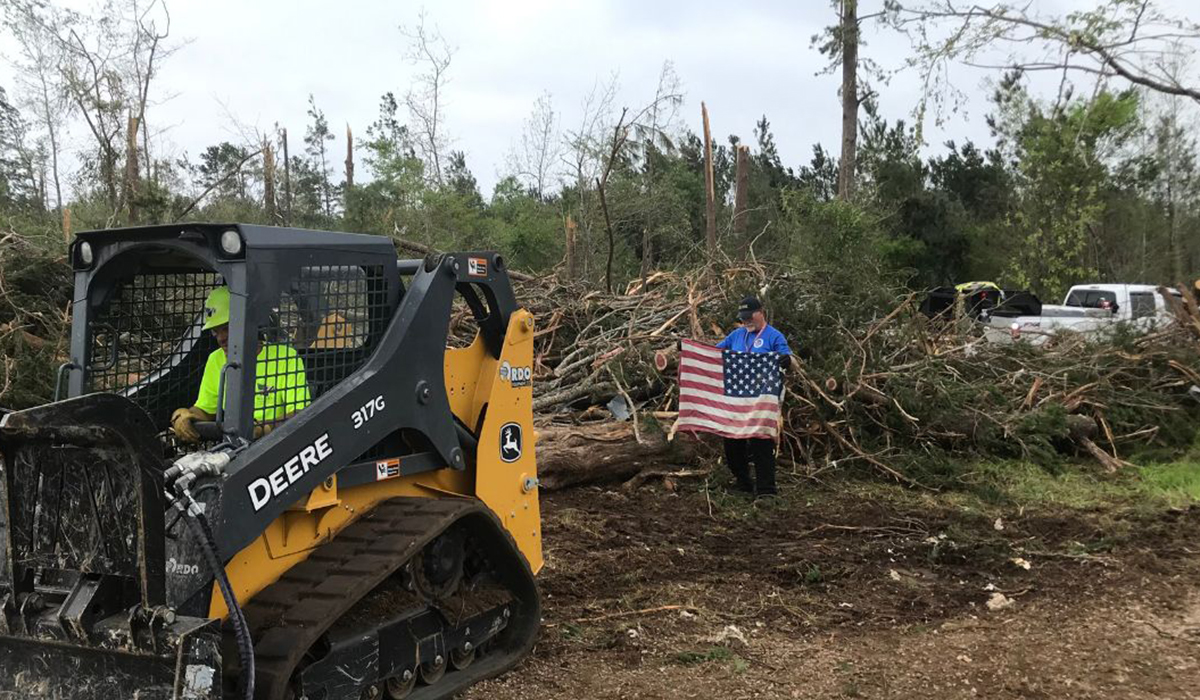
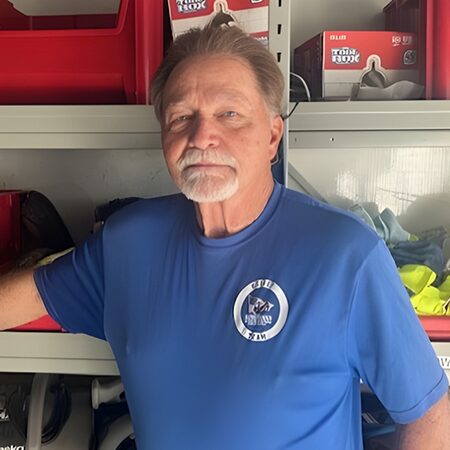
Meet Daily Point of Light Award honoree Bill Sommers. Read his story, and nominate an outstanding volunteer or family as a Daily Point of Light.
While many disaster relief volunteers are recognized for their work in the immediate aftermath of a storm, Bill Sommers’ vital contribution begins long before the clouds gather. Since joining Minuteman Disaster Response in 2017 as part of the relief team, he has transitioned into the role of maintenance coordinator, a position that serves as the backbone of the organization’s operational readiness. For Bill, the mission is simple but high-stakes: if the equipment fails, the mission to serve those in crisis fails along with it.
The scale of Bill’s responsibility is staggering, yet he approaches it with the disciplined focus of a master craftsman. He and his dedicated team manage a fleet of over 30 rolling pieces of equipment, many of which are outfitted with complex onboard generators. His leadership shines brightest during their monthly maintenance days, where he rallies a team of volunteers to turn wrenches and run diagnostics regardless of the blistering heat or freezing rain. Beyond these scheduled sessions, Bill spends countless unscheduled days in the shop during the peak of storm season, ensuring that every vehicle is a reliable sanctuary for those who have lost everything.
Bill’s ingenuity has directly expanded the organization’s reach and capability through remarkable feats of engineering. He spearheaded the effort to convert six former U-Haul trucks into fully functional mobile relief vehicles, transforming standard moving vans into sophisticated tools for disaster recovery. This fleet expansion allows the organization to deploy to multiple locations simultaneously, bringing hope to more communities in the wake of hurricanes, tornadoes and floods. His work is not confined to the garage, either; Bill himself has deployed over 17 times, occasionally traveling directly to disaster sites to service equipment in the field under the most demanding conditions.
Bill’s commitment provides a sense of security to his fellow volunteers and a lifeline to survivors. Read on to learn more about his work.
Tell us about your volunteer role.
Minuteman Disaster Response started in 2011. Our mission is to provide assistance in the immediate aftermath of a disaster through the deployment of highly trained and equipped volunteers. We have hooked up with all the emergency response systems because if you go to a disaster, you have to have access to get in; if you aren’t vetted, they will just turn you away. And that’s actually what happened the first time the founders went out in 2011. They went to Arkansas—just four guys in a long trailer with water and supplies—and they got turned away because they didn’t have the proper credentials. On the way back, they stopped for lunch and said, “Boys, we’ve gotta do better than this.” They developed Minuteman Disaster Response from that moment, and it has grown tremendously. This is our 15th year now.
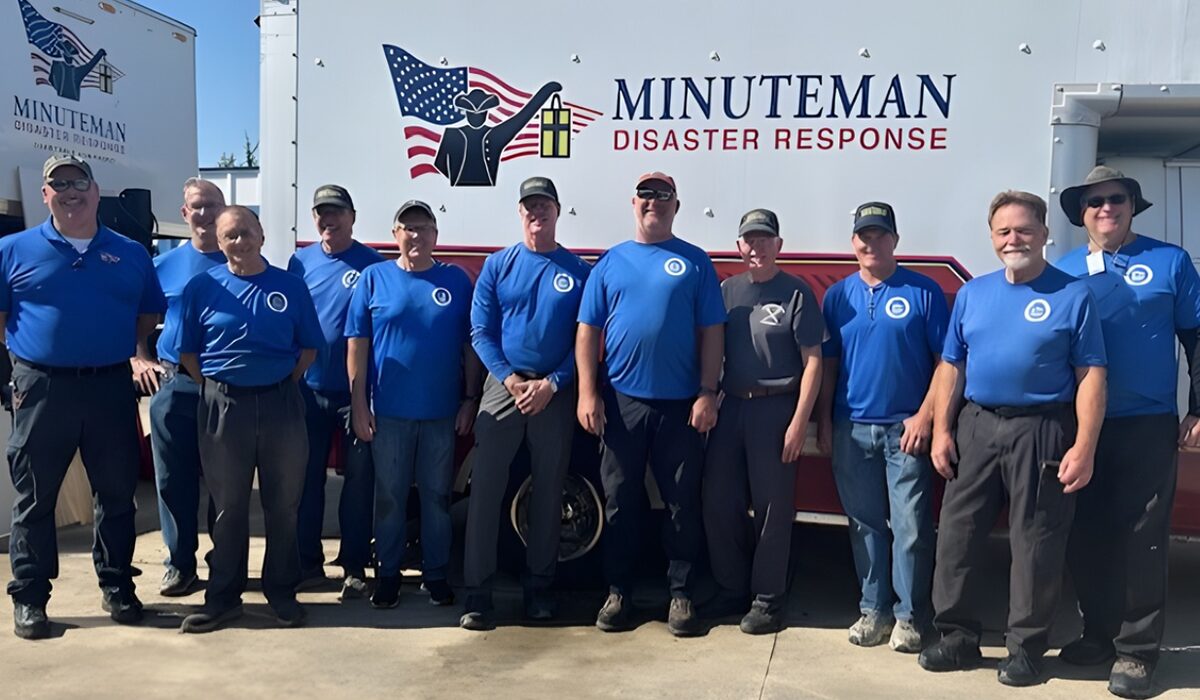
I became the coordinator for the maintenance team, and I have 22 people under me. Usually, the same 10 or 12 regular volunteers show up each month to do the heavy work. Since I live only four miles from where the equipment is stored, I’ll go in two or three times a week to handle the little things, like battery changes, so I don’t have to call my guys in from out of town. When we come back from a deployment, there is always something broken—volunteers can be hard on equipment! I’ve deployed 17 times myself, often doing chainsaw work, and I even taught the chainsaw class for a while. I just turned 75, so I don’t deploy to the field as much anymore. I let the young guys go out and run the chainsaws all day while I stay at the home base. I have plenty of work to do here keeping everything running so that we are always ready to respond.
What inspired you to get started with this initiative?
I didn’t join until 2017. I retired in 2014 after spending 31 years in the U.S. Post Office, then worked for the county for another eight years and retired from there. Prior to that, I served as a Vietnam veteran and a Bronze Star recipient. While that isn’t volunteer work, it is serving. And then I was looking for something to do. I was retired and didn’t want to just sit around and grow old. In 2017, I saw an advertisement for Minuteman in a local weekly newspaper. They were organizing their first relief team, so I went to the meeting and joined immediately. My first deployment was in April 2017 to Canton, Texas, after a tornado went through. We jumped right into the cleanup work.
As we grew, we obtained a lot more equipment. We realized we had to maintain it because if everything is broken, we aren’t helping anybody. Currently, we have about 30 rolling pieces of equipment. This includes a 53-foot, 28-man bunk house and a 53-foot Incident Command Post filled with computers and big screens. We also have two shower trailers and our own skid steers. Most of these trailers have onboard generators that require oil changes every 250 hours, so you have to stay on top of them. We also have two larger generators that can power our entire base camp.
Why is disaster response so important to you?
When we go out there, we see a wide range of needs. I remember a tornado that went through Dallas, which isn’t far from us. We were down there clearing the streets, and we saw that some of the residents had the means to hire landscaping crews to clean up their yards immediately. But the people we typically help can’t afford any of that. They’re stuck.
Our response team used to go in and work for about three days, but as they were leaving, the homeowners would just be returning. Our guys would be pulling out while the residents were standing there, looking at where their house used to be or where their trees once stood. We realized we couldn’t just leave them high and dry; they were helpless. That’s why we got the relief team started. It’s a vital service because you can’t just walk away when the immediate danger has passed.
A lot of people have the capability of paying to have debris removed, but we try to take care of everyone else—the ones who can’t afford to hire the work out. We talk to the homeowners and explain that we can cut the trees down and stack them at the edge of the road for the county to pick up. Inevitably, they ask, “What is this going to cost? I can’t afford that.” When we tell them it doesn’t cost anything, that it’s free, they usually start crying. They are just so thrilled that we are there to help because they don’t have a clue where to even start. We help get them back on their feet.
What’s been the most rewarding part of your work?
It is just so rewarding. When we arrive, people are often feeling helpless and unsure of where to even start. We come in with a game plan because we’ve done this so many times before. To see them get that little glimmer of hope back is incredibly rewarding. You walk away knowing you’ve helped someone who was basically helpless before you arrived. It’s a really, really good feeling.
What are your long-term plans or goals for the organization?
We’ve expanded significantly. We used to operate within a 400-mile radius, but we’ve gone way beyond that now. Some of our supporters have even offered flights for volunteers. For example, when hurricanes hit Florida or North Carolina, we were able to get our equipment there. One of our sponsors told us that if a volunteer commits to three days of work on the ground, they will fly them there and back for free. That opened up all kinds of possibilities; we can basically go nationwide now.
We’ve established branches in Birmingham, Alabama, San Antonio, Texas and Tulsa, Oklahoma. To support this, we bought used U-Haul trucks and built them out ourselves. We installed shelving, organized equipment on the walls and equipped them with generators and all the power tools we need. These smaller trucks can get into areas where our big trailers can’t fit.
This past year, we were deployed in Kerrville for floods and in West Texas at the same time. Because we are deploying to multiple spots simultaneously, we’re building another bunk house. We have to ensure our people have a place to stay, food to eat and restroom facilities. Our goal is to continue branching out nationwide. We’ve noticed that tornado activity seems to be shifting a bit to the East, which is why we chose Birmingham as a branch location. They have their own equipment guy and a shower trailer there now.
What have you learned through your experiences as a volunteer?
I’ve learned that you can do a lot more than you thought you could, when you really put your mind to it. I’ve also learned that if you lead by example, your team will do anything you ask. I don’t ask my maintenance guys to do anything that I wouldn’t do myself. If you lead by example, provide the right training and give them a little bit of guidance, it’s unbelievable what people can accomplish. Those guys are just great.
Why is it important for others to get involved with causes they care about?
You truly understand the mission when you deploy and help someone clean up what used to be their home. When people are that hopeless and you step in to help, you learn more about yourself. It is a very worthwhile experience. When you walk away from a site, you’ll know exactly why you signed up because the work is just so rewarding.
Any advice for people who want to start volunteering?
In our organization, there’s a place for everyone. I remember we were down in Refugio, Texas, cleaning up a park. I was the only certified chainsaw operator that day, and we had a skid steer running. One of my team members came up and told me he had hurt his back and couldn’t lift any lumber or branches. Now, there was a sign in that park that said, “Beware of Alligators.” I told him, “I’ve got a job for you. Stay here, rake a little brush if you can, but mostly, just watch our backs for snakes and alligators.”
There is a job for everybody. Some people are comfortable learning heavy equipment like the skid steer (I tried it, but it wasn’t my cup of tea) while others prefer chainsaws. You may think you aren’t doing much, but when you put the whole team together, it pays off. There is something for everyone to do.
Anything else you want people to learn from your story?
Minuteman is a great organization with strong leadership. When people join, they are treated with respect and receive the training they need to go as far as they want to go. We understand that life happens; if someone can’t show up because of work or personal commitments, that’s fine. There will be a time when they can. This culture is what has kept me volunteering all these years. I don’t plan on quitting anytime soon—as long as I’m healthy, I’ll be here.
Do you want to make a difference in your community like Bill? Find local volunteer opportunities.
Share this post
