
Where Art and Sustainability Meet
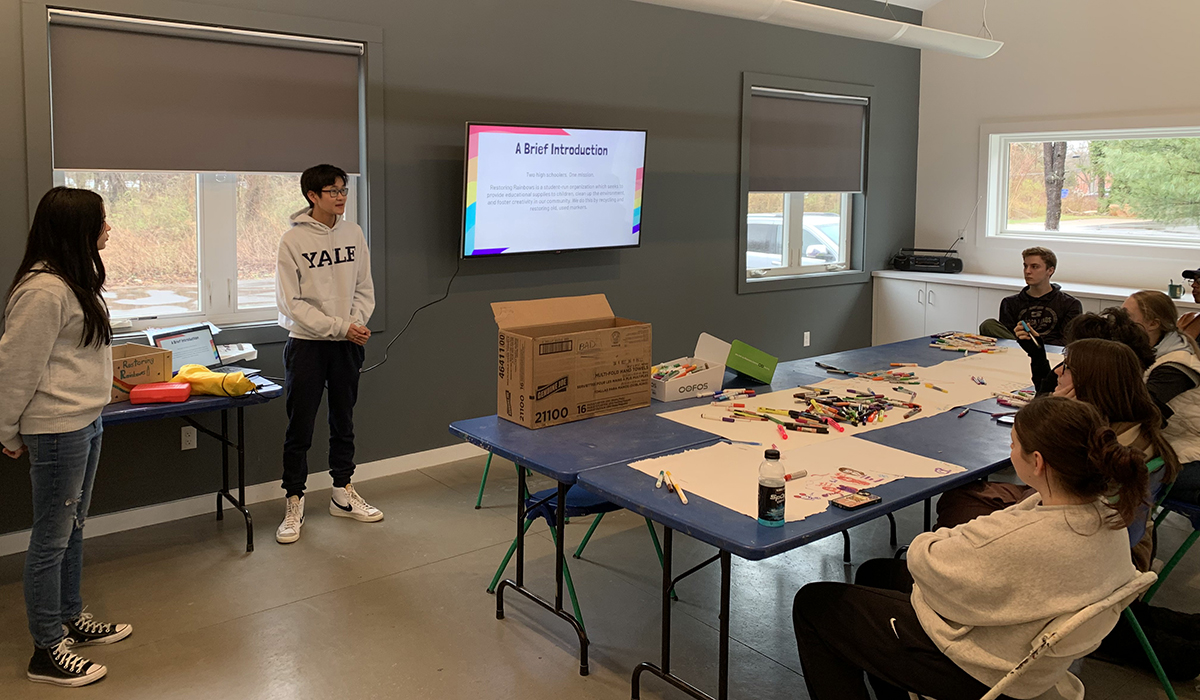
Meet Daily Point of Light Award honoree Jordan Chen. Read his story, and nominate an outstanding volunteer or family as a Daily Point of Light.
It all started in a gym class where the only people they knew were each other. Sixteen-year-old Jordan Chen and his co-founder bonded over their love for artistic endeavors—him, painting and her, theater—while simultaneously realizing that many students didn’t have the materials to participate in art education. It’s an area that is chronically underfunded around the world.
In 2024, they founded Restoring Rainbows to address that unequal access as well as environmental sustainability. In just over a year, the organization has grown to more than 200 branches across 50+ countries. They’ve diverted more than 40,000 school supplies from landfills by refurbishing and putting items into the hands of underserved students. While they prioritize art supplies, they also provide basics like pencils, erasers and paper to those who need it. And, of course, they accept new supplies to donate. It’s work that relieves parents’ financial burden and empowers students’ creativity.
As a high school junior, Jordan is starting to look towards life after graduation. He is eyeing an environmental science degree due to his concern for climate change and the future of the planet. And of course, he will continue to paint.
What inspires you to volunteer?
Restoring Rainbows was my first time doing philanthropic work. My friend and I just wanted to start something and landed here.
Apart from that, I volunteer with my school’s Leo Club. We do a lot of free face painting for children at local events. I also run my school’s Color Run Club. We host an annual run to raise money for the American Diabetes Association. Last year, we donated around $2,200.
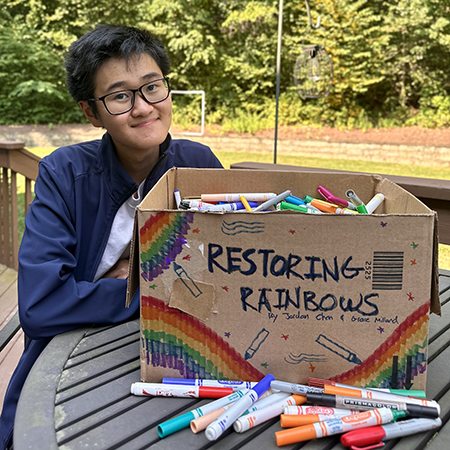
Tell us about your volunteer role with Restoring Rainbows.
As co-executive director, I manage global operations. I work with a 15-person executive team, each of whom handles a different department of our organization–operations, branches, partnerships, finances and more. I check in with everyone, give them weekly tasks, offer support to our executive team and branches. I also make sure grant applications are getting submitted and foster partnerships. We work with local schools, museums and youth to ensure continued supply collection and distribution.
Many of our branches, including our own, also do a lot of bake sales and in-person events to fund projects and to cover things like cleaning and shipping costs.
What inspired you to get started with this initiative?
From a young age, I was into oil painting and drawing, and my co-founder Grace was into multimedia art and musical theater. We knew how important art is. We also shared an interest in activism, particularly around addressing climate change. It was clear there was a problem in our community that sat at the intersection of both.
Every day, we saw usable school supplies on the floor, like a pencil that was dirty or had been snapped in half. They were still usable, but people weren’t doing so because they weren’t nice-looking. At the same time, a few towns over, schools don’t have pencils, erasers or paper, let alone extras like paint brushes or watercolors. With this realization, we decided to take new and refurbished school supplies—sanitized, sharpened, refilled, etc.—and redistribute them to where they’re needed, recycling what can’t be used.
What do kids gain from art education?
Oil painting is a way for me to cope with stress. It’s incredibly relaxing to express yourself through art, and it’s a way to bond with other people, especially for younger kids. It’s important for their development to be able to show creative expression that’s unique to them.
What are your long-term plans or goals for the organization?
We hope to donate over 1 million school supplies by 2030. We’re trying to expand our impact, and ensure we’ll continue to operate if Grace or I ever decide to step down.
What’s been the most rewarding part of your work?
I find strength, hope and inspiration from the young people I talk to and work with every day. It’s not easy. It’s a choice every single day to wake up and be positive in the face of all the hard things going on in our world, and it’s one of the most rewarding aspects of being involved.
What have you learned through your experiences as a volunteer?
There’s a surprising number of people willing to help you if you have good intentions. When we first started, we reached out to dozens of partners in our local community asking them to set up a donation box. Many didn’t respond, but we thought if we asked enough people, someone would say yes. Our first partners did.
Someone out there will believe in you. You just have to look for them.
Tell us about future partnerships, programs or events that you are excited about.
We’re currently developing our inaugural Branch Advisory Board. Our shortlist is made up of branches in multiple countries that have the biggest impact. They’ll consult with us on areas where branches need work, how we can better support them, where resources are needed. We look forward to their insights and ideas about how we can grow the organization.
How can people reading this take steps to address environmental sustainability and unequal access to art education where they live?
Think before you throw anything out or buy anything. Before I shop for school supplies, I look for folders I can reuse and notebooks I didn’t use last year so I don’t have to buy new. Using supplies you already have cuts down on carbon emissions.
What do you want people to learn from your story?
Initially, I was really worried about how my friends and existing climate, art and education movements would perceive what I was doing. But if you have an idea you’re super passionate about, whether it’s a nonprofit or a business or a club, go for it. Put 110% effort into it, and see how far it goes.
Do you want to make a difference in your community like Jordan? Find local volunteer opportunities.
Share this post
