. As this program begins to change hands, Points of Light is partnering with AL!VE to ensure a smooth transition. This is the first in a series of updates from AL!VE. This one comes from Service Enterprise Administrator Kayla Paulson around the organization’s work with Service Enterprise.
It is exciting to be part of the Association of Leaders in Volunteer Engagement (AL!VE) and to help create the next progeny of the Service Enterprise Program. From the rich and collaborative infancy with Reimagining Service and California Volunteers to
nurturing Service Enterprise through the national pilot initiative and continuing to push forward the growth and research, build a vibrant network of hubs and make curriculum improvements, the program has been able to be housed with entities that are uniquely qualified to guide and support the program through its next stage. AL!VE’s national presence, partnerships and membership base uniquely position us to lead Service Enterprise with Points of Light’s support and continued guidance. Our existing national connections create opportunities to identify and develop new hubs along with our proven track record of providing training and technical assistance to leaders in the profession, demonstrating our ability to expand resources and support for hubs and participants. A direct connection to AL!VE members will create a pipeline of potential participants already seeking to enhance volunteer efforts and strategy at their organization.
How AL!VE is Uniquely Positioned to Operate Service Enterprise
AL!VE continues to listen to members and partners about the needs of volunteer engagement practitioners, changes in the sector, and potential services to further leadership development and develop programming to address these needs. We also plan to expand our offerings through various modalities that fit different styles of learning (e.g., presenters delivering training through AL!VE Academies, peer in-person or virtual learning through the Hybrid Conference, information sharing and peer coaching through Communities of Practice, and one-on-one leadership development through the mentor program). In the last annual member survey, all AL!VE programs received over 95% favorability for being important to member growth and development. Our program offerings and attendance continue to grow year over year, yet the key piece that we were missing was an organization-wide approach to volunteer engagement. Service Enterprise will fill that gap.
Many of AL!VE’s Board Members have been longtime advocates of Service Enterprise. I, personally, have been a trainer with a certified hub since the national pilot. Our Board President, Michelle Raymer, runs a certified state-wide hub. Past-President Megan Vixie took her organization through Service Enterprise achieving certification. We also have additional board members who are currently starting their organization’s Service Enterprise journey or have already achieved certification. AL!VE is not yet a Service Enterprise certified organization but has been focused on implementing practices and laying the foundation to position us to participate in the Service Enterprise program to become a certified organization. Our leadership and committed volunteers value the Service Enterprise process as well as achieving certification.
Looking Back at Service Enterprise
During Points of Light’s leadership tenure, Service Enterprise has transformed the culture of over 600 organizations across the country. AL!VE, with the support of Points of Light, will take this program to scale through expanded access, continuing to build on Points of Light’s momentum, creating a movement that captures the attention of nonprofit leaders, funders and stakeholders. With the support of our members and Service Enterprise hubs, we will empower Service Enterprise to be the game changer it was designed to be, breaking the cycle of scarcity so organizations can do more with more to meet our world’s most pressing needs.
“When we first started this work, we knew we were looking at the transformation of how an organization leverages a diversity of resources to build capacity. Over the following decade our re
search has consistently proven that nonprofits operating as a Service Enterprise can operate at a 50% decrease in revenues while achieving the same results as their peers
,” said Elizabeth Schwan-Rosenwald, Chief Program and Network Officer of Points of Light. “We chose AL!VE because they are uniquely positioned to take Service Enterprise to the next level.”
The AL!VE team is already beginning to transition the technology and systems over to AL!VE’s platforms and we have begun conducting listening sessions with hubs to ensure that we are taking a collaborative needs-based approach to creating additional infrastructure and support to empower more effective promotion and delivery of the program by the hubs. Initially, we are focused on creating a smooth transition for hubs and participants but will soon begin looking for philanthropic partners, subject matter experts and industry leaders to help us ensure program sustainability and accessibility.
“Service Enterprise aligns perfectly with AL!VE’s mission and values, and its national presence will allow for further promotion of the initiative within the field of volunteer engagement,” says member and Service Enterprise Trainer Lisl Hacker, Director of Training & Technical Assistance at Massachusetts Service Alliance. “They are also well respected and connected not only to their members but to other leaders and partners in the field, which will help move the program forward and bring further credibility. They have what it takes to evolve, implement and cultivate this transformative program.”
As trainers and participants of the hub network, we know that we need to update the curriculum for dynamic in-person, virtual or hybrid delivery models using inclusive language and designing an equitable approach to Service Enterprise, both for hubs and participants. We are committed to designing an equitable model that can help hubs identify and acknowledge the barriers which historically positioned some organizations from being able to participate and/or prevent equality in opportunity and acting to remedy this problem. We will work with DEAIJ (
diversity, equity, anti-racism, inclusion, and justice
) experts and plan to design an approach and resources that further empowers our hubs to tailor support, terminology and program delivery dependent on the type and severity of barriers faced and focus support to underserved communities.
We look forward to integrating Service Enterprise characteristics into our internal volunteer engagement practices at AL!VE and foster the development of the program to meet the needs of the nonprofit sector while honoring the dreams and practices that Points of Light has championed over the last 10 years. If you would like to explore how you can bring Service Enterprise to your community, help your organization begin its Service Enterprise transformation, want to help AL!VE create a vibrant and inclusive program, or just want to learn more about AL!VE
to your campaigns, and advocate for your shared cause. But purchase power can also be a dynamic tool, and we’ll show you how to help your community leverage it to drive change.
Purchase Power: A Key Piece of the Civic Engagement Puzzle
One of the most powerful, and often untapped, resources that a nonprofit has is the collective
of its volunteers. Purchase power represents an individual’s ability to make decisions around spending or consumption of goods or services. Each of your
has the ability to make decisions around how they consume or purchase goods and services.
These purchasing decisions may reflect their values or advance a social cause or issue. Buyers may deliberately purchase or avoid purchasing a product or service based on a company’s policies, social causes, size and scale, environmental footprint and more. In the same way your volunteers choose to share their talents with your organization, they may also choose where their purchase power goes.
When considering purchase power, it’s essential to recognize that, for many people, there is limited choice in where or how to shop. This circumstance can be for a variety of reasons, from lack of access to financial limitations, but there is still great value in being more informed and being able to share that knowledge with their own networks.
Even when choices are limited, there is decision-making power in these choices. And in those instances, when the only step we can take is to be more informed and share that information with others, this action is still meaningful and has value. Here are three ways you can help activate the purchasing power of your volunteers.
Curate a List of Businesses to Support
Maintain a list of businesses or brands that support causes that are aligned with your mission and share it on your website. A great example is
to life through nine issues of “Civic Life Today”, a free digital magazine series, each issue highlighting an area of the Civic Circle and taking a deep dive into how people can activate this in their own life. Share the link to the
Highlight businesses in the community you serve to help increase awareness among your volunteers and their networks. Consider engaging local businesses to volunteer with your organization and cross-promote both of your organizations through social media.
deeply centered within our community know that voting is one of the key ways communities can advocate for themselves. But how can nonprofits help voters become more civically engaged? The United States federal tax code prohibits 501(c)(3) charitable organizations from “directly or indirectly participating in, or intervening in, any political campaign on behalf of (or in opposition to) any candidate for elective public office.” This prohibition can make nonprofit organizations hesitant or even resistant to engaging in any activities around politics or voter registration.
According to the National Civic League, across the U.S. only “Fifteen to 27% of eligible voters cast a ballot in their local election” in 2020. Further, analysis of voting data shared on
shows that turnout in major American cities was less than 15% or even in the single digits.
Large swaths of communities, and even generations, are not being represented during mid-term and local elections. Yet every day elected officials are shaping policies that impact the lives of their communities. An engaged electorate has a greater opportunity to ensure that policies better align with community needs in areas such as
. As the saying goes, “elections have consequences,” and an engaged electorate that represents the broad diversity of a community is more likely to elect officials who share their values and their vision for a vibrant, healthy community.
How Your Organization Can Help Communities Through Voter Engagement
Here are a few ways you can remain within the legal bounds of the tax code and still
, which provides nonpartisan resources to help nonprofits integrate voter engagement into their ongoing activities and services, offers seven reasons to do voter registration. One of the reasons is that, as a nonprofit, your agency may be more poised to reach voters that others cannot.
Your unique position, and the trust you have fostered, can engage community influencers and leaders who may otherwise not have become involved in elections and voting. NonprofitVOTE offers a
that serves as a useful resource for organizations just starting down this path.
Share Information That Empowers Voters
Provide voters information about voting, such as the election dates and times, polling and drop-box locations, eligibility and ID requirements. Offer information about their rights as voters and numbers to contact if there are any issues. People are often interested in voting, but they do not know enough about the candidates, their platforms or their voting history.
work to serve as a neutral encyclopedia of American politics and upcoming elections. Other resources, including local newspapers, may also provide additional nonpartisan information that highlights the key platform and policy positions of each candidate.
Host a Candidate Forum
Provide an opportunity for candidates to share their vision and policy positions with your community.
offers a step-by-step guide on planning, publicizing and hosting a candidate forum. Candidate forums provide a great opportunity for community members to hear from all of the candidates at the same time. The forums also help increase public understanding of the election process.
4 Themes from the 2022 Points of Light Conference That Shine a Light on CSR Trends for Business
Points of Light knows that when the world’s largest companies get it right, the world gets it right, which is a theme at the heart of the 2022 Points of Light Conference. As a part of this year’s conference experience, we welcomed leaders from the corporate citizenship community to our stages and workshop spaces to meet like-minded peers and share insights from the challenging work that faces the business community as leaders in social impact.
Several themes were explored, shining a light on the direction where business needs to lead:
The “to do” list of the business community has become longer. For the business community, it can feel like we are being outpaced by the problems of the world that we seek to solve. In addition to economic and societal responsibilities, global communications firm Edelman shared with Points of Light’s Corporate Service Council that almost six out of 10 people in the U.S. believe it is a responsibility of business to take action on the world stage, engaging in geopolitical issues such as the war in Ukraine. Navigating how to respond to or engage in these issues has introduced new and unique challenges for corporate citizenship professionals.
Our brains are wired for stories. As companies seek to capture the measurable impact of their efforts, they should leverage the power of stories. Disney Institute shared with conference attendees that stories are one of the strongest forms of communication, evoking a sense of connectedness in those who hear them. At Points of Light, we say that “Data + Stories = Proof.” The relentless pursuit of data must be coupled with an equal desire to share more about the people and places at the heart of that data. Additionally, leaders within companies must be equipped to tell these stories, communicating the company’s and their own passions and values through the story.
Volunteer engagement must adapt to the hybrid world. As we enter the third year of the COVID-19 pandemic, we continue to grapple with variant surges, return-to-office starts and stops and disruptions to in-person events. It has become clear that the current hybrid work environment will not be a temporary condition of the pandemic, but a lasting model of collaboration that must extend to deepen employee engagement. In one workshop, Common Impact shared how companies can look to skills-based volunteering as a partial or fully virtual strategy to deliver on employee engagement goals.
There is a CSR and ESG identity crisis. The corporate citizenship community is caught between two acronyms. Several workshops sought to answer the question: What is the difference between CSR (Corporate Social Responsibility) and ESG (Environmental, Social, and Governance)? The role of business in society has been discussed and expanded upon over 50 years. The growing influence of ESG is rooted in CSR, which marked the starting point of businesses taking ownership of their impact on society. Without CSR, there would be no ESG, but the two are far from interchangeable. CSR helps companies give context to their corporate responsibility strategy and culture, while ESG is the action and measurable outcomes of that agenda.
Whether or not you joined us this year at the 2022 Points of Light Conference, we invite you to continue learning with us year-round by accessing our body of
. These studies shed light on global trends that are central to maximizing the impact of corporate social responsibility. We look forward to the 2023 Points of Light Conference in Chicago on June 14-16.
is set to be a powerful and inspiring event. As in-person experiences are enjoying a comeback, we’re excited to host this year’s conference in person once again at Disney’s Coronado Springs Resort. Now is the perfect time to make the case – to your employer or organization – to attend Conference.
If in-person attendance isn’t feasible, don’t worry. We’re also offering a virtual option so that you can benefit from the same phenomenal speakers and rich content.
Either way, it’s essential to approach your supervisor with well-crafted reasoning that highlights the benefits of attending. Plus, you can inspire others within your organization to also attend.
Asking for time off and coverage of registration expenses requires a solid understanding of the potential benefits to your supervisor, colleagues and stakeholders, as well as your organization as a whole. You can communicate these benefits clearly with the following easy-to-follow roadmap along with a
designed to help get you to the 2022 Points of Light Conference.
Five Steps for Getting to Conference:
Map out the value of each experience. Identify the speakers and workshops you wish to see. When looking through the Conference agenda, keep an eye out for sessions that you believe will help you develop both your skills and your network.
Identify your organization’s greatest challenge or an area of strategic focus and tie it to key sessions being offered at Conference.
Make a plan that outlines how your workload will be handled while you’re away including how, if necessary, technology can keep you accessible.
Pitch your plan to your supervisor. Once you’ve listed the sessions that will be of greatest value to your workplace, put your request in writing. The editable sample letter below is an excellent place to start!
Propose a time after your return when you will share with your coworkers and supervisor the fresh ideas, best practices and contacts you’ve gained at Conference through a presentation or lunch-and-learn.
Five Ways You’ll Add Value to Your Organization After Conference:
Here are just a few of the ways you’ll add value to your organization after the event. These reasons can help you demonstrate to your supervisor why your organization can’t afford to let you miss this power-packed event! The 2022 Points of Light Conference will help you:
Add more innovation and thought leadership to your organization. With a robust lineup of speakers and workshops, the Points of Light Conference is uniquely positioned to not just track trends but inspire you to start some of your own.
Learn new ways to help your organization become more efficient, effective and economical.
Gain professional development tips that will make you better at your job and help elevate your organization.
Return with a renewed sense of enthusiasm about your work when you hear our inspiring speakers and network with your fellow attendees.
Attending conference sessions can be applied toward the education requirement for initialCVA Certification or CVA Renewal. CVA certification is the only internationally recognized credential in the field of Volunteer Administration.
We’re cheering you on as you advocate for your professional development, your continued education and your organization’s growth. We can’t wait to see you at the 2022 Points of Light Conference!
Civic Engagement: What We Know, What We’re Learning, and What Comes Next
A few months ago, I was invited to listen to an online conversation between two professionals entitled “What I’m Learning.” The panelists were captivating, but it was the title of the discussion that caught my attention. During this global pandemic and time-out of our regular routines, we are all learning more about ourselves, each other, and the world around us.
Perhaps the quote by American poet Maya Angelou, “I did then what I knew how to do. Now that I know better, I do better,” perfectly captures the essence of learning, reflection, and action.
At Points of Light, we believe the most powerful force of change in our world is the individual. One who is informed, inspired, and equipped to take action.
So when Points of Light and our partners
conducted a study this spring, with generous support from AT&T, aimed at understanding Americans’ attitudes, behaviors, barriers and motivations around civic engagement, I was delighted and encouraged by the data.
looks at the current state of civic engagement, reveals a universal desire to do more, and sheds light on how we can convert good intentions into positive action. Here’s a glimpse of what we found:
Civic Life Will Become More Important Than Ever
We surveyed more than 1400 adults of every generation from the silent generation to Gen Z. We heard that after the pandemic passes, 95% of respondents said they will maintain their current level of involvement or do more to get involved and make a difference. More than three-quarters (78%) cited voting as an important action they intend to take; 75% said they would donate to nonprofits; 73% said they’d volunteer; and 60% said they intended to contact government leaders or advocacy groups.
Further, 82% of respondents said they believe we must all get involved to rebuild our communities and country, with 66% saying that the coronavirus will have a long-lasting, positive impact on our collective consideration for others and our willingness to get involved in making a difference.
My favorite part: Half of all Gen Z respondents (loosely defined as those born in the late 1990s and afterward) said they will do more to get involved after the pandemic than they did before; and this cohort already reported the highest levels of civic engagement across any other age group.
Gen Z Isn’t Going to Accept What We’re Handing Them
Speaking of Gen Z, this is a generation that simply isn’t going to accept the world as it is today. As is evident from the research, they are an active, action-oriented group. Nearly 40% of Gen Z respondents reported participating in five or more civic engagement activities in the last year – and this was in May – before the killing of George Floyd and the demonstrations against police brutality and systemic racism in this country.
What this shows us is that the open questions that we’ve let linger as a society – on race, social justice, the environment, and mental health – are questions that they will not allow to persist any longer. This generation sees societal change as a team sport, and they’re participating in greater numbers and with greater frequency than any other demographic.
They also expect action from the companies with which they do business. While 41% of all adults say they have made purchase decisions based on a company’s social responsibility, nearly 60% of Gen Z respondents have, and they know that the enormous purchase power they yield (
) is an asset that they can use to affect change.
The generation coming of age right now is not a “wait and see” generation; they’re a “let’s get it done” one. They don’t wait for hierarchies; they start where they are with what they have. They’ve witnessed a reckoning in their country – and they’re proving they’re a force to be reckoned with.
Community Is Queen
Our research also revealed that more than half (55%) of people say they want to focus on issues impacting their communities. People crave local opportunities that let them interact with those who are benefitting – safely, of course, given the pandemic. This aligns with the recent
study, which reported that 64% of respondents believe that the pandemic “will lead to changes for the better in how we live, work and treat each other as people.”
Let’s hope so.
In the last year, 28% of respondents reported volunteering, yet an additional 32% said that while they had not volunteered in the last year, they were interested in doing so. That’s 60% of all respondents interested in getting involved in their communities in some fashion.
Imagine if it actually happens.
All of these indicators provide clarity that civic engagement is becoming more important than ever, Gen Z is changing the game, and there is a hyper-local focus on service. It shows us that people are more aware that the actions they take have enormous power to affect change.
It seems that even now, Maya Angelou’s words above can apply to all of us and our engagement in civic life. Each of us has power and light within us – let’s use it for good.
Natalye Paquin was the president and chief executive officer of Points of Light from 2017–2022.
She is a visionary and results-oriented leader, with more than 20 years of experience providing strategic, operations and fiscal leadership in the nonprofit and public sectors.
Continue the Learning: Business with Purpose Themes from the 2020 Points of Light Conference Online Experience
There is a great energy, a spirit of optimism and a sense of renewal when thousands of people convene with the same purpose. During the Points of Light Conference, leaders from the corporate and social sectors gathered for fellowship, education and inspiration. Although, this year, we “gathered” around our computers for the first ever online experience.
Business with Purpose workshops, designed specifically for professionals responsible for engaging their fellow employees in their communities, explored how companies are leading with their values and collaborating with nonprofits and other stakeholders to bring their resources, time, talent and voice to bear to be a powerful force for good – especially now.
Four themes emerged throughout the three-days of learning:
1) Going Digital. Due to COVID-19, many leaders are quickly adopting digital solutions for their employee engagement needs. With more employees working remotely, virtual volunteering becomes a way to continue their involvement in social issues. However, all nonprofits are ready to accept virtual volunteers and provide them a meaningful experience.
Virtual volunteering may also be harder to track, which can impact your ability to report results to leadership. No matter how you’re engaging employees in their communities at this time, a digital platform that helps you manage, communicate and track results is a cornerstone of a successful social impact strategy.
2) Setting Strategic Intentions. Several workshops elevated the need to be planful with your engagement programs. Whether they provided a straight-forward framework to follow or showcased the intentional planning that goes into programs once strategy is developed, attendees walked away with a deeper understanding of a company’s journey from “scatter-shot to strategic.”
Two workshops flipped the strategy conversation on its head and demonstrated how employee volunteer engagement can be used as a strategy itself to bring together disparate corporate cultures and ensure the well-being of your workforce. All very important proof points to share with company leadership as they look for solutions to these internal challenges or when you are advocating for more resources.
3) Uplifting Cross-sector Collaboration. Without strong collaboration, your giving and volunteering efforts may not elicit shared value. We heard from two organizations that have built deeply aligned partnerships for program design and delivery while working to solve complex global challenges.
It is, in fact, these strong collaborations that have enabled many organizations to pivot during the pandemic. Starting from a place of shared understanding while also acknowledging and appreciating similarities and differences will feed collaboration and ensure mutually beneficial outcomes.
4) Leading Through Crisis: Unprecedented times bring unprecedented opportunities. In a world facing natural and human-made disasters to the current health and social justice crises, how should a company respond? How can they balance their annual commitments with pressing community needs as they spontaneously arise? And, how can they support the increase in employee activism and shift in consumer expectations due to these crises?
It’s imperative for businesses to plan for the unexpected. Workshops provided tips that resonate broadly no matter the type of crisis you might face such as leaving some room in your budget for emergencies, tapping into partners’ expertise, refraining from knee-jerk reactions and diverting all resources to one need, and having a ready of inventory of upcoming priorities so you can quickly make decisions. And, of course, communicating transparently and acting authentically are true when balancing emergent needs and when those needs give rise to powerful voices internal and external to your company.
We invite you to check out recordings from all of our 2020 Business with Purpose workshops and connect to research, learn frameworks, and discover new ideas to inspire and renew your efforts to accelerate the impact of your company’s social impact strategy. These recordings are available on Points of Light’s newest digital platform, the Community for Employee Civic Engagement. Through CECE, you’ll be able to ask questions and get answers from experts, as well as stay up to date with the latest industry news and explore ideas central to maximizing the impact of corporate social responsibility.
For unlimited access to everything CECE has to offer, sign up for a complimentary 14-day trial.
How We Serve is Changing, Why We Serve (and Why It Matters) Remains the Same
comes to a close, and as our world remains forever changed (and still changing) in the wake of the coronavirus pandemic, we can’t help but get reflective.
We know that the need for service is greater now than ever. We know that helping others, like so many facets of life, is going to look different going forward – and likely (hopefully) for the better. We also know that the people most impacted by the crisis are the people depending on the communities that surround them to encircle them with kindness and love.
Even as we put distance between ourselves, so many stories have emerged of our community circles growing wider. Italians taking to their balconies to sing in unison, lifting spirits. New Yorkers cheering for health care workers every night during their shift change. People dusting off their sewing machines to make (and give away) masks out of quilting fabric.
In the darkness, we’ve seen light.
Global Volunteer Month Activation Partner
, which connects people with opportunities for social impact action, does incredible work promoting both nonprofit jobs as well as service opportunities. Around and amid this crisis, their work has been even more critical.
We spoke with them about three important thing they’re seeing as it relates to the future of service. Taken together, these three things leave us hopeful and inspired.
First, during the crisis, people were (and still are) at home wanting to help. Idealist saw people offering to do grocery runs or trips to the pharmacy for their elderly neighbors. Young people were walking dogs or mowing lawns for neighbors. People were doing whatever they could to help those in their immediate proximity. Sometimes they found those opportunities through a flier in a mailbox, or a sign posted in an apartment lobby.
Idealist created a
, where people can find these small (but so meaningful!) ways to help someone, person-to-person, right where they live. These directories give people a way to find purpose amid so much uncertainty. Ideally, that sense of purpose will translate to continued service once the immediate crisis is over. The world is forever changed, so are we as citizens of it.
Second, Idealist also saw that organizations like foodbanks or soup kitchens that require in-person volunteers were hit especially hard by the crisis. The need for what they do was greater than ever, but the availability of volunteers was at an incongruent low point – whether that was due to stay-at-home orders or the vulnerability of their volunteers themselves (often older retirees, for example). At Points of Light, we regularly connect individuals and families with
promote and encourage that activity going forward.
Finally, Idealist rightly observed that the global pandemic also brought about a wave of what you could call “
.” By that they mean that people used their devices and online platforms to connect with others well outside the traditional definition of a community. During the crisis college students tutored school children on opposite sides of the country – or even the planet. People on social media shared the addresses of nursing homes so that others could send greeting cards to residents who were separated from their families. Idealist, on its
, saw a woman in Arizona donate and mail elastic to a woman in Alaska who was sewing masks for healthcare workers. The stories we know about represent hundreds, maybe even thousands that we don’t.
The problems we faced before the crisis were complex. The crisis made them even more so. As we come out the other side of this pandemic, we will be judged as a society by how we rose to the challenge. Did we go insular and circle our wagons; or did we open our communities and our hearts for the betterment of everyone within them?
The pandemic changed so much. It’s our hope that it also changed our sense of connectedness to our neighbors. Our honorable and dutiful obligation to one another. The purpose and power we have when we serve others.
Global Volunteer Month was intended to be a moment to pause and to celebrate service. More than that, it’s a moment to recognize and reinvest in it. A phrase we’ve heard so often over the last several weeks is:
We’re all in this together.
We’ve been in this together. Let’s be better in it together; for a better “this” and a better tomorrow.
To learn more about any of these initiatives or to learn more about Points of Light and Global Volunteer Month, please visit:
had the unique opportunity to join forces with Points of Light as content partner for the 2019 Points of Light Conference, held in St. Paul, Minnesota. MAVA focused on what it does best — providing educational sessions for hundreds of nonprofit professionals looking for best practices in their industry. Points of Light brought its large following to Minnesota, exposing so many new people to our work, and the response was immense! Extra sessions added to meet the demands of the larger audience gave conference attendees from all over the world the chance to get their first taste of what MAVA has to offer.
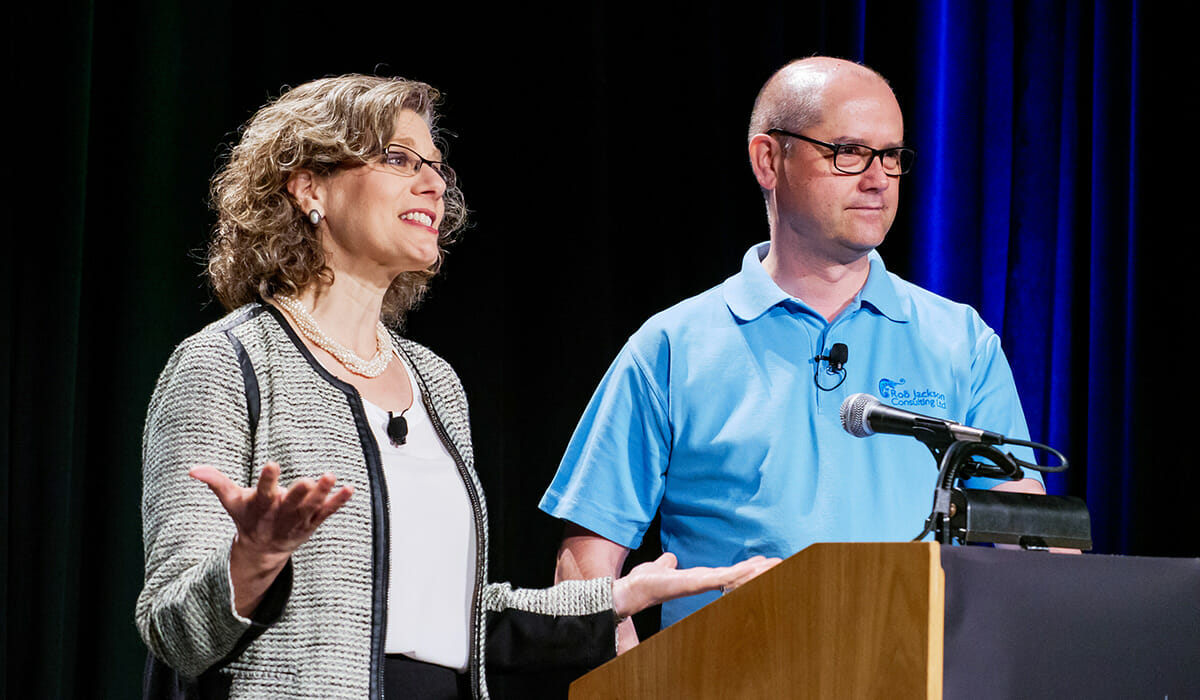
Many participants were introduced for the first time to established leaders in our industry. Rob Jackson, director of Rob Jackson Consulting Ltd., and Beth Steinhorn, president of VQ Volunteer Strategies, led an inspiring educational plenary at the Nonprofit Volunteer Engagement Opening Session, focused on the far-reaching effects that can be seen when we engage and enable volunteers. Attendees watched a series of videos, collected from across the globe, featuring volunteer managers speaking to the ripple effects that volunteers have had on projects within their communities. Buzzing with ideas and new motivation, the crowd set off for two and a half days of learning and sharing best practices, conversations with colleagues and those “ah ha!” moments. Sessions on creating an environment of inclusion displayed the trend of demographic changes in the volunteer population and our need to stay on top of them. And MAVA’s own Lisa Joyslin presented data collected from a recent inclusion study and the
. The need for data tracking and reporting on trends grows with the industry, and MAVA is a leader in these studies.
Beth Steinhorn and Rob Jackson lead an inspiring educational plenary at the Nonprofit Volunteer Engagement Opening Session.
“The interactions and questions that sprang forth from the participants were energizing, and really displayed the need for continued transparency and establishment of best practices to help each other move the industry into the professionally recognized and rewarding job we know it can be,” said Kristina Wilkes, manager of volunteer projects at Chicago’s Museum of Science and Industry. Kristina was among the volunteers staffing the MAVA information table, which offered attendees the opportunity to learn how MAVA might benefit them — even if they’re not in Minnesota.
“As a member who lives and works in Chicago, I was able to talk to the benefits that institutions receive even if they aren’t within the Minnesota State lines,” Kristina said. “It was empowering to share how best practices for the management of volunteers are being presented from state to state and professional to professional every week through MAVA. The foundation may lay in the Twin Cities, but the work we do is universal.”
With the learning and networking that we did at this year’s Points of Light Conference I know that next year’s MAVA Conference, June 3-5 in Minnesota, will be another great step in supporting not just Minnesota, as the land of volunteering, but all of America.
We extend our heartfelt thanks to Points of Light for bringing the conference to Minnesota and for shining a light on MAVA,
and the stellar volunteer engagement work conducted in Minnesota.
The 2020 Points of Light Conference will be held June 10-12, 2020, in Washington, D.C.! Subscribe to our email newsletter, and be the first to get conference-related news and updates, including the call for proposals and early-bird registration discounts.
Karmit Bulman is the executive director of the Minnesota Association of Volunteer Administration. She oversees strategic planning, board development, financial management, fundraising, program development and day-to-day programming at MAVA.
Transforming Organizations Through Strategic Volunteer Engagement
Despite a surge of passionate leaders, the social sector continues to struggle with getting volunteer engagement just right while creating sustainable infrastructure for effective volunteer engagement. That’s where the Service Enterprise Initiative comes in. A national change-management approach, the Service Enterprise Initiative helps organizations gain a greater return on volunteer investment to meet their missions by tackling tough questions like: How do we address myths or misconceptions about volunteers among our staff? How can we get more resources for volunteering and make our program more sustainable? How can we work with volunteers to do more with less? The initiative is inspired by principles from Reimagining Service, a coalition of cross-sector leaders, researchers and practitioners that identified what was needed for effective volunteer engagement after the Serve America Act was signed into law in 2009. At its core, Service Enterprise transforms an organization’s culture so that it values volunteers as part of its human capital strategy.
A Paradigm Shift for Volunteer Organizations
Through a diagnostic, training, coaching and certification model, certified Service Enterprises have seen real impact. Asheville Humane Society in North Carolina has seen the number of animals they care for increase by more than 25 percent because of how they partner with volunteers. Thanks to Service Enterprise, they can also demonstrate that for every $1 they invest in volunteer engagement, they see a return of $18.24. The humane society is part of the national Best Friends Animal Society, which has taken on a leadership role by joining Service Enterprise as a Hub to certify its network of rescue organizations to operationalize its mission to “save them all” and end the killing of homeless pets. It’s working.
“Service Enterprise is changing our paradigm regarding volunteers and their role,” said Tracy Elliott, executive director of Asheville Humane Society. “They have always been important to us, but we are beginning to see and experience vastly expanded roles and responsibilities for volunteers, in turn increasing our ability to achieve our mission.”
Leaders like Elliott are committed to the future of nonprofit capacity building, and see the Service Enterprise model as the way forward in changing the way organizations can achieve their missions by harnessing the power of volunteers.
A growing number of organizations, including food banks, animal shelters, mentoring organizations, and agencies providing affordable housing and community services, are getting certified. Even cities like Boulder and Fort Collins, Colorado, and NYC Service in New York, are joining the ranks of more than 400 certified Service Enterprises across the country as they seek to bridge the gap between local government and residents.
Points of Light founder President George H.W. Bush likened community organizations like these to a thousand points of light, “spread like stars throughout the nation, doing good.” By helping organizations create a sustainable environment for volunteering as part of their culture, the Service Enterprise Initiative enables these points of light to shine even brighter.
To learn more, including how your organization can become a Hub to lead Service Enterprise transformations in your community, visit www.pointsoflight.org/SEI.