Supporting Young Volunteer Leaders: How to Help Youth Become Passionate and Engaged in Community
When we think of leaders, we are not always thinking about those under 25. However, we know that Generation Z, those born after 1996, are already leaders making substantial changes in our society and there’s a lot we can learn from them. In our civic engagement research, we found that Gen Z was the most civically engaged generation. These young leaders are setting the new standard for civic engagement, leading the way through actions like:
advocacy through social media
using their purchasing power
making employment choices based on the impact a company has on the world
While those in the generation following, Generation Alpha (born 2011-2025), are still developing as leaders, they’re following in similar footsteps with the support of their parents. In fact, in a
by Civic in partnership with Hart Research Associates, 99 percent of parents prioritized developing character, integrity, and finding happiness over getting a good job and being prepared for college. We know that volunteering and giving back in meaningful ways helps young people in attain these attributes and there are ways adults can help young people reach their world-changing goals.
Supporting the Civic Life Development of Young People
Here are a few ways to help young people you know based on where they are in their leadership journey.
For the developing volunteer leader (typically Generation Alpha):
Include them in tasks to help them build confidence. Researchers Lucía Alcalá and Sheina Lew-Levy found that delegating daily tasks to our youngest helpers rather than allowing them to sit on the sidelines can build confidence in their ability to contribute and may encourage them to be more helpful later in life. This can include asking them to help by bringing you supplies or making them responsible for a part of a project.
Lead by example to help them envision their future. Whether it’s volunteering in the community or being kind to neighbors and strangers, seeing adults they look up to modeling helping behaviors sets an example for young people on how they can work to address issues in their community. It can even be doing things you’re already passionate about, like Daily Point of Light honoree Wendy Wu, a piano teacher who shares her love for music and volunteering with students of all ages.
Help them learn about various ways to give back. There are a lot of great books you can read with young people or shows you can watch that address the impact of giving back. After reading and discussing Kids Who Are Changing the World (You Should Meet) with my own six-year-olds, they decided that they’d like raise funds for a local family shelter so that the children living there can have toys to play with. You can find more resources in the Youth and Family Corner of the Volunteer Issue of Civic Life Today.
For the independent volunteer leader (typically Generation Z):
Help them feel more fulfilled by directly connecting them to ways to help others. It’s not an understatement that the isolation and loneliness brought on by the COVID-19 shutdowns have substantially impacted the mental health of young people. Research has shown that volunteering positively impacts social and emotional health and gives young people a sense of belonging. You can direct older youth to in-person opportunities through our platform Engage or instructions on how to build their own activity through our Virtual Volunteering toolkit.
Understand that the issues that may be of most concern to young people may not be your top issues. Recognize the areas that young people are most concerned about and help them address those issues in ways that resonate with them. It’s important to remember that their world view may be different and supporting their vision for the future will help them actualize it. One activity you can do to get everyone on the same page is our Courageous Conversations
Empower them by looking to them as true leaders and experts. Allowing youth to truly lead the change they want to see can have greater impacts than adults alone can produce. Frances Leung and Nicole Kim, who are bringing Gen Z BIPOC youth together to make youth activism communal and accessible through their work with the Nonstandard Project, are examples of young people leading work and having a real impact.
For all youth:
Give guidance and be supportive of ideas.
Depending where young leaders are in their development, they may need varying levels of guidance. Be supportive of their ideas and look to use the
approach when helping think through ways to strengthen their projects.
Finally, be an advocate for young volunteer leaders. Help others understand the importance of youth voice, youth guidance and youth as true co-leaders in your volunteer program development and implementation. The work we do with them ensures they’re ready to continue to lead for decades to come in areas beyond volunteering.
Special Olympics Florida, with the Support of Volunteers, Offers Sports and Socialization Opportunities for Children and Adults with Intellectual Disabilities
With more than 21 million residents, the state of Florida is the third most populous in the nation. It’s also one of the most diverse states, with large proportions of indigenous people, Asian, Black, Hispanic and European residents.
Special Olympics Florida is making sure that inclusion and opportunities extend to another group of Floridians – a group that spans all ethnic groups – those with intellectual disabilities. Those efforts continued through the past year’s coronavirus pandemic, when Special Olympics Florida launched a health and wellness program that reached participants virtually.
Special Olympics Florida serves close to 60,000 children and adults with intellectual disabilities, who are given the opportunity to play and compete in various sports, from baseball, basketball, swimming and flag football to bocce, bowling, skiing, speed skating and even surfing.
Because participants have special needs, Special Olympics works hard to provide plentiful coaches and others who teach, cheer and support the athletes to ensure their success.
That’s where dedicated volunteers make all the difference.
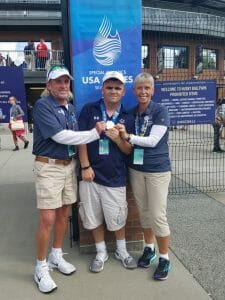
Michael and Nancy Howard, coaches with Special Olympics Florida, accompanied Frankie Jaruszewski to the Special Olympics National Games in Seattle in 2018, where he won a gold medal in bowling.
Nancy and Michael Howard, who live in Palm Beach County, have volunteered their time as Special Olympics coaches for 12 years, and they don’t plan to stop anytime soon. Unlike many coaches, the Howards are not the parents of a Special Olympics athlete. Nancy is a special education teacher at a school that decided to create a Special Olympics team. “Team Howard” participates in bowling, basketball, track, surfing, softball and has started open-water swimming.
Michael, a recently retired inspector for Palm Beach County, has been volunteering alongside his wife.
“If you spend about 15 minutes with these kids, you’re hooked, and that’s what happened to me,” says Michael. “It’s a lot of work, but when you see these kids’ faces, it’s worth it.”
The work is considerable. The Howards arrange and run all practices. If athletes don’t have a ride, they pick them up and take them home afterward. If they lack the proper clothing or equipment, the couple finds a way to provide them. The Howards also strive to schedule extra time for the athletes to socialize with one another, as well as time for their parents to socialize.
The couple even travels, at their own expense, to out-of-town regional, state and even national competitions, a gesture that means everything to athletes whose own parents cannot attend.
Nancy agrees that the volunteer work is gratifying. “Maybe an athlete couldn’t dribble last year, but this year, they can dribble and maybe even make a basket or two. It’s not about the sport in most cases; it’s about the relationships they build with one another,” she said. “It also gives the parents some respite – they know their children are taken care of by us.”
Although the COVID-19 pandemic added even more tasks, such as taking temperatures and extra measures to ensure social distancing at both indoor and outdoor activities, the Howards took it in stride.
“We can’t imagine not doing this,” said Nancy, “People talk about moving away when they retire – we can’t. If we left, these kids would lose out on their Special Olympics team, because I don’t know who would step up to take our place.”
Logan Alvarez, on the other hand, is a volunteer at the very beginning of his adult life and career.
Logan is just 18, but he’s been volunteering with Special Olympics Florida in Miami-Dade County since he was only 7.
“My mom is a teacher and she coached a Special Olympics team,” says Logan. “I would attend state games and local games and I would hand out lunches and help in any way I could. When I got to high school, I trained as a Unified Special Olympics team, where athletes with and without disabilities play on teams together. Logan also helped host basketball and softball skills training events for Special Olympics participants.
“I believe that the world needs a lot more inclusion,” says Logan, who is now a freshman at Florida International University, studying political science and pre-law. “I want to become an ambassador for Special Olympics.”
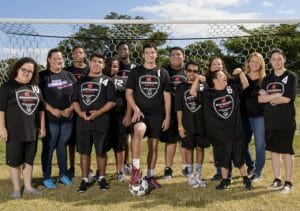
Logan Alvarez (center, with foot on soccer ball) poses with triumphant Special Olympics soccer players in fall 2019, after Miami Southridge Senior High School was named an ESPN Top 5 Unified National Banner School.
Logan, who is not disabled, and in fact was a stand-out high school football player and class president, is highly aware of how difficult acceptance can be for those who with special needs. It’s what makes him passionate about what he calls the “race for inclusion.”
“Just seeing how happy the (Special Olympics) athletes get and seeing them being included is worth everything to me,” says Logan. “In society, you see how left out they are.”
COVID-19 prompts new programs
Special Olympics Florida stepped up throughout the state after the COVID-19 pandemic forced in-person sports programs to be temporarily suspended by hosting multiple virtual programs that encouraged athletes to remain healthy and fit.
At least eight separate programs succeeded in conducting more than 4,900 virtual screenings across all Healthy Athletes disciplines, according to Jim Stratton, communications director for Special Olympics Florida.
For example, a series of videos called “Fit 5 Like a Pro” features both Special Olympics and professional athletes, who encourage viewers to exercise five times per week, eat five fruits and vegetables daily, and drink five glasses of water a day.
“We piloted a virtual screening program for Special Olympics International, using Zoom to connect athletes with medical professionals who answered questions and discussed any health concerns the athlete had,” said Stratton. “We used social media and Zoom to conduct weekly emotional wellness sessions, organize fitness challenges, offer nutrition tips, share healthy recipes, and play games. The sessions provided valuable information but, just as importantly, helped our athletes and their families feel connected during a time when many were limiting their social contacts.”
Teens Encourage Youth to be the Driving Force in Reducing Single Use Plastic
17-year-old Amy Meek has always had a connection with nature, as she grew up in Nottingham, England. She remembers spending a lot of time with her sister Ella and her parents as they took family hiking trips and went on outdoor adventures. Eventually, her connection with the environment turned into a powerful youth movement to protect what she holds so close to her heart.
The Meek sisters couldn’t wait for someone else to do the work of protecting the environment because they believed that there was no guarantee that action would be taken — and that’s when Amy and Ella Meek brought Kids Against Plastic to life in 2016.
The Meek sisters took particular interest in plastic after learning about the UN Sustainable Development Goals, and one in particular had a vision of preventing the damage of plastic pollution — goal number 14: Life Below Water.
Their mission for Kids Against Plastic centers on reducing single use plastic consumption and encouraging individuals, schools and businesses to be more discerning when it comes to the damage that single use plastic can do. Single use plastic is essentially plastic that is used once and then thrown away and cannot be recycled. It ends up on landfills, and is commonly found in the ocean and around the animals that call it home.
Amy believes that the urgency in reducing single use plastic lies in the belief that it’s already proven to damage the environment and sea mammals — and that it will directly affect the future generations of our planet.
“If we don’t take action now to reduce plastic usage, it’s going to be something that we are forced to clean up for hundreds of years,” Amy said. “It’s not going away anytime soon and it looks like young people are going to be left with this massive environmental crisis that we’re going to have to fix despite not being the predominant cause of it,” she added.
First, Amy and Ella marched into a local café with plastic clipboards in hand and educated the staff on ways they could reduce their single use plastic. They continued this outreach in other cafes near Nottingham, and eventually began outreach in schools and other businesses.
Amy created the organization’s Plastic Clever Schools Initiative because she understands that reducing plastic can be initially intimidating, expensive and time consuming. The program is all about making small steps that eventually have a huge impact. These steps include using the main forms of plastic: plastic bottles, cups, lids, straws and bags.
The program has gathered more than 1,000 schools that have partnered with the sisters in making reusable items the new norm. She’s even spoken to the business manager at her own school about reducing plastic usage by supporting reusable lunch boxes, refillable canteens and wooden cutlery.
Amy also wants to see the organization and its volunteers pick up at least 100,000 pieces of plastic litter — one for every sea animal killed by plastic in the oceans every year. They’ve almost hit their goal with 90,000 pieces of litter picked so far.
Although Kids Against Plastic is based in the United Kingdom, Amy designed the organization’s educational resources to be adaptable anywhere around the globe. She believes in cleaning up the community you live in first before pointing fingers at others, and that everyone has a part to play in the global movement of protecting the environment.
Another important component of Kids Against Plastic is young people. Amy is dedicated to encouraging youth around the world to stand up for what they’re passionate about and stand firm in what they believe in. She’s seen youth involvement continue to grow, and the organization’s Kids Against Plastic Club — an initiative that encourages children to become active against plastic pollution— has reached 100 members.
A source of motivation for Amy and her sister lies in the fact that they no longer have to start educational conversations by telling people why plastic is harmful. They’ve seen attitudes towards plastic, environmentalism and litter have shifted on a global scale since 2016.
They also make it incredibly easy for schools and organizations to find educational resources on reducing plastic usage.
She was mostly at home with her family during the early months of the COVID-19 pandemic and turned a difficult season into an opportunity of growth by digitizing most of Kids Against Plastic’s work. The organization hosted workshops and Zoom conversations online — something Meek had no prior experience in. It’s also been a season of true reflection for Meek.
“It gave us a chance to sit down and think about how we could improve the outreach that we do and how we could better support the young people we work with,” Amy said. “It’s been really great to see something positive come out of this.”
As Amy approaches the end of her secondary education in England, she has dreams of becoming an environmental campaigner or activist. She also finds herself to be more and more passionate about youth engagement.
“It’s not just the environment issues, but also the power that young people have when they stand up to make a difference — no matter what issue it is,” Amy said.
Laureus Uses Sport to Serve Youth, Bridge Divides and Bring Communities Together
In Atlanta, Ga., youth in underserved neighborhoods just blocks from where the Atlanta Hawks basketball team plays can learn about the sport while being mentored in healthy lifestyles, exercise and social skills, thanks to a local program called Hoops University.
In Kenya, Africa, an initiative called Boxgirls teaches girls and young women up to age 23 the sport of boxing – giving them self-defense skills as well as a feeling of empowerment to succeed in a male-dominated society.
Both initiatives are among more than 200 sport-related programs in 40 nations that receive funding through Laureus Sport for Good, a global charity that works to address violence and discrimination affecting disadvantaged youth. Laureus Sport for Good was founded under the patronage of the late Nelson Mandela, president of South Africa from 1991-’97, and a lifelong philanthropist and activist against racism.
“Globally, we’re working to tackle violence, discrimination and disadvantage through the power of sport,” says Adam Fraser, Chief Executive of Laureus globally. “Programs in South Africa use surfing to provide mental health therapy sessions for kids with trauma; programs in favelas in Brazil are using soccer to bridge the divide between different gangs,” said Fraser. “It runs the gamut in terms of sports being used and problems being addressed. We’re trying to support local community grassroots organizations to empower them.”
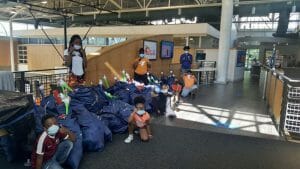
Laureus Sport for Good Atlanta has collected $25,000 worth of high-quality sports clothing and equipment to be distributed to disadvantaged kids to encourage healthy sports activities during the 2020 pandemic. Volunteers spent days sorting, packaging and delivering the special “summer kits.”
Regardless of the sport or location, Sport for Good programs rely on dedicated volunteers.
Many volunteers have personally experienced the benefits of playing sports as a child or teen and are now using the organizational and leadership skills they’ve honed as adults to bring sports opportunities to disadvantaged youth.
For example, Tarin Berry has a career as director of operations at the metro Atlanta YMCA. As a volunteer member of
, which includes 10 other passionate community leaders working to solve local challenges collaboratively, Tarin helps to match community youth programs with high-powered supporters in the form of corporate executives or professional sports teams.
“I’ve developed professional relationships with all of the professional sports teams in Atlanta for the Y, and I’ve continued those relationships, so when it came to do the (volunteer) work with Laureus, it was such an easy fit and so easy to pick up the phone and call on them for resources,” said Tarin. “A lot of what I bring to the table is project management and keeping things on task.”
Even though Tarin is also a busy mother of four, she volunteers for Laureus because sports made “a huge difference” in her own life. She grew up in a family that moved across the country often. “Sports was the one constant,” she says. “I could go anywhere and pick up a softball and fit in. I was never amazing in sports, but it gives kids confidence, the ability to work with a team and a sense of achievement. I can’t even imagine where I would be, even in my professional life, if I had not had the experience of playing sports while growing up.”
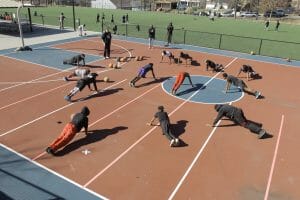
La’Teef Pyles and participants in Hoops University, a community group he runs in downtown Atlanta which is supported by Laureus Sport for Good.
On the other hand, La’Teef Pyles, who serves on the same leadership council, is more hands-on when it comes to helping kids play sports. He leads one of those grassroots neighborhood groups for underserved youth that is now receiving financial support from Laureus Sport for Good.
A barber by profession, La’Teef lives and operates his business in downtown Atlanta. He started Hoops University to teach local kids to play basketball, while working in lessons about healthy living.
La’Teef said he’s grateful for diverse training in coaching, mental health and fitness that Laureus Sport for Good has funded.
“I’m obsessed with basketball – I would teach anybody,” says La’Teef. But he’s especially proud to be called “Coach” by kids in the immediate neighborhood, which reminds him of the South Side Chicago area where he grew up. His parents wanted to be sure he had good influences in his life, and he strives to be that good influence for others.
Adapting to the pandemic
When the 2020 pandemic kept basketball participants from gathering at a neighborhood park, La’Teef installed a basketball hoop in his own backyard, where kids can practice in a socially distanced manner. They also get to see La’Teef in his barber shop, meeting more role models among his customers.
“These guys come by here, they subconsciously see a man of color conducting business, responsibly supporting his family and giving back to the community,” said La’Teef.
Meanwhile, Tarin Berry used her connections during the pandemic to help Laureus Sport for Good put together special gift packages of high-quality sports equipment and clothing that were distributed to disadvantaged families along with food donations so that kids could stay physically active, despite the disruption in normal athletics.
Promoting safety beyond COVID-19
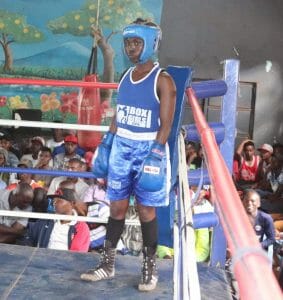
Emily Kasiyoki participates in a national boxing competition.
In Kenya, volunteering led to a paid job at Boxgirls for Cynthia Coredo, who has worked with the organization since 2008. She had experience working with computers and wanted to share her skills for a good cause. She now manages fundraising for the program.
Boxgirls was created when two girls asked to participate in boxing lessons offered by a local boxing coach, Analo Anjere, popularly known as Priest, who was teaching kids in the Kariobangi district of Nairobi, Kenya’s capital and largest city.
Today, Boxgirls also serves girls in rural areas as well as in the city. Currently, about 2,655 girls are enrolled, and the program has an 80 percent retainment rate.
“We use boxing as the entry point to really advocate for girls’ empowerment,” said Cynthia. “We believe it’s very important to be change agents to give girls and young women a voice.” In a society where physical and sexual violence against women has become a national crisis, Cynthia says it’s important to emphasize the ideology that women deserve an equal chance at an education and have a right to a safe life. In addition to learning boxing and participating in tournaments, girls are given leadership mentoring, reproductive education and practice in running a small business, for example, the group makes and sells handbags.
Volunteers work with the girls, but also reach out to parents and schools, to raise enthusiasm for helping the girls to succeed and encouraging them to stay in school and also participate in the Boxgirls training sessions. “We use them as a point of contact in the schools,” said Cynthia.
At least one girl who went through the Boxgirls training has been so inspired that she is now volunteering as a mentor to other Boxgirls participants, encouraging the next generation to become adult leaders and coaches in the program.
To learn more about Laureus Sport for Good, visit
Daily Point of Light honoree and Points of Light Youth Network member Sage Hirschfeld talks about why listening and learning is important both for youth and adults.
Listening is one of our world’s most underrated skills. It has the power to expand your worldview and drastically improve your relationships. I implore you to take a moment and imagine what our world would look like if people genuinely listened to each other and put effort into learning about other people’s perspectives, logic and reasoning for their beliefs and actions. That world seems pretty nice, right? It’s also pretty different from the one we live in now.
Why is that? Why do we live in a world where we don’t listen to each other?
Taking the first step to listen is hard. Sometimes we hear things that hurt, either because they include stories of pain and abuse or because they call into question things we previously believed. Sometimes when we listen, we hear things that just don’t make sense in our heads and it takes us time to understand. That can feel really frustrating.
But humans do things that are hard and frustrating all the time (shout out to taxes and physics homework), so what makes listening and learning so different?
The reason we don’t live in a more listening world is because we haven’t built up the stamina for it.
Sage Hirschfeld: “
Once we understand that listening isn’t easy, we’re more forgiving of mistakes, we’re more receptive to the time it takes and we’re more resilient in the messy reality of the learning process.
”/ Sage Hirschfeld
Listening and learning are processes that take time and struggle and that’s not what our society values. Our society has taught us to appreciate what’s fast, easy, and convenient. That’s how we like our food, our social media and even our information. With the polarization of news sources, the information we’re given is filtered based on what will be the most convenient truth for our consumption rather than based on what’s actually happening.
Over time this erodes our ability to tolerate the discomfort that comes from absorbing information that might make us pause. This process involves considering how this information fits into our worldview and whether we need to re-evaluate some of our previously held beliefs. Our listening and learning muscles atrophy and we’re left with very little stamina for perspectives or information that don’t fit neatly into our expectations.
On top of this, our society normalizes that lack of stamina. In America, it’s common to write someone off completely when they have an opinion that differs from yours. Even in our highest levels of government we see this happening. That’s not normal! But we’re so used to it that we’re more surprised to hear about a bipartisan piece of legislation being passed than we are about our government literally shutting down when members of congress refuse to listen to each other.
So what can we do about this?
For the past few months, I’ve been co-facilitating an eight-week virtual seminar on reproductive justice. I’ve watched our multi-generational group take in a curriculum full of stories of injustices that were hard to listen to and perspectives that were so different from their own that it took time and some serious mental legwork to comprehend.
But still, week after week, people kept showing up.
We sat in the discomfort of hard truths and waded through discussions where we felt uncertain. People would ask questions, share stories, make mistakes and then forgive each other (and themselves) for these mistakes. At times it was hard but no one shied away. Or if they did at first, they returned each week to try again.
The secret was that we didn’t pretend it would be easy.
Once we got past that, we were able to go into the struggle together. And that made all the difference.
Once we understand that listening isn’t easy, we’re more forgiving of mistakes, we’re more receptive to the time it takes and we’re more resilient in the messy reality of the learning process.
The key to a more listening world is to see it realistically: a place where there are just as many misunderstandings and mistakes as there are now, but instead of taking them as a sign to jump ship and stop trying, seeing them as signs that we’re not done learning yet, that we need to listen a little harder.
I don’t know exactly how to get to that world. But if I had to guess, I would start with listening. Today, tomorrow, and every day after that.
To read more about listening and learning, download the latest issue of Civic Life Today.
that Generation Z is one of the most civically engaged generations, with nearly 40 percent saying they have taken five or more civic actions in the past year. But still, many said they have taken less.
We know today’s civically engaged person may express their desire to do good through the purchases they make, what they share on social media, and what nonprofit organization to support as a volunteer or donor. But often times, using one’s voice to speak up on an issue can be the most intimidating step to take, especially for a young person.
It may be difficult for young people to see how they can use their voices and make themselves heard. Parents, family members, and educators can play an important role in supporting children and young people in using and developing their voices. No matter who we are, we all have the ability to influence those around us – from sharing information on social media to speaking at a local town hall meeting to simply having a conversation at the dinner table with family.
Here are some ideas for supporting children and young people in your life to use and develop their voices, along with insight from the Points of Light Youth Council.
Listen. Sometimes, for young people especially, the challenge is feeling that their voices aren’t heard or don’t make a difference. Listening and responding when they raise and advocate for issues that they care about can help encourage them to develop their voice.“The youth are not waiting until they get older to make an impact in the world. We are making moves and your support is always needed. My advice is to give us room to grow and listen to our needs. As youth we see what’s going on in the world and we want to do our part to make it better.” – Khloe Thompson, Youth Council Member
Offer guidance. There are as many ways to use our voice as there are causes we want to support. Learning what issues and causes matter to us and how to advocate for them is a constant process, particularly for young people. Help them think through ways to use their voices safely and effectively.
Provide tools and resources. These tools could include books or other materials about how to use your voice, as well as resources on the causes and social issues they care about. A great place to start is the Voice issue of Civic Life Today, which includes numerous resources, including a Youth and Family Corner with tools geared toward a young audience.“Sometimes the best way to get youth involved…is to show them the ultimate impact. If they know what they’re working towards, they are more motivated to make a difference.” – Adom Appiah, Youth Council member
Lead by example. Perhaps one of the best ways to support young people in using their voice is to use your own. From more formal ways like advocacy to informal ways such as having conversations with family and friends, there are many ways to model using your voice and to support the young people in your life in using theirs.“Leading with the next generation of changemakers has allowed me to found two service projects, each giving me the chance to use my voice to benefit others for the past decade — all because my mom encouraged me to believe in myself and showed me what it meant to serve others.” – Eleanor Schoenbrun, Youth Council member
For more on using your voice, including resources and action plans,
affiliates across the country to revitalize school learning environments with the goal of supporting students in achieving academic success. Through our School Transformation Day project, employee-volunteers roll up their sleeves for school beautification projects, from painting walls to building outdoor classrooms. This annual event has become a favorite of employees, attracting more than 20,000 Fidelity volunteers in the last 10 years.
This year, due to COVID-19, our decade-long, beloved School Transformation Day was at risk of cancellation. But at Fidelity, we believe that long-term change and success comes through collaboration, listening and adapting to the needs of our communities. And that is exactly what we did. Throughout the regions, our community relations team worked closely with local Points of Light affiliates to understand our community partner’s top needs and priorities during the 2020-2021 school year, mid-pandemic. We also engaged our passionate colleagues across the country to gauge their interest in completing community projects from home, with their families.
New York-New Jersey Season of Transformation
“Despite the unusual nature of 2020, we saw that our employees, while working in a virtual environment, were even more enthusiastic about supporting community,” said Heidi Siegal, vice president, community relations at Fidelity Investments. “Our people are our greatest asset.”
As a result, we pivoted School Transformation Day to a fully virtual, experience reflecting the unique needs and difficult challenges of each community. Our community relations team consistently heard three themes: COVID-19 safety needs, support of virtual learning and addressing the digital divide.
Fidelity assisted schools and nonprofits with replenishing the resources utilized throughout the crisis to meet the ongoing needs of students including COVID-19 safety kits, face shields, contactless thermometers and touchless water fountains.
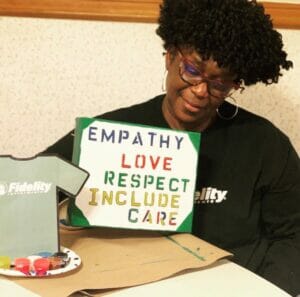
Employee volunteers focused on the social and emotional support of students. Working at home with their families, volunteers created mindfulness kits and recorded guided meditations and beginning yoga videos for students as part of one school’s new self-regulation room sponsored by Fidelity. Volunteers also created inspirational canvas art to hang in hallways, garden kits for students to build their own gardens at home, classroom safety signs, reading corners to promote literacy and even tie-dyed t-shirts for the students.
Additionally, volunteers placed over 380 Amazon Wish List orders which provided schools with more than 4,000 individual supplies including notebooks, folders, paper and snacks.
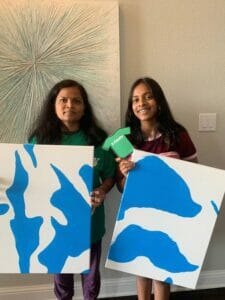
A mom and daughter create a mural together in Texas.
Through our community partners we learned that the pandemic exacerbated educational inequalities among students, and none more critical than the lack of access to technology for Black and Brown students. In response, Fidelity committed to providing technology resources for educators and students to effectively engage in remote learning. Students in schools where Fidelity has a presence received equipment needed for virtual learning including iPads®, Chromebooks™, earbuds with mics and lap desks. Many teachers also received a second monitor to enhance their online teaching experience. Additionally, community partners like the Boys & Girls Clubs, which throughout the pandemic have become centers of education by extending their hours to support virtual learning, were supported with enhanced Wi-Fi and additional equipment.
Community and school partners were also supported through a series of grants made in each region. The grant funding was used at the discretion of the recipients to purchase safety and cleaning equipment needed to combat COVID-19, technology for students and teachers, virtual curriculum and more.
“Our strong partnership with Points of Light and the commitment of our employee volunteers make it possible for Fidelity to continue impacting communities,” said Siegal.
The 2020 annual School Transformation Day involved more than 620 employee volunteers and their families virtually connecting with 14 schools and organizations across the country impacting more than 28,000 students and nearly 500 teachers.
Season of Giving: Use Your Voice for Good
For decades, people have been using their voice to advocate for change. From the civil rights marches in the 196
0s, to the peaceful protests this year, individuals have
take
n
action in their communities
and
been
using their voice to
advocate for important issues
in greater and greater numbers
.
There are so many ways for people to use their voice – and sometimes they don’t even realize they’re doing it!
It can be as simple as
telling your friends and family about a nonprofit organization
that is
close to your heart.
It can also include calling your electe
d officials about an issue, using your voice to speak out on social media, using your voice to bring kindness to the world.
For our young Daily Point
of Light Award
honoree
Paloma
Rambana
,
using her voice was out of necessity. She realized there was a funding gap for visually-
impaired
children between ages 6-13
.
She worked and advocated to
the Florida legislature
, who
approved a $1.25 million program
to support t
he visually-impaired community
,
with $500,000
designated
to help kids ages 6-13
at the Division of Blind Service
s
.
Positive
change begins when one person shines a light and uses their voice to uplift underserved groups and causes. Read more
is more likely to participate in a demonstration or rally while older adults, like
baby
b
oomers,
are more likely to call elected officials.
We believe that civic engagement isn’t a one-size-fits all concept and our suggestions for harnessing the power of your voice can be tailored to fit your unique circumstances and values.
Points of Light’s Youth Council Provides Your Family Volunteer Day Playlist
Music can make any task into a party. This year, as we celebrate the 30
th
anniversary of Family Volunteer Day, we thought while we can’t be together, we can share the joy in giving back by sharing some great music! In honor of this major milestone, we asked the Points of Light Youth Council to handpick their favorite songs to listen to with their families while doing their service projects.
Here are some of the songs they’ll be listening to on Family Volunteer Day. What else would you add?
Be A Light -Thomas Rhett
Wings – Little Mix
This Mountain – Faozia
HandClap – Fitz and the Tantrums
Happy – Pharrell Williams
Can’t Stop the Feeling! – Justin Timberlake
Better When I’m Dancin’ – Meghan Trainor
Happy Anywhere – Blake Shelton & Gwen Stefani
I Don’t Need Anything But You – Jaime Foxx, Quvenzhane Wallis
to choose from one of our DIY project guides or virtual volunteer projects that you and your family can perform anytime during the month of November. And while we know sometimes it’s difficult to get younger kids involved, our
Nominate a Family for a Daily Point of Light Award
Millions of families act on their power to do good every day, using their hearts, hands and minds to help strengthen communities and solve persistent problems. We recognize their stories, and lift them up to inspire others to make a difference. If you know of a family that is making a difference in their community, nominate them for a Daily Point of Light Award. Each day, an extraordinary volunteer or family is recognized for their service work.
While we’re excited to celebrate family volunteering on Nov
.
21, we recognize that many
families may need to adjust how they
’re giving back this year
.
Varying school and work schedules and more time at home means that many families are together more, but
need
different types of activities to do together.
Here are a few
ideas
for
spending time together as a family while doing good for others.
Here are
eight
projects for kids of all ages:
Food banks and pantries serve a great service to those in need of food in our communities. In addition, food banks and pantries are seeing an increase in visitors and may not have enough in food donations to meet those needs. By completing virtual fundraisers, you can help them help others. Feeding America can help you find a local food bank or pantry you can support!
The impact of COVID-19 continues to change our daily lives and routines, but the in-person volunteers that nonprofits rely on are more important than ever. Make masks to protect yourself, your family or others in your community who want to volunteer in person. The following face covering project can be modified to do at home and delivered via mail or drop off to adhere to the social distancing guidelines set by local and national authorities.
We could all use a visual reminder to be kind! Help spread kindness by putting your thoughtful and good intentions on paper and display them in your window for others to see! This arts and crafts project can inspire and encourage others to ignite a chain of kindness too! All you need are a few of the following: construction paper; markers or crayons; stickers; paint;glitter; glue and tape.
Some senior citizens can feel isolated a lonely. A simple visit, even a virtual visit, can make all the difference in their day. Help bring cheer to a senior center near you by sending notes or doing virtual activities! This project can help brighten the day of a senior who is feeling distant from loved ones and family members.
There are a lot people going through hard and frustrating times. You can help them channel and release their frustration by making Relax Bottles: water bottles decorated and filled with glitter. Watching the glitter settle after shaking the bottle can be relaxing. Use this Relax Bottle project guide to help others feel more at ease during these times of uncertainty.
Another great way to get young kids involved is creating boxes of love. Create and send Boxes of Love to send to military or first responders as a thank you and reminder of home. This DIY video is a great way to encourage younger kids to get engaged!
Helping seniors fight memory loss by doing puzzles with them, and by donating puzzles to organizations is a great way to serve seniors. You can even make your own puzzles! Watch this DIY video to learn more!
As the country is still facing natural disasters, another great way to help volunteer is by making and delivering fleece blankets to those in need: evacuees, families in homeless shelters or kids in foster care. Spread the love, and some warmth, with this DIY, no-sew blanket project.
There are many
other
ways to give back this year and do something that can bring your family together in a meaningful way
. With many people in need of kindness more than ever, your family can be the light that offers hope for a better tomorrow.
Nominate a Family for a Daily Point of Light Award!
Millions of families act on their power to do good every day, using their hearts, hands and minds to help strengthen communities and solve persistent problems. We recognize their individual stories, and lift them up to inspire others so we may each, in our own way, answer the call to make a difference. If you know of a family that is making a difference in their community, nominate them for a Daily Point of Light Award.
Each day, an extraordinary volunteer or family is recognized for their service work. Created by President George H.W. Bush and continued by Points of Light, these awards honor the power of people who step up and say, “Yes, I can help.”