



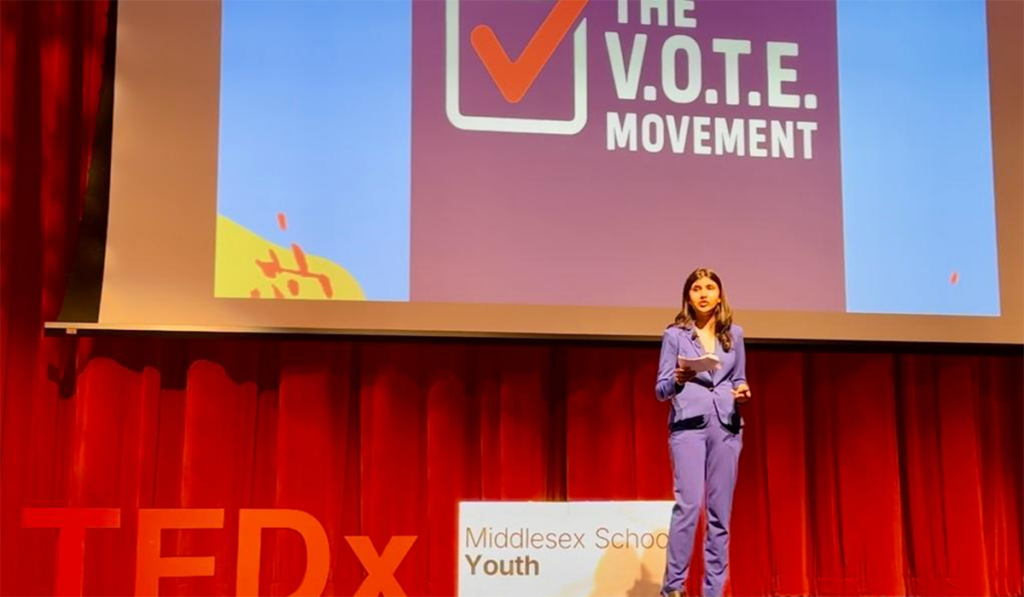
Meet Daily Point of Light Award honoree Sanya Nadeem. Read her story, and nominate an outstanding volunteer or family as a Daily Point of Light.
It all started with a statistic for Sanya Nadeem. The Massachusetts high school student heard that her hometown of Walpole had a 78% voter registration rate, which is relatively high. But when Sanya heard that only 9% of those people showed up to vote in local elections, she knew she had to make a change.
Sanya created a nonpartisan digital voter brochure listing polling times, open positions and short candidate bios and distributed it via QR codes, businesses, libraries and senior centers. The brochure reached more than 1,000 residents in one election cycle, and Sanya knew she had something big in her hands. She established The VOTE Movement, an organization that ensures every eligible voter, particularly young people, has the tools to make informed decisions about their local government.
One of Sanya’s greatest achievements with The VOTE Movement is the establishment of the town ambassadors program, which was designed to bolster civic education. Ambassadors reach out to candidates, design flyers, translate guides, host Q&As and knock on doors, so young people can practice democracy even if they aren’t old enough to vote. Currently, over 100 high school students across 25 states and three countries participate in the program, creating and distributing nonpartisan voter brochures for their towns while partnering with local organizations to help locals understand the ballot for their local election.
Slowly but steadily, Sanya has built the nation’s largest youth-led nonprofit dedicated to increasing voter turnout in local elections. The world is noticing, too: The organization recently received the National Carnegie Young Leaders for Civic Preparedness Fellowship, which included a $7,500 grant that enabled the organization to train town ambassadors in all 50 states and create school civic readiness workshops.
When Sanya heads off to college, she hopes to major in government or political science before eventually attending law school, where she can become a constitutional lawyer or civil rights lawyer. Her goal is to help protect voting access for every person in the country. But no matter where she goes, The VOTE Movement will continue right alongside her. Sanya’s dedication to the cause as a volunteer is a powerful example of just how much we can accomplish when we passionately believe in a cause.
What inspired you to get started with this initiative?
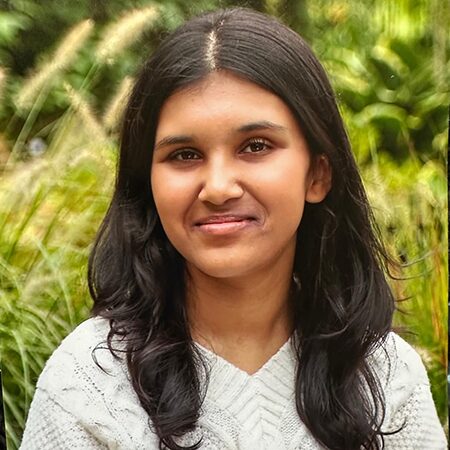
I heard a statistic in my own hometown that was incredibly shocking. My hometown of Walpole, Massachusetts, had a 78% voter registration rate, which is pretty high, but only 9% of those people actually showed up to vote in our local election. I started asking neighbors why, and the answers were almost identical. Every time, they would say they didn’t know when the election was, who was running or that the position mattered. That was the moment I realized that people weren’t apathetic. They were uninformed. I came up with a hypothesis that if I lower the barrier to information, maybe voter turnout in our local elections would rise.
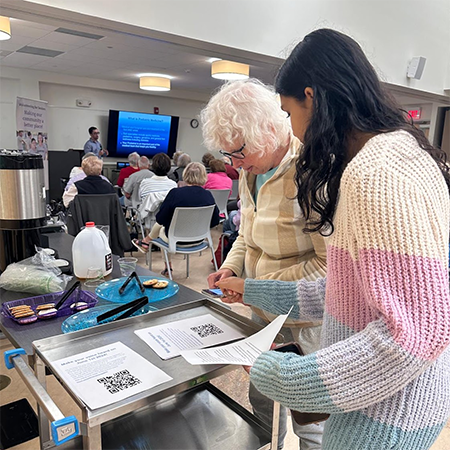
I created a digital voter brochure that pulled together everything residents needed, like where to vote, what positions are on the ballot, and the short candidate bios taken directly from campaigns to avoid any bias. I raised awareness about the brochure everywhere, like senior centers, grocery stores, local newspapers and social media, and asked to reach all the demographics of the town. To my surprise, over 1,000 residents interacted with it, and that one-town experiment showed me two things. One is that people pay attention when information is accessible. Second is that students don’t need to wait until they’re 18 to lead this sort of civic change. That’s what inspired me to turn that single brochure in Walpole into this national youth-led movement, which I call The VOTE Movement today.
Tell us about your volunteer role with The Vote Movement.
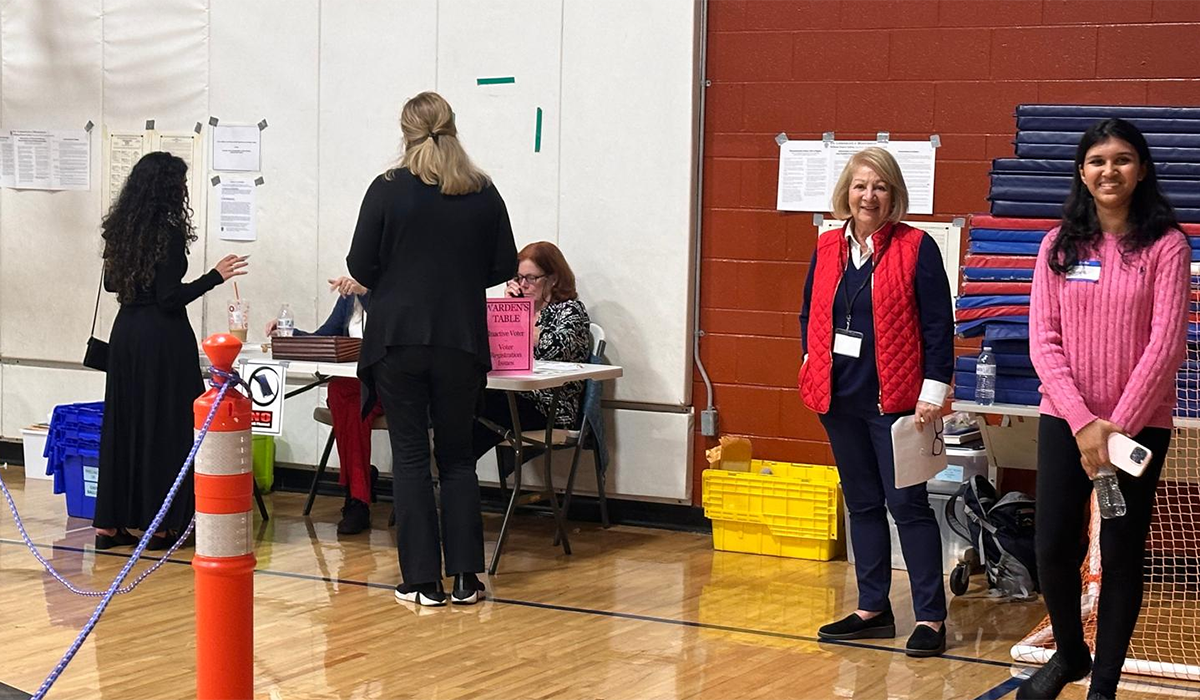
I serve as the founder president of The VOTE Movement, which stands for voter outreach, turnout and empowerment. We’ve grown to be the nation’s largest youth-led nonprofit dedicated to increasing voter turnout in local elections. In my volunteer role, I dedicate about 28 hours each month to running and expanding our work. That means I oversee our town ambassador program, a network of over 100 high school students across 25 states and three countries who create and distribute nonpartisan voter brochures for their towns. They host Q&As, partner with local organizations and transmit materials so every resident can understand the ballot for their local election. I write and update the toolkits for ambassadors, which have email and flyer templates, onboard and mentor each new student and coordinate our diverse national executive team, which is made up of students of many religions, cultures and income levels. I also manage partnerships with town clerks, libraries, senior centers, the League of Women Voters and state departments of education.
What are your long-term plans or goals for the organization?
Our long-term vision is to build the first national youth-led civic infrastructure for elections. Our goal is to train town ambassadors in all 50 states so that every town, no matter its size or income level, has a trusted student leader providing nonpartisan voter information. One major priority is expanding our partnerships. In places like California, Wyoming, Nevada, Colorado, Maine and more, we have agencies and people who are already sharing our resources with schools that historically receive little civic support.
But another long-term goal is to scale those through workshops. We want to continue equipping students with the skills and resources necessary, not only to inform voters but also to build sustainable civic habits in their communities. Ultimately, I want The Vote Movement to make local elections impossible to ignore. In 10 years, I envision a country where students lead civic life in their town, where local election information is accessible to every resident and where young people don’t inherit this broken system that we currently have.
What’s been the most rewarding part of your work?
The most rewarding part has been watching who is now leading this movement. When I started the vote movement, the goal was to fix low voter turnout. But as the organization grew, I came to realize that rebuilding civic participation also means rebuilding who gets to lead it. When forming our executive team, I didn’t just look for resumes. I also wanted to look for lived experience, health perspective and ensure that our organization was as inclusive as possible. Today, our executive team includes students who are Latino, Asian, Middle Eastern, Hindu, Catholic, LGBTQ+ and from a wide range of socioeconomic backgrounds. What’s most meaningful and rewarding for me is hearing ambassadors say that they’ve never seen a team that looks like this, or that they actually feel represented here, because this is actually one of the first times they have seen civic leadership that reflects their faith, culture, background or even the state that they’re from.
What have you learned through your experiences as a volunteer?
We’re not going to see an increase in voter turnout just because there’s one brochure I’ve given to town ambassadors. What works is having a dialogue with every town ambassador and seeing which centers in each community people interact with most. Are all the different demographics in your town going to interact with social media? Is it going to be something posted in the newspaper? Being able to understand that has really applied to all my other work, whether it’s in school or outside. The second part of it is this idea of understanding youth leadership. I think the rhetoric is very much that you should only be involved in politics once you turn 18. But the truth is that you can start at any age. That creates lifelong voters, and that creates future leaders.
Why is it important for others to get involved with causes they care about?
When someone gets involved in an issue that they care about, they’re not just adding another volunteer; they’re adding another lived experience, another perspective, another angle that no one else can bring, and that collective diversity of experience is actually what makes community solutions effective. It is one thing to care about climate change, food insecurity, education or civic engagement, but it’s another thing to help run a food drive, tutor a student or testify at a hearing. Once someone steps into action, that issue stops feeling distant. It becomes something that you are personally connected to, and that personal investment is what sustains movements over the long term. Involvement creates these ripple effects that people don’t always realize. When one young person volunteers, their friends are more likely to do the same.
Any advice for people who want to start volunteering?
Start with something that genuinely stays in your mind. It could frustrate you, it can concern you or excite you. But the best volunteers are never the ones who pick a random cause just to volunteer. They’re the ones who pick the thing that they can’t ignore. Passion is not enough on its own, but it does tell you where your effort will actually feel meaningful. I think volunteering becomes tangible the moment you attach your interest to a specific responsibility.
The second thing I would say is don’t disqualify yourself before anyone else has a chance to include you. Everyone experiences imposter syndrome at the beginning, even adults who have been working for decades. Organizations, especially like ours, don’t expect volunteers to know everything. What we need are people who are passionate about the issue, who follow through, communicate clearly and don’t leave when something is inconvenient.
What do you want people to learn from your story?
You have the power to make a real difference in democracy. Young people have the capacity and the power to lead the change. Just because we might not have those decades of experience doesn’t mean that we don’t have that passion. I would argue that we have a lot of energy and excitement to get involved. When young people get involved in politics at an early age, and when they pair what they’re learning about US history in high school with what they’re learning through the town ambassador program, they’re able to practice democracy. They’re gaining the sort of skill set that is very, very important and that is going to help them ensure that they can take on the idea of civic leadership as soon as they turn 18, whether it’s running for office at a young age, voting in their local elections or inspiring the next generations of change makers and constituencies to go in their local elections.
Do you want to make a difference in your community like Sanya? Find local volunteer opportunities.