



Meet Daily Point of Light Award honoree Kelly Lange. Read her story, and nominate an outstanding volunteer or family as a Daily Point of Light.
Kelly Lange has metastatic breast cancer, but that isn’t stopping her from changing the world. After previously being diagnosed with stage one breast cancer in 1995, Kelly was diagnosed with metastatic breast cancer in 2002. She has undergone endless treatments, seven surgeries and two rounds of radiation. Despite this onslaught of treatment and therapies, she still sees her situation as one of good fortune, and that can largely be attributed to the support system that surrounds her.
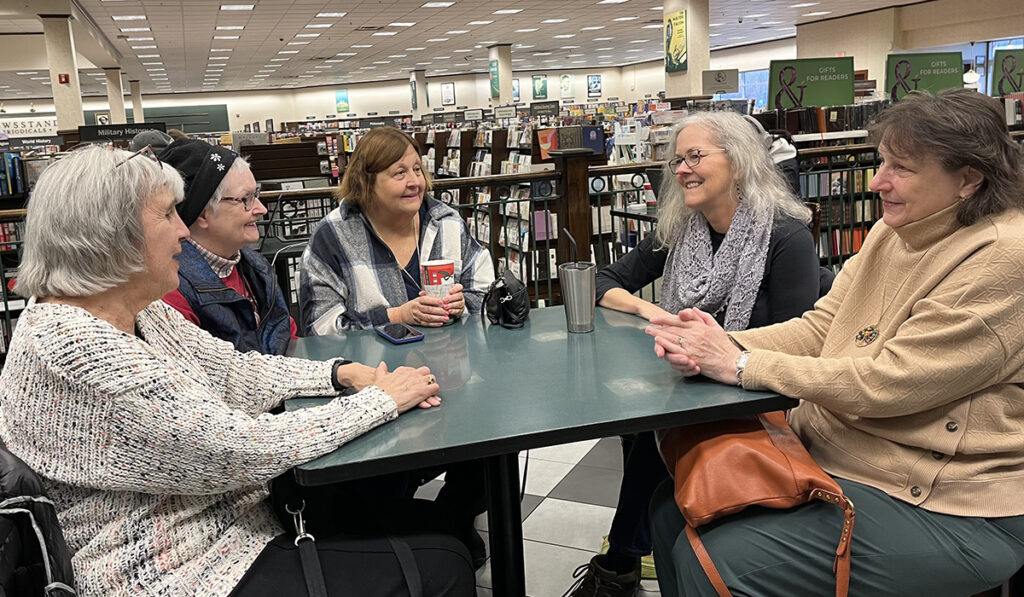
Four members of Kelly’s original support group founded an organization called METAvivor, a patient-led, grassroots organization that raises funds toward metastatic breast cancer research. Since 2013, Kelly has served as the leader of the Annapolis regional METAvivor group, a community supporting people with metastatic breast cancer. While doctors are essential components in the course of cancer treatment, Kelly understands that the peer support factor is also necessary. While oncologists are often overworked, the peer-to-peer relationships in support groups can not only serve as an emotional lifeline but also as a drawing board that helps patients identify and communicate their priorities when making treatment decisions. As a result, they can communicate more productively when they do get that coveted one-on-one time with their physicians.
Kelly meets weekly with her support group and arrives with a variety of curated information that members can review on topics ranging from new drug approvals to clinical trials. She also serves as a branch that connects members to people outside the group, facilitating new relationships that might help members navigate their cancer journey more easily. Kelly has seen how essential a role the support group plays, citing evidence that participation reduces anxiety and improves survival and quality of life outcomes for those who are living with MBC. It’s no surprise that more than one member has told her that the group has helped them live longer and better because of the weekly meetings.
Kelly’s willingness to dedicate her time to volunteering for the cause of metastatic breast cancer has changed not only her life, but the lives of countless others. Her dedication shows just how powerful the mission of volunteerism can be.
What inspires you to volunteer?
I have been fortunate enough to be very successfully treated for metastatic breast cancer. I’ve been metastatic for over 23 years, which is highly unusual. A lot of women and men only get a couple of years. In some cases, it’s less than a year, because it can be very aggressive. I’ve been extremely fortunate that the drug I’m still on has been working so well for so long. I’m so stable that I just feel like I need to help everybody else with all the experience that I have. It’s very satisfying.
What inspired you to get started with this initiative?
Over the years, I’ve amassed a lot of knowledge, and collectively as a group, we have a lot of information, experience and knowledge. It’s extremely helpful, especially when you’re newly diagnosed, to talk to other people who’ve been living with it successfully, and it’s just very satisfying to help other people. It’s just comforting to talk to somebody who’s done the thing you’re about to do.
Tell us about your volunteer role with METAvivor.
I organize the meetings, which means on the day before each meeting, I inform participants of the meeting location, whether it will be held on Zoom or in person. I ensure I’m present for the meeting itself, and then during the meeting, we make sure everyone has a chance to discuss their care, health and the group’s progress. If you’re at a decision point in your treatment, which happens a lot, we talk it through as a group, and we help the member make a list of questions to ask the oncologist. Between meetings, I’ll often get emails from the various members asking to be put in touch with somebody who’s had something done, like a liver biopsy. I’ll connect them, making sure that the person who has the information is okay with me giving out her phone number.
I also serve as the State Captain for METAvivor advocacy efforts in Washington, D.C. I served on the METAvivor board of directors for 15 years and served as president of METAvivor for two years.
What are your long-term plans or goals for the organization?
To continue the support group meetings for as long as I can, which seems like it’s going to be a while yet, which is great. This support group was originally founded in Annapolis, Maryland, and four members of the original support group founded METAvivor, intending to raise money to specifically fund metastatic breast cancer research and provide support and advocacy for people living with MBC. I’m not volunteering for the nonprofit anymore, but they have training to teach people how to start support groups in their own neighborhoods. It’s about enabling other people to do the same thing. They continue to fund research and have funded more than $30 million of research since our founding in 2007.
The nonprofit continues to grow, and we continue to have new support groups start in various areas all over the country. I just want to keep mine going.
What’s been the most rewarding part of your work?
Helping other people. I really believe that our support group has extended the lives of some people. I think, and there is evidence that membership in a support group extends life when you have metastatic breast cancer. Part of that might be that the kind of people who seek out a support group are the kind of people who are seeking out knowledge, potentially second opinions, reading about it online… that sort of thing. So they’re very informed consumers and self-advocates for their disease. That might be part of it, but it’s definitely true that if you’re in a support group, you can live longer.
What have you learned through your experiences as a volunteer?
I learned from my members all the time. We’ve had a lot of amazing women in the group, and I benefit from their experience, especially the practical tips. For example, when I finally got a port installed for IV therapy, one of the members in my group advised me not to let my doctor put it under my bra strap. That was a really good tip. More profoundly, I found that I can connect with anybody over metastatic breast cancer. It could be somebody that I would not normally have anything in common with, but we can always connect over the issue of metastatic breast cancer in dealing with the disease.
Why is it important for others to get involved with causes they care about?
I think if you care about an issue or a cause, you can feel helpless if you feel like nothing’s changing. If you volunteer and do a little bit to help that cause, it can really help, especially if you’re anxious about whatever your cause is. You do your part, and you feel better about it.
What do you want people to learn from your story?
We haven’t solved the breast cancer problem. People think that if you make it five years, you’re good, and that’s simply not true. We have women in the group who metastasized 20 or 30 years after their initial diagnosis. People think that stage zero doesn’t metastasize, but it does. We’ve had women in the group who had a stage zero cancer who died of metastatic disease. Our average life expectancy is maybe creeping up a little bit for certain breast cancer subtypes. But in general, we’ve spent a fortune on prevention and early detection, but we haven’t changed the metastasis rate. One in three early-stage breast cancer survivors will develop metastatic disease, and when you do, your average life expectancy is around three years, and that hasn’t changed in decades. We continue to lose more than 40,000 people every year in the US. Worldwide, it’s one every 15 seconds, and that hasn’t changed for many, many, many years. So we have not solved the breast cancer problem. We continue to metastasize, and metastatic cancer kills.
Do you want to make a difference in your community like Kelly? Find local volunteer opportunities.