



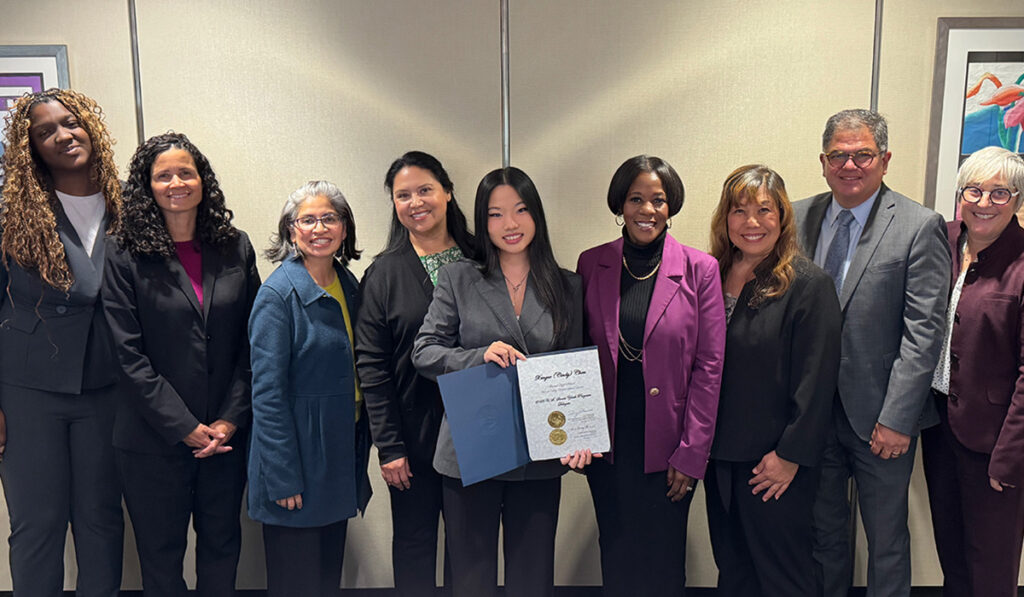
Meet Daily Point of Light Award honoree Cindy Chen. Read her story, and nominate an outstanding volunteer or family as a Daily Point of Light.
For Cindy Chen, humanitarian work isn’t just about the logistics of aid. It’s about the power of the human voice. As the founder and CEO of the IgniteHER Project, Cindy has pioneered an approach centered on “rhetorical feminism.” By teaching girls and marginalized communities to navigate the complexities of language, civic education and policy advocacy, she is giving them the tools to rewrite their own futures. While she dedicates roughly 30 hours a month to overseeing global partnerships and writing policy proposals, the scale of her influence is staggering. To date, Cindy has reached more than three million individuals globally and mobilized a network of over 50,000 activists.
The impact of IgniteHER is felt in the tangible essentials that restore dignity to those in crisis. Cindy has led the distribution of more than 50,000 items, ranging from backpacks and suitcases to menstrual products and clothing, supporting disaster survivors, people in shelters and incarcerated women. Beyond physical aid, the organization has trained over 3,000 young women in leadership and civic literacy. Under her guidance, IgniteHER has blossomed into a massive infrastructure of 120 chapters spanning 66 countries and 30 U.S. states, including the hosting of three global conferences aligned with prestigious platforms like the UN Youth Forum.
Despite the vastness of the organization, Cindy speaks of her overseas teams as close friends whose individual stories she treasures. This grassroots connection allows IgniteHER to adapt to the specific needs of different cultures. In India, she works with a chapter leader to protect rural girls from manipulation. In Nigeria, she empowers a volunteer leading local donation drives. In Pakistan, she mentors teams bringing digital literacy to regions where the internet is a rare luxury.
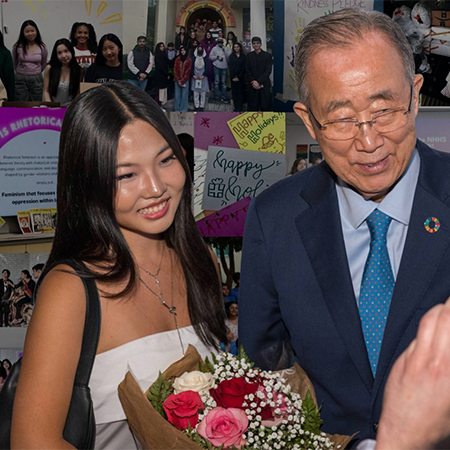
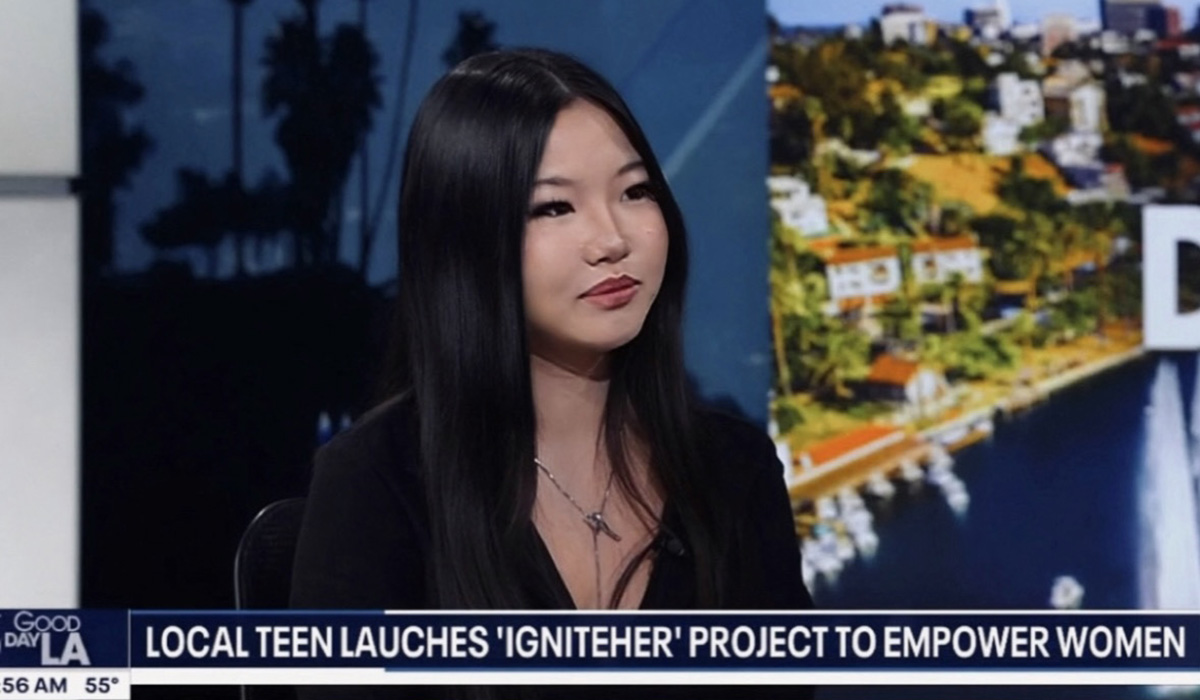
Cindy’s tireless dedication has earned her recognition from the United Nations, Johns Hopkins University and state government bodies, as well as features on Spectrum 1 and Fox 11 News. Read on to hear more of her powerful story.
Tell us about your volunteer role.
I’m the founder and CEO of IgniteHER Project, a youth-led global initiative that empowers girls to become leaders through civic education, leadership development and community-based advocacy. In practice, my “volunteer role” is building the infrastructure that makes participation possible — especially for girls who don’t already have access to money, networks or proximity to power. That looks like recruiting and training student leaders, developing curriculum and toolkits, coordinating partnerships, running campaigns and mentoring teams across chapters so their work is sustainable, ethical and locally rooted.
Why is this issue so important to you?
Because gender equity is not abstract. It is safety, dignity and the right to move through the world without fear. Growing up, I struggled to find my voice as a girl who was constantly called “bossy” just for trying to lead. I know what it feels like to carry a voice and be taught to lower it; to watch girls learn early that their anger should be quiet, their ambition should be “reasonable” and their boundaries should be negotiable. That lesson isn’t just personal — it’s community trauma. It lives in what girls are taught to tolerate, what survivors are forced to carry alone and what institutions quietly normalize. IgniteHER is my way of pushing back by building survivor-informed, community-centered leadership: not just teaching girls to speak, but creating spaces where they can heal, organize and lead without having to translate their pain into “proof” to be taken seriously.
What inspired you to get started with this initiative?
IgniteHER began from a frustration: we talk about “empowering girls,” but we rarely give girls real pathways into power, especially in communities where influence is gated behind privilege. I wanted to build something that didn’t just celebrate girls’ potential, but trained it: a place where young women could learn how institutions work, how to organize, how to advocate and how to turn conviction into outcomes. And I also wanted it to be healing-centered. So much leadership work teaches girls to perform resilience while still enduring harm. We built IgniteHER to do the opposite: to treat care as strategy, to normalize survivor-led advocacy and to make space for girls to lead in ways that are not extractive — where their worth isn’t tied to how much they can endure.
What are your long-term plans or goals for the organization?
Long-term, I want IgniteHER to be a durable leadership pipeline that lasts beyond any individual student leader. That means expanding leadership programs, deepening our civic education work, and building partnerships that translate youth advocacy into real policy wins at the local and state level. Most importantly, I want IgniteHER to stay accessible. Leadership shouldn’t be something you have to earn through privilege before you’re allowed to practice it. And I want our model to keep centering survivor-informed care: training chapters to collaborate with local organizations, respond to community needs and build systems of support that outlive any single campaign.
What have you learned through your experiences volunteering?
I’ve learned that sustainable change is less about one big moment and more about consistent systems, like training, mentorship, accountability and care. I’ve learned that leadership isn’t a personality trait — it’s a skill you can build. And I’ve learned that community work only lasts when it’s collaborative and trauma-aware. People don’t need saviors; they need partners. Especially in gender justice work, “helping” can easily become extraction — taking stories, pain and resilience without building real support. Survivor-led healing means we follow community needs, protect dignity and build structures that make people safer after the spotlight moves on.
What’s been the most rewarding part of your work?
Watching someone who used to describe themselves as “quiet” or “not confident” realize they can lead, and then actually do it. There’s a specific moment I’ll never get over: when a student stops asking for permission to take up space. When they start writing their own agenda, organizing their own team and speaking like they know they belong in the room — because they always did. I’ve also found it deeply meaningful when girls use our spaces not just to achieve, but to heal: when they name what happened to them, find community that believes them and transform that truth into advocacy that protects others.
Why is it important for others to get involved with causes they care about?
Because caring is not the same as changing something. The world runs on participation — in schools, in local government, in mutual aid and in advocacy. When people opt out, decisions still get made; they’re just made without us.
And on a community level: involvement is how we heal. Silence doesn’t keep people safe — it isolates them. When we show up, we build the infrastructure of care that institutions often refuse to provide: survivor-informed support, community accountability and networks that protect people before harm escalates. Participation is how you protect your community, build power and turn values into something real.
Any advice for people who want to start volunteering?
Start small, but start now. Pick one issue you genuinely care about, find one local organization doing consistent work and ask what they actually need — not what feels most impressive. Be reliable. Learn from people already doing the work. And don’t wait until you feel qualified. You become qualified by showing up, with humility, consistency and respect for the community you’re joining.
Do you want to make a difference in your community like Cindy? Find local volunteer opportunities.