
California Teen Dedicates Hundreds of Hours to Literacy
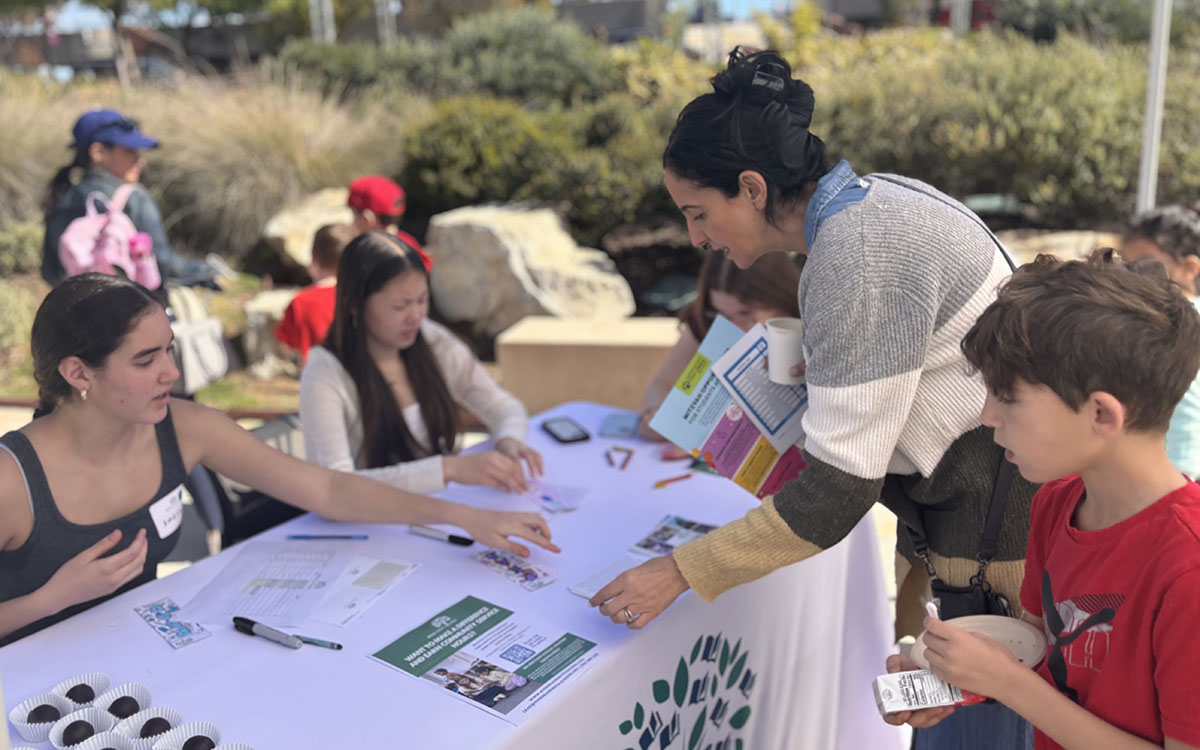
Meet Daily Point of Light Award honoree Amelia Sarkisian. Read her story, and nominate an outstanding volunteer or family as a Daily Point of Light.
Growing up as the child and grandchild of teachers, Amelia Sarkisian learned early that education has the power to change lives. It’s a lesson that has stuck and one she has spent the past three years putting into practice.
When the Los Angeles 11th grader arrived at high school and discovered Wise Readers to Leaders (WRTL) — a nonprofit that runs literacy programs for students from under-resourced Title I schools — she didn’t hesitate. Three years and more than 260 hours later, she has become one of the organization’s most invested teen volunteers.
Amelia tutors a third-grade student one-on-one each week throughout the school year, assists in a classroom of 40 second and third graders every summer, and co-chairs the Teen Board’s Enrichment Committee, where she oversees 37 high schoolers as they design and teach virtual enrichment courses — everything from coding to performing arts to journalism — to kindergarten through eighth grade scholars.
Back at her own school, she founded and runs a 13-member WRTL club, collected more than 600 donated books for the organization and launched the first city-wide Los Angeles Student Service Leadership Summit, bringing together 60 students from five high schools to share best practices in community service.
What first got you interested in Wise Readers to Leaders?
I’ve always loved reading — it’s been a big part of my life growing up. But when I used to go with my sister to read books to preschoolers at a child development center, I noticed how some of them couldn’t sit through an entire book. That really worried me, honestly. When I got to high school and found out about Wise Readers to Leaders, I knew it would be a perfect opportunity to keep working on the literacy gap.
Can you describe the different roles you have with the organization?
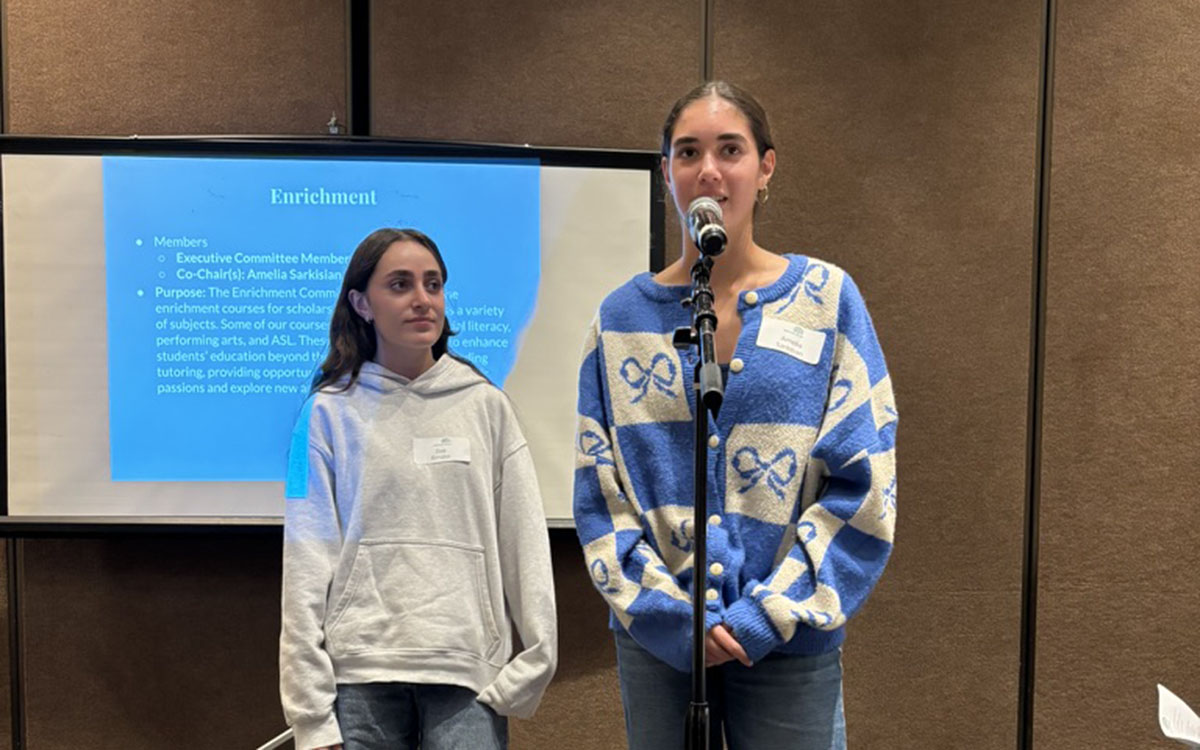
On the Teen Board, I co-chair the Enrichment Committee, overseeing 37 high schoolers who design and teach their own Zoom classes throughout the year to the same kids in the summer program — kindergarteners through eighth graders. We each teach whatever we’re passionate about, so I run a computer science class while others teach performing arts, journalism, architecture, ASL, fitness and nutrition to name a few. Through all of it, over 100 scholars have had the chance to explore subjects their families typically can’t afford to provide outside of school.
I also tutor a third grader named David one-on-one every week throughout the school year, and each summer I work as a Junior Literacy Leader in a classroom of 40 second and third graders. And at my school, I founded a WRTL club — now 13 members strong — where we recruit volunteers, run book drives, and spread awareness about the organization’s work.
How do you make reading fun for kids who might be reluctant or struggling?
The most important thing is just acting like you love it yourself. I find that the scholars really look up to us as teens, so if we’re excited to read the next chapter, they’re going to want to be too. I also try to add game-like elements — we do a lot of Kahoot for comprehension at the end of chapters. And it’s not just reading the whole time. We’ll stop and talk about the story. For instance, would you have made the same choice as the character? Making it interactive is the best way I know to get them to love it.
Do you have a specific memory of a student having a breakthrough moment?
Last summer I was helping in a second and third grade classroom, and the teacher offered a little duck toy as a prize for whoever wrote the most sentences in their journal. Two girls in the class got so excited and really wanted that prize. They wrote so many sentences as I was helping them with the grammar and punctuation. But when journal time ended, they both begged to keep going. They wrote through lunch.
They gave up their recess. Just to keep writing and make sure everything was right.
What struck me was that at the start of the summer, a lot of those kids had been really reluctant to write at all because they didn’t have the confidence. And here these two were, giving up their free time because they wanted to. Seeing that transformation made me realize what we’re doing actually matters.
Tell us about David, your one-on-one tutoring student.
The biggest change I’ve seen in him is his confidence. At the beginning, he was really shy and we would take turns reading because he wasn’t sure of himself. Now we’ve actually moved into a fourth-grade book because he was flying through the third-grade ones so fast. We started with the Magic Tree House series because he loved those, and now we’re reading a new book from the suggested reading list. He tells me about his favorite books and gets excited to keep going. Honestly, we’ve become great friends.
You also launched the first LA Student Service Leadership Summit. What was that like to organize?
I had attended the Educators’ Consortium for Service Learning the year before and was really inspired by the keynote speaker, Cathy Berger Kaye, and the way she talked about community engagement. So we invited her back and brought together students from five different high schools in the LA area for a workshop day.
We learned about best practices for leading service clubs and what it means to be a good leader. But the biggest takeaway was this perspective shift — that service isn’t about imposing help on someone who needs it, but about a real exchange of ideas between people. I think everyone left with something meaningful to bring back to their school and community.
What keeps you going when things get overwhelming?
Just knowing that what I’m doing is actually helping people and making a difference in their lives. The education these kids are getting can change the whole trajectory of where they go. And then there are those moments — like the girls at journal time, or David telling me he wants to keep reading. When I remember those, it’s not hard to show up again.
What advice would you give to a young person who wants to start volunteering?
Start with what you think is the most important issue you see around you. It shouldn’t feel forced — it should come from something genuine, maybe something connected to an academic interest or something you notice in your community. And don’t think it has to be something huge. Helping one kid learn to read is going to change his life. Just do whatever you can.
Do you want to make a difference in your community like Amelia? Find local volunteer opportunities.
Share this post
