



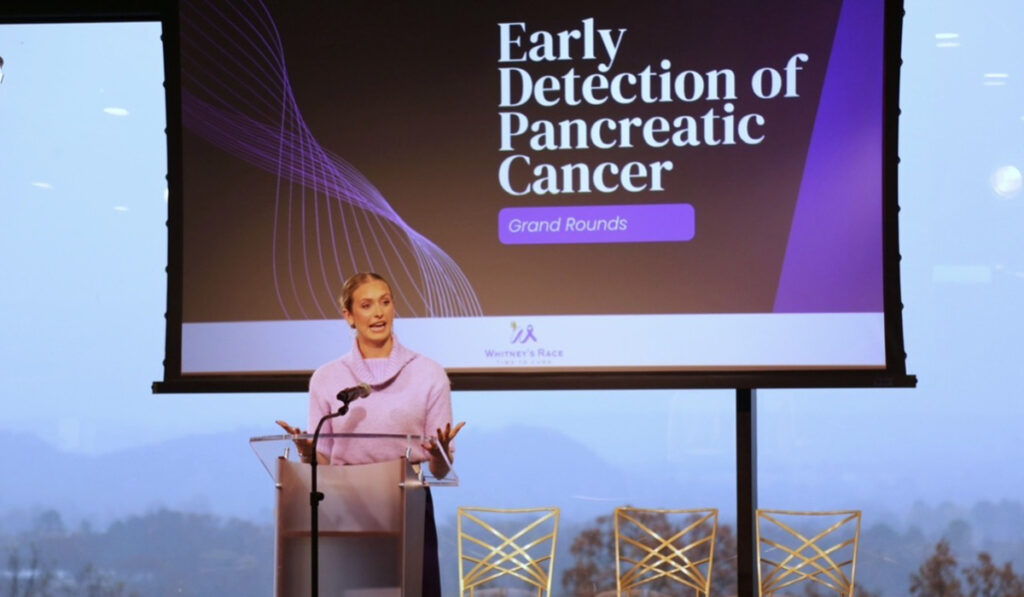
Meet Daily Point of Light Award honoree Madison Marsh. Read her story, and nominate an outstanding volunteer or family as a Daily Point of Light.
The cockpit of a fighter jet and the stage of Miss America may seem worlds apart, but for Madison Marsh, they’re both platforms for a life-saving mission. After losing her mother, Whitney, to pancreatic cancer in 2018, Madison refused to let grief be the end of the story. Recognizing that families often crumble under the weight of non-medical costs and resource gaps, she founded the Whitney Marsh Foundation. As a U.S. Air Force Officer and Harvard graduate student, Madison channeled her disciplined leadership into a force for clinical and communal change.
Through the Whitney Marsh Foundation, Madison’s leadership has mobilized over $500,000 in hospital grants and established national patient assistance funds that cover the often-overlooked expenses preventing families from reaching top-tier medical institutions. Whether she spends five hours a week keeping things running during the quiet seasons, or 20 hours a week during peak event planning, Madison remains hands-on with her efforts. Her work has reached over 1,000 homes through newsletters and educated more than 400 physicians, ensuring the medical community is prepared for the families they serve.
A Truman Scholar and an Astronaut Scholar, Madison conducts rigorous cancer research and lobbies for federal funding to ensure that the “wait for a breakthrough” doesn’t claim more lives. Serving as PanCAN’s Rural Health Equity Chair, she focuses on the most disadvantaged patients, working to ensure that geography never determines a person’s survival rate. And as the first active-duty military member to be crowned Miss America, Madison has used her 12.1 billion potential social reach to inspire over 200,000 students and patients worldwide. She has transformed a deep personal loss into a public legacy, engaging 5,000 event participants and 250 volunteers in a collective fight against a silent killer.
What inspired you to start the Whitney Marsh Foundation?
I started this nonprofit in 2018, and it all started because my mom was diagnosed with pancreatic cancer when she was 41 years old. We didn’t have any cancer history in our family. She wasn’t in any of the risk factor groups, by any means. So it was very shocking to all of us. She ended up passing away later that year, and having to watch that experience as I was a 17-year-old at the time—losing your mom and having to grieve the loss of a loved one even before they’re really gone—made me want to do something more, so that her memory could still be alive and that her loss wasn’t going to be in vain.
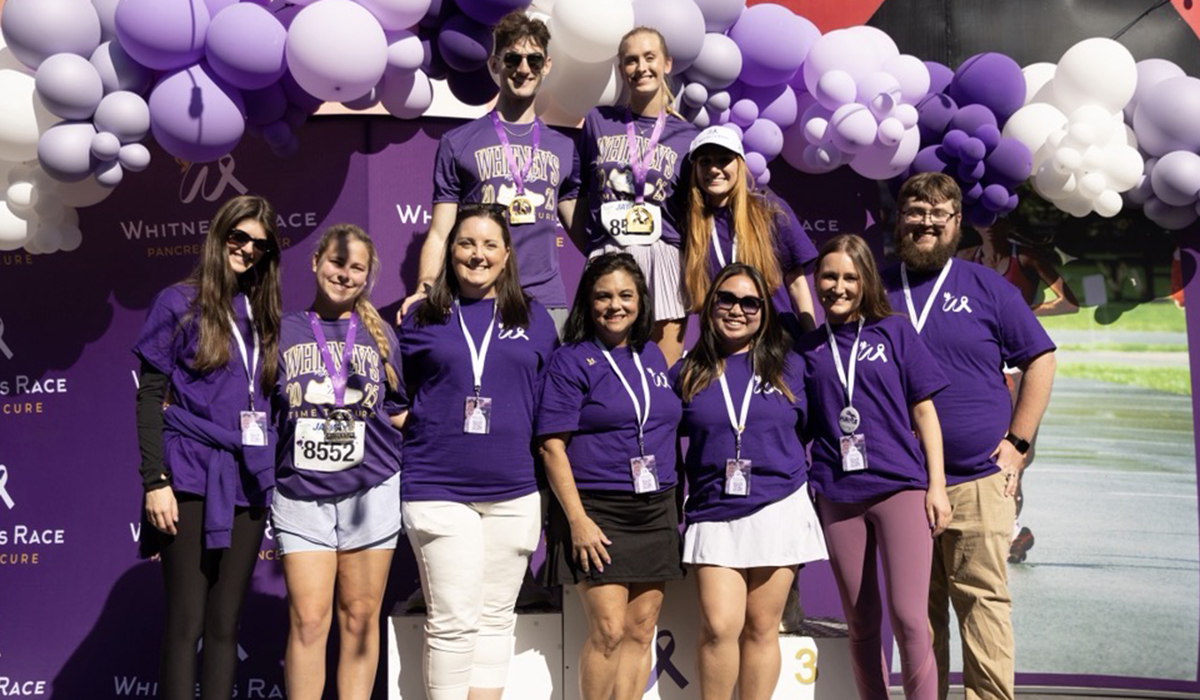
A couple of days after she passed, my older brothers forced me to leave the house and they brought me to the gym. I refused to work out, so I went and I sat in the locker room and started thinking: what can we do so that my mom isn’t forgotten, that we can help other people? We originally just started out as a small 5k/10k race because my mom was a huge runner, and we wanted to be able to bring our community together doing what she loved. That very first year, we had a record-breaking race in our town with nearly 1,000 people in Arkansas.
Since then, we’ve been able to grow and raise over half a million dollars given to patients and hospitals, ensuring that critical programs are in place to help people who are like my mom. I know what it’s like to lose a loved one and how hard that is. Whatever we can do to either help families never have to go through that, or at least alleviate some of the stress and pain that accompanies it, whether that is the financial burden, being able to help with patient assistance funds or the emotional burden and just being there as a support group so that people know that others are going to be in their corner.
That all eventually played into when I competed in Miss America, because you have to have a community service initiative to compete. I had been running my nonprofit for seven years at that point, and I was able to use that as a platform to educate people on pancreatic cancer, using my mom’s story to educate that pancreatic cancer can happen to anyone, even the healthiest people, and also sharing some of the big resources out there. We’re a small local nonprofit, and I’ve loved getting to work with big ones like the Pancreatic Cancer Action Network and utilizing their resources and networks over the years together. That’s how all of these experiences converged together with philanthropy, and then using my platform and the microphone that I was given for that year as Miss America to amplify that message.
Why is support for patients and loved ones so important after a cancer diagnosis?
When you think of pancreatic cancer, the survival rate is so low; most patients are going to pass away within the first year or two. There’ve been so many people that we’ve met throughout our nonprofit that have lost their parents within three weeks of a diagnosis, or several months. You’re not just having to deal with the grief that comes afterwards, but like I said, you are grieving the loss of the person before they’re even gone, and that is so incredibly difficult.
Not to mention how expensive all the different cancer treatments are. When you think of pancreatic cancer, one thing that’s really crucial is that patients get treated at what we call high-volume centers. Those are places that are performing a certain amount of pancreatic cancer surgeries every year, which is the one way that patients survive. There’re not a lot of them out there, and it can be quite expensive and burdensome to travel to those places, especially if you come from a rural area or a low-resource family. We never want anyone to have to choose between survival and time with their family and the resources that they have.
It’s absolutely crucial in that sense—one, removing that burden from people so that they can make the correct medical choices to help them survive, but also taking away that emotional burden of everything that comes with a cancer diagnosis so that you’re able to hopefully spend more time with your family instead of spending time thinking about your bills or any of the other things that come along with the cancer journey. There’re so many different aspects that pancreatic and really all cancer patients need, whether that is financial help or just resource and education to get people to the right places. Maybe what they really need is someone that has gone through this path before.
I remember when my mom was diagnosed, I didn’t know anyone that had ever had pancreatic cancer. And then if you search on Google, Google can be a pretty terrifying place, especially for pancreatic cancer, and everything that you see is the low survival rates and no hope. I think it’s so important to give people that hope and that comfort, and to use our resources with survivors, or even just someone who’s gone through it, to be there for someone in that moment where they don’t even know what questions to ask. What they need is just someone to be there for them.
What are your long-term plans or goals for the organization?
One of the biggest things that we would love to do moving forward is partner with more large hospitals for patient assistance funds. We have one set up right now with MD Anderson, we’re in the works of setting up with one in Colorado and we would love to really spread those throughout the United States to have a collective network. When pancreatic cancer patients say, “I want to be able to travel to this specific hospital,” we can say, “Hey, great. We will fund you and your family for all of your non-medical expenses to get there,” to make sure that we are not only incentivizing people to go to these places, but we’re removing whatever barriers exist.
I know that’s one thing that’s really important, having a caregiver—having your family with you—not only because it helps with the effectiveness of treatment and being able to follow along with some of those treatment plans, but also just emotionally, getting to have your kids or your spouse or whoever it might be there with you in that time of need.
In expanding those sorts of programs, I would love also to expand some of our support groups to meet a larger audience across the United States. I know there’re a couple of nonprofits that we would love to work with, especially in the tech industry, to be able to create a really easy pipeline that would exist either virtually or even through pamphlets for people that don’t have access to computers or smartphones. We want to give them a resource that very quickly will allow them to see what hospitals are closest to them that we fund, or maybe it’s going to be clinical trials, or resources about surgery—just to make it easier and education-filled so that people can make the best choice for them in their treatment journey.
What have you learned through your experiences running your organization?
It’s difficult sometimes, especially being a smaller nonprofit, because we feel like we can’t have as much impact as some of the big, huge ones that are in the community with multi-million dollar grants. But I think what it has shown me is that everyone has to start small, and it’s also okay to stay small. There are different benefits to every level of a nonprofit, and it has shown me as a leader how much impact we can have through the small things.
Because we’re a small nonprofit, I get to personally connect every single day with the patients and our survivors, and really make it targeted towards specific small communities to help them. You don’t have to do a big thing all of the time and make this massive, really visible change; sometimes the best change is the quiet, small piece of helping one family at a time. Anyone can be a part of that process, no matter what community you come from. To really make that difference ripple across the world starts with one person, in one place, with one action.
What’s been the most rewarding part of your work?
I’ve loved over the past couple of years seeing more survivors come to our events and participating in our nonprofit. Most of the time within pancreatic cancer, finding survivors is really difficult. Especially when we have newly diagnosed family members, not having a survivor there to give them hope or some sort of positive outlook on what it could be can be really difficult.
Getting to see that now that we’re getting bigger and being able to attract everyone—whether that is caregivers, bereaved loved ones and now even survivors—to be a part of our community, I feel like we can take care of such a broader set of people that need help. Before, we weren’t able to do that. Now, we have this sort of diversity throughout our community.
Why is it important for others to get involved with causes they care about?
I think that volunteering and community change is what changes the world. Of course, we have all of the big pieces that might change within legislation at the government level, but I think what we forget is the power of staying small and the power of what you can change within your own locality.
What I saw from my mom’s own life was she only got 41 years, but life isn’t about how long you have, it’s about what you do with that time. Every day that I get up, I know that I don’t want to waste a moment that I have, and if that means going out serving others and being able to use my passions and my strengths in life to get involved in our community, that’s how we all can make change and also make our lives filled with meaning.
Who knows how long I have here? But living every day in a way that would serve my mom well and serve my community well is a lesson that we can all learn from people that have left us far too soon. We can use that in our own lives to lead a better, more service-fulfilled life, knowing that we can all make change through the small ways that we give back to people in our life every day.
Any advice for people who want to start volunteering?
When I was in college, also looking for volunteer opportunities outside of my nonprofit, I just started searching online and just went. All you have to do to make change is just show up. There’s always more than enough need to go around. If you look anywhere, there’re always hands needed at almost every single organization and volunteering event. You can be that change. Just take that step. Try something new, look it up online and make a deal with yourself that you’re going to show up.
Do you want to make a difference in your community like Madison? Find local volunteer opportunities.