
A Student Leader’s Mission to End Resource Scarcity
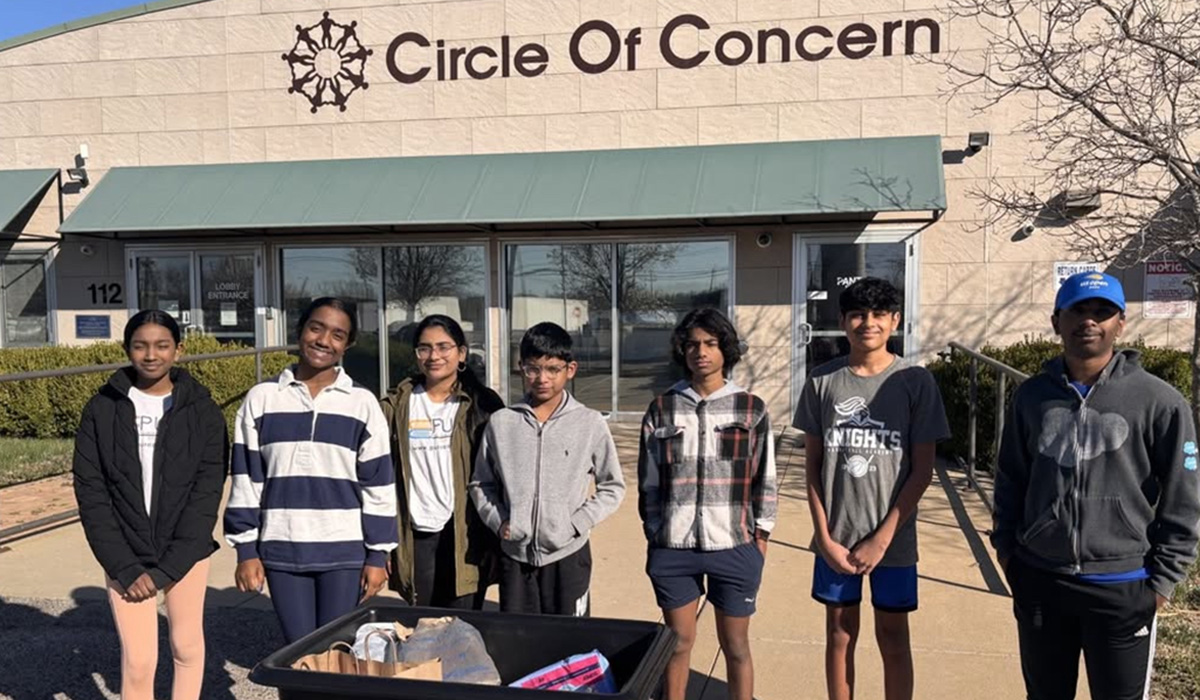
Meet Daily Point of Light Award honoree Shruthi Senthil. Read her story, and nominate an outstanding volunteer or family as a Daily Point of Light.
As the national service director for PURE (People for Urban and Rural Education), Missouri 17-year-old Shruthi Senthil has transformed her passion for health equity into a nationwide movement. Balancing the rigors of school and sports, she still manages to carve out 20 to 25 hours every month to orchestrate service projects that range from her home state to chapters across the country. One of her most profound contributions all began with a sobering statistic: 64% of low-income women in the St. Louis area lack consistent access to essential period products. Refusing to let this need go unmet, she launched a local pad bank initiative.
Shruthi’s monthly drop-off program creates a streamlined supply chain of tampons and pads, funneled directly to one of the largest pantries in the city. By identifying this specific gap, she has provided critical hygiene products and restored reliability for hundreds of women in her own backyard. This local momentum eventually fueled the ambitious PUREathon initiative in the fall of 2025. Shruthi meticulously coached each national chapter, helping them secure locations and rally participants to shine a light on period poverty. The results were staggering. In St. Louis alone, she mobilized nearly 200 people to walk and run for the cause, resulting in the collection of almost 75 pounds of period products.
This year, Shruthi also spearheaded a 9/11 tribute where chapters nationwide assembled comfort bags and handwritten cards for local firehouses and first responders. Additionally, she is currently mentoring a new generation of directors-in-training to ensure the mission of empowerment continues in her community long after her own tenure. By spending her time volunteering for the causes that matter most to her, Shruthi is helping neighbors see that their community is standing right behind them.
Tell us about your volunteer role and organization.
I volunteer with PURE, or People for Urban and Rural Education. I’m a national student director. I’m one of five students selected this year, and I’m actually the only girl and the only junior. The organization itself does a lot. They were founded to help support children who couldn’t quite get an education by helping construct schools in rural areas, as the name itself suggests. At this point, we just celebrated our 10th anniversary March 17. We’re starting to get a little bit older, and by now we have achieved so much. We’ve expanded across so many other issues, my favorite one being PUREFemme, where we try to support initiatives to get rid of period poverty and bring awareness about what a period is, and just make it a societally acceptable issue, as there’s so much stigma behind it.
We do other things; we have an initiative where we try to help schools set up their own garden so they can grow their own food. Those are our larger-scale initiatives outside the country too, but then here within the United States, we have 35+ chapters that I help manage on the day-to-day. I help them work through any issues they might have in regards to what kind of local projects they want to do, who they should reach out to, what businesses they should reach out to and how to properly contact people and ask for things that you might need, ask for support or try to bring attention to events. We operate on a big international scale, but then we also try to contribute a lot to our local communities.
Why is period equity so important to you?
I love this question because I’m all about empowering girls and women. When I was younger, in middle school, I was talking to my mom. My mom and I have always talked about a lot of things, and she was telling me about what a period is. Whenever it first happened for me, I was in a well-enough circle and I had a good enough relationship with my mom to know what it was and have the resources to still be able to go to school.
But when I joined PURE, one thing that I learned was that in a lot of indigenous or rural areas, girls don’t have pads or tampons or any sort of feminine hygiene products. Whenever they get their period every month, they can’t even go to school, and usually that would mean they’re missing at least four or five days every month. It’s not like they can control when they miss. There was that logistical issue that made me frustrated because I have the comfort of being able to go about my daily life even when I’m on my period. Also, there’s a social stigma behind it that I think is really unfair, because I don’t think a normal biological process should be something that holds anyone back.
Additionally, my work in St. Louis was really catalyzed when I was reading up about period poverty. That was initially why I became really interested in it. I was like, “Wow, this is really hindering so many girls around the world who deserve the same right to education as I do,” because this organization is all about providing education. But I learned that in St. Louis, 64% of low-income women don’t have access to period products and are under conditions of period poverty. To me, that was such an alarming statistic because I live in St. Louis. Here I am thinking about how to affect someone’s life that I’ll probably never see because I want to do good in the world, but I can do good right in my own community. That’s really what catalyzed our local pad bank and the PUREathon that we held back in October. I realized that I could shed so much light in our local community and support women here as well, because there is that need here and it never gets addressed.
Tell us a little bit more about the PUREthon.
The PUREathon was something I wanted to do as national student director. I had been a chapter director prior to that, and while I got to have the responsibilities of operating these huge scale fundraising events, as national student director, I could do that within the entire country. Really, the entire country just became my oyster. I was like, “What’s the coolest thing I could do right now?” and it all came back to period poverty. We needed to organize something to bring awareness to this issue because so many people don’t realize it even exists.
I’m a big believer in that when people know an issue exists, they’re more compelled to try to address it or solve it. Just doing events where we say the fact that period poverty does exist in our country and our cities can draw more attention to it and bring more support. I was able to work with all our chapters; we made sure all of them were able to reach out to parks or set up some sort of walk. St. Louis had the most participation; we had nearly 200 people show up to the run, and lots of people donated and brought pads and tampons. At every PUREathon across the nation, I’d written a speech that everyone gave. I think it was just a moment where in my head I saw us all coming together as a country right now. While it’s currently just PURE doing this, I hope that in future years, it becomes something that I take forward to wherever I go to study and wherever I work. If I open my own clinic or anything I do, I know that this message will still stand strong. I hope that PUREathon continues to happen every year and the message gets sent out, because that’s the most important aspect of it.
What are your long-term plans or goals with volunteer work?
I think about this almost every day. Volunteering has become such an instrumental part of my life and I definitely will continue to volunteer even as I get older. For the near future, next year, I hope to still work at the national level because it truly allows me to carry out these impactful projects throughout the country. I hope to take more charge in PURE Femme in the coming year.
As I get older, something that I’m a big believer in is that healthcare should be for everyone. I hope to, at some point in my life, be able to set up free healthcare clinics and help people who really need it, or travel to rural countries where they might not have the same medical resources as we do here. I want to provide them with resources and my medical expertise, hopefully at that point, and also just advocate for people and reiterate the importance of the necessity for healthcare and why women’s health should be taken seriously.
What’s been the most rewarding part of your work?
I’m such a people person and I love interacting with people. I think that’s a huge reason I got into volunteering and to this day, that’s what I enjoy out of it the most. In St. Louis, we do a lot of smaller initiatives. I’ve volunteered at foster care closets and helped at school as well. There are a lot of other volunteer opportunities where I can help at local middle school or elementary school dances. One of my favorite ones was when I was helping out at this food pantry kitchen.
In all these experiences, I got to talk to people and help them find clothes that they needed for their kids, or saw little girls enjoying a night and feeling like princesses. That just melts my heart. I know that they might not remember me, but I did a little something just to brighten their day. Regardless of whether we do a huge fundraiser and we raise a ton of money, all the interactions I have with the people and telling them about our cause is always the most rewarding part, because I know they’ll depart with that message and a little ting of happiness.
What have you learned through your experiences as a volunteer?
Doing anything positive in your life, whether that be volunteering or service, can really let you see how many other people there are who have the same vision for the world that we live in. Especially during times like right now, where there’s so much discourse and divide, volunteering has enabled me to see that at the end of the day, when there is an issue that everyone sees and can acknowledge, we as a society can put aside our differing views on other things and work to resolve whatever that issue is. That’s the most beautiful thing I’ve ever seen.
Why is it important for others to get involved with causes they care about?
Overall – with volunteering or anything people are passionate about – whenever you have that passion, you’re able to pour so much more into it. If everyone were able to pursue just their passions, the world would operate on joy and people would be happy doing what they want to do. It would just be such an overall positive environment, instead of people trying to struggle for money and other things that we see in society right now.
Specifically for youth, it’s so important because we’re tomorrow’s leaders. The people I go to school with are all going to do something amazing one day, and it’s so important that we learn how to advocate for ourselves and speak up for the things that we care about and build communities now instead of waiting for when we’re older. We are preparing for the future, and those skills take time to learn. When I started off in fifth grade, I was a little bit more timid and shy, but just being in this volunteering atmosphere has allowed me to break out of that shell and engage with so many people, which is such an important skill to have.
Any advice for people who want to start volunteering?
Just do it. Often, you spend so much time thinking about whether this is exactly what you want to do, or if this is worth your time or what you will get out of it. But once you get started, and once you see the people you interact with and the change you create, you’ll feel so rewarded and it can really offset anything else that might be troubling you in life. I would say just go for it if you’re even slightly thinking about doing it because there’s such a nice community there too. You’re not going to ever end up regretting it.
Do you want to make a difference in your community like Shruthi? Find local volunteer opportunities.
Share this post
