
FIGHTING TO GIVE MILITARY FAMILIES A SAFE PLACE TO LIVE
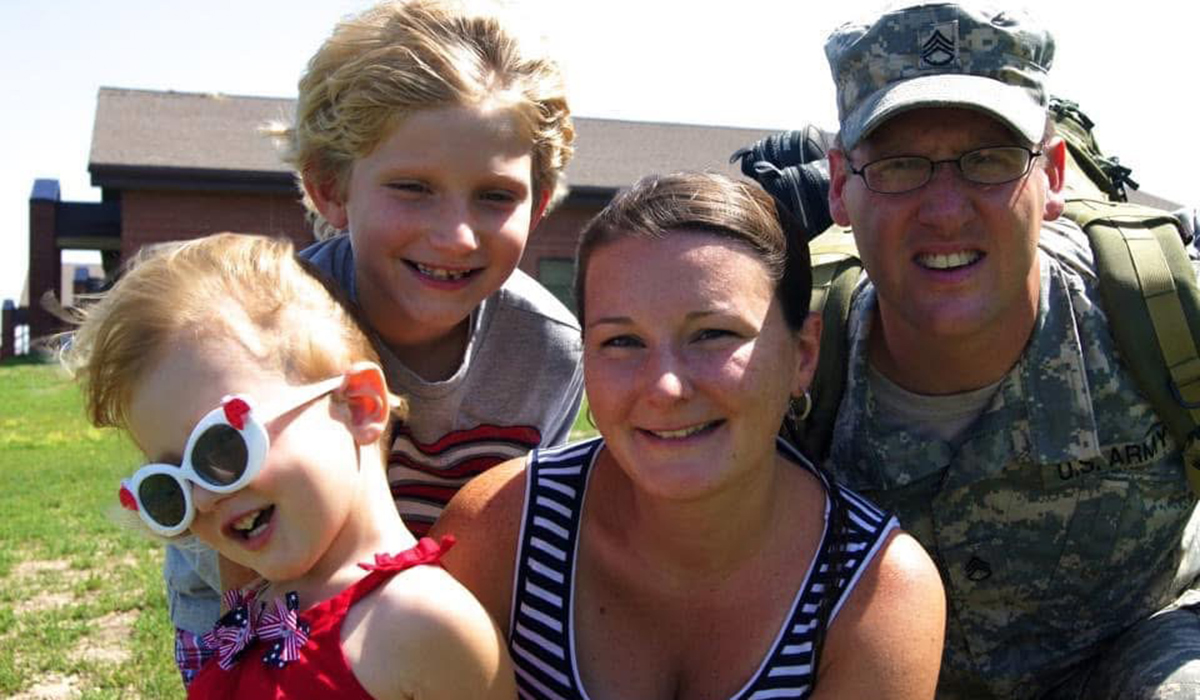
Meet Daily Point of Light Award honoree Heather Hall. Read her story, and nominate an outstanding volunteer or family as a Daily Point of Light.
Heather Hall had nobody to turn to when her daughter got sick in military housing. Around 2011, Heather was living in military housing in Kansas with her husband and their infant daughter. When her daughter suddenly became very sick, Heather didn’t know where to turn. Their days were filled with nebulizers, inhalers and oral medication. When her daughter’s pediatric pulmonologist told Heather that their daughter was sick because of her environment, Heather started to advocate for the multitude of other families who were navigating the system when their family members dealt with similar issues, likely caused by mold in their military housing.
While the family soon moved, Heather’s mission didn’t stop there. While working under another organization’s umbrella, Heather’s ability to advocate to Congress was limited, and she decided to form her own organization. She started the Military Housing Coalition, a grassroots military family-led nonprofit dedicated to improving privatized military housing across the United States. With the MHC, Heather advocates for safe, high-quality housing for service members and their families on the ground level. Whether she’s reviewing policy updates, assisting with community outreach, supporting resident feedback efforts or providing one-on-one resident advocacy, Heather pushes to improve accountability and awareness within the military housing system. While she has a busy schedule as a mother and a special education teacher, she still dedicates 20 to 30 hours per month to her volunteer work with the MHC.
Now 14 years old, Heather’s daughter is still under the care of a pediatric pulmonologist. While she’s doing better, Heather unfortunately believes there has been long-term damage due to their original housing situation. Still, Heather continues to fight on, doing her best to advocate for other military families to ensure they never have to go through what her family did. Her dedication to empowering the military family community is a tremendous example of how one person’s powerful passion can create lasting change.
What inspired you to get started with this initiative?
When I was working under another organization’s umbrella, I was limited in my ability to go to Congress and the Department of Defense. I felt like I was in a forest fire with the fire extinguisher. Once I put out one tree, the fire of another one was raging even bigger behind me. I knew that there needed to be reform. When Congress instituted its Tenant Bill of Rights, they thought that was a fix-all, but it was a Band-Aid to a major gaping wound. Every time I contacted Congress, they said they didn’t know it was still this bad. I knew I had to do more. I knew I needed to push for legislation. I knew I needed to push for mold remediation standards, and that’s what I did, and I’m still doing.
What inspires you to volunteer?
The reason I stay on the phone with people for hours as soon as I get off of work and take phone calls with senators after I’ve been at work all day dealing with children is that I don’t want anyone to ever experience what I did. Yet they are. I didn’t have support. I didn’t have an organization that I could turn to that knew ways to navigate things without reaching out to attorneys. There are people out there who take the route of getting involved in litigation, but it’s a terrible process. In the end, I don’t know if those families are better off. I think that some of them feel like they’ve been heard and that there are resolutions to their situation, but that attorney is taking 40% of any kind of compensation that was ever given to these families.
Tell us about your volunteer role with the Military Housing Coalition.
It can be a multitude of things. I do work one-on-one with families who reach out to us and need help and assistance with their individualized issues. It could be working with congressional or Senate leaders to draft or develop policy language. It could be talking to the Department of Defense or the Department of War to change policy on that end. There’s kind of a wide range of things at any moment in time I could be doing.
What’s been the most rewarding part of your work?
Helping the families. When you talk to a family who has been in a situation for an extended period of time and they’ve not been able to get help on their own, and they reach out to us, and then their issue is resolved within 24 to 48 hours. Then you get the messages saying they can’t believe we were able to have this fixed for them, or their child is feeling better now in the house and they’re so thankful for the organization. That is worth its weight in gold. You can’t put a price on knowing how you have impacted somebody’s life.
What have you learned through your experiences as a volunteer?
Military housing is kind of like an onion. Every day, you peel back a layer and you learn something new. I have so many people who have become confident, that I trust and communicate with. Iron sharpens iron. I know things on my end, and they know things on their end. We feed off of each other. These contracts are so complicated that I can’t even put into words how difficult they are. Every day, I’m learning something new about how to make a change and how to improve a family’s experience living in housing.
Why is it important for others to get involved with causes they care about?
It’s so rewarding. I get a lot of pressure because I take calls and I’m working until eight o’clock at night after I’ve been at work all day. But when you see the result of having helped the family, or volunteered in a situation, you’ve made a difference. There’s legislation right now that is passing directly because of a survey that we did of military families and our push for years to have mold remediation standards within Congress. Change takes time. You can eventually quantify it into something that allows you to say that you did this. I was able to be a voice for somebody else who was not able to have a voice.
Any advice for people who want to start volunteering?
I feel like everybody has a passion. If you were to sit down and have a conversation with anyone, you eventually will pull out something that they’ve experienced in their own life, or they know somebody in their family, or have a close friend who has gone through something, and it really made an impact on their own life. I feel like that’s where you start. You know that you have information, or if you feel like you can make a change, and you don’t know where to start, but there are so many different organizations out there that probably would align with it. There’s somebody out there who is trying to do the same thing that you’re very passionate about, and you just have to find it.
What do you want people to learn from your story?
In my world, everyone knows about military housing. But in reality, nobody does. The big picture is that we have these families out there that are still going through similar or worse experiences. I think that there is a big misunderstanding within Congress that because they put the Tenant Bill of Rights out, that everything was taken care of, and it’s not that’s not the case. That was a start, but we haven’t crossed the finish line yet.
Do you want to make a difference in your community like Heather? Find local volunteer opportunities.
Share this post
