
FOOD SAFETY FOR ALL IS THE FOCUS FOR THIS VOLUNTEER
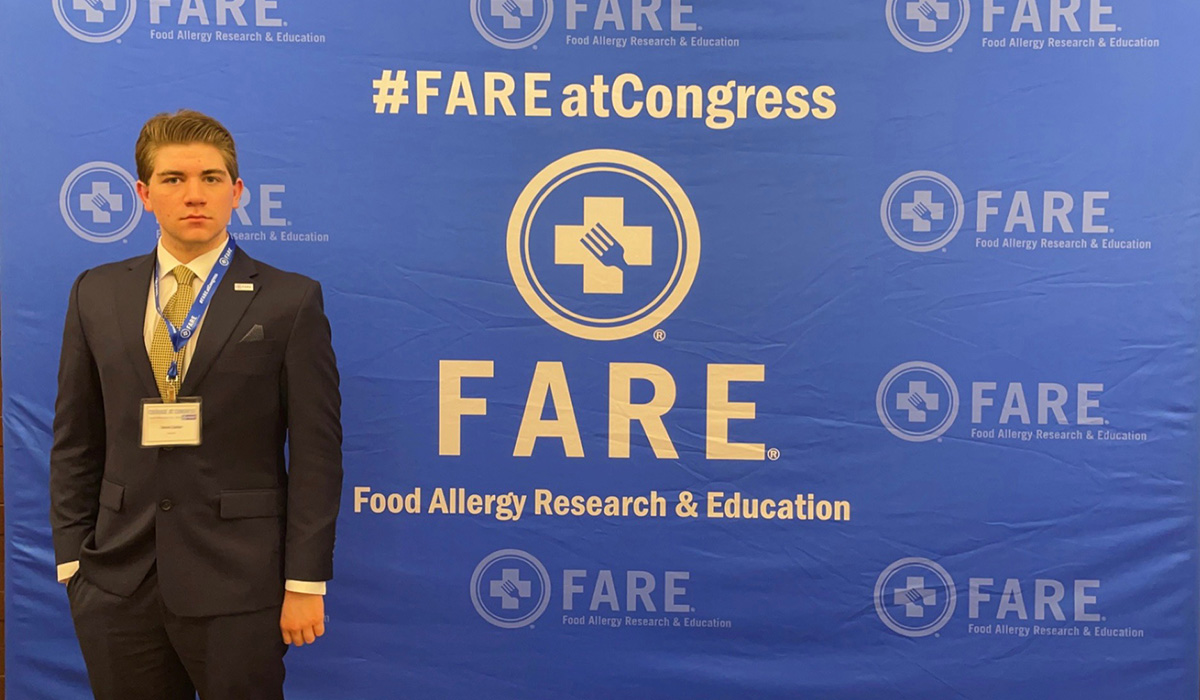
Meet Daily Point of Light Award honoree Devin Sailer. Read his story, and nominate an outstanding volunteer or family as a Daily Point of Light.
Growing up with 31 life-threatening allergies, Devin Sailer knows how hard it is to find safe food to eat. That’s why he’s making a difference to ensure other people can.
As a kid in an underserved rural community in upstate New York, Devin saw firsthand how hard it was to acquire safe and healthy foods when you’re struggling with severe food allergies. If you’re in a domestic violence or homeless shelter, it’s almost impossible. One-third of domestic violence and homeless shelter residents in upstate New York are children, many of whom have fled an unsafe situation with no warning. Looking to help those living with deadly allergies like himself, Devin established Safe to Eat, a youth-led initiative that advocates for allergy-safe options in domestic violence and homeless shelters. Along with a small team of volunteers, Devin facilitates the flow of allergen and gluten-free foods into these shelters across upstate New York, ensuring that everyone has a safe meal to eat, no matter their situation.
Currently in his senior year of high school, Devin’s efforts to transfer allergy-safe foods from companies and individuals to domestic violence and homeless shelters are no small endeavor, particularly for someone who is carrying a full academic workload. But Devin wisely prioritizes his time, sharing that he believes there’s more time in each day than one would expect. He focuses on coordinating several large food runs each year, so each shelter can stock up on the allergy-safe foods they need to keep their clients fed. As a result, his work ensures that eight shelters across a combined area the size of Jamaica are stocked with over one-quarter ton of allergen-safe food. Through hundreds of hours of volunteer work, Devin has turned his own struggle into a solution. His inspired mission is a powerful testament to how one person’s story can become a force for good.
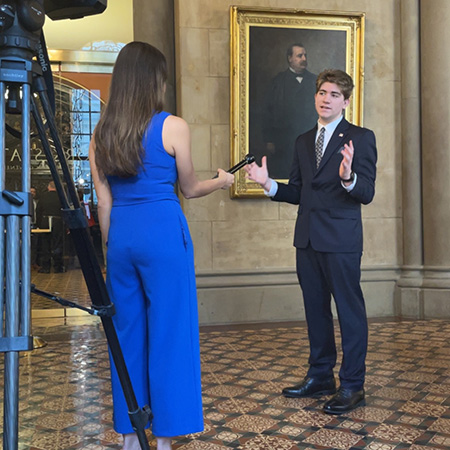
What inspires you to volunteer?
We were not always well off in my family. We did not always have everything we could ever need. I was never in a domestic violence or homeless shelter, but we were not always in a fantastic financial position. Now that I am in a much better position, I feel obligated to help people who are in a position that I used to be in.
Tell us about your volunteer role with Safe to Eat.
I am the founder and director of the organization, so I’m the one making the phone calls and doing the paperwork. It’s either me or someone else driving the car, but I am very much an on-the-ground leader. I’m picking up the boxes, loading them and getting the donations. We all work together. We’re a very, very small team, so I do a lot of the work. But the people I work with help me; they help me load the boxes, but I’m the one making the calls and setting the schedules.
What inspired you to get started with this initiative?
I was in a position where I was able to do so. It was over the summer and I had enough time to devote myself to it. I had enough experience running things. I ran, and I continue to run a nationwide lobbying organization through FARE, the Food Allergy Research and Education organization. I got leadership experience through my other work that I’ve done through FARE in New York and on my own, and so I thought I was in a good enough financial, time and social position where I would be able to found and run this organization effectively and get some good work done.
What are your long-term plans or goals for the organization?
Long-term, I want to expand to the entirety of upstate New York. Presently, we serve an area the size of Jamaica in western New York. I think that is good for now, but I want to keep an eye on the prize and just keep moving until we can encompass the entirety of upstate New York, because these issues are not unique to our area. These are present across our region.
What have you learned through your experiences as a volunteer?
I’ve learned that there is this portrayal in media and in society that the less fortunate are there absolutely because of their own decisions. They’re always there because they have done something wrong or they have made a bad decision. I don’t think that’s true. I think most of the time, people have been dealt a bad hand, and they try to make the best of it, but sometimes you’re down on your luck.. I think that is a stigma and a narrative that we need to combat, not only in society but also in media organizations.
Why is it important for others to get involved with causes they care about?
If you don’t get involved, who will? Only you know the issues in your community, and only you know specifically what you believe needs to happen in your community to solve those issues. If everybody took an hour out of their week to volunteer their time to do what was necessary to improve their communities, we’d be living in a far, far better country and a far, far better world.
Any advice for people who want to start volunteering?
I would just say you’ve got to start somewhere. You’ve got to start small. If you want to, start a canned food drive. That’s something pretty small and simple that has a major impact. I also think you don’t necessarily have to do it on your own. I do volunteer work at the local Methodist church. Local churches, religious organizations and service organizations are a great way to get some experience and get started doing volunteer work.
What do you want people to learn from your story?
I want them to learn that this is an ever-present issue in rural communities. I’m somebody who has grown up and lives presently in an area of New York that is very rural. When we think of New York as a whole, we tend to think of the metropolis itself. That’s also what we think of when we think about domestic violence and homelessness. A lot of the time, it is people who are in these rural communities and small towns. But there are differences between urban and rural homelessness. It’s a lot harder for people in these rural communities to get the resources they need because the local and county governments have far less access to funding and resources to make warming centers and homeless shelters. I want people to realize that this is not a singularly urban issue. It is, in fact, a major problem in rural areas.
Do you want to make a difference in your community like Devin? Find local volunteer opportunities.
Share this post
