
How One Youth Is Rewriting the Global Classroom
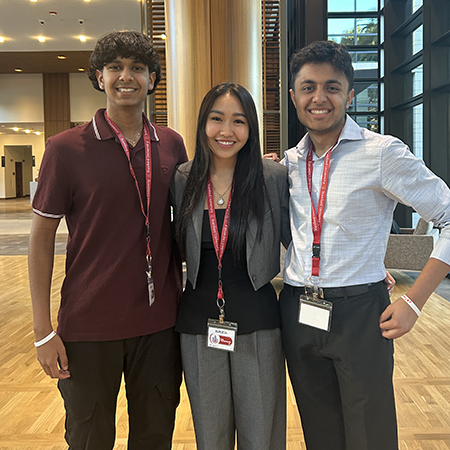
Meet Daily Point of Light Award honoree Shivansh Bansal. Read his story, and nominate an outstanding volunteer or family as a Daily Point of Light.
For Shivansh Bansal, education is not just about textbooks, but about the biological spark of human curiosity. As the founder of Project Catalyst, Shivansh has pioneered a unique approach to learning that bridges the gap between neuroscience and the classroom. By focusing on how supportive environments can shape gene-expression patterns related to memory and motivation, he’s mobilized over 150 volunteers to lead 75 workshops at prestigious venues like the Georgia Institute of Technology and various YMCAs. Shivansh believes that every student possesses potential that simply requires the right “catalyst” to unlock. And his movement has already touched the lives of 40,000 students across the United States.
Through Project Catalyst, Shivansh has overseen the distribution of 15,000 interactive books to schools in Ethiopia, Ghana and Brazil, which has saved these schools an estimated $1.2 million in educational costs. By developing free biotechnology and engineering courses consisting of over 100 lessons, he’s providing high-level intellectual tools to students who might otherwise be left behind. This global footprint has earned him a nomination for the International Children’s Peace Prize and a second-place finish in computational biology at the Regeneron International Science and Engineering Fair (ISEF).
The impact of his work is further amplified by his role as a U.S. youth ambassador to the United Nations. Beyond attending conferences, he actively shaped global policy by co-drafting UNESCO’s first youth constituency. His advocacy for science-informed learning strategies has influenced educational frameworks for over one million students worldwide. Whether speaking at the World Engineering Education Forum or the ECOSOC Youth Forum, Shivansh has become a primary voice for a generation demanding that education be both equitable and grounded in the latest scientific understanding of how humans actually learn.
Read on to hear more about how Shivansh is blending nonprofit leadership, scientific rigor and diplomatic grit to build the future of education.
Tell us about your volunteer role.
I originally started this organization that I called Project Catalyst as a way to engage students in hands-on educational concepts in biotechnology and engineering. My mom has a daycare with a couple of centers around the Bay Area, and volunteering at those centers and seeing them evolve over time helped that dream emerge. On top of that, I had a background in scientific fields like biology and this fascinating phenomenon we call neuroplasticity, where the brain can reshape itself, and this idea of epigenetics. The goal of the organization became: how can we possibly create interactive and engaging learning environments so that proper neural pathways are able to form? This idea of epigenetics comes through to help students grasp and recall information better. That became the basis of the organization, and we went from there.
Within the organization, we focus a lot on delegating tasks. Originally, it was just me and a couple of friends; we would go to a school or an event, teach our stuff and call it a day. But then it became more like a movement where students wanted to join because they were passionate about this education revolution. From there, we were able to start writing grants and getting funding. I focus on making sure everything is running smoothly in terms of funds and reaching out to partners. I have friends who are directors of outreach, and their main role is just trying to get partnerships, because through collaboration, our reach has been able to expand much more than if it was just us. We have people doing grant writing, people curating materials and people focusing on how to get resources shipped internationally. I focus on managing that and conducting research on the science we involve in our learning resources.
What inspired you to get started with this initiative?
We started off hosting a bunch of workshops and conducting research into scientific literature on this whole process of neuroplasticity and genetics. Then we started curating our own educational resources and materials and hosting workshops around the country. We have three main headquarters: one in California, one in Georgia and one in New Jersey. We span from there, making free resources for students on our website and having in-person workshops. From there, we partnered with organizations like the United Nations and universities like Georgia Tech. Through these partnerships, we can expand our reach internationally and around the country as well.
Tell us a little bit more about the various initiatives you’re working on.
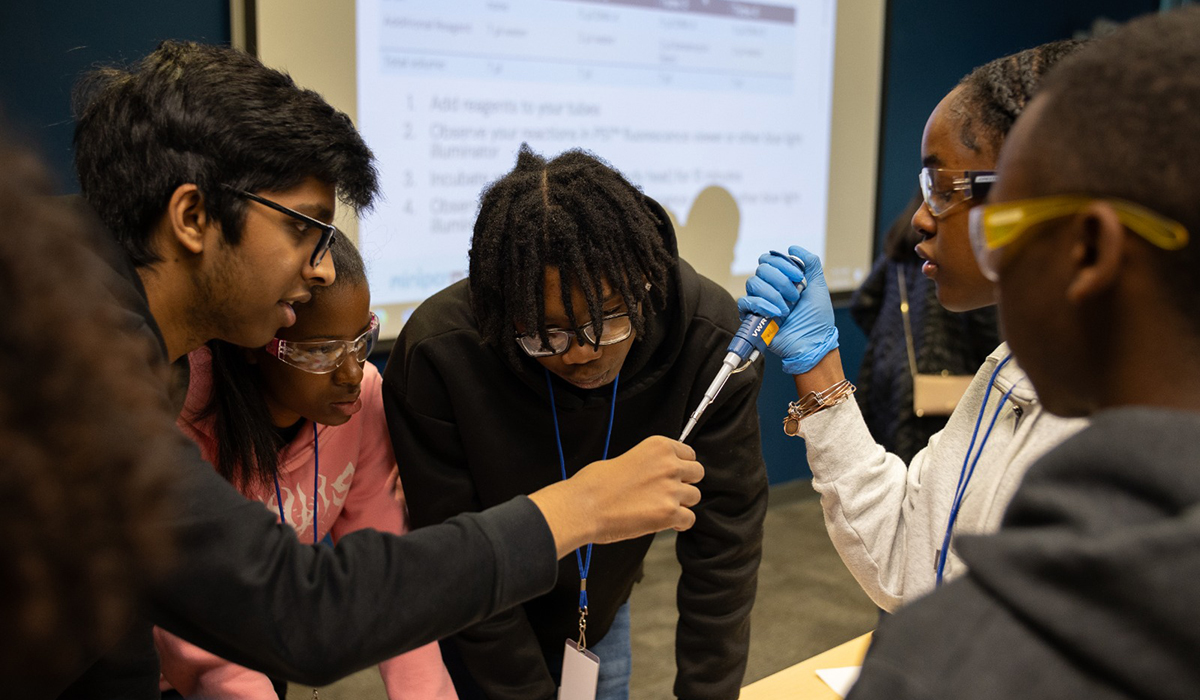
For the workshops specifically, we focus on engaging the students in a way where they’re questioning what is happening; we find ways to pique their curiosity. If you have ever sat in a normal university or school lecture where teachers use slideshows, it often becomes boring and repetitive, and you aren’t really motivated to ask questions or get hands-on with the learning. We found that if we make our entire workshop purely experiments, while explaining the concepts being done, the students can ask questions, form their own hypotheses and try out different things. One of the main things was that they are able to fail and try again, which is really important. That helps them grasp these specific concepts and apply them in the real world and at their own schools.
For our resources, we have two main initiatives. One is the online resources where we made interactive games that cover topics in engineering and biotechnology. They are free and cover over 100 different lessons that we curated using information from college, high school and middle school textbooks. The other initiative was this interactive book that was mainly a way for us to reach international students. We saw that although we have these free resources and can host webinars, some people in Africa, for example, just don’t have the internet capabilities to take part in this education revolution. We took everything from our games and workshops and stuffed it all into one neat package called “An Engineer’s World.” It’s a textbook that we can manufacture at low-cost, and then ship to countries for free. We have been able to distribute 8,000 to 10,000 books, and that’s how we are reaching people internationally.
Beyond this, I’ve been able to take these ideas to United Nations conferences and talk about the science behind epigenetics and neuroplasticity. It is causing a paradigm shift within stakeholders where they see that this idea of science-backed education is something very important that students around the world should take part in. It’s been cool to see how I am able to pitch in for that. There is a duality between being someone who wants to improve education and being a student myself, being able to pitch my voice to these stakeholders and policymakers. That is my representation at those conferences.
Tell us about future partnerships, programs or events that you are excited about.
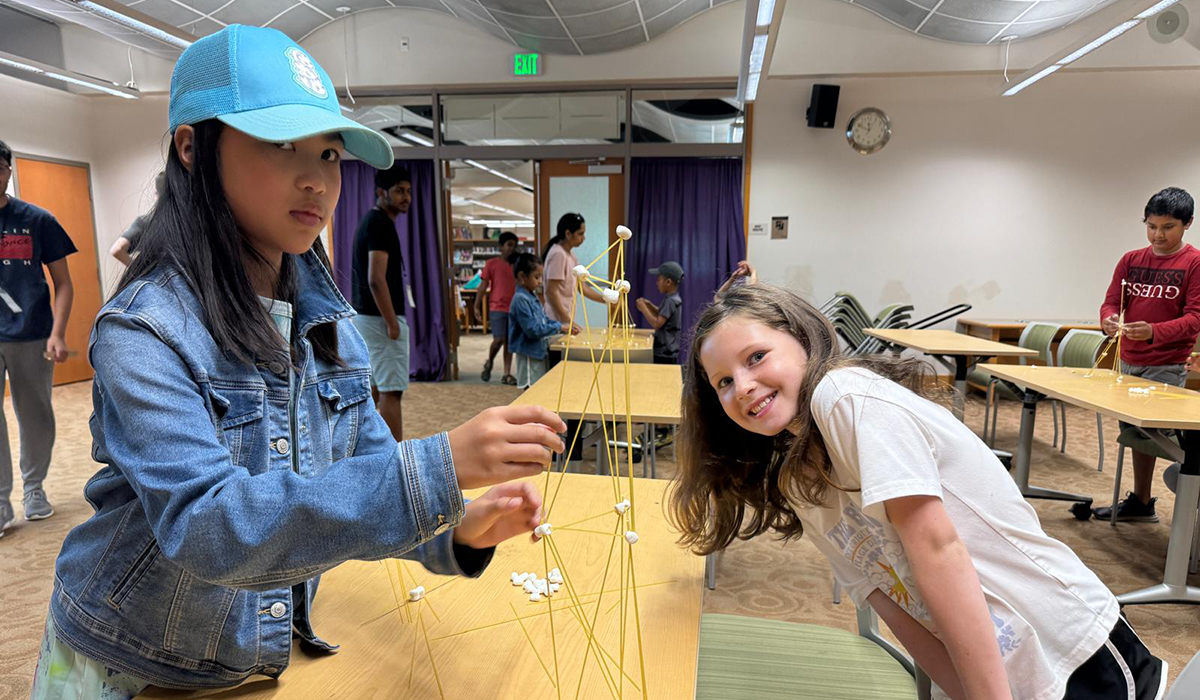
We have a recurring program with the Georgia Institute of Technology; we partnered with them through Johnson & Johnson’s Pharmaceutical “Bridge to Employment” program to host workshops at Georgia Tech. Those workshops focus mainly on biotechnology. We also have recurring workshops with local YMCAs and an organization in Oakland called Girls Inc., which focuses on providing education for underserved girls in the area. We go out there quite regularly providing workshops, and on top of that, we also try to host at local libraries or county centers. We have those recurring as well.
What are your long-term plans or goals for the organization?
Our main long-term goal is working with a larger institution like the United Nations to implement this idea of epigenetics and neuroscience back into the education systems of less developed countries. We feel like if these ideas are able to help students learn better, then overall it can help uplift communities out of cycles of poverty and hardship. If they can have a fair opportunity to learn, they can become successful in whatever field they want. I feel like that’s something really important, how we can uplift each other as a community and uplift the world as a whole. If everyone is given a proper chance to learn, then we can become more connected as individuals.
What have you learned through your experiences volunteering?
When you’re creating an organization that you want to make global, you’re going to see things like funding falling apart or specific partnerships not coming through. Those things are small and manageable. Bigger issues we have faced involve trying to get more people on our side. When we go to these organizations asking for partnerships or help, sometimes we are not given priority just because we are students.
It has been my mission to amplify the voices of students throughout the world. I’ve been working with diplomats at the United Nations to increase youth participation within UNESCO’s framework. It is challenging, but it has been a rewarding experience to see that as a student, if I put my mind to it, I am actually able to go out and contribute my own voice to these events.
What’s been the most rewarding part of your work?
One of the most exciting things for me is when I see students smile and learn in front of me; they are having a great time, just being amazed by what we’re showing them. That is really heartwarming and wholesome. The other thing is being able, as a student, to contribute at such a big level where I can see how people’s lives can be changed by something I contribute – how that can actually affect communities abroad and people that I might never meet. I wanted to contribute to the world in that way; it is a big feeling of wanting to spread love and make the world a more connected place.
Why is it important for others to get involved with causes they care about?
I think this really comes down to how we can make a more loving world. It comes from recognizing as humans how connected we are. If one person’s smallest actions can positively influence somebody else, and we get a million people to do that, those actions ripple outwards and positivity starts spreading everywhere. If we can all work together as one world, we can address the biggest problems we face, like climate change, lack of education and poverty. If we can band together and recognize another person’s suffering as our own, we become motivated to address their problems.
As youth, we also have this unrecognized power, which is our young age. We have creative ideas and approaches. When we start recognizing that we can actually make a difference in even the smallest ways, it becomes really impactful because of the snowball effect.
Any advice for people who want to start volunteering?
Find something that you are really interested in and just get started. When I first started volunteering, it was at an organization called Kids Against Hunger. I was originally volunteering just for the service hours, to get those checked off, but I recognized once I got there that the people were just amazing. Being around them and seeing that we were all working towards one cause was truly heartwarming. Getting involved in any way whatsoever is the basis of what we should be doing as humans; it is fulfilling to ourselves and helping others as well. If you’re really passionate about something, just get started.
What do you want people to learn from your story?
Beyond this organization, I’ve also been really passionate about research into cancer. I was intimidated as a high school student – how could I possibly contribute to this field? But it’s important to get started on something you’re passionate about because once you go through with it, you’ll realize that you’re actually capable of making such a big difference in other people’s lives. You are able to have a positive effect on the world, and that’s the legacy we should all leave: one where we’ve helped other people and done our part in creating a more connected and loving world.
Do you want to make a difference in your community like Shivansh? Find local volunteer opportunities.
Share this post
