
STIRRING UP SOMETHING HEALTHY FOR NATIVE YOUTH
Meet Daily Point of Light Award honoree Gavin Reddy. Read his story, and nominate an outstanding volunteer or family as a Daily Point of Light.
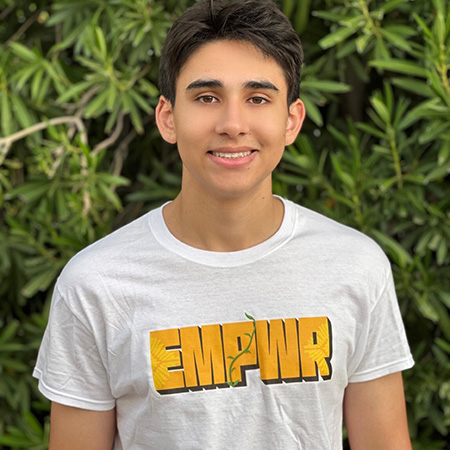
When Gavin Reddy saw his grandfather struggle with his health, he knew he wanted to help others pursue a healthy lifestyle. A 17-year-old high school student, Gavin has always been very passionate about how culture and identity play an important role in our health. His grandfather, who comes from an East Indian background, had a cough and was initially diagnosed with tuberculosis, because the disease has a higher rate in the East Indian population. However, it turned out to be an aggressive form of cancer that was caught too late.
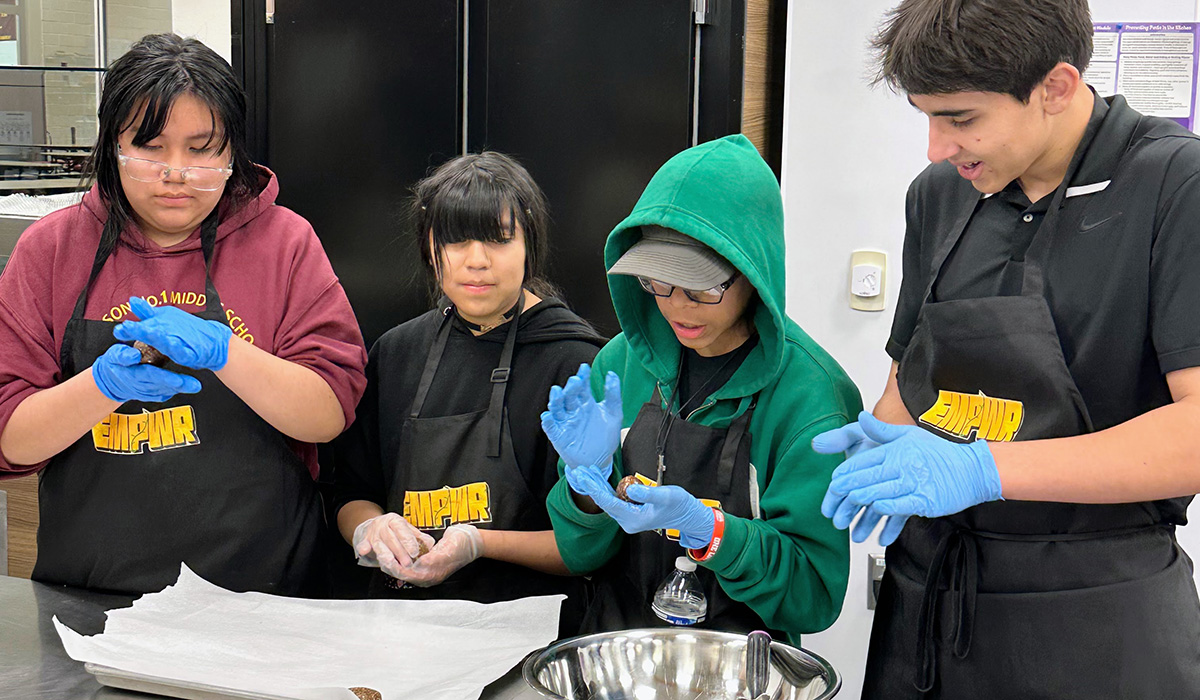
Inspired to start volunteering with Native communities, Gavin saw the disparities in his community. So he created EMPWR Arizona, an organization that works to fight childhood obesity through Indigenous foodways. The organization empowers Native youth with healthy habits, raises awareness about changing food traditions and builds strong communities rooted in culture, resilience and wellness. The foundation of EMPWR’s mission is its hands-on cooking classes for students and caregivers, taught by a Native American chef. In each session, attendees receive nutrition and sustainability education, as well as guidance on traditional food practices and preparation. Each family departs with a fresh bag of produce and ingredients they can take home to put what they learned in class to practice, simultaneously minimizing food insecurity and reinforcing long-term healthy habits.
Since its origin in 2024, EMPWR has served more than 40 families, distributed over 100 bags of fresh produce and ingredients and has helped raise more than $30,000 to support and expand programming. But Gavin has also seen many of his students thrive, whether they’re developing a love of cooking or learning healthy practices and taking them home to pass them on to their families. Gavin’s dedication to EMPWR’s mission is visible in the 12 to 15 hours per month that he volunteers to run the organization, on top of his very busy high school schedule. But his devotion to the cause is just another example of how age doesn’t have to be a barrier to changing the world. In fact, with a passion to help others, anyone can make a significant change in their community.
What inspired you to get started with this initiative?
Over the summer of my sophomore year, I volunteered at a health facility for Native American people. I saw they had this program called Read It and Eat, where they would have a librarian come in and tell a story or a folk tale, and then they would have a couple of these children cook. A lot of the people who were coming in were disproportionately affected by obesity. This led me to do some research, and I found out that in Arizona, it’s Native American children who have the highest rates of obesity. That started me down this path of seeing what I could do to change things.
I began looking for other nonprofits that were involved with Native American communities, and I found that there weren’t any. I decided to found EMPWR in my sophomore summer. Initially, I reached out to indigenous chefs from around the valley to gain some of their knowledge, ask them about the obesity crisis and ask what we can do to bring back health and culture to these communities. From there, I developed a model of cooking classes that are parent-child in participation, in which a chef leads them through the class. I help students cook and feel comfortable. We provide access to healthy foods so that all students go home with bags of food and produce for the next two weeks that can be used to cook at home, and we’re giving them the education and tangible skills to overcome that barrier.
What inspires you to volunteer?
It’s seeing a need and trying to fill in. I believe that if you’re not actively helping, you’re no better than the issue itself. I noticed that the obesity epidemic is something that affects all Americans. However, in my own community, it’s affecting a specific population the most, which is Native American communities. I’m very passionate about health because of what happened with my grandfather. I thought, if I’m not actually helping, what is my role in this crisis? That’s what led me down the path to creating EMPWR and trying to engage other Native American community members to help fight back against this crisis.
Tell us about your volunteer role with EMPWR Arizona.
I’m the founder and president of EMPWR. Outside of the cooking classes, I go shopping for groceries, plan the next meal and create health tips, because something that EMPWR is working on is not just the culinary aspect, but also the healthy eating aspect. Some of the programs we’ve done are on the importance of pea proteins and other plant-based proteins, because not only do they have a smaller ecological impact, but they’re better for our health. A second one we developed was a challenge called the rainbow plate. It was the idea that we would bring in some pictures of healthy foods in a rainbow format, seeing how many colors and different foods they could get on their plate. We challenged the students to go home and send us pictures of all the meals they’ve created using natural ingredients and colors. Inside the cooking classes, I help plan the meals with Chef Mario, and he leads the whole class, but I work with each student.
What are your long-term plans or goals for the organization?
Currently, we’re based in the Madison district. We have two classes with two sets of students. However, something we’ve been working towards is making EMPWR self-sustaining, so right now we’re working on getting a community garden at the Madison Elementary School District, so we don’t have to keep going out and shopping for vegetables every week or trying to buy new ingredients. We hope that it becomes something that manifests outside of our classes, in which students can engage with this community garden. They can learn about seed banking and other culinary practices that are related to both indigenous wisdom and healthy eating. That way, they’re engaging power outside of our culinary classes.
Our hope is also that it affects other students whom we don’t have the time to incorporate into our classes, because the Madison district has a large Native American population. Our goal with the garden is to engage students who may not be directly involved with EMPWR, because our goal is to platform the whole community. Our second piece is expanding into other schools within the Madison district and then creating chapters outside of Arizona.
What’s been the most rewarding part of your work?
The most rewarding part has been seeing the culinary love that all of our students are developing. For example, one of our students who came in had an aptitude for cooking, and we platformed him by giving him extra ingredients when he went home. This developed into a real love of cooking, and now he has actually started his own chef’s blog where he documents what he’s doing. He’s entered some cooking competitions, all because of the love we nurtured at EMPWR.
Essentially, we’ve seen this love grow within all of our students.
What have you learned through your experiences as a volunteer?
Because we work with a delicate community, there are a lot of trust issues and other barriers. It’s taught me that leadership requires a lot of listening and feedback. Specifically, as a volunteer and as the president of EMPWR, it’s been a process of engaging these communities productively, because our goal within power is not to transpose a model of what we want onto these communities. It’s a mutual negotiation between the communities and us: seeing what they want and what they need, and then being a helpful resource. I’ve reached out to countless chefs and other Native American figures to see if what we’re doing is appropriation or cultural learning, because we don’t want to infringe upon anything in these communities. For me, leadership may seem at face value like taking initiative, but to me, what I’ve learned is that it’s about listening and engaging with community members.
Any advice for people who want to start volunteering?
I would say the biggest piece is to get active, because a lot of people are afraid of the setting, or they’re uncomfortable engaging with these communities in the first place. They don’t really know if what they’re doing is useful, or they feel out of place. That’s something that initially happened with EMPWR. We were trying to see if the community wanted it or how they were going to be involved. For me specifically, it was just the act of actually getting into the volunteering, meeting the students and talking to them, because once you develop a personal relationship with them, you move beyond those issues and feelings of discomfort that may have prevented people from volunteering in the first place. Once you build a connection, it creates a lifelong bond where you want to keep going back to help the community.
What do you want people to learn from your story?
You should always be listening to the needs of others, because sometimes we have preconceived notions of what communities want or what we think people need. But when you actually listen and engage with the community, you find out what is actually necessary, and then it becomes your role to help nurture and develop their skills, help fight off any barriers and help platform what they need. A lot of people get caught up in logging hours, or they’re a little bit nervous to even try. I think that the idea of listening and engaging helps to mitigate those effects.
Do you want to make a difference in your community like Gavin? Find local volunteer opportunities.
Share this post
