
TURNING THE PAGE ON THE STIGMA OF INCARCERATION
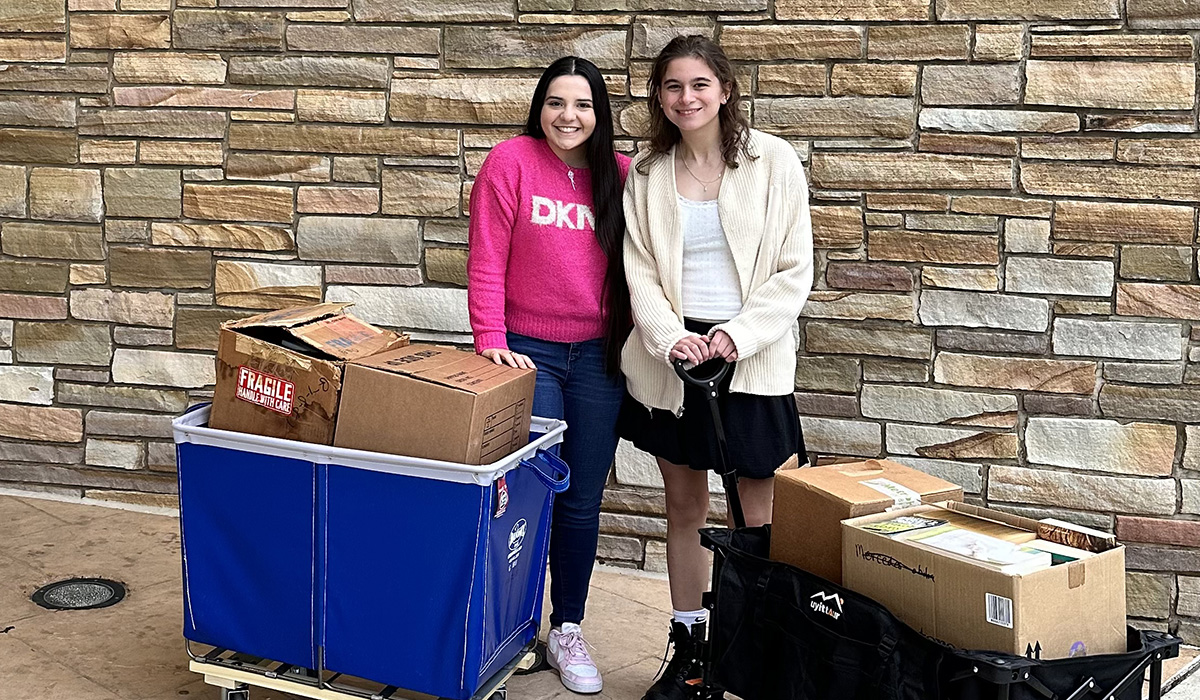
Meet Daily Point of Light Award honoree Alex Cox. Read her story, and nominate an outstanding volunteer or family as a Daily Point of Light.
Alex Cox has always been a voracious reader. Now, the 18-year-old high school student is helping others get the same opportunity. From an early age, Alex has read almost anything she could get her hands on. When she was assigned a capstone project in eighth grade that asked her to focus on a social issue, she had already begun delving into the complex challenges of the justice system. She decided to focus her project on the struggles incarcerated people face attempting to find books to read due to severely lacking prison library systems. Hoping to take her work a step further, she held a book drive at her school and decided to donate the books to her local correctional facility. However, Alex didn’t stop there. Inspired by another Daily Point of Light honoree, Lucia Noto, who was a year ahead of her in school, Alex founded Books Behind Bars, an organization that holds book drives at local schools and donates those books to correctional facilities.
On top of her heavy academic workload, which includes preparing for college in the fall, Alex spends approximately 15 hours a month organizing drives, collecting books and contacting prisons, in addition to working toward advocacy for her cause. Since starting Books Behind Bars in 2022, Alex has donated over 3,500 books to 2,800 inmates in prisons across 3 states. She has built partnerships with five prisons and is expecting to grow that number by five more in an effort to continue the massive impact of her work. While Alex isn’t sure what career path she wants to follow, she knows she wants to lead a life that advocates for change in any unjust system.
Because Alex’s inspiration to volunteer was sparked by an older student at her school, she credits that as one of the most influential reasons she decided to stand up and make a difference. The chain reaction that’s sparked when one person sees how powerful helping others can be is a strong example of just how contagious volunteering can be.
What inspired you to get started with this initiative?
In eighth grade, we had a capstone project where we chose a social issue and designed an innovative way of tackling it. I’ve always been an avid reader, and at that time, I had just discovered a pretty deep interest in the justice system. I decided to focus on access to books for incarcerated people. I learned more about that issue, which centers around the idea that prison libraries are underfunded and understocked.
The stigma around incarceration prevents a lot of people from giving charitable donations to these libraries.
Incarcerated people often have very limited access to books. Considering all of that, I developed a plan to hold a book drive at my school and donate the books to my county’s correctional facility. At the end of the year, I decided to not only present my solution but also actually implement it. I ended up holding a book drive at my school, and the initiative grew from there.
Tell us about your volunteer role with Books Behind Bars.
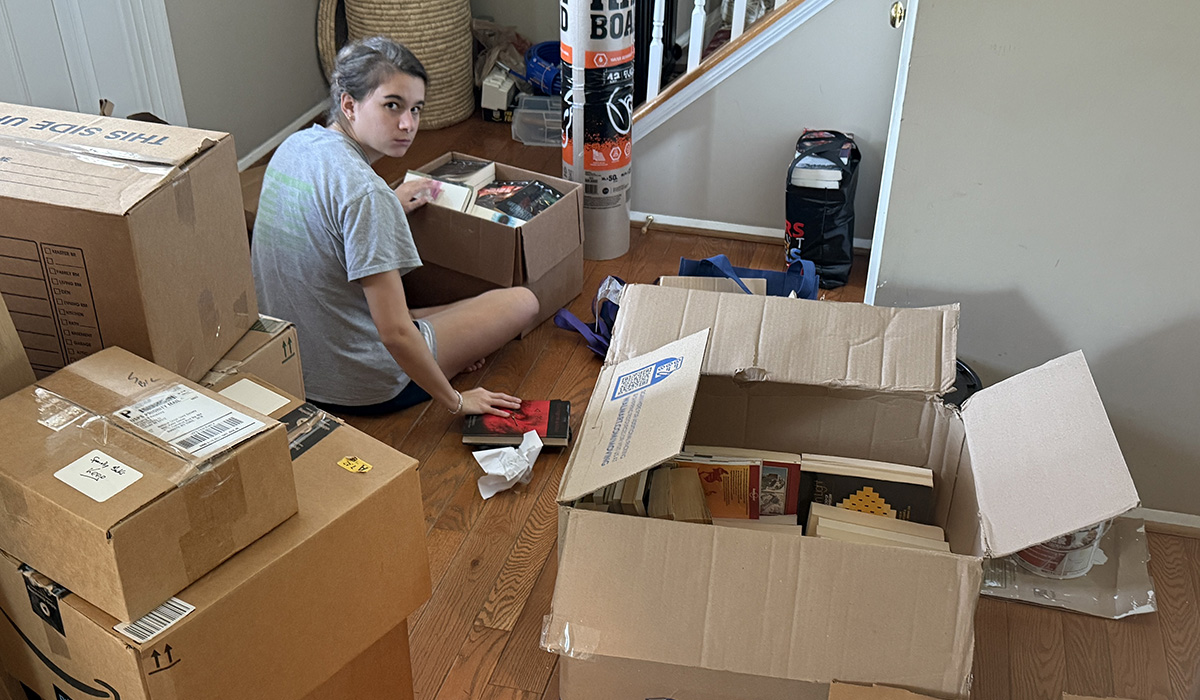
I start by coordinating book drives in my area at local high schools. After I do that, I hold a book drive where students and teachers can donate everything from self-help books to dictionaries to fiction books. Then I coordinate with local prisons to donate books directly to their shelves. So far, I’ve donated over 4,000 books with the help of high school students across D.C., Maryland and Virginia. I’ve also been involved more recently in advocacy for the incarcerated community. I’ve also been involved in lobbying for correctional education-related legislation in my state’s general assembly, and I recently hosted a virtual speaker panel to further bring attention to the experiences of incarcerated individuals and those who work with them.
What are your long-term plans or goals for the organization?
I definitely want to continue Books Behind Bars in college. Currently, I plan to start a chapter at the school I’m going to and perhaps even lean more deeply into the legislative advocacy aspect by putting together a group of undergrads to lobby for incarcerated people’s rights on the state and national level. Aside from continuing my own work, I want to make sure that the legacy kind of work that I’ve behind in Maryland and the DMV area continues, so I’m hoping to be able to hand off my organization to a younger student at my school or a member of my community who’s interested in keeping Books Behind Bars alive in Maryland.
What’s been the most rewarding part of your work?
The ability to work with the prison officials whom I’ve met. These are librarians, education coordinators and various administrators. They were all very open to working with me, and they really care about expanding educational equity for the incarcerated people under their care. They have been able to work with the young people who have helped me get involved in book drives in different schools, and who’ve helped grow my organization. It’s been so inspiring to know that there are kids like me who want to make a difference in this issue.
What have you learned through your experiences as a volunteer?
I’ve learned a lot about the justice system, obviously, especially as it relates to incarceration. I’ve done a lot of research on Maryland-specific correctional education policies, because Maryland does have some really excellent prison college partnership programs. More broadly, I’ve learned some different ways to combat society’s assumptions about incarcerated people, which are obviously so deeply ingrained in our society. It can be really difficult, but it’s rewarding when it’s done, and when you’re able to recruit people to understand a deeper understanding and appreciation of how important this issue really is.
Why is it important for others to get involved with causes they care about?
I started this when I was 14, and as a young person, I remember not seeing a lot of resources and ways for me to get directly into the world of volunteering. As young people, we’re told that we don’t really have the platform to make a difference until we’re at least in college. But as I said before, my work has introduced me to a lot of really motivated young people who refuse to wait until we’re older to fight for a cause they care about, and I think that it’s so important. No matter your age, background or experience level, you know you do have the power to make a change if you’re dedicated and passionate enough. And you just have to find that power within you, and really set out to serve the community so you can make the difference that you care about.
Any advice for people who want to start volunteering?
Take advantage of the presence of older mentors. I mentioned Lucia before, but she was really instrumental in helping me start my organization. If you are in a state or situation where you have older mentors at your school or in your community who have experience starting volunteer organizations or just volunteering in them, and they know what steps to take, I really recommend taking advantage of that resource.
But if you aren’t in a position where you can find these mentors, then really research which issues you care about the most. Then find what organizations near you are taking steps to address these injustices. Maybe go to a food bank or volunteer at a hospital. It’s so easy to get involved in your community, as long as you know where to start.
What do you want people to learn from your story?
The stigma around incarceration is really unjust. Even though it might seem counterintuitive to focus our resources on incarcerated people who are supposedly being punished for their wrongdoing, it actually is really beneficial to society, and it’s something that we can’t ignore. We have to face it headfirst, and we have to make sure that we’re doing all that we can to support this community that doesn’t get the support that it needs.
Secondly, I hope that my story can inspire other young people to get involved in their communities and start an initiative about something that matters to them, and know that they don’t have to wait until they are in college or the workforce to get involved in an issue that is really important to them.
Do you want to make a difference in your community like Alex? Find local volunteer opportunities.
Share this post
