The New Philanthropist: An Interview with Pamela Norley

As president of Fidelity Charitable, Pamela Norley is a leading voice in advocating for the power of American philanthropy across the world. Outside of the office, Ms. Norley volunteers her time as vice-chair of the Board of Directors for Points of Light. She also serves on the boards of the U.S. Impact Investing Alliance, Research Triangle Park Foundation and the Flying Kites School Network.
For those not familiar with the concept of philanthropy, what is it? What makes someone a philanthropist?
For many, the term “philanthropy” has traditionally called to mind wealthy families bestowing large endowments on major institutions. But for me, my idea of what it means to be a philanthropist was shaped by my dad.
Donating was second nature to my father, and he had this knack for knowing what people needed and when he could help. When he ran his own business, he made sure all his employees had turkeys at Thanksgiving and Christmas and hams at Easter. And it wasn’t until later that I learned that he anonymously paid off the mortgages of neighbors whose homes were in foreclosure and bought suits for local high school students interviewing for college.
My dad really embodied the original meaning of philanthropy—”love of humanity”—and, luckily for the world, he’s not the only one. Increasingly, we’re finding that people are embracing this much more broad and multifaceted definition.
Recently, donors—particularly those of younger generations—are thinking beyond traditional monetary donations to 501(c)(3) organizations and reframing the concept of philanthropy as any act of social good, whatever form it takes. That could besharing your time through volunteering, using your social media platform to advocate for a cause or changing your consumer habits to better align with your values. To put it simply, anyone sharing their time, talent or treasure to make the world a better place can be a philanthropist. And we’ve really seen this more accessible and inclusive definition resonate with younger donors. In fact, three-quarters of millennial donors say that they consider themselves to be philanthropists, compared to just 35 percent of Baby Boomer donors.
How are the ways in which younger generations, such as millennials and gen Z, make decisions about how and where to make philanthropic contributions changing?
We certainly see younger donors approach their decisions differently than donors of older generations. We see younger donors prioritize contributing to small, innovative organizations where they can easily see the effectiveness of their support. We see peer-to-peer advocacy creating an influencer culture around donating. But this question really goes far beyond how younger generations approach charitable giving and gets at how they approach life.
Younger generations are finding ways to integrate their values around philanthropy into everyday decisions. For their parents or grandparents, donating has often been siloed as an action separate from other aspects of daily life, but younger donors take a more holistic approach. It is now second nature to consider the social benefit of their actions before making a decision. They choose products from brands like Warby Parker, TOMS, or Bombas that incorporate social good into their business models. They leverage major milestones like birthdays and weddings to fundraise for their favorite causes. They consider a company’s corporate social responsibility when deciding whether to take a job offer. And these are just a few examples. Particularly for these generations, it’s no longer about charitable giving; it’s about charitable living.
What can older generations learn from younger generations about investing in the issues they care about?
To me, the greatest lesson from younger generations’ philanthropy is the power of using your voice to increase the power of your dollars. Many older donors don’t want their donating to be visible, which may be related to feelings that anything connected to money should be handled privately. But younger generations understand the power of sharing and making the causes they care about more visible. Even if you aren’t able to afford large donations, you can use your voice to share favorite causes or organizations and to ask for others to support the same issues. Every post and interaction is an opportunity to plug into something bigger and make more of a difference.
Recent research has shown a growing trend by younger generations to donate to individuals versus the organizations themselves. Why is it important for people to also donate to nonprofits?
For many, giving money directly to an individual or family is one of the most tangible ways to support others. With the growing accessibility of online platforms such as GoFundMe, Patreon or DonorsChoose—and younger donors’ strong focus on seeing the demonstrated impact of their donations—it’s no surprise that direct donations are an appealing way to engage in philanthropy.
However, through their on-the-ground experience, nonprofit organizations are centers of knowledge and expertise in addressing the challenges that their communities face. They also may have greater visibility into the populations who leverage their services. Further, unlike one-to-one gifts, nonprofits work at scale to help a greater number of people with a similar donation. For example, Feeding America reports that they are able to provide 10 meals for every $1 donated. This combination of expertise and efficiency enables organizations to set up systems that can transform whole communities.
Finally, while donating directly can make an immediate impact in meeting one individual’s request, the underlying systemic issues that influence those requests continue to go unaddressed. Often, nonprofit organizations not only work to provide direct services, but also advocate for systemic change at the policy level. That scope of work is much more difficult to organize and manage on the individual level.
How can donating be a pathway to deeper civic engagement (volunteering, using your voice, etc.)?
Above all, I hope donors understand the full breadth of ways that they can make an impact on the world. Sometimes it starts with just one donation, sometimes with a vote, sometimes with a simple ”like” on social media. All of these are great entry points to making more of a difference, and they can build on each other over time.
I’m reminded of Fidelity Charitable donors Peter and Kendra Amico. They believe that passion for a cause should inspire your donations, but that the opposite is also true. In addition to donating to causes that they care deeply about—those that are top of mind and heart because of a direct experience—they also give to causes that they
want
to care more about, including issues outside of their experience and maybe their imagination.
When you put your money toward something, you begin to care more about it and become personally invested in progress in that area. And that new passion can be the inspiration needed to engage more deeply, through volunteering and speaking up for those who need your voice even when it’s tiring or difficult.
READ THE ISSUE
Finding Purpose by Donating: An Interview with Blake Canterbury
Blake Canterbury is a social entrepreneur dedicated to good and the Founder of Purposity. Blake founded his first company based on social media in 2009: beremedy. It was named one of the “3 reasons we’re still tweeting” by CNN and one of the leading organizations in bringing aid to Haiti after the major earthquake. Blake has worked for agencies and major brands launching national TV campaigns and mobile apps. His work has been featured in media outlets and publications internationally. In addition to leading Purposity, he also currently sits on Compassion International’s Board of Directors.
Purposity is building the future of generosity and comes from the core belief that humanity finds purpose through generosity. Visit www.purposity.com to learn more and download from the App Store or Google Play.
Why did you create Purposity?
Most people are “pursuing happiness” in life. However, the way most are going about it is all wrong. We believe there’s a way to live that leads to true, sustained happiness. And that’s living generously. So creating Purposity was really about inviting people into a journey towards a life that they ultimately would like to live.
Our name comes from a marriage of “purpose” and “generosity.” We believe that purpose is actually rooted in generosity. We believe that identifying your purpose in life should be the precursor to everything else you do. But we see that many people don’t pursue their purpose until much later in life. We actually think this should be pursued before things like personality tests or strength finders. Once you’ve identified your purpose, it becomes the lens through which you can say “yes” to great decisions and say “no” to good decisions. It becomes your motivation every day when you wake up. Absence of purpose is why many people often feel stuck and unclear – and then begin to search for meaning.
The theory behind Purposity is that if people had a way to live generously that was more fun, easy and transparent, millions of people would begin doing so… or living more generously than they currently are.
As we looked at generosity today, we found that for most people their ways to live generously tended to be traditional methods that have been around forever. We thought that if we could use great technology and build a lifestyle brand, we could reimagine what generosity looks like for our generation. And we could invite millions of people to find purpose.
How can someone be a responsible and impactful donor?
The answer to a problem is always “easy” from a distance. But the closer you get, the messier it becomes. It’s why it takes deep work, experts in the space and good data around outcomes to understand how to address issues in local communities.
The sooner we can assume less about what people need and want, and find out what they actually need and want, the more responsible we can be. We can be better donors when people have a say in what they need.
Another key to donating responsibly is keeping the dignity of the other human being intact. It is keeping in mind that you are enabling a human being. And not reducing it to a transaction. If you can do that, it will immediately bring clarity to the situation.
Purposity was designed with both of these things in mind. Each need on our platform was identified by a school or nonprofit professional that is working directly and deeply with the individuals being served. Needs are identified with direct input from the recipient, so they’re not receiving hand-me-downs or surplus items. We’re honoring their dignity when they can provide inputs on what they’d want. With each need, we are also sharing an individual’s story, so our users understand who they are, their situation and how a particular item will help them toward a more sustainable situation.
Some people may wonder how making a small donation or supporting just one person can be meaningful. Can you share a story that demonstrates this type of impact?
Look, every step helps. For somebody needing support, every piece of the puzzle gives hope.
Here’s one example. There was a family who was unhoused, and the mom and dad had had two children while they were living on the streets. They were connected with an organization who worked with the parents to help them get jobs. The parents saved money and were able to buy their first home. We were able to help outfit their home – from silverware to pots and pans to a set of bunk beds for their two boys.
We actually got to be part of delivering the items, which is rare. And we helped install the bunk beds. We kept the boys outside until the beds were ready. When they ran inside, they saw the first beds that they could ever call their own, and instead of jumping on them like you’d imagine in a movie, they came running over and gave a total stranger a hug.
Whether the impact is a bed or a pair of shoes or formula for a newborn baby, there’s no answer I can give in an interview that can share the depth of impact that one single item can have on another person’s life.
What is your vision for where donating is going?
Our vision is one of neighbors helping neighbors. We believe that people would help their neighbor if they knew they had a need. When I was growing up, if we didn’t have an egg or a bag of sugar to bake cookies, we’d ask our neighbor and they’d give it to us. It was natural. We believe that if we invite people into a simple way of doing this – rooted in trust and transparency – it’ll scale in local communities. It’ll scale nationally. It’ll scale globally. And millions of people will be helping their neighbors. They’ll be living generously. And we will have democratized philanthropy. So much so that people may no longer call it philanthropy or donating. It’ll no longer be a philanthropic act. It’ll simply be a natural way of living.
Purposity connects requests for donations to potential donors in a community. How is technology changing the way people donate? Is this the future of donating?
Yes, this is the future of donating. Technology is just enabling new ways to be generous. It has the potential to make donating more fun and more transparent, and the data that comes with technology has the potential to make it more effective.
In Purposity’s model, when you buy a pair of shoes for a child, you get a notification in real time letting you know the shoes have been delivered. When we do this, it helps build trust with the donor and it’s fun! This in turn inspires donors to donate more and volunteer more, and more deeply invest in organizations.
Technology enables the kind of transparency that’s always been hoped for in the space and transparency should build trust. The more trust a donor has in the organizations and in the folks they support, the more reasons the donor has to give to and through the organizations that support all aspects of the individuals and communities they are serving.
We’re on the forefront of what technology is going to be able to do for giving. We’re building new ways for people to live generously that have never been done and we can’t wait to release them to the world. We believe that those organizations that adopt it early will be better positioned to stay ahead of the curve as the sector continues to evolve.
What is your ultimate goal for people who engage with Purposity?
Really, it’s that people would pursue their next selfless act. Culture tells us that we can buy our way to happiness, and the more we live this way… buy this thing, dress this way… we’ll be happy. But when you think about life from the end of life and what really matters, it’s what you did for others that comes through. The sooner we can invite people to understand this and for it to become a lifestyle, the quicker everybody’s life will be better.
read the issue
Hear from Number One: Our First Conference Registrant Shares Why She Was Inspired to Join Us
Are you registered for the annual Points of Light Conference on July 14 – 16? Are you still considering if you’ll attend? We interviewed this year’s very first conference registrant, Natalie Wood, director of community engagement at the Regional Food Bank of Oklahoma. Natalie tells us all about her organization, why she registered for the conference right away and what she’s hoping to gain from her conference experience!
Can you tell us more about your organization and the role you play?
I work for the Regional Food Bank of Oklahoma. We’re the largest hunger relief organization in the state of Oklahoma, serving 53 out of the 77 counties in the state. My role as the Director of Community Engagement uniquely positions me to work with donors, volunteers and community leaders in the fight against hunger. In addition to leading our organization’s efforts on the recruitment and retention of volunteers, I also oversee food and fund drives, our young professional programs and hunger education.
How many volunteers does your organization activate each year?
In a typical year, we have more than 44,000 volunteers who help fight hunger through our different volunteer programs. Starting at the end of March 2020, we closed our Volunteer Center out of an abundance of caution due to the COVID-19 pandemic. We just recently opened our Volunteer Center again after 14 months of being closed to the public, but with much smaller volunteer shift sizes of 50 people per shift.
Have you attended the Points Of Light conference before?
Last year was supposed to be my first Points Of Light conference attending in-person. When it shifted to a virtual format, I was so pleased with the online experience that I just knew I had to attend again. I will be joining virtually again this year and can’t wait!
What has been your most memorable conference moment?
I was in awe of the virtual conference last year. I felt connected, even while being virtual and thoroughly enjoyed the presentations and speakers. I find the ability to learn from others invaluable and I knew the Points of Light Conference would provide me the opportunity to hear and learn from many leaders in our industry.
What are you hoping to learn or gain from the conference this year?
I love attending conferences because I walk away with a new set of ideas and a fire ignited inside me. I am hoping to gain ideas around deepening the volunteer experience to help volunteers, donors and community members understand their full impact.
Is there one session or speaker you’re looking forward to in particular?
Let me start by saying that narrowing down what sessions I want to attend is no easy task! There are many sessions I am looking forward to, but really excited to learn more from Cairn Reisch in “It’s a Win-Win! Utilizing Volunteers in Meaningful Work.” Our organization is about to launch our skills-based volunteer program and I know I will glean a lot from this presentation. Our current volunteer opportunities are wonderful, but I am looking to identify roles for those volunteers that want to take a deeper dive in the fight against hunger.
What is your hope for the next year for the volunteer/civic engagement sector or your community?
Through this past year, we learned that people are extremely eager to help and stand up for those that need it most, especially in times of increased need. Volunteers want to do more and know more to make a real change. My hope is that we all take the time to equip volunteers to not only serve, but to lead through advocacy and action.
Are you ready to reserve your spot for this year’s power-packed conference? Register now for this exciting virtual event!
Civic Engagement During Pride Month (and Beyond!)
As people around the globe celebrate Pride this June, it’s important to not only celebrate the progress that’s been made but make a plan for continuing to advocate for LBGTQ+ rights, equality and representation.
Taking inspired action to move a cause forward does make a difference! Points of Light’s
Civic Circle
provides a framework for individuals to lead, lend support and take action. There are multiple ways to get involved, no matter where you are or how much time you have.
Here are some ways you can help move the needle forward for LGBTQ-related causes this month and throughout the year.
Volunteer
Volunteering
is one of the most accessible ways to support LGBTQ communities. There are huge needs in this space, volunteer gaps and plenty of opportunity.
Find LGBTQ-related causes and organizations to lend your time to. Or, if your community is lacking these, consider starting your own like
Valerie Weisler
or Loralei Cook did.
Volunteers, whether they give their time once or on a recurring basis, make a massive impact. You can browse and search for volunteer opportunities in your area or virtual opportunities on
Points of Light’s Engage
.
Purchase Power
Where you decide to put your dollars matters. Using your
purchase power
is one way to get more civically engaged. The truth is, there are some brands that are LGBTQ-friendly and some that aren’t.
Do your homework before you buy. Choose to buy from
LGBTQ-owned businesses
where you can, research which companies are supporting LGBTQ rights with their capital, voice and employee base.
Vote
Voting is a crucial part of living a civically engaged life. Your vote is your way to show support for LGBTQ rights. Stay informed on the issues affecting LGBTQ communities, doing your research not only on candidates but on proposed policies and legislation that will either advance or impede LGBTQ causes.
Then
ensure you’re registered
and go out to cast your vote, especially in state and local elections. Every individual vote counts and collectively, change really can happen at a systemic level through voting.
Work
In the past, separating work from personal values, beliefs or identities was the norm. But times have changed. People are bringing their whole selves to work. Now, the workplace is another way you can champion the values that make up your life, including LGBTQ equality. Read our Civic Life Today: Work issue for some tips for being an
ally at work
.
One of the biggest opportunities for companies is to promote and advance LGBTQ causes throughout the year, not just during Pride month.
If you have the ability to select where you work, do your research carefully and consider companies that are actively working for the LGBTQ community. If you’re currently working for a company that is not, consider how you can
foster change from within
.
Voice
Another powerful way to advance LGBTQ causes is by using your
voice
. Everyone has the ability to make an impact in their communities with their individual and collective voice. Using your voice could start with something as small-scale as a conversation with a friend or family member, or it could turn into a much bigger project.
LGBTQ children, teens and adults need the support of people who will have their back and stand next to them, as well as speak out against discrimination and harassment and for equality.
You can host an
Allies Are Cool Workshop
to educate and encourage others in allyship. LGBTQ adolescents in particular are often struggling with how and whether to use their voice, so finding ways to uplift and encourage them as an ally can make a resounding impact.
Donate
Donating allows you to contribute your money, services or goods to support the wellbeing of LGBTQ communities.
Donating to a cause financially helps the organization to best allocate your funds where they’re most needed. But you can opt to donate skills and services (like
Dillon Eisman
) or goods (like
Joe English
) to meet specific needs you see in your community.
Donate to a
LGBTQ nonprofit
or look for underserved LGBTQ populations in your area that might need financial assistance or goods, particularly in shelters, schools or hospitals.
Listen and Learn
True allies continuously do all they can to keep
listening, learning
and growing. Exposure to a diverse set of life experiences helps us to see different perspectives and consider those who are different from us when we make decisions.
Students, employees and group members should feel safe expressing their true identities — whether it be their gender expression or sexual orientation. You can help promote this sense of safety by establishing a “
safe zone
” at your workplace, school or community. LGBTQ
safe spaces at schools
can help youth feel protected, supported and seen.
Not only does this protect people identifying as LGBTQ, but it helps everyone in the environment to honor each other’s lived experiences, learning from our differences.
Service
While not everyone will want to or be able to engage in public service, we can all support those who do.
Public servants like
Samantha Gerson
and
Edie Windsor
are actively advocating for LGBTQ rights, often using their personal or painful experiences as motivation to make the world a more inclusive place.
A public service career may require specific training, plus giving your time, energy and talent. Whether it be the school board, city council or a national position, public servants are able to be a voice for the voiceless in the LGBTQ community.
Social Entrepreneur
Social entrepreneurs
find innovative solutions to the world’s toughest issues. These individuals identify a need that hasn’t yet been met by the existing traditional structures.
Perhaps you’re a social entrepreneur yourself or maybe you know someone who is. Do your part to support solutions to LGBTQ-related issues for individuals and societies. Keep an eye out for
LGBTQ-identifying social entrepreneurs
who are solving these, and spread the word about them via social media or word of mouth. If you’re an investor, you might even consider backing emerging LGBTQ social entrepreneurs.
There’s no shortage of ways you can help support the LGBTQ community this Pride month and throughout the year. You don’t have to do it all — but picking one of the methods from our Civic Circle can make a difference, and combining a few can make an even bigger impact. Get started today and see the difference you can make in your community!
5 Reasons Our Virtual Conference Is Still a Special Experience
Change occurs when innovative ideas are shared, connections are forged and individuals are inspired to do the work required. The annual Points of Light Conference provides a space for all of these opportunities in one thrilling three-day event! This much-anticipated conference is a global convening of nonprofit, government, business and civic leaders who connect and uncover meaningful ways to drive transformative change.
The conference will be offered virtually again this year, and we’ve got an incredible lineup of speakers, including thought leaders who span the public, private and nonprofit sectors. So put on your best virtual outfit and get ready for what is sure to be an incredible conference! Here’s a sneak peak of the experiences you can look forward to.
Idea Exchange
Want to share your solutions and hear from others who are just as passionate as you are? Exchange ideas around timely topics like volunteering and fundraising with a group of your peers. This live and interactive conversation is limited to 40 participants — save your seat for this limited capacity experience when you register!
Book Club
Get ready for this special book club experience, including a live and interactive discussion with the authors! With authors including Jean Becker discussing “The Man I Knew”, Bea Boccalandro discussing “Do Good at Work” and Caleb Smith discussing “Peacebunny Island: The Extraordinary Journey of a Boy and His Comfort Rabbits, and How They’re Teaching Us about Hope and Kindness,” you can hear from them and ask your most pressing questions. Just like the Idea Exchange, you’ll want to be sure to save your seat for this limited capacity experience when you register!
Community Networking
The Points of Light Conference offers the opportunity to connect with others you’ve come to know and love. Head over to our Event Community page to check out who’s attending and find folks you know with our robust search functionality! Connect with those in your organization or country and send messages directly through the platform.
Youth Summit
At Points of Light, we know the power of civically engaged youth. This year we’ll have a special Youth Summit with speaker Mikaila Ulmer, founder and CEO of Me & the Bees Lemonade, a nonprofit dedicated to bee research and preservation and author, Bee Fearless: Dream Like a Kid. Hear more about how Gen Z is driving social change in communities across the globe!
Captivating Content
Of course, we’ll be serving up the spectacular content you’ve come to expect from the Points of Light Conference. Our action-packed agenda includes workshops on reimagining employee engagement, fostering virtual volunteerism, collaborating across sectors, addressing systemic inequities and much, much more!
We hope you’ll join us July 14-16 for fresh ideas, lively conversation and community connection. Don’t wait!
Register Today!
Supporting Young Volunteer Leaders: How to Help Youth Become Passionate and Engaged in Community
When we think of leaders, we are not always thinking about those under 25. However, we know that Generation Z, those born after 1996, are already leaders making substantial changes in our society and there’s a lot we can learn from them. In our civic engagement research, we found that Gen Z was the most civically engaged generation. These young leaders are setting the new standard for civic engagement, leading the way through actions like:
- advocacy through social media
- using their purchasing power
- making employment choices based on the impact a company has on the world
While those in the generation following, Generation Alpha (born 2011-2025), are still developing as leaders, they’re following in similar footsteps with the support of their parents. In fact, in a
study
by Civic in partnership with Hart Research Associates, 99 percent of parents prioritized developing character, integrity, and finding happiness over getting a good job and being prepared for college. We know that volunteering and giving back in meaningful ways helps young people in attain these attributes and there are ways adults can help young people reach their world-changing goals.
Supporting the Civic Life Development of Young People
Here are a few ways to help young people you know based on where they are in their leadership journey.
For the developing volunteer leader (typically Generation Alpha):
- Include them in tasks to help them build confidence. Researchers Lucía Alcalá and Sheina Lew-Levy found that delegating daily tasks to our youngest helpers rather than allowing them to sit on the sidelines can build confidence in their ability to contribute and may encourage them to be more helpful later in life. This can include asking them to help by bringing you supplies or making them responsible for a part of a project.
- Lead by example to help them envision their future. Whether it’s volunteering in the community or being kind to neighbors and strangers, seeing adults they look up to modeling helping behaviors sets an example for young people on how they can work to address issues in their community. It can even be doing things you’re already passionate about, like Daily Point of Light honoree Wendy Wu, a piano teacher who shares her love for music and volunteering with students of all ages.
- Help them learn about various ways to give back. There are a lot of great books you can read with young people or shows you can watch that address the impact of giving back. After reading and discussing Kids Who Are Changing the World (You Should Meet) with my own six-year-olds, they decided that they’d like raise funds for a local family shelter so that the children living there can have toys to play with. You can find more resources in the Youth and Family Corner of the Volunteer Issue of Civic Life Today.
For the independent volunteer leader (typically Generation Z):
- Help them feel more fulfilled by directly connecting them to ways to help others. It’s not an understatement that the isolation and loneliness brought on by the COVID-19 shutdowns have substantially impacted the mental health of young people. Research has shown that volunteering positively impacts social and emotional health and gives young people a sense of belonging. You can direct older youth to in-person opportunities through our platform Engage or instructions on how to build their own activity through our Virtual Volunteering toolkit.
- Understand that the issues that may be of most concern to young people may not be your top issues. Recognize the areas that young people are most concerned about and help them address those issues in ways that resonate with them. It’s important to remember that their world view may be different and supporting their vision for the future will help them actualize it. One activity you can do to get everyone on the same page is our Courageous Conversations
- Empower them by looking to them as true leaders and experts. Allowing youth to truly lead the change they want to see can have greater impacts than adults alone can produce. Frances Leung and Nicole Kim, who are bringing Gen Z BIPOC youth together to make youth activism communal and accessible through their work with the Nonstandard Project, are examples of young people leading work and having a real impact.
For all youth:
Give guidance and be supportive of ideas.
Depending where young leaders are in their development, they may need varying levels of guidance. Be supportive of their ideas and look to use the
“yes, and”
approach when helping think through ways to strengthen their projects.
Finally, be an advocate for young volunteer leaders. Help others understand the importance of youth voice, youth guidance and youth as true co-leaders in your volunteer program development and implementation. The work we do with them ensures they’re ready to continue to lead for decades to come in areas beyond volunteering.
Volunteering Can Bring Peace of Mind, For Your Community and Yourself
We often think of volunteering as inherently beneficial to those who are being served. But what about the benefits that it offers volunteers themselves? This Mental Health Awareness Month, we’re looking at volunteering as a means to boost mental health.
Perhaps you’re part of the 85% of Gen Zers who say that “taking care of their mental health is important to them, with 1 in 3 saying it is extremely important.” Maybe you identify with the one third of Americans who are “experiencing symptoms of anxiety or depression” since the start of the COVID-19 pandemic.
In addition to recommended treatment and self care practices, adding in a volunteer activity might make more of a difference than you think. According to study after study, volunteering is consistently shown to improve mental health, physical health and general satisfaction with life.
In fact, even if you start out feeling far from happy or content, volunteering has been shown to dramatically elevate mood and overall well-being. There are a few reasons for this. For one, engaging in a volunteer activity connects you with others — both those being served and fellow volunteers. It also alters brain chemistry, releasing dopamine, oxytocin and serotonin, which are the feel-good hormones responsible for boosting moods. And those who are more content with life tend to volunteer more, creating a kind of feedback loop of giving and receiving.
Almost half of Gen Zers said that they think about their mental health or take steps to improve it frequently, and over half said that their mental health has been negatively impacted by the pandemic. In a time with so much social unrest and racial injustice, it’s easy to see how people are struggling with mental health issues, anxiety and depression. According to Points of Light’s research, 52% of Gen Z and 36% of millennials say mental health is a top issue area/cause they’re interested in getting involved with and taking action on.
And volunteers can also support those seeking mental health support. Nonprofits are supporting mental health in innovative ways in response to the increase in mental health challenges people have faced in the past year and a half. Spark the Change Colorado, for example, has created their Mental Wellness Program, which connects licensed and insured mental health professionals who volunteer their time and expertise to low-income Coloradans in need of counseling.
Whether you’re looking for ways to stay connected to others as a retired person, want to build different skills for a future career or just need a mental health lift, volunteering is one route to take that serves both you and others in the process.
You can look for volunteer opportunities around a specific cause, find out what needs aren’t being served in your community yet or try a few different one-time volunteer activities to see which organization might be a good fit. If volunteering with others or with a formal organization seems too daunting, you can always start small – offer to mow the lawn for an elderly neighbor or drop off food to a local food bank.
Interested in volunteering for a cause you care about? Search Points of Light Engage for thousands of virtual and in-person volunteer opportunities.
A Deeper Look at Social Intrapreneurship: An Interview with Mark Horoszowski
Mark Horoszowski is the CEO at MovingWorlds, a social enterprise that helps companies scale their social impact programs by engaging employees. Mark is a founding adjunct faculty member and lecturer on Corporate Social Responsibility at the University of Washington Tacoma’s Center for Leadership and Social Responsibility.
Tell us more about social INTRApreneurs.
We tend to be eager to create these exciting new labels or get people to self-select as “social intrapreneurs,” but the reality is that most of the people we call social intrapreneurs do not identify themselves as that. They are simply individuals trying to make their company and the world a little better. In fact, I’ve spoken to a lot of people that run away from this label as they fear it could have a negative impact on their career.
So my first piece of advice here is to ditch the label and start small. In our guide for social intrapreneurs, we suggest that companies need to both “do less harm” while also contributing to “do more good.” Let’s take a marketer as an example. A marketer can “do less harm” by ensuring that any place that they are paying to place advertisements exists for social good. This past year we saw so many ironic combinations – like companies that were lambasting fake news websites, while their ads were showing up on these very sites and, in turn, providing a financial incentive to these websites.
Alternatively, marketers can “do more good” by reimagining their marketing strategy and shifting away from traditional efforts to cause-based marketing campaigns that direct all their marketing spend to social causes. You don’t need to be a fancy intrapreneur to propose this, rather, you need to be a strategic marketer that analyses your assets and thinks about using them in ways that reduce harm and contribute to the sustainable development goals.
Many people are familiar with social entrepreneurs – those that start their own organizations to solve a problem. But what are social intrapreneurs? And what’s the difference between the two?
My colleague created a simple infographic to explain this difference here. The basic idea is that a social ENTREpreneur finds a new business model to create a social impact. A social INTRApreneur finds a way to make an existing business model create more social impact.
Social intrapreneurship sounds like being an advocate. How are they the same? Different?
Coming back to the idea of labels, I do think that we miscategorize these individuals. An advocate does things beyond the company’s existing business model and operations to create a more sustainable and equitable enterprise – like advocating for employees on the board, organizing walkouts, campaigning for unions, etc.
We definitely think there is a need for employee activists, but this is different from intrapreneurship. An intrapreneur is working directly in the core business, marketing, supply chain and other day-to-day operations to increase the competitiveness of the enterprise while making a positive impact and/or creating less harm.
Can you tell us about social intrapreneurs you’ve worked with in the past? What impact did they have?
Ricardo Wagner at Microsoft may be one of the best examples I’ve seen because he has found ways to be an intrapreneur in every role he has served in. Ricardo has long been passionate about accessibility in software. While on a skills-based volunteering project through the MySkills4Afrika program, he realized that there were inequities in some algorithms, and so went to the technical leaders to help them understand how their technology could be improved.
As time went on, he saw a bigger need for accessibility, but since he is not an engineer, he could not influence this directly. Instead, he started working with partners to understand their needs, and then brought his findings back to the business as a business opportunity, showing how Microsoft could financially benefit and accelerate progress towards its mission by building more accessible software. His work led to massive business deals with the Canadian government.
He didn’t stop there. From this, he learned that there was even more that could be done and then assembled a team to generate a new technology and business model around accessibility. I love Ricardo’s story because he shows that you can start small and then keep growing as you see more opportunities, and do that in a way that is positive to your own career.
How do you gain buy–in from others, including leaders?
In our MovingWorlds Institute and corporate CSR workshops, we talk about the need to “immunize corporate antibodies” and “navigate the naysayers.” Most guides on social intrapreneurship will talk about the need to build the business case, align with corporate priorities and mobilize champions – and indeed this is critical – but it takes just one naysayer to block an initiative like this. As such, it’s important to spend time identifying who may block your idea, and then figure out how to convert them to champions (or at least have them not be a blocker.) We recommend starting with systems-mapping and building executive sponsorship as early as possible to help navigate these naysayers.
Being a social intrapreneur isn’t for everyone. How can others support a social intrapreneur within their own organization without becoming one themselves?
I agree with this, but I think it’s because we want people to be these big and audacious social intrapreneurs. Look – most people don’t want to be intrapreneurs. It’s risky. It’s hard. I think we need to change the conversation and show that every person, no matter their role, can make small changes that can make an important difference. In our guide explaining how professionals can use their job to help contribute to the Sustainable Development Goals, we tell people to simply start conversations with their colleagues to brainstorm how they can both reduce the harm they may be creating in their day-to-day jobs, while also contributing to positive progress.
Choosing Light, Finding Power in Hope
Have you ever thought about the fact that a tiny pen light can break through the darkest unlit room? Why is that? The smallest amount of light penetrates darkness, even when darkness surrounds us.
The news reminds us of the darkness. Police shootings continue a year after an uprising for social justice. Violence has erupted between Israel and Hamas. And each of us has our own personal darkness to work through. It is because of the darkness that we must always try to find our light.
How do you find light when darkness abounds? For me, it is by seeing the
big
possibilities in
small
measures of progress and consciously choosing hope
as a daily practice
.
As we approach June 2021, nearly six months into the year after 2020, the year that changed the world all at once, I invite you to pause and reflect and take time to chart (y)our course for the new normal. A better normal.
We all recall where we were last summer, especially after the death of George Floyd, physically, emotionally, spiritually. Navigating and grounding ourselves in ambiguity and tapping into new levels of awareness. There was and remains a lot to do. People are getting off the sidelines and using their position and platforms to make new things happen.
Last summer, people of all ages, races, ethnicities, and backgrounds came together in cities around the world to raise their voices in protest of social injustice. We saw new conversations in boardrooms about systemic inequality, business made room for different perspectives, and companies used the power of their brands to take a stand on issues that impact their employees, the communities where they do business, their investors, and ultimately their shareholders.
Record numbers of Americans voted in 2020, many of them young people. We have our first female, first African American, first Southeast Asian Vice President in Kamala Harris and millions of girls, particularly little brown girls, now see themselves and their world differently. We saw the state of Mississippi change its flag, replacing a symbol of the confederacy with the magnolia, a flower that symbolizes dignity.
These small and large steps are measures of progress and reflections of light.
Those of us in the nonprofit space have dedicated our careers to the ideals of eliminating human suffering, inhabiting a clean planet, and creating a world that provides dignity for all. Together, we connect donations, resources and the time and talent of more than 77 million individual volunteers with the people who need it most. Nonprofits in the United States have been immensely effective.
Yet, here too, there is work to do.
Nonprofit leadership doesn’t always reflect the communities we serve. In the United States, there are more than 1.6 million nonprofits. Each year, the nonprofit sector spends $2 trillion annually, and employs 10 percent of the US workforce. However, nonprofit boards have not kept pace with the changing demographics of society, and currently are 78 percent white. Funding isn’t equitable either, and Black-led nonprofits have 45 percent less revenue than white-led ones.
This summer the
MacArthur Foundation announced
it would make $125 million
in additional grants and investments
for people, organizations, and communities affected by inequality. Four other organizations made similar moves, resulting in a
total of $1.7 billion
in new funding to help stabilize and sustain nonprofits in the wake of both the pandemic and the epidemic of social injustice.
My hope for some of this funding is that it also makes space for
social entrepreneurs
, who are filling the needs in communities unmet by traditional institutions. Ordinary people who see a need and create a new way to solve it while also having a positive impact on society. Social entrepreneurs change the expectation by challenging the traditional way of operating, and often-times are the unexpected leader who emerges with a approach and as a bonus, with new partners. They are our youth filled with curiosity and imagination, seniors with more discretionary time and wisdom from life experiences, and overlooked or sidelined community members of all races and ethnicities whether from big cities, small towns, rural areas, and indigenous nations.
Each of these people have light within them. They share it every day. And though the news shows us all the darkness, I encourage you to look around and find the light in yourself and in others around you. It may feel dim right now, but even the smallest of light in the darkest space can illuminate a clearer path for yourself and others.
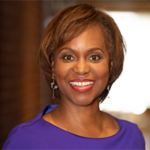
Natalye Paquin was the president and chief executive officer of Points of Light from 2017–2022.
She is a visionary and results-oriented leader, with more than 20 years of experience providing strategic, operations and fiscal leadership in the nonprofit and public sectors.
4 Ways to Recognize Volunteers and Keep Them Engaged
Recognition is one of the easiest and most cost-effective strategies when it comes to retaining your volunteers and growing your volunteer programs. Whether you are a nonprofit organization or a company growing your employee volunteer program, recognizing the efforts of your volunteers go a long way to making people feel engaged and appreciated!
In Points of Light’s civic engagement research, 43 percent of respondents said they agree or somewhat agree that it was “important to receive recognition, even just a ‘thank you’” after volunteering. Now more than ever, recognizing volunteers who have been helping during these unprecedent times can really mean so much. There’s no better time to thank them!
Here are a few ways you can recognize your volunteers and keep them feeling passionate about and dedicated to your mission.
Send an electronic “thank you” to your volunteers and include a personal touch. When individuals are affirmed for their actions specifically, rather than generally, they feel a deeper level of appreciation as well as authenticity from the organization. This could be as easy as an email or text, or as personalized as a handwritten card or video greeting. Give the volunteer a “shout out,” preferably using their name and citing their specific type of volunteer work.
Use social media and employee channels to increase storytelling. Not only is storytelling a fantastic way to keep your volunteers engaged, but it has the power to reach all types of audiences if distributed via social media channels. Use social media – or even email newsletters or internal employee portals – to recognize volunteers who are contributing to your cause. Humans love human stories, so include some fun details about the volunteer you are spotlighting and why they care about the mission. Plus, uplifting stories of others can inspire people to take action.
Honor your volunteers with an award. This one can be as simple or grand as you’d like it to be based on your organization’s resources and volunteer retention goals. A printed or digital certificate of achievement is a great way to honor a volunteer’s efforts. Want to go a little further? Consider a gift certificate or incentive for most volunteer hours in a time period. External recognition is always a special moment for volunteers. Points of Light’s Daily Point of Light Award began 30 years ago and has honored volunteers every weekday since. Additionally, the President’s Volunteer Service Award allows organizations to recognize their most exceptional volunteers based on annual hours served.
Host a team event to recognize outstanding volunteer efforts. While we might not be gathering en masse right now, that doesn’t mean your organization can’t host a recognition event. You can create a virtual event to celebrate your volunteers, which is a great time to distribute awards to individuals or to thank them with a small, personal speech. You might opt to have your top two or three volunteers share their story with the virtual group. Events like these — even the ones that take place on-screen rather than in-person — can go a long way to boost morale and inspire your volunteer community.
If you’re looking for some assistance with your volunteer recognition processes, the Points of Light team is here to help. We can provide you with some tangible ways you can recognize your volunteers with minimal cost and effort. Learn more about our recognition programs here.



