Special Olympics Florida, with the Support of Volunteers, Offers Sports and Socialization Opportunities for Children and Adults with Intellectual Disabilities
With more than 21 million residents, the state of Florida is the third most populous in the nation. It’s also one of the most diverse states, with large proportions of indigenous people, Asian, Black, Hispanic and European residents.
Special Olympics Florida is making sure that inclusion and opportunities extend to another group of Floridians – a group that spans all ethnic groups – those with intellectual disabilities. Those efforts continued through the past year’s coronavirus pandemic, when Special Olympics Florida launched a health and wellness program that reached participants virtually.
Special Olympics Florida serves close to 60,000 children and adults with intellectual disabilities, who are given the opportunity to play and compete in various sports, from baseball, basketball, swimming and flag football to bocce, bowling, skiing, speed skating and even surfing.
Because participants have special needs, Special Olympics works hard to provide plentiful coaches and others who teach, cheer and support the athletes to ensure their success.
That’s where dedicated volunteers make all the difference.
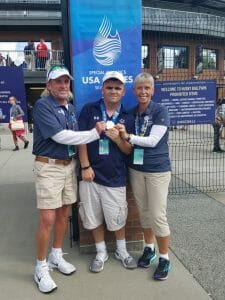
Michael and Nancy Howard, coaches with Special Olympics Florida, accompanied Frankie Jaruszewski to the Special Olympics National Games in Seattle in 2018, where he won a gold medal in bowling.
Nancy and Michael Howard, who live in Palm Beach County, have volunteered their time as Special Olympics coaches for 12 years, and they don’t plan to stop anytime soon. Unlike many coaches, the Howards are not the parents of a Special Olympics athlete. Nancy is a special education teacher at a school that decided to create a Special Olympics team. “Team Howard” participates in bowling, basketball, track, surfing, softball and has started open-water swimming.
Michael, a recently retired inspector for Palm Beach County, has been volunteering alongside his wife.
“If you spend about 15 minutes with these kids, you’re hooked, and that’s what happened to me,” says Michael. “It’s a lot of work, but when you see these kids’ faces, it’s worth it.”
The work is considerable. The Howards arrange and run all practices. If athletes don’t have a ride, they pick them up and take them home afterward. If they lack the proper clothing or equipment, the couple finds a way to provide them. The Howards also strive to schedule extra time for the athletes to socialize with one another, as well as time for their parents to socialize.
The couple even travels, at their own expense, to out-of-town regional, state and even national competitions, a gesture that means everything to athletes whose own parents cannot attend.
Nancy agrees that the volunteer work is gratifying. “Maybe an athlete couldn’t dribble last year, but this year, they can dribble and maybe even make a basket or two. It’s not about the sport in most cases; it’s about the relationships they build with one another,” she said. “It also gives the parents some respite – they know their children are taken care of by us.”
Although the COVID-19 pandemic added even more tasks, such as taking temperatures and extra measures to ensure social distancing at both indoor and outdoor activities, the Howards took it in stride.
“We can’t imagine not doing this,” said Nancy, “People talk about moving away when they retire – we can’t. If we left, these kids would lose out on their Special Olympics team, because I don’t know who would step up to take our place.”
Logan Alvarez, on the other hand, is a volunteer at the very beginning of his adult life and career.
Logan is just 18, but he’s been volunteering with Special Olympics Florida in Miami-Dade County since he was only 7.
“My mom is a teacher and she coached a Special Olympics team,” says Logan. “I would attend state games and local games and I would hand out lunches and help in any way I could. When I got to high school, I trained as a Unified Special Olympics team, where athletes with and without disabilities play on teams together. Logan also helped host basketball and softball skills training events for Special Olympics participants.
“I believe that the world needs a lot more inclusion,” says Logan, who is now a freshman at Florida International University, studying political science and pre-law. “I want to become an ambassador for Special Olympics.”
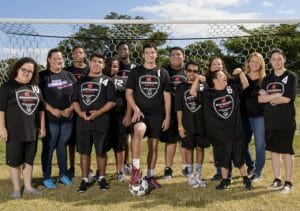
Logan Alvarez (center, with foot on soccer ball) poses with triumphant Special Olympics soccer players in fall 2019, after Miami Southridge Senior High School was named an ESPN Top 5 Unified National Banner School.
Logan, who is not disabled, and in fact was a stand-out high school football player and class president, is highly aware of how difficult acceptance can be for those who with special needs. It’s what makes him passionate about what he calls the “race for inclusion.”
“Just seeing how happy the (Special Olympics) athletes get and seeing them being included is worth everything to me,” says Logan. “In society, you see how left out they are.”
COVID-19 prompts new programs
Special Olympics Florida stepped up throughout the state after the COVID-19 pandemic forced in-person sports programs to be temporarily suspended by hosting multiple virtual programs that encouraged athletes to remain healthy and fit.
At least eight separate programs succeeded in conducting more than 4,900 virtual screenings across all Healthy Athletes disciplines, according to Jim Stratton, communications director for Special Olympics Florida.
For example, a series of videos called “Fit 5 Like a Pro” features both Special Olympics and professional athletes, who encourage viewers to exercise five times per week, eat five fruits and vegetables daily, and drink five glasses of water a day.
“We piloted a virtual screening program for Special Olympics International, using Zoom to connect athletes with medical professionals who answered questions and discussed any health concerns the athlete had,” said Stratton. “We used social media and Zoom to conduct weekly emotional wellness sessions, organize fitness challenges, offer nutrition tips, share healthy recipes, and play games. The sessions provided valuable information but, just as importantly, helped our athletes and their families feel connected during a time when many were limiting their social contacts.”
Teens Encourage Youth to be the Driving Force in Reducing Single Use Plastic
17-year-old Amy Meek has always had a connection with nature, as she grew up in Nottingham, England. She remembers spending a lot of time with her sister Ella and her parents as they took family hiking trips and went on outdoor adventures. Eventually, her connection with the environment turned into a powerful youth movement to protect what she holds so close to her heart.
The Meek sisters couldn’t wait for someone else to do the work of protecting the environment because they believed that there was no guarantee that action would be taken — and that’s when Amy and Ella Meek brought Kids Against Plastic to life in 2016.
The Meek sisters took particular interest in plastic after learning about the UN Sustainable Development Goals, and one in particular had a vision of preventing the damage of plastic pollution — goal number 14: Life Below Water.
Their mission for Kids Against Plastic centers on reducing single use plastic consumption and encouraging individuals, schools and businesses to be more discerning when it comes to the damage that single use plastic can do. Single use plastic is essentially plastic that is used once and then thrown away and cannot be recycled. It ends up on landfills, and is commonly found in the ocean and around the animals that call it home.
Amy believes that the urgency in reducing single use plastic lies in the belief that it’s already proven to damage the environment and sea mammals — and that it will directly affect the future generations of our planet.
“If we don’t take action now to reduce plastic usage, it’s going to be something that we are forced to clean up for hundreds of years,” Amy said. “It’s not going away anytime soon and it looks like young people are going to be left with this massive environmental crisis that we’re going to have to fix despite not being the predominant cause of it,” she added.
First, Amy and Ella marched into a local café with plastic clipboards in hand and educated the staff on ways they could reduce their single use plastic. They continued this outreach in other cafes near Nottingham, and eventually began outreach in schools and other businesses.
Amy created the organization’s Plastic Clever Schools Initiative because she understands that reducing plastic can be initially intimidating, expensive and time consuming. The program is all about making small steps that eventually have a huge impact. These steps include using the main forms of plastic: plastic bottles, cups, lids, straws and bags.
The program has gathered more than 1,000 schools that have partnered with the sisters in making reusable items the new norm. She’s even spoken to the business manager at her own school about reducing plastic usage by supporting reusable lunch boxes, refillable canteens and wooden cutlery.
Amy also wants to see the organization and its volunteers pick up at least 100,000 pieces of plastic litter — one for every sea animal killed by plastic in the oceans every year. They’ve almost hit their goal with 90,000 pieces of litter picked so far.
Although Kids Against Plastic is based in the United Kingdom, Amy designed the organization’s educational resources to be adaptable anywhere around the globe. She believes in cleaning up the community you live in first before pointing fingers at others, and that everyone has a part to play in the global movement of protecting the environment.
Another important component of Kids Against Plastic is young people. Amy is dedicated to encouraging youth around the world to stand up for what they’re passionate about and stand firm in what they believe in. She’s seen youth involvement continue to grow, and the organization’s Kids Against Plastic Club — an initiative that encourages children to become active against plastic pollution— has reached 100 members.
A source of motivation for Amy and her sister lies in the fact that they no longer have to start educational conversations by telling people why plastic is harmful. They’ve seen attitudes towards plastic, environmentalism and litter have shifted on a global scale since 2016.
They also make it incredibly easy for schools and organizations to find educational resources on reducing plastic usage.
She was mostly at home with her family during the early months of the COVID-19 pandemic and turned a difficult season into an opportunity of growth by digitizing most of Kids Against Plastic’s work. The organization hosted workshops and Zoom conversations online — something Meek had no prior experience in. It’s also been a season of true reflection for Meek.
“It gave us a chance to sit down and think about how we could improve the outreach that we do and how we could better support the young people we work with,” Amy said. “It’s been really great to see something positive come out of this.”
As Amy approaches the end of her secondary education in England, she has dreams of becoming an environmental campaigner or activist. She also finds herself to be more and more passionate about youth engagement.
“It’s not just the environment issues, but also the power that young people have when they stand up to make a difference — no matter what issue it is,” Amy said.
that Generation Z is one of the most civically engaged generations, with nearly 40 percent saying they have taken five or more civic actions in the past year. But still, many said they have taken less.
We know today’s civically engaged person may express their desire to do good through the purchases they make, what they share on social media, and what nonprofit organization to support as a volunteer or donor. But often times, using one’s voice to speak up on an issue can be the most intimidating step to take, especially for a young person.
It may be difficult for young people to see how they can use their voices and make themselves heard. Parents, family members, and educators can play an important role in supporting children and young people in using and developing their voices. No matter who we are, we all have the ability to influence those around us – from sharing information on social media to speaking at a local town hall meeting to simply having a conversation at the dinner table with family.
Here are some ideas for supporting children and young people in your life to use and develop their voices, along with insight from the Points of Light Youth Council.
Listen. Sometimes, for young people especially, the challenge is feeling that their voices aren’t heard or don’t make a difference. Listening and responding when they raise and advocate for issues that they care about can help encourage them to develop their voice.“The youth are not waiting until they get older to make an impact in the world. We are making moves and your support is always needed. My advice is to give us room to grow and listen to our needs. As youth we see what’s going on in the world and we want to do our part to make it better.” – Khloe Thompson, Youth Council Member
Offer guidance. There are as many ways to use our voice as there are causes we want to support. Learning what issues and causes matter to us and how to advocate for them is a constant process, particularly for young people. Help them think through ways to use their voices safely and effectively.
Provide tools and resources. These tools could include books or other materials about how to use your voice, as well as resources on the causes and social issues they care about. A great place to start is the Voice issue of Civic Life Today, which includes numerous resources, including a Youth and Family Corner with tools geared toward a young audience.“Sometimes the best way to get youth involved…is to show them the ultimate impact. If they know what they’re working towards, they are more motivated to make a difference.” – Adom Appiah, Youth Council member
Lead by example. Perhaps one of the best ways to support young people in using their voice is to use your own. From more formal ways like advocacy to informal ways such as having conversations with family and friends, there are many ways to model using your voice and to support the young people in your life in using theirs.“Leading with the next generation of changemakers has allowed me to found two service projects, each giving me the chance to use my voice to benefit others for the past decade — all because my mom encouraged me to believe in myself and showed me what it meant to serve others.” – Eleanor Schoenbrun, Youth Council member
For more on using your voice, including resources and action plans,
is more likely to participate in a demonstration or rally while older adults, like
baby
b
oomers,
are more likely to call elected officials.
We believe that civic engagement isn’t a one-size-fits all concept and our suggestions for harnessing the power of your voice can be tailored to fit your unique circumstances and values.
Points of Light’s Youth Council Provides Your Family Volunteer Day Playlist
Music can make any task into a party. This year, as we celebrate the 30
th
anniversary of Family Volunteer Day, we thought while we can’t be together, we can share the joy in giving back by sharing some great music! In honor of this major milestone, we asked the Points of Light Youth Council to handpick their favorite songs to listen to with their families while doing their service projects.
Here are some of the songs they’ll be listening to on Family Volunteer Day. What else would you add?
Be A Light -Thomas Rhett
Wings – Little Mix
This Mountain – Faozia
HandClap – Fitz and the Tantrums
Happy – Pharrell Williams
Can’t Stop the Feeling! – Justin Timberlake
Better When I’m Dancin’ – Meghan Trainor
Happy Anywhere – Blake Shelton & Gwen Stefani
I Don’t Need Anything But You – Jaime Foxx, Quvenzhane Wallis
to choose from one of our DIY project guides or virtual volunteer projects that you and your family can perform anytime during the month of November. And while we know sometimes it’s difficult to get younger kids involved, our
Nominate a Family for a Daily Point of Light Award
Millions of families act on their power to do good every day, using their hearts, hands and minds to help strengthen communities and solve persistent problems. We recognize their stories, and lift them up to inspire others to make a difference. If you know of a family that is making a difference in their community, nominate them for a Daily Point of Light Award. Each day, an extraordinary volunteer or family is recognized for their service work.
While we’re excited to celebrate family volunteering on Nov
.
21, we recognize that many
families may need to adjust how they
’re giving back this year
.
Varying school and work schedules and more time at home means that many families are together more, but
need
different types of activities to do together.
Here are a few
ideas
for
spending time together as a family while doing good for others.
Here are
eight
projects for kids of all ages:
Food banks and pantries serve a great service to those in need of food in our communities. In addition, food banks and pantries are seeing an increase in visitors and may not have enough in food donations to meet those needs. By completing virtual fundraisers, you can help them help others. Feeding America can help you find a local food bank or pantry you can support!
The impact of COVID-19 continues to change our daily lives and routines, but the in-person volunteers that nonprofits rely on are more important than ever. Make masks to protect yourself, your family or others in your community who want to volunteer in person. The following face covering project can be modified to do at home and delivered via mail or drop off to adhere to the social distancing guidelines set by local and national authorities.
We could all use a visual reminder to be kind! Help spread kindness by putting your thoughtful and good intentions on paper and display them in your window for others to see! This arts and crafts project can inspire and encourage others to ignite a chain of kindness too! All you need are a few of the following: construction paper; markers or crayons; stickers; paint;glitter; glue and tape.
Some senior citizens can feel isolated a lonely. A simple visit, even a virtual visit, can make all the difference in their day. Help bring cheer to a senior center near you by sending notes or doing virtual activities! This project can help brighten the day of a senior who is feeling distant from loved ones and family members.
There are a lot people going through hard and frustrating times. You can help them channel and release their frustration by making Relax Bottles: water bottles decorated and filled with glitter. Watching the glitter settle after shaking the bottle can be relaxing. Use this Relax Bottle project guide to help others feel more at ease during these times of uncertainty.
Another great way to get young kids involved is creating boxes of love. Create and send Boxes of Love to send to military or first responders as a thank you and reminder of home. This DIY video is a great way to encourage younger kids to get engaged!
Helping seniors fight memory loss by doing puzzles with them, and by donating puzzles to organizations is a great way to serve seniors. You can even make your own puzzles! Watch this DIY video to learn more!
As the country is still facing natural disasters, another great way to help volunteer is by making and delivering fleece blankets to those in need: evacuees, families in homeless shelters or kids in foster care. Spread the love, and some warmth, with this DIY, no-sew blanket project.
There are many
other
ways to give back this year and do something that can bring your family together in a meaningful way
. With many people in need of kindness more than ever, your family can be the light that offers hope for a better tomorrow.
Nominate a Family for a Daily Point of Light Award!
Millions of families act on their power to do good every day, using their hearts, hands and minds to help strengthen communities and solve persistent problems. We recognize their individual stories, and lift them up to inspire others so we may each, in our own way, answer the call to make a difference. If you know of a family that is making a difference in their community, nominate them for a Daily Point of Light Award.
Each day, an extraordinary volunteer or family is recognized for their service work. Created by President George H.W. Bush and continued by Points of Light, these awards honor the power of people who step up and say, “Yes, I can help.”
Co-Authored by Interns 4-Good and Volunteer New York!
It has never been easier than right now to find an engaging and meaningful volunteer opportunity – especially if you’re able to volunteer remotely.
Around the world as nonprofit organizations look for ways to adapt and continue to make a difference in a post COVID-19 reality, they have increasingly been turning to technology to deliver their mission and connect with volunteers using innovative and creative solutions. At Volunteer New York!, a regional volunteer connector organization serving the suburban counties just north of New York City, there has been a 92% increase in volunteer signups since March 2020. When compared to the same time period last year, people have been raising their hands to help now more than ever!
“Several of the opportunities for literacy and tutoring programs that were listed on our website have been so popular that we had to be taken down within days of posting due to so many requests to volunteer,” said Katie Pfiefer, senior director of programs, Volunteer New York!
Since September is National Literacy Month, here are a few examples of nonprofits offering unique remote volunteering opportunities to be mentors, tutors, and readers that we hope might inspire you:
The Pajama Program: a national organization with multiple chapters whose mission is to promote and support health sleep and bedtime routines for children, has come up with ability to let volunteers host Virtual Reading Parties for Kids as a way to spark the imagination of children and bring communities together during COVID-19.
Quarantine Tutors: an organization founded by students for students as a result of this pandemic after they saw a need to help those who were experiencing challenges with remote e-learning. Their opportunity for volunteers (who face a stringent screening process) to become Virtual Tutors relies on using Zoom, FaceTime or Google Meet.
Another great example of how established nonprofits are adapting is the organization JCY-Westchester Community Partners. They have come up with a specialized eTutor Program specifically to match volunteer mentors to help students with their assignments remotely.
One standout organization that is leading the way to advance opportunity and education for teens while embracing technology is Interns 4-Good, which was founded by a Westchester high school student, Ellie Zimmerman. Check out what this innovative organization is up to in Ellie’s own words:
Interns 4-Good is a 501(3)(c) organization that connects teens with remote, skill-based internship opportunities at nonprofit organizations. Initially, I created the organization to allow high schoolers to utilize their skills and build their resumes while providing nonprofits with much-needed support. The nonprofits we work with serve causes ranging from health care to the education system. In response to COVID-19, Interns 4-Good mobilized its network of talented volunteers to help students in underserved communities with the transition to online learning. We set up a Zoom hotline to support teachers in navigating unfamiliar technology. Our volunteers also began tutoring lower and middle school students. When summer rolled around, we shifted gears to create fun summer enrichment programs and a virtual camp. To date, over 600 students have benefited from these services.
However, there are many students who do not have access to the technology needed for online learning. During this critical developmental time in many students’ learning careers, there is an immediate need for help. There are hundreds of students in need of electronic devices in order to benefit from our tutoring services and, more importantly, to participate in online learning.
Thanks to a grant from Points of Light, Interns 4-Good is planning to purchase refurbished tablets for these students. Our membership with TechSoup, a nonprofit technology marketplace, will allow us to obtain these tablets at discounted rates as low as $20. After securing the tablets, we will then follow up with a tutor to provide free homework help throughout the school year.
With thanks to resilient nonprofits and the amazing leadership of young changemakers like Ellie, there are more opportunities to make a difference with your time from the safety of your home. And there has never been a more important time than now to get off the sidelines and get started. To find volunteer opportunities near you, visit pointsoflight.org/volunteer to search the listings of hundreds of volunteer connector organizations around the globe!
A Global Youth Movement: Taking Action to Change the World
This is the second blog of a two-part series featuring Daily Point of Light honorees Shreyaa and Esha Venkat of Ashburn, Virginia, US and UK Point of Light Award honorees Amy and Ella Meek, of England, in a discussion around youth activism.
These incredible young women all speak at our 2020 Youth Summit, which inspires youth ages 13-18 to continue improving their communities and giving back. Register now to join us on Aug. 19.
As young people, you’ve all used school as a basis for your programs and also a place for support. Tell us more about that.
Amy and Ella:
Getting your school involved is also a great way to build support for your cause or campaign. At school, in normal times at least, you have easy access to a large number of young people your age to get on board. Plus, you’ll often find that your teachers are more than happy to help you with your mission, so doing talks to your tutor group (or homeroom) is a good way to develop your skills and get more confident speaking to an audience.
More often than not, you may find that the issue you’re passionate about tackling relates directly to your school as well. For example, our school used a lot of plastic in the canteen (such as plastic bottled water, and plastic cutlery). Schools aren’t small, and 1000+ students using, for example, a plastic fork every day for lunch can quickly add up, and so swapping these out for reusable cutlery can have a large positive impact. So, working with your school on the issue you’re campaigning against (be it plastic pollution, food waste, or period poverty) can help you make a big positive difference in a relatively short period of time.
Shreyaa and Esha:
Inclusive, good-quality education is the foundation for dynamic and equitable societies. After witnessing the transformative effects of continued education in our own community, we set our sights on providing quality education and leadership & mentoring services for vulnerable students worldwide through NEST Tutors, our free virtual tutoring program, and NEST Inspires, our leadership program! We’ve impacted kids in 32+ schools and have over 250 high school and college mentors. Also, we’ve donated 10,000+ books to underprivileged kids worldwide! By forging global partnerships with organizations in Zambia, India, and Vietnam, we help underprivileged students achieve academic success while contributing to the Sustainable Development Goals.
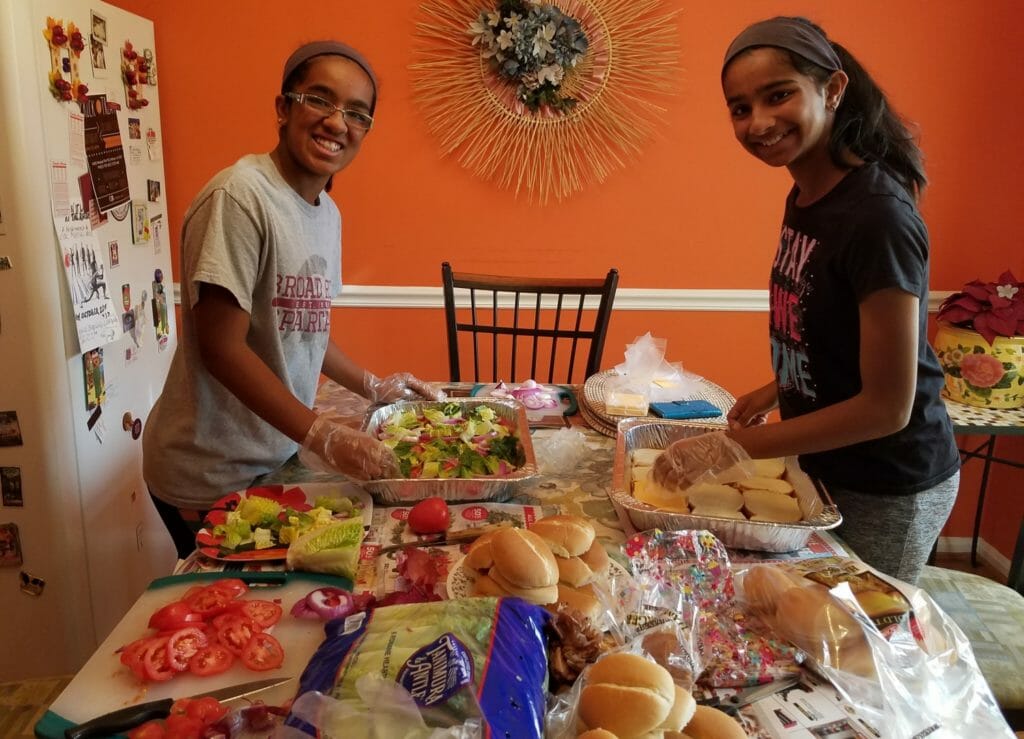
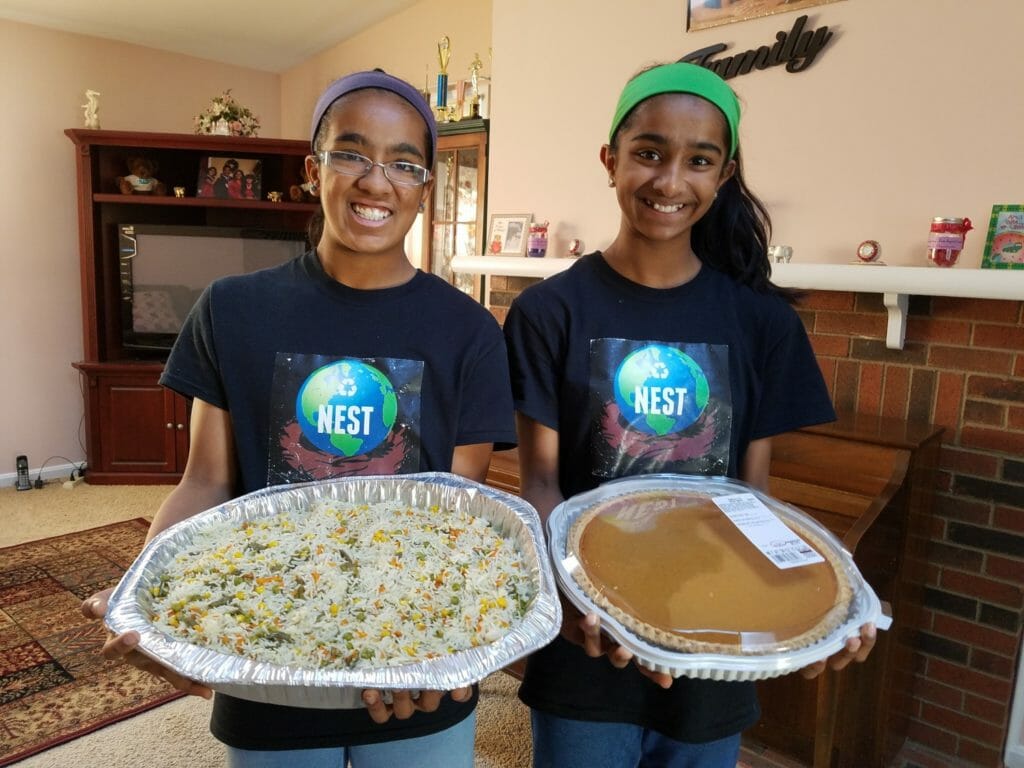
Shreyaa and Esha Venkat preparing meals for delivery in 2019.
How do maintain financial support for your organizations to continue running?
Amy and Ella:
If you’re looking to grow your campaign onto an even larger scale, financial support can be really useful. There are lots of grants available for youth-led organisations, but they’re certainly competitive. If you are keen to apply for some, make sure you have a clear focus of what you’d like to achieve with the funding you get – the more specific, the better. Also make sure you have targets in place for the future, as the last thing organisations or people offering funding is to see the impact fizzle out once the funding has stopped – they like longevity and for campaigns to become self-sustaining.
We’d definitely recommend getting your parents or carers to help you with this where possible – any extra experience with money and budgeting can be helpful, and some grants are only open to those 18+.
Shreyaa and Esha:
In the beginning, the biggest barrier NEST4US has faced has been getting adequate financial resources. Since we’re a teen-led organization, we were self-funding and relying on in-kind donations, community support, and mini-grants from local business partners to run our programs efficiently. As we developed NEST4US, we began receiving tremendous financial support, partnerships, and networking opportunities from corporate businesses and other organizations. We believe strongly in the power of collaboration and are continually forging partnerships with other nonprofits to find new and innovative ways to help those in need.
What are some final thoughts you have for youth who want to get involved?
Amy and Ella:
Don’t give up. Your cause is worth fighting for.
Shreyaa and Esha:
Finding a cause you’re passionate about helping and then spreading awareness about it is the first step towards getting more involved in your community. According to us, EVERYONE has the power to make a difference!
A Global Youth Movement: How Small Ideas Can Spark Big Change
This is the first blog of a two-part series featuring Daily Point of Light honorees Shreyaa and Esha Venkat of Ashburn, Virginia, US and UK Point of Light Award honorees Amy and Ella Meek, of England, in a discussion around youth activism.
These incredible young women all speak at our 2020 Youth Summit, which inspires youth ages 13-18 to continue improving their communities and giving back. Register now to join us on Aug. 19.
Tell us how you got started.
Shreyaa and Esha
: We started out volunteering together – helping at school, the library, and community events. However, we really wanted to get our friends and community involved, so we formed NEST4US, a nonprofit that provides volunteer solutions to the community to make the world better through kindness.
Shreyaa (left) and Esha (right) Venkat prepare food to bring to a local shelter.
Amy and Ella
: We first started our charity, Kids Against Plastic, back in 2016 as a youth social action campaign after studying the UN’s Sustainable Development Goals and discovering the devastating impact that human’s use of disposable plastic is having on the environment. This was a few years back, and plastic pollution was far from the well-publicized issue it is today.
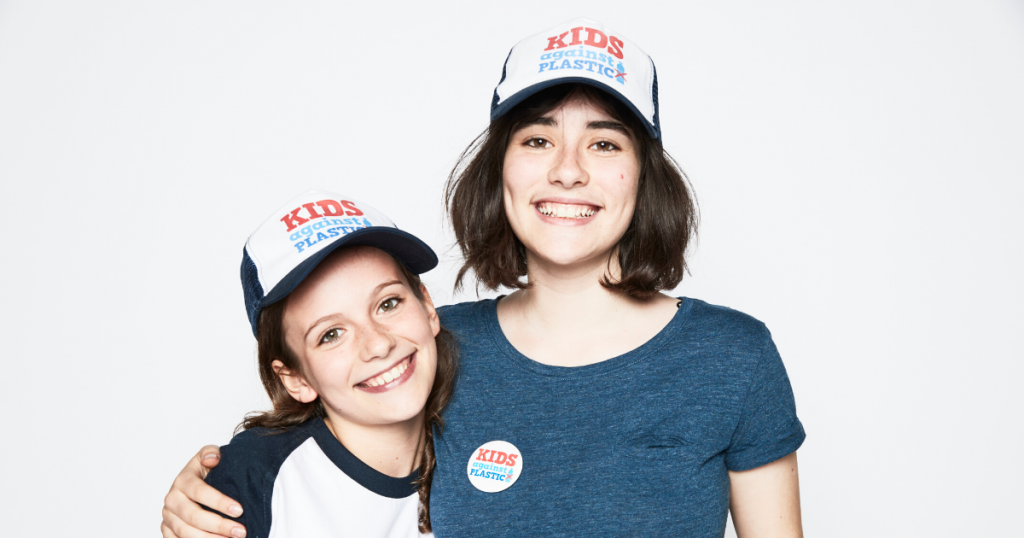
Amy and Ella Meek, founders of Kids Against Plastic.
Once you had your idea in mind, what were the next steps you took? How did you know where to start?
Shreyaa and Esha
: Initially, we noticed three key issues in our community that we wanted to tackle—food insecurity, the lack of volunteering with a passion, and diversity and inclusion. When we started volunteering, we noticed so many homeless people who didn’t have access to food. We also noticed that so much food goes to waste daily in our community. So, homeless people and food waste. We put two and two together and decided that our first program, NEST Nurtures, should focus on reducing food waste and feeding the hungry.
Amy and Ella
: One of the hardest parts about campaigning is certainly getting started, as the issues facing our world can feel so immense that it’s hard to know where to start. When we first started taking action with Kids Against Plastic, we began litter picking. We set ourselves the rather ambitious goal of picking up 100,000 pieces of plastic litter (one for every sea mammal allegedly killed by plastic in the oceans every year), grabbed some litter pickers and bags, and got to work. It allowed us to do something immediate instead of putting off action until the future, while still having a positive impact on the environment we were in.
What were some of the initial challenges you faced?
Shreyaa and Esha
: After we established NEST4US, we began to witness discrimination based on age, as many organizations doubted the ability of youth to make a true difference in the community. After all, we were only 13 and 10 years old, how could we make an impact? Also, most people do community service solely for hours or other incentives, which we believe defeats the purpose.
Amy and Ella
: When we first founded Kids Against Plastic, we set ourselves the target of getting plastic bottled water off UK supermarket shelves. After resistance from supermarkets, we realised that we needed to change our focus to driving consumer demand for more eco-friendly alternatives before trying to change large corporations. It’s important to bear in mind that you will get pushbacks like this when getting involved in youth activism, especially at the start of your work. Activism is a lot of trial and error, and a plan can and will fall into place as you progress and mature. The key thing to remember is to stay passionate, stay motivated and to start.
How did you start getting others involved in your work?
Amy and Ella
: We found that the best way to engage people with your cause is to give them a simple thing that they can do to get involved – a tangible action that they can take to make a difference. You see, often, people do care or empathise with the issue that you’re passionate about tackling, but it can be hard for them to know where to go or what to do to help.
For us, with our charity Kids Against Plastic, we helped people get involved through our Plastic Clever scheme. With so many products we all by and use daily wrapped in plastic, it’s hard for people to see how they can consume less plastic and make a difference, never mind become the virtually impossible and impractical ‘plastic free’. So, through the Plastic Clever initiative, we encourage people to take that first step to reduce their usage of plastic by stopping their use of four main items: plastic cups and lids, straws, bottles, and bags.
Shreyaa and Esha
: We decided to provide a variety of programs that allow people of all ages to give back by doing something that interests them. Through social media platforms, we serve as advocates for positive change in the community and promote diversity and inclusion by welcoming people of all backgrounds to our volunteer family. In just four years, NEST4US has grown from a small project to an impactful organization with over 1,000 volunteers, ranging from ages 4-70.
In part two of the series, Shreyaa, Esha, Amy and Ella will share how they sustain their work, places for support, and other thoughts for youth to get involved.
At Home Service Project Ideas for Kids and Teens
While it’s difficult for adults to process the impact COVID-19 is having on the world, it can be even harder for kids. For active families who have canceled activities, school or are even quarantined, finding something to do to pass the time and feel good is so important. However, just because you’re not able to participate in your favorite service activity in person right now, doesn’t mean you can’t still give back.
Here are seven ideas that families and youth groups could do to not only keep youth engaged, but also help others both locally and around the world.
Spread cheer by sending cards for those who are serving in the military or in the health care field
is encouraging you to donate clean, used towels and blankets to an animal shelter to make a furry friend’s stay more comfortable. You can also use old towels, blankets or event t-shirts to make tug toys!
You can also
. There are many issues that are important right now, and making sure your local leaders know that you care is a good way to move things through government. Have an issue you’d like to address? The
Make a video or post on social media about an issue you care about
. Is there an issue you or your family would like more people to learn about? Make a video and posting it online for others to see! You can interview people via phone or video conference, collect information on your cause area, then post your video. Use #LocalLight to share how you’re taking action.
In light of COVID-19, the health and safety of all volunteers is our top priority. Please see our COVID-19 Action Plan
to find resources and other ways to stay engaged and volunteer when in-person alternatives have been postponed or cancelled.
The Points of Light Youth Council, a collective group of youth across the country and the issues they are tackling, does the following:
Advises on Recognition program design
Increases the youth voice in Points of Light’s own work and across the country
Support youth in developing their own programs and platforms
This year’s Youth Council is made up of five of our Daily Point of Light honorees: