
Meaningful Engagement
The volunteer experience is meaningful
Volunteering is most powerful when people feel a genuine connection to one another, to the causes they care about, and to the communities they serve. Through service, people build belonging, purpose, trust, and relationships that strengthen the social fabric. Volunteering also creates opportunities to build empathy and bridge divides. More people see themselves in service and contribute in ways that reflect their lives, skills, identities, and lived experiences.

Goals for Meaningful Engagement

Design Volunteering that Meets People Where They Are and Drives Impact
Experience means moving beyond one-size-fits-all models to design volunteering that is meaningful, flexible, and relevant to people’s lives – recognizing informal and formal participation alike, and creating experiences that build connection, purpose, belonging, and a sense of agency while driving real community impact.
Emerging Opportunities for the Field:
1. Define Purposeful Volunteering Frameworks and Standards
2. Support Volunteer Growth and Leadership
3. Strengthen Faith-Based Entry Points into Volunteering
4. Connect Informal and Formal Volunteering Pathways

Support Participation for All Ages and Life Stages
Participation over a lifetime means volunteering is designed to evolve with people across life stages – starting with strong early entry points for young people and continuing with pathways that adapt to changing needs and build skills, opportunity, and sustained engagement over time.
Emerging Opportunities for the Field
1. Expand Volunteer Engagement Through Educational Institutions
2. Connect People to Service Across Life Stages
3. Scale Intergenerational Volunteer Programming
4. Bridge Volunteering, Workforce Skills, and Career Pathways
5. Grow Successful Volunteer Models for Older Adults

Remove Barriers So Everyone Can Volunteer
Access means removing the systemic, logistical, and policy barriers that limit
participation so that volunteering is truly within reach for everyone and not just those with the time, resources, or flexibility to take part.
Emerging Opportunities for the Field
1. Streamline Volunteer Screening Processes
2. Adapt Volunteer Models to Today’s Work, Care, and Transportation Realities
3. Reimagine Court-Ordered Service as a Civic Pathway
Experience 
Design Volunteering that Meets People Where They Are and Drives Impact
Experience means moving beyond one-size-fits-all models to design volunteering that is meaningful, flexible, and relevant to people’s lives – recognizing informal and formal participation alike, and creating experiences that build connection, purpose, belonging, and a sense of agency while driving real community impact.
Emerging Opportunities for the Field:
1. Define Purposeful Volunteering Frameworks and Standards
2. Support Volunteer Growth and Leadership
3. Strengthen Faith-Based Entry Points into Volunteering
4. Connect Informal and Formal Volunteering Pathways
Lifecycle
Support Participation for All Ages and Life Stages
Participation over a lifetime means volunteering is designed to evolve with people across life stages – starting with strong early entry points for young people and continuing with pathways that adapt to changing needs and build skills, opportunity, and sustained engagement over time.
Emerging Opportunities for the Field
1. Expand Volunteer Engagement Through Educational Institutions
2. Connect People to Service Across Life Stages
3. Scale Intergenerational Volunteer Programming
4. Bridge Volunteering, Workforce Skills, and Career Pathways
5. Grow Successful Volunteer Models for Older Adults
Access
Remove Barriers So Everyone Can Volunteer
Access means removing the systemic, logistical, and policy barriers that limit
participation so that volunteering is truly within reach for everyone and not just those with the time, resources, or flexibility to take part.
Emerging Opportunities for the Field
1. Streamline Volunteer Screening Processes
2. Adapt Volunteer Models to Today’s Work, Care, and Transportation Realities
3. Reimagine Court-Ordered Service as a Civic Pathway
Ready to Take Action?
The National Volunteer Strategy is as much about amplifying what's already working as it is about creating something new. Share an initiative, partnership, or example - your own or someone else's - that could inspire learning and action across the field.
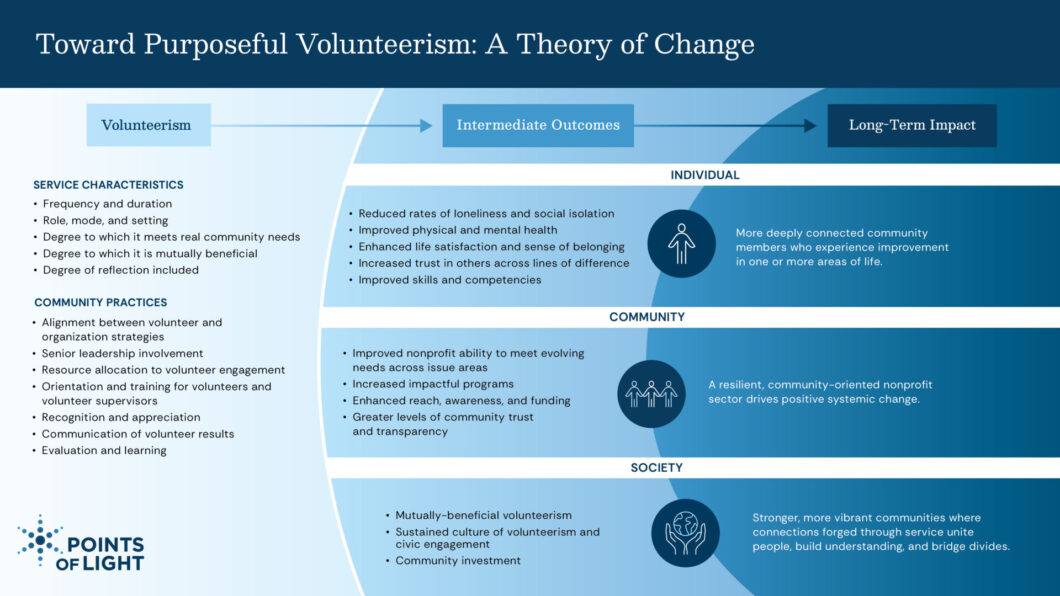
Toward Purposeful Volunteerism: A Theory of Change
Purposeful volunteering requires intention. This theory of change shows how, when designed well, volunteering creates positive outcomes for volunteers, organizations, communities, and society.
The National Volunteer Strategy is the roadmap for making those conditions a reality. Its framework and goals outline how we can work together to strengthen volunteering and create more opportunities for people to engage in purposeful service.