



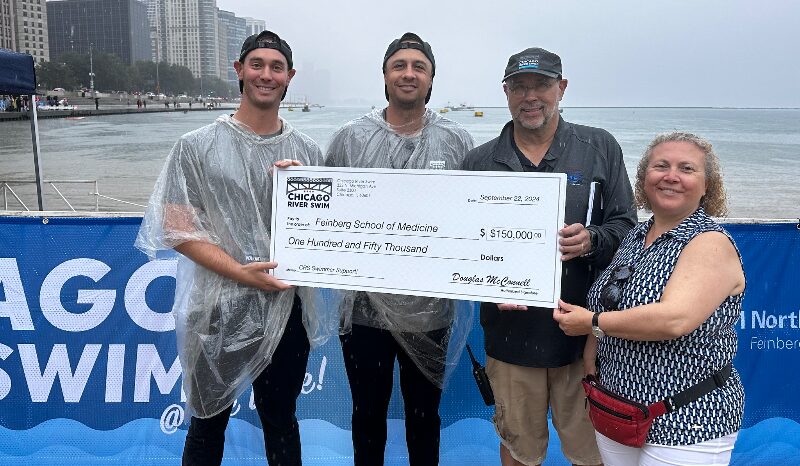
Meet Daily Point of Light Award honoree Doug McConnell. Read his story, and nominate an outstanding volunteer or family as a Daily Point of Light.
Doug McConnell knows just how devastating it is when a family receives an ALS diagnosis. That’s why he’s working toward finding a cure for the disease. When his father was first diagnosed, Doug’s family was relatively unfamiliar with ALS. But when his sister, Ellen, was diagnosed several years later, the family had already navigated the disease’s devastating path once. Determined to channel their experience into making a difference, Doug drew from his and his sister’s love of swimming to co-found A Long Swim, an organization that uses open-water swimming to bring awareness and funding to collaborative ALS research. Because the sport requires that you use all your muscles all the time, it provides a sharp contrast to the plight of an ALS patient, who gradually loses their ability to use their muscles and to breathe deeply. In establishing A Long Swim, Doug and his family knew they were forging a pathway toward finding a cure.
The organization started with swims that Doug completed, ranging from the length of Tampa Bay and the English Channel to the loop around Manhattan and Nantucket Sound. They then branched into hosting exciting open-water swimming events for the public to participate in, encouraging people from everywhere to compete and change the future of ALS treatment. In the organization’s home state of Illinois, Doug spearheaded A Long Swim’s most ambitious volunteer effort, the Chicago River Swim. The event, which served as the first permitted open-water swim in the Chicago River in almost a century, welcomed hundreds of swimmers and raised $100,000 for ALS research.
Another exciting initiative A Long Swim started is promoting water safety for children. Because A Long Swim utilizes Chicago’s waterfront, it was pointed out that many children in the city don’t have the training to be safe on the water. As a result, A Long Swim funds swimming lessons that teach thousands of children how to enjoy the water safely. The Chicago River Swim specifically raised $50,000 annually for swim safety lessons for children in underserved communities.
Since its founding, A Long Swim has raised more than $3 million for ALS research and patient care, primarily benefiting Northwestern University Feinberg School of Medicine. And when the next Chicago River Swim takes place this September, the organization will continue its mission to change the future of ALS. Doug and the team’s determination to take their experience and turn it into a force for good shows just how influential volunteerism can be.
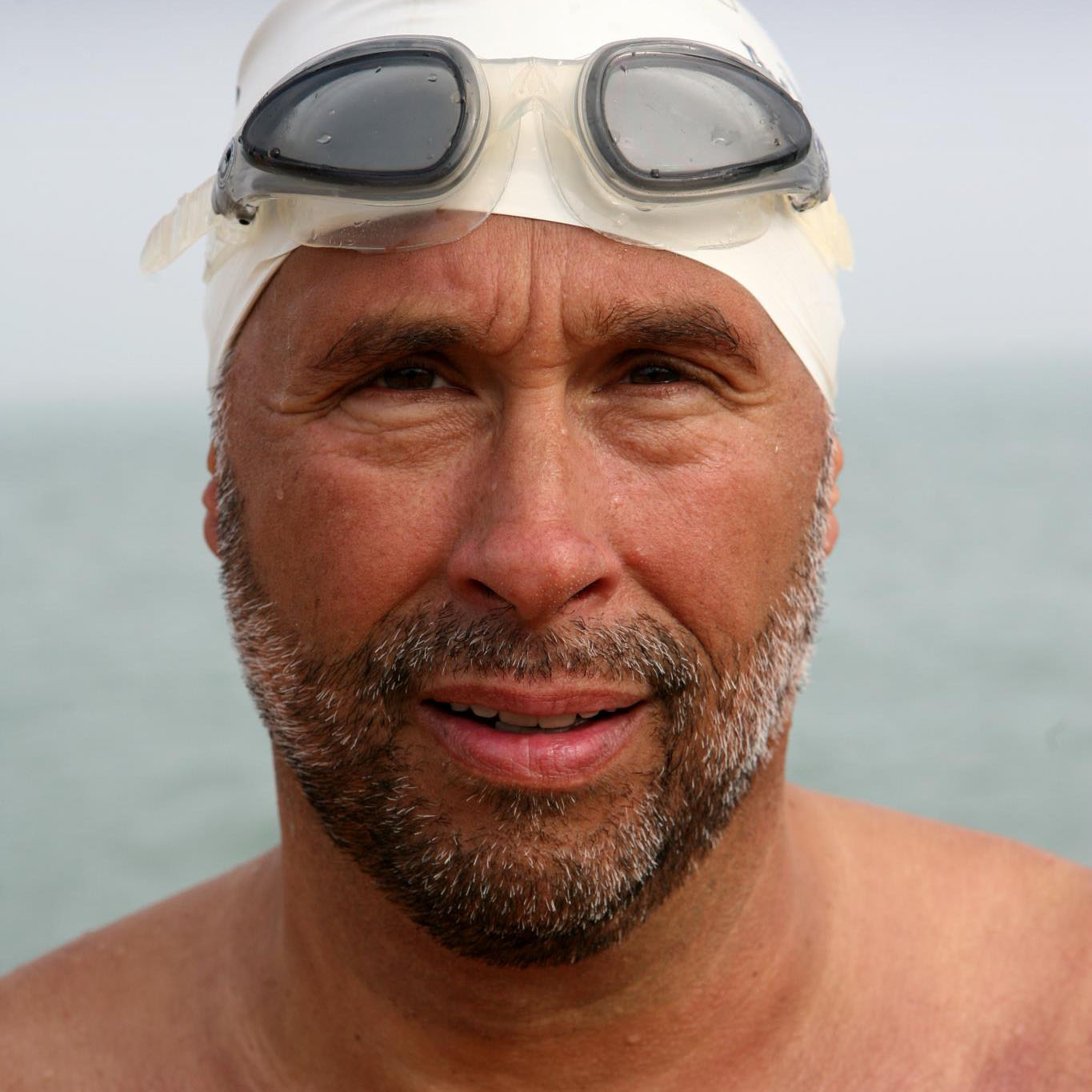
What inspired you to get started with this initiative?
My family was jolted, like every other family is, with a diagnosis of ALS. My dad was diagnosed with ALS in the mid-1990s, and other than knowing about the baseball player, none of us knew anything about it. He passed away in 2006, and it was just a few months after he died that one of my sisters was diagnosed. It was after Ellen was diagnosed that we wanted to do something. It is so disarming, and it makes you feel so powerless when somebody you love is diagnosed with this thing, because you feel like there’s just nothing you can do. We started brainstorming creative ways to raise money for research, and we came up with swimming because that was something she and I had shared when we were little biddies. In recent years, I have really discovered open-water swimming. I started doing these open water events, and it was Ellen’s idea to call it A Long Swim. We borrowed the acronym from ALS, and we would use marathon ocean swimming as a way to raise money.
What inspires you to volunteer?
It makes you feel less powerless. This specific disease is so bleak and so grim that it makes you feel like you’re doing something. By the way, over the course of the 15 years that we’ve been raising money, the researchers have been absolutely knocking it out of the park. They’re doing fabulous things. They are to the point where they are discovering compounds that are now at the FDA and are going through the drug approval process, so it’s really helping.
Tell us about your volunteer role with A Long Swim.
A lot of it is event planning. I’m just the luckiest guy in the world because I get to sit on top of the heap and help direct and manage some of that stuff. One of the other things that we got into along the way was hosting swims for other people. Lake Michigan is right here, but then there are lakes out in the suburbs and whatnot. Last September, we were able to, after 13 years of work, host the first organized swim in the Chicago River in 100 years. That was a big deal, and it’s going to continue to be a big deal as we’ve got this year’s event planned.
What are your long-term plans or goals for the organization?
To continue to fund research and make some headway on this horrible disease. One of the things we’ve learned so well from those researchers is the importance of collaborating with other like-minded folks. One thing that we are getting better at is collaboration with other ALS support charities and organizations. It’s a small disease, but that leads to the fact that funding is hard to come by, and it’s really scattered. The more we can collaborate, the more collective leverage we can get.
What’s been the most rewarding part of your work?
Seeing amazing work being done by these researchers based on our work, and the fact that there is hope that it will lead to a cure for this disease. That’s a game-changer. ALS is a neurodegenerative disease, which, to you and me, means very little. At the same time, what we’re discovering is that one drug that’s now in the FDA approval process treats ALS, but it also treats other neurodegenerative diseases. If you start looking at some of these other disease mechanisms, all of a sudden you’ve got a bullseye on Parkinson’s and another one on MS and another one on Alzheimer’s. Those populations are gargantuan, and so, almost by accident, we trip across this compound and look at the impact it could have.
What have you learned through your experiences as a volunteer?
How gracious and generous people are. I’ve been involved in volunteer work for 30 or 40 years, but when you talk to somebody and they understand your message and your motivation, and they dish out that support, it just kind of knocks your head off. It’s really something.
Why is it important for others to get involved with causes they care about?
Ultimately, to make a difference. Even if the difference or the progress is slow or frustrating, at least it’s progress. It’s just so gratifying to be able to build the links in the chain between an individual’s effort and an organization. All of a sudden, you can feel it and witness the impact of your contribution and effort. If you’re volunteering, that’s a special feeling.
What do you want people to learn from your story?
There are a lot of different paths to the cure, the goal and the outcome. We picked one that is a little obscure, probably, but there are 100 roads to lead there. If you want to see something materialize, whether it’s curing ALS or a reduction in the number of Chicago children who drown, you can put the pieces in place and make that happen. It just does your heart so much good.
Do you want to make a difference in your community like Doug? Find local volunteer opportunities.