How Do You Give Good Proof? Let Cabot Help You Thank Your Volunteers
By Cabot Department of Gratitude
When you shop you get proof with a receipt. When volunteers help, their proof is your thanks. Just as we’d never leave the store without that little slip of paper, volunteers shouldn’t go for long periods of time without getting the vital proof of how valuable they are to you. Luckily, there are many ways to honor your volunteers and document the impact of volunteer service!
Cabot’s longstanding partnership with Points of Light provides nonprofits with opportunities to show appreciation to their volunteers. Our Department of Gratitude – yes, Cabot has a whole department dedicated to showing gratitude – features programs that any nonprofit organization can take advantage of:
Our work with Points of Light helps you make sure your volunteers hear those vital thanks, serving as proof that their work matters.
Multiply Impact with a Thank You
“Thank you” reinforces to your volunteers that their work matters. Thanking volunteers also multiplies the impact of the initial volunteer work through “social proofing” – when one person is moved to action by seeing the good work of another. Seeing our friends volunteering and having fun makes us want to volunteer, too.
Programs within Cabot’s Department of Gratitude and other volunteer appreciation efforts end up increasing volunteerism through that concept of social proofing, so a thank you becomes much more than a thank you. It becomes an open door for other people to volunteer.
It’s Not Just New Volunteers
Of course, it isn’t just about recruiting new volunteers. Remember the old campfire song, “Make new friends, but keep the old; one is silver and other’s gold”? Like friends, new volunteers and old volunteers each have their own value. Without volunteer retention, organizations are left in a continuous state of retraining new recruits. Long-standing volunteers save time and resources, hold institutional knowledge, and provide continuity.
According to the 2017 Volunteer Impact Report, only 55 percent of nonprofits are measuring the impact that volunteers are having on the organization’s goals. But those 55 percent are enjoying 19 percent higher recruitment and retention because volunteers can see that their work matters.
What’s the best way to retain volunteers? Yes, you guessed it – thank them. Retention is cemented by thanking volunteers verbally, passing along praise, and acknowledging their work in writing. When volunteers log their hours, it’s easy to track their work and give concrete examples of how their contribution impacts the organization. Volunteers reported that hearing feedback about the impact of their work plays a big role in keeping them engaged in the organization.
Not All ‘Thank Yous’ are Equal
Canadian researchers found that 80 percent of volunteers would like to be thanked by hearing about how their work has made a difference. However, there are other ways to give volunteers warm feelings of appreciation.
For instance, Cabot provides delicious meals through the Gratitude Touring Team, taking care of nourishment by providing grilled cheese to keep volunteers fueled. We also celebrate volunteerism with our celebrity cruise and by promoting the use of Reward Volunteers. While younger people expressed a desire for small gifts, all volunteers stated they would rather be recognized throughout the year on an informal basis rather than saved up for a single event like a ball or a banquet.
So, set aside time today to see if you fit with the 55 percent of organizations that are tracking volunteer impact. Then, let your volunteers know how much you appreciate them with a big, heartfelt thank you, and maybe a little grilled cheese to boot.
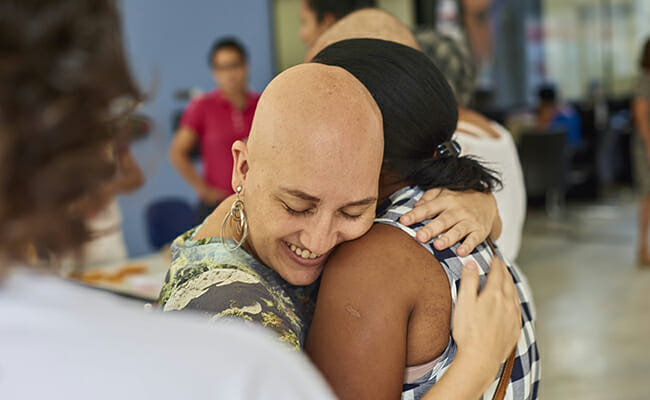
Photo courtesy of Atados, a Points of Light Network affiliate.
At the core of Points of Light’s philosophy is a belief that the most powerful force in the world is the individual who has realized their power to do good.
Whether you plug in or tune out, it is hard to avoid the topic of bitterness and division. It is in the headlines, on the nightly news, in our social media feeds and at our family gatherings. Everywhere we look, differences – political, racial, geographical, and otherwise – threaten to divide us. Amidst deep political divisions, heartbreaking displays of hate and intolerance, and a growing distrust of people and institutions, it is critical that we leverage every available opportunity to lift each other up and inspire one another to move beyond this destructive force field.
Instead, consider another power. The incredible power of people – as a force of human kindness.
At the core of our philosophy at Points of Light is a belief that the most powerful force in the world is the individual who has realized their power to do good, and who applies their time, talent, and resources to make a positive difference. I believe that every individual has the power to create change and no act is too small. It is not someone else – it is each of us.
Last month, the world paused to celebrate the life and legacy of our founder and 41st President of the United States, George H.W. Bush. In the many tributes spoken and written about his life, the primary focus was not on his many professional accomplishments, but on his character and the personal traits that most who knew him experienced and remembered. His friends reminded us of his empathy, respect, desire for people to be kind to one another, and his belief in the power of the human spirit to create positive change. Nearly every friend and leader who spoke about him expressed President Bush’s reference of “a thousand points of light.” It was clear in their reference, and in the president’s own words, that he used this phrase as metaphor to illustrate the multiplying effect of people doing good.
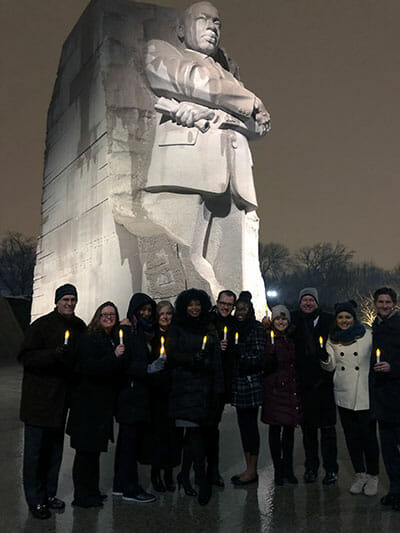
Last week, I had the pleasure of spending a couple of days in Washington, D.C., with nearly 100 corporate partners focused on integrating social purpose into their business strategy, as we came together for the annual meeting of our Corporate Service Council. After a day of connections and exchange, on the first night, a small group took a walking tour of the monuments and paused at the Martin Luther King Jr. Memorial for a special moment of reflection. Each person received a small book of “Quotations of Martin Luther King Jr.” and took turns reading their favorites aloud.
It was inspiring that so many of our partners extended their day to participate in this moment, despite the snow on a cold January night. Experiencing the monument together provided a brief moment of wholeness and hope. Now, each person has the opportunity to share and discuss that experience with others, whether in their homes, office, and communities around the country, and become multipliers, extending wholeness and hope.
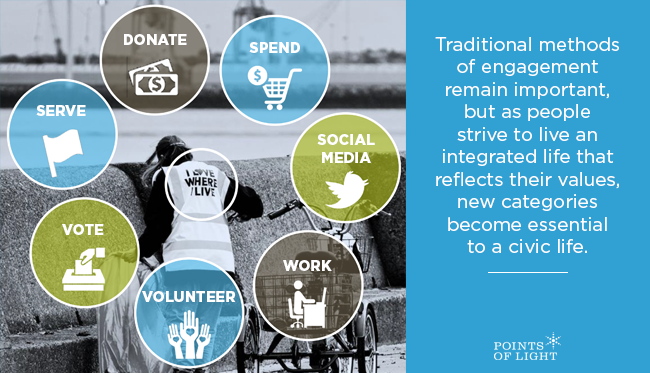
President Bush asked each of us to become a point of light. Dr. King challenged each of us to take an active role in building a better world. Both leaders encouraged us to serve others and live a civic life. Each year on MLK Day of Service, we have the unique opportunity to reflect on the gains we have made, and re-commit ourselves to the work that remains as we strive for a more just society. What is interesting is that our expression of civic life today is complex and evolving. Individuals are leading and lending support to causes they care about through many mechanisms.
Today’s engaged person may express their desire to do good through their purchase decisions, in what they share on social media, or where and how they choose to work, and what non-profit organization to support as a volunteer or donor. Whether online, at the office, or the local food bank, whether with a vote, a voice, or a wallet – doing good comes in many forms. People are still working to achieve many of the same ideals Dr. King fought for in his lifetime. Peace, justice, equality, kindness – and the creation of a “Beloved Community,” a global society built on love for all people.
We are witnessing a significant shift in our civic culture, a revolution against apathy, marked by events and movements that have altered the way we connect with and engage in our communities and our world. If we look at eras of significant change throughout history, each was preceded by a period of disruption. The Industrial Revolution was the transition from hand tools to machine-powered manufacturing, and ushered in the Industrial Age. The Digital Revolution propelled us from analog to digital technology and electronics, and led us into the Information Age.
Where the Industrial Age centered on the rise of the factory system, I believe this new age is an era of civic engagement that is driven by human capital, connections through technology, a force of human kindness, and the extraordinary power of people to create change. When future generations look back on this time, they will see it was an era of sustained, meaningful civic engagement, fueled by a global community of people ready and willing to do good. The dawn of a “Civic Century.”
Each year we experience an astounding pace of advancement in science and technology, pushing humanity to new limits. While we can be certain that technology will continue to change, let’s also know that certain truths remain constant. As Dr. King taught us:
“Darkness cannot drive out darkness, only light can do that. Hate cannot drive out hate, only love can do that.”
“Never succumb to the temptation of bitterness.”
“We are now faced with the fact that tomorrow is today. We are confronted with the fierce urgency of now.”
Instead of sipping on stories of bitterness and division, I suggest a new fuel for the new year. Imagine kindness. The super power of people – the multiplying effect of a force of human kindness in the world.
Project Management Day of Service: Finding Innovative Solutions to Nonprofit Challenges
“We rarely have the luxury of spending time on the business with a group of highly skilled professionals,” said Mariana McNeill, executive director of CareerCatchers. Dedicated to empowering the community’s most vulnerable populations through career counseling, mentorship and training programs, Mariana and
participate in the D.C. Regional Project Management Day of Service each year, taking advantage of the unique opportunity to work with project management professionals to solve tough challenges – at no cost. Hosted by
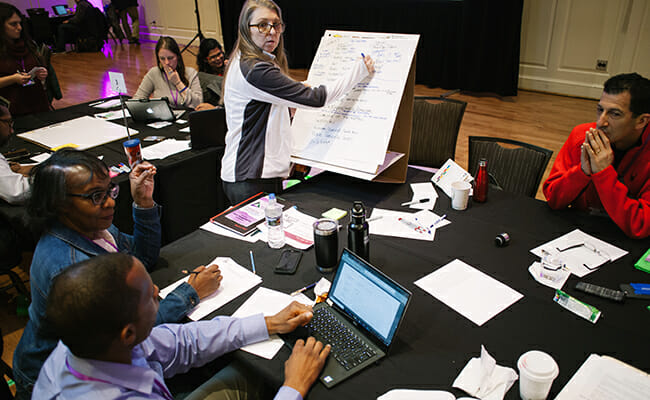
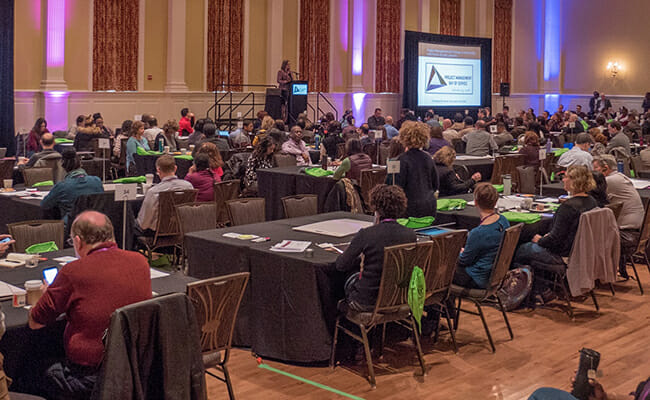
, the marathon-style event falls annually on Martin Luther King Jr. Day of Service and is designed to help nonprofits find innovative solutions to their most pressing challenges. This year’s event will include 130 project management volunteers who will contribute hours of direct service to more than 30 projects for 25 area nonprofits. Participating this year for the fifth time, CareerCatchers will seek support in creating plans to boost infrastructure development, and improving marketing and communications efforts.
Created in 2014, the Project Management Day of Service started out as a one-day community service event in the Washington, D.C., metropolitan area. At each event, volunteer project managers help nonprofit leaders to scope and plan projects that allow them to do more to serve their communities. Since its inception, PMDoS events have been launched at locations across the United States and around the world, including Virginia, New York, Georgia, California, Australia and Poland.
For many nonprofits, pro bono project management can be a valuable asset when limited resources prevent smaller organizations from hiring full-time support. Points of Light is proud to partner with Project Management for Change on these events, which helped community-focused nonprofits more effectively manage their resources and give project management professionals the perfect opportunity to give back.
This year’s D.C. event will take place on Jan. 19, and Mariana will once again attend to meet with project management professionals. We spoke with her to learn a little more about her experience with PMDoS over the years, and how the events support CareerCatchers’ success.
Please tell us a little bit about CareerCatchers.
CareerCatchers provides sustained career counseling for more than 500 domestic violence victims, homeless, at-risk youth, previously incarcerated individuals, people with disabilities, and immigrants every year. Since our inception in 2007, we’ve worked with more than 2,100 individuals. Our mission is to ensure stable employment and upward mobility; identify and encourage participation in workplace skills training programs; enhance self-esteem and foster empowerment, primarily through one-on-one counseling as well as Job Clubs, workshops and mentoring/tutoring. The ultimate goal is to support clients as they move from poverty to self-sufficiency. CareerCatcher’s personalized and collaborative approach makes a difference in the community by supporting the most vulnerable residents in obtaining job training and sustainable careers while leveraging other county resources.
What project or need did you bring to the Project Management Day of Service last year? Tell us a little about your experience that day, and how the project management volunteers supported your work.
Last year we came to PMDoS for help with new fundraising ideas. The project managers assigned to us were incredible. After some discussion and collaboration with the subject-matter experts, the notion of establishing a junior executive board was suggested. The concept was fleshed out and one of our project managers, Angel Choi, said she’d like to be a part of the effort. By the time we left the room we had a plan for how to establish a board, how to recruit members, and its major purpose.
What happened after PMDoS? Give us an update on your project, or how your participation in the event helped your organization.
After the PMDoS session last year, the board of directors wholeheartedly supported the formation of a junior executive board. Angel, who had offered to chair the project of starting a board, followed up on her promise. Within a month, a five-member junior executive board was operational. In 2018, the JEB held two fundraising events, and by the end of the year added a CareerCatchers client to their membership. At this point we are working out the relationship between the board of directors, the junior executive board and staff to ensure that the needs and contributions of all stakeholders are met.
What has been the most valuable part of your participation in these PMDoS events?
The ability to take a step away from the day-to-day operations and focus on an aspect of the business that needs attention. The project managers help us articulate the issues and create a framework for coming up with an actionable solution.
Will you be attending the 2019 event? If yes, what do you hope to accomplish this year?
Yes, we will be attending this event. The first project is creating a plan for a steady revenue stream for infrastructure development. The second project is a communications and marketing vehicle that enables us to get our mission out to our target audience and increases individual donations.
What advice would you give to other organizations that are in need of project management support?
Come to PMDoS with your organization’s pressing issues!
Project Management Day of Service: Helping Nonprofits Tackle Their Most Difficult Challenges, One Project at a Time
Inspired to help local nonprofit organizations reach their full potential, Gary Vaughan volunteers his time and project management skills to create actionable project plans during the annual D.C. Regional Project Management Day of Service. Hosted by
, the event falls annually on Martin Luther King Jr. Day of Service, and over 130 volunteers will contribute hours of direct service to more than 25 area nonprofits and 30 projects. A senior IT adviser with the Bureau of Information Resource Management at the State Department, Gary brings years of experience to the PMDoS marathon-style event. Now in his fourth year as a volunteer, he is helping under-resourced nonprofit leaders address their most difficult challenges at no cost, one project at a time.
Created in 2014, the Project Management Day of Service started out as a one-day community service event in the Washington, D.C., metropolitan area. At each event, volunteer project managers help nonprofit leaders to scope and plan projects that allow them to do more to serve their communities. Since its inception, PMDoS events have been launched at locations across the United States and around the world, including Virginia, New York, Georgia, California, Australia and Poland.
For many nonprofits, pro bono project management can be a valuable asset when limited resources prevent smaller organizations from hiring full-time support. Points of Light is proud to partner with Project Management for Change on these events, which helps community-focused nonprofits more effectively manage their resources and gives project management professionals the perfect opportunity to give back.
This year’s D.C. event will take place on Jan. 19, and Gary will once again volunteer his time to support nonprofits in his local community. We spoke with him to learn a little more about his involvement with PMDoS over the years, and what inspires him to give back.
How did you become involved with DC Project Management Day of Service, and how many times have you participated?
I have been an active member of the D.C. chapter of the Project Management Institute, which was a key initial founder of the day of service. I was attracted by the mission to help D.C.-area nonprofits, and the events also offer an opportunity to hone my project management skills in the “real world,” outside of the office. This year, I will have participated in the Project Management Day of Service for four years, including the upcoming event this month.
Tell us a little about your experience with PMDoS over the years, and your role at the event.
I have been a volunteer both on regular project management teams in addition to serving as a roving IT expert where I helped various teams. The most memorable event was one where our team coached a small international nonprofit in developing a plan for an internal, online human resources system.
What has been the most rewarding part of your participation in these PMDoS events?
It’s a great opportunity to meet not only members of the nonprofit community, but to interact with fellow project managers. I have also enjoyed talking with representatives of sponsoring organizations that exhibit at the event.
Why is an event like Project Management Day of Service so important, not only for the nonprofit sector but also for the project management volunteers who give their time? What keeps you coming back year after year?
I think that the one-day format is very pragmatic in making efficient use of time for nonprofits and volunteer project managers. We all tend to leave the event with a sense of accomplishment! It seems that every time that I participate, I learn something new about the practical and applied world of project management.
What advice would you give to nonprofit organization that are in need of project management support?
They should consider applying to participate in a Project Management Day of Service. I have already recommended it to a few nonprofits in my area. It is a great way for an organization that is lean on resources to get free stock-taking and planning all in one fell swoop. Taproot Foundation also offers some helpful, pro bono project management support for nonprofits.
Why is it important for others to get involved and make a difference in their community?
Nonprofits are essential partners in supporting our community, but are often short on budget and long on needs for funds and organizational support. My sense is that PMDoS provides a great way to match up organizations’ needs and the skills and good will of local project managers.
In addition to PMDoS, do you volunteer in any other capacity (as a project manager, or otherwise)?
I have volunteered as a project manager with Taproot Foundation, both to head a team on a long-term project to develop a WordPress website for a D.C.-area nonprofit that helps new immigrants, in addition to volunteering to assist nonprofits during a half-day workshop. In the past through the Project Management Institute, I also mentored graduate students in George Washington University’s project management program.
Creating a Caring Community for Volunteers of All Ages
“Alone we can do so little. Together we can do so much.” HandsOn Hong Kong, a Points of Light Network affiliate, brings to life these words from Helen Keller – tackling their most pressing social needs by mobilizing and empowering every member of their community to make a difference through volunteer service.
Since its founding in 2007,
has been working to create service opportunities for every cause and volunteer. Whatever your passion may be, HandsOn Hong Kong makes it easy to search its inclusive volunteer calendar to find service projects for people of all ages. From homelessness, refugee and asylum seeker support, to disability inclusion and food insecurity, the organization is turning every day of the week into an opportunity for individuals and families to give back.
The organization is dedicated to making volunteering more accessible and rewarding in Hong Kong, where research shows that finding new family-friendly volunteer opportunities often feels limited, according to
. According to Catherine Dannaoui, head of communications for HandsOn Hong Kong, it is common for charities to prefer adults over children due to assumed physical limitations. The organization is combatting this misconception by pouring more resources and energy into their affiliates’ understanding of the power of family volunteering. With support from The Walt Disney Company, they give awareness talks and share family volunteering opportunities with schools across the community.
“Our youth are the future stewards of the city,” said Catherine. “If we don’t instill in them this stewardship of service, we can’t move forward. We want them to be the next generation of volunteers, and we want family volunteering to be important everywhere.”
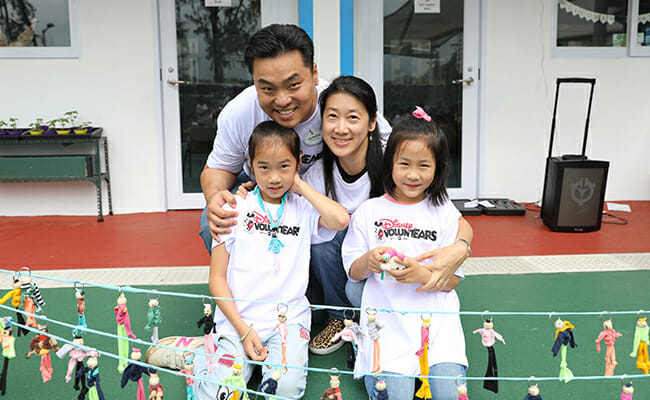
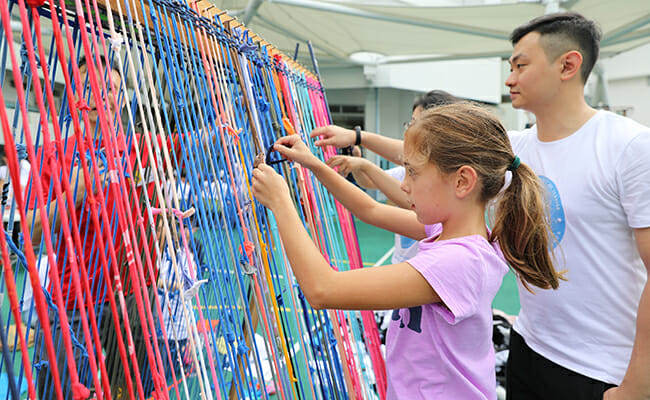
Volunteers have responded with great support, especially on Family Volunteer Day — a global day of service that celebrates the power of families who work together to improve their communities and neighborhoods. This year, HandsOn Hong Kong led four Family Volunteer Day projects. At their biggest event at Kennedy School in Pokfulam, 180 volunteers upcycled unwanted materials like T-shirts into mats, keychains, potholders, coasters and a large community rug. The textile industry is the second biggest contributor to pollution in Hong Kong, and unwanted materials usually end up in overly populated landfills; thanks to HandsOn Hong Kong, these materials were turned into usable items that were donated to community centers and senior centers.
Each year, HandsOn Hong Kong engages more than 47,000 volunteers, and runs more than 100 volunteer programs each month. It works alongside nonprofit partners and community-minded corporations to create a caring community that gives its time and talent to transform Hong Kong. Opportunities to volunteer with the organization are many and varied, but key family-friendly programs are central to its work.
ImpactHK, is a nonprofit that HandsOn Hong Kong supports with volunteers almost every day of the year. Its mission is to support Hong Kong’s homeless through kindness with the aim of giving them a true second chance — the first step is to reach out to them through “kindness walks.” Every day of the week, up to 10 volunteers hand out water and snacks, and encourage homeless people to go to their local community center to start a plan towards reintegration into society. Volunteers are able to build trust, which is a pivotal step in helping homeless citizens navigate a path towards rehabilitation.
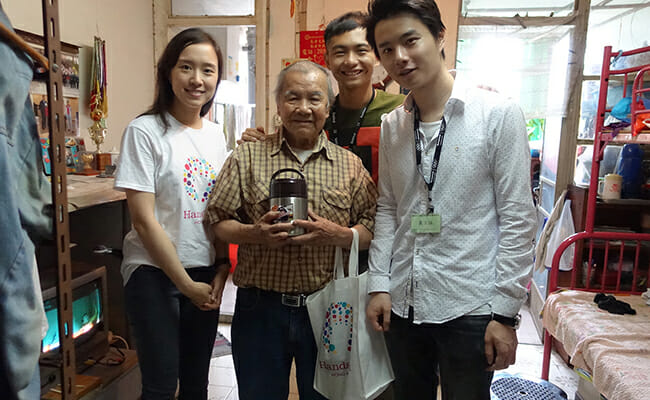
HandsOn Hong Kong also equips volunteers to give back to the elderly. In Hong Kong, one in three people over the age of 65 live in poverty and become more susceptible to depression, anxiety and loneliness. During the winter season, HandsOn Hong Kong connects volunteers with struggling elderly populations through its signature Soup for the Elderly program, spreading warmth and love to seniors through home visits and soup deliveries.
In addition to working alongside community volunteers and nonprofits, HandsOn Hong Kong helps corporations engage in service opportunities through custom volunteer programs. For example, the organization assists L’Oreal Paris with its annual Citizen Day program, a day-long volunteering event across the globe, by bringing numerous service projects in Hong Kong to life. They also connect employees from Fossil Group to schools where they takeover a school for a day and lead art workshops, create hygiene products and other educational activities.
And each year on International Volunteer Day, HandsOn Hong Kong hosts a breakfast to celebrate their volunteers’ efforts, share their values and promote their work among their community. The organization is raising awareness of Hong Kong’s pressing social needs – and ensuring inclusive access to volunteer opportunities, so everyone can take part in improving their community.
“We will do everything we can to empower and equip our community members with the skills they need to be lifted up and succeed,” said Catherine. “We will continue to support every kind of cause you can imagine.”
19 Everyday Ways You Can Make a Difference in 2019
Why not add volunteering to your New Year’s resolution list? The beginning of a new year is a great opportunity to start volunteering, or to find new ways to make a difference in your community. Not only does volunteering connect you to the people closest to you and to others in your community, it can also improve personal health and happiness levels. Giving back can be as big or small a commitment as your time allows, but it’s always time worth spending. Here are everyday ways you can start making a difference this year:
Give What You Can
1. Run or Walk for a Good Cause
There are races, walks and fun runs for almost every cause imaginable. Visit Active for lists of charity walks near you, or Running in the USA for local races. Mobile apps like Charity Miles also let you raise money for your favorite charity, giving back with every mile you run or walk
2. Donate Your Hair
Help bring confidence and smiles to children who are suffering from hair loss, whether from alopecia, chemotherapy, or other conditions. Grow out your hair for a new look, then donate inches to Locks of Love.
3. Save Your Coins
Children do it, and so can adults! Having a jar to collect loose pocket change and coins can add up into an unexpected sum of money in time. After a few months, count your savings and donate it to your favorite charity.
4. Give Blood
A decision to donate your blood has the potential to save a life, or even several when your blood is separated for patients with specific conditions. Connect with your local blood bank or the American Red Cross to find out how to donate in your community.
5. Donate Electronics, Furniture and Household Items
Companies like eBay are making it easy to give back. By selling old or unwanted electronics and household items, the eBay for Charity program connects users with their favorite charities with the option to donate proceeds from any sale to a cause that matters most to you.
6. Find a New Home for Old Books
Want to clear your bookshelf to make room for new purchases, or declutter your home? You can give your books a new home while helping others by donating them to a local school, library, or literacy organization. Or, consider creating a Little Free Library in your neighborhood!
7. Make the Most of Spring Cleaning
Now is the perfect time to clean out your home and simplify. Any clothing or household items you no longer need can be donated to a local charity. Organizations like Habitat for Humanity, Goodwill and the Salvation Army even offer pick-up services for larger pieces of furniture.
Show Love to Your Neighbors
8. Cook or Bake for Others
Food is an easy way to everyone’s heart. Do you have a neighbor who needs some extra joy in their life? Try baking them some cookies, or bring them a home-cooked meal. Burn everything you try to cook? No problem, just pick up something from your local bakery.
9. Read to Children
Do you love to read? Ask local elementary schools, libraries or daycare centers if they are in need of volunteers to read to children. You can do what you love, promote literacy skills, and bring joy to kids in your community.
10. Tell a Soldier Thank You
We can’t say thank you enough to the men and women who serve our country, but we can try! Writing a thank you note to a soldier is an easy way to give back, such as Operation Gratitude, or consider sending books or care packages to military personnel stationed overseas
11. Collect and Give Box Tops
Box Tops can be found on hundreds of products inside grocery stores. Take the time to look at your groceries for any Box Tops, clip the ones you find and send them to your local school, where they will be collected and turned into cash to support the school.
12. Deliver a Meal
Nearly 9 million seniors in America face the threat of hunger, and many live alone facing feelings of loneliness and isolation. By volunteering with Meals on Wheels on your lunch break, you can help seniors in your neighborhood and bring them an extra source of joy.
13. Share a Smile
When you smile, you instantly uplift others! Plus, smiling can reduce stress and activate the smiles in the people around you. Trust us, the world wants to see you shine.
Improve Your Community
14. Embrace the Green Movement
Make a conscious effort to start recycling more, by placing an additional waste basket near existing trash can in your home or office. Don’t forget about batteries, paint and medication that may need to be disposed in a particular way. And, to conserve resources (and save some extra money!), try unplugging appliances you know you won’t use in the near future, and remember to turn off lights before leaving your home.
15. Use that Green Thumb
Community gardens have many benefits. Creating a garden in your town is a great way to reduce food insecurity, increase physical activity through garden maintenance activities, and increase fresh fruit and vegetable intake for your household.
16. Support Local Businesses
Finding ways to support local businesses is a great way to give back to your community and show the ones around you that you support them. When you shop small, purchases become more meaningful and you help encourage growth in your home community.
17. Become an Ethical Shopper
More than ever, large and small brands alike are taking stands on important issues of the day. Take the time to research stores and brands to find places to shop that align with your values and the causes you care about.
18. Foster an Animal
Animal shelters are frequently overpopulated with homeless cats and dogs. Don’t have the ability to adopt? Consider fostering an animal from your local shelter, providing them temporary love and comfort until they find their forever home.
19. Find volunteer opportunities in your community!