4 Ways to Observe National Veterans and Military Family Month
When was the last time you thanked a military member or veteran for their service? November is National Veterans and Military Family Appreciation Month, and Points of Light is highlighting ways you can celebrate, support and honor our service members. Here are four ways you can get involved, from volunteering to donating and beyond.
1. LISTEN AND LEARN WITH AN EDUCATIONAL PODCAST
Before acting on an issue, understanding it is essential. This is where listening and learning comes into play. When we are informed and educated about an issue, we can think more critically, make better decisions and lend stronger support.
Military OneSource has created
for military members and families to equip them with the knowledge and resources they need to thrive. Topics include deployment, recreation, casualty assistance, relationship health, money management, parenting resources and how to care for family members with special needs.
See how military veteran and Daily Point of Light honoree Michael Wisecup continues to serve by running a camp for children and families with life-threatening illnesses.
2. VOLUNTEER AS A VIRTUAL CASEWORKER FOR MILITARY FAMILIES
Volunteering is a crucial part of leading a civically engaged life and driving real and sustained change in your community. This type of hands-on support is some of the most impactful in the nonprofit sector, and organizations rely heavily on volunteer power to carry out their missions. The American Red Cross is
caseworkers for military members, veterans and families. This volunteer role requires some training, but it can be carried out from anywhere, and shifts are flexible.
If you’re looking for other remote volunteer opportunities or want to find an in-person opportunity in your area, search Points of Light Engage, the world’s most comprehensive database of volunteer opportunities around the globe.
See how Navy servicewoman Daily Point of Light honoree Michaela White advocates for mental health in the military.
3. DONATE TO VETERANS, SERVICE MEMBERS AND THEIR FAMILIES
Donations to nonprofits remain critical in helping these organizations address the issues that matter most to us, societally and personally. Nonprofits and NGOs are dependent on donor support to pay their staff, recruit volunteers and execute their high-impact work. This year marks
, and you can support their mission by making a donation for National Veterans and Military Family Appreciation Month.
Wounded Warrior Project has been serving and supporting over 1 million post-9/11 wounded veterans, service members and their families since 2003 – through career and VA benefits counseling, mental health support, adaptive sports initiatives and more.
4. CELEBRATE AND HONOR VETERANS IN YOUR WORKPLACE
Supporting a cause you care about isn’t limited to your personal life. In fact, carrying civic engagement into our places of work is part of being a conscious contributor to social good. Military members and veterans add exceptional value to workplaces, bringing
that can greatly benefit companies.
If you work with service members or veterans, consider ways you can celebrate and honor them this month. It might be as simple as thanking a coworker for their service, or as grand as hosting a lunch to honor them. You might consider organizing a volunteer event with your team that benefits service members. Whether gestures are large or small, thanking service members and veterans can go a long way in helping them feel seen and appreciated – not to mention boosting morale and contributing to a stronger team mentality across your workforce.
See how retired fireman, Army veteran and Daily Point of Light honoree Tom Schneider continues a life of service helping those in natural disasters.
There are a multitude of ways to get involved in National Veterans and Military Family Appreciation Month. Making a plan now will help set you up for success as you prepare to contribute your time, talent and resources to honoring our former and current military members and their families.
Unlocking Employee Civic Engagement: Beyond National Elections
Elections are the cornerstone of any democratic society. They provide citizens with the opportunity to take civic action by voicing their opinions, shaping the direction of their communities, and ultimately, influencing the policies that impact their lives.
While national elections receive a lot of buzz, it’s essential not to overlook the significance of local and regional elections. These are often the elections that truly affect an employee’s daily life. Help them be prepared to have their voice heard by ensuring they are empowered and educated through your company’s plans for nonpartisan election support.
At Points of Light, we join our friends and partners at Civic Alliance in the shared belief that every individual should be able to live their most civically engaged life, and voting is a main component of that. In fact, in Points of Light’s civic engagement research, 78% of respondents said voting would be more important than ever post-pandemic.
Employers can play a nonpartisan role by offering educational opportunities and resources to employees, providing ways to support a free and fair election process and, of course, by helping to get out the vote. Civic Alliance has created a 2023 Elections Toolkit that helps you as an employee community engagement leader develop plans to keep employees informed and prepared.
This toolkit includes a list of significant dates broken down by U.S. market, key messaging and suggested social media posts for external audiences, and even online resources to share with employees to ensure they’re ready to vote, whether that’s on Nov. 7, 2023, or throughout the year. Remind employees that all elections matter and so does their active participation.
Skills Based Volunteering: Effective Recognition Strategies
Volunteers play a vital role in driving positive change in the world and supporting community organizations’ missions. Acknowledging and honoring the contributions of volunteers is crucial for maintaining a positive and appreciative working environment, as well as for attracting and retaining them.
As an expert in volunteer recognition, whether traditional or skills-based, we wanted to share a few ideas with you while we celebrate Pro Bono Week. At the top of our list is creating both formal and informal ways to recognize your pro bono and skills-based volunteers and developing a multi-faceted approach.
Informal Volunteer Recognition Tactics
Personalized Thank-You Notes: Write heartfelt thank-you notes that highlight volunteers’ specific skills and the impact they’ve had on the company’s nonprofit partners. This personal touch goes a long way in expressing gratitude.
Casual Coffee or Lunch Meetings: Invite them for a coffee or lunch with yourself or with senior leaders to express appreciation and discuss their experiences. It’s an opportunity to learn more about their skills and interests.
Social Media Shoutouts: Give them a shoutout on your company’s social media platforms, showcasing their work and expressing gratitude for their expertise.
Small Tokens of Appreciation: Send a handwritten card along with company-branded merchandise or a gift card to show your gratitude for their efforts.
Highlight Their Contributions in Team Meetings: Ask their supervisor to take a moment during team meetings to acknowledge their contributions and the positive impact they’ve had on your company’s employee volunteer program.
Peer Recognition: Encourage colleagues and team members to recognize and applaud volunteers’ contributions through informal communication tools like a Slack volunteer channel or by posting photos in the breakroom.
Feature Them in Newsletters or Blogs: Include a section in internal newsletters or on your company blog that highlights the work and accomplishments of your skills-based volunteers.
Invitations to Community Events: Often, corporate social impact leaders receive tickets to events hosted by nonprofit partners or others in the community. Offer the chance to attend to your volunteers so that you’re seated amongst colleagues who will truly appreciate the opportunity.
Remember that informal recognition should be sincere and tailored to the individual volunteer’s preferences. Some volunteers may prefer a private thank-you note, while others may appreciate public recognition. Be sure to consider their comfort levels and preferences when showing appreciation.
Formal Volunteer Recognition Tactics
Formal Thank-You Letters: Send formal thank-you letters or emails signed by company leadership to skills-based volunteers, expressing gratitude for their expertise and dedication. Make sure their supervisor also receives a copy for their personnel file.
Awards and Certificates: Create awards or certificates that acknowledge volunteers for their contributions. These can be presented at company-wide events or volunteer recognition ceremonies.
Skills-based Volunteer of the Year: Establish a formal award to honor the individual or team that has made the most significant impact through their skills-based volunteering efforts.
Annual Volunteer Recognition Event: Host an annual recognition event dedicated to honoring all volunteers, including skills-based volunteers. Invite company leadership and colleagues to celebrate their contributions.
Performance Reviews: Encourage employees to include their skills-based volunteer work in their mid-year or annual performance reviews or conversations. This provides a platform for them to explain skills they learned or practiced that can help them advance.
Public Recognition: Include a section on your company website or internal newsletters that highlights the achievements and contributions of skills-based volunteers. This can be in the form of profiles or success stories.
Professional Development Opportunities: After coordinating with HR and leadership, offer skills-based volunteers opportunities for professional development, such as attending conferences, workshops or courses relevant to their field of expertise or creating social impact like the annual Points of Light Conference.
Mentorship Programs: Implement a mentorship program where experienced skills-based volunteers can mentor newer volunteers. Recognize mentors for their guidance and support.
Monetary Grants or Donations: Consider offering a charitable grant or donation to a cause of the skills-based volunteer’s choice as a way of recognizing their efforts. This can also serve as an incentive for getting more skills-based volunteers involved in the next project.
LinkedIn Recommendations: Encourage company leaders and colleagues to write LinkedIn recommendations for skills-based volunteers, acknowledging their valuable contributions.
When recognizing skills-based volunteers formally, it’s important to make the acknowledgment meaningful and aligned with your company’s culture and values. Tailor your approach to fit the preferences and needs of the volunteers while ensuring that their contributions are acknowledged and celebrated throughout the organization.
Regardless of format, one of the best ways to recognize the work of a skills-based volunteer is to highlight the results they accomplished at a project’s conclusion. This evaluation should be two dimensional, showcasing the effect the project had on volunteers, the nonprofit organization as well as outcomes related to social impact. Use that information to nominate your skills-based volunteers for a
How to Organize a Successful Donation Drive for Employees
Before the end-of-year holidays ramp up, corporate social impact leaders can be found hard at work finalizing their plans to host a donation drive that benefits their employer’s nonprofit partners. While useful during many times of the year, donation drives tap into the generosity of the holiday season and become creative ways to support the communities where employees live and work.
If your donation drive includes the collection of gently used items such as business attire for organizations like Dress for Success, you and your colleagues are helping to keep items out of landfills and redirect them to those who can benefit from their use.
We’ve put together a checklist to help you get started planning a donation drive for your colleagues. Add these tips to your employee champion resources should they be responsible for planning a donation drive in their market.
Before your donation drive begins
Determine which community needs will be addressed by your donation drive; Then identify the nonprofit organizations you’d like to support
Contact those agencies to determine what they need and identify whether any needs are more critical than others.
Decide in consultation with these partners which items will be collected and m
ake sure you understand any limitations (i.e., what they don’t need), any specific guidelines about clothing and how much they can store once donations are delivered.
Engage a planning committee in setting goals and how to measure progress
You could decide to set a goal for gathering a certain number of items, collecting specific tons of food or reaching out to a specific number of people. Think realistically about these goals and what might influence them; you don’t want to overpromise and underdeliver. Then keep track of how you are doing and designate someone to be responsible for updating the group on how you are progressing toward your goals.
Organize logistics and set your plans into motion
Determine the duration of the drive; often a donation drive will last two to three weeks to give employees ample time to gather the items requested and make a plan for drop-off. Develop your internal communications plan to last the duration of the drive and include a variety of messaging and formats. Make sure the communications include the reasons why these items are needed, who they will benefit, your goals and any guidelines specific to the items requested. You’ll also need to arrange for supplies that you might need including collection bins or boxes if not provided, storage space for donated items and any incentives you might employ. Don’t forget to coordinate with your buildings’ facilities team to find the right space for the collection and storage of items to occur. Plan to collect items in highly visible but fire-code-safe locations.
Consider these options:
Single-site drop off: You ask employees in each market to bring donations to one location during set hours on a specific day. You may need to recruit additional volunteers to ensure the collection site and process runs smoothly.
Extended donation drive: It might be more convenient to set up multiple collection points with drop boxes where people can leave their donations over the course of multiple days or weeks. Volunteers can collect the donations once per day and transfer them to storage or deliver them to partners if requested.
Plan accordingly if many of your colleagues are now hybrid or fully remote
Make sure they know where and when to drop off donations so they feel included in the opportunity to support their community. You might also consider promoting your partners’ “online wish lists” if you feel that some employees would prefer to donate those requested items, whether they are in the office or work fully remote.
During your donation drive
Remind and motivate employees to support the donation drive
Consider creating a friendly competition among departments, floors or locations. Keep track of which location gathers the most items. Record which individual or team contributes the most items. Recognize the donors with bragging rights or small rewards. Always keep in mind that no one should feel pressured to give so keep any competitions or incentives light-hearted.
Monitor and showcase the progress employees are making toward achieving the drive’s goals
As items are collected and you need to transfer them to storage or to the partners’ selected locations, take photos before moving items off-site or as they are delivered to your partner to use in your communications. Purchase more supplies or collection boxes as they are needed.
After the donation drive ends
If requested, sort and count the collected items
Go through the donated items collected and sort the items according to the organization’s guidelines. Try to get an accurate count of what has been received so that you can share with employees and with your partner organization and keep track for future drives that your employer might host.
Deliver the donations
If you haven’t needed to deliver the donations during the drive, find a mutually good time to deliver them to your partner agency. Recruit employee volunteers to help complete this task. Take photos during the delivery to use in your final communications so that those who donated can feel pride in contributing. Touch base with the recipient organization a few weeks later to see how the donations were distributed and plan for your next collaboration.
Celebrate success
Share the total number of items you collected with all of your participants. Thank employees for participating and show gratitude to those who took on a leadership role. If possible, include any stories of how the donations will support your partners’ beneficiaries. Consider how you and your planning team could improve for next time.
5 Questions You Should Ask to Strengthen and Scale Your Pro Bono Program
Whether tapping the enthusiasm and talent of employees in St. Louis or Singapore, research continues to show that creating impactful volunteer opportunities doesn’t only benefit communities in meaningful ways—it can enhance your business, too. At Points of Light, we are committed to providing resources for community-minded companies that want to strengthen and scale effective employee volunteer programs.
Below is a quick list of research and resources that will help you address the most asked questions about skills-based and pro bono support of nonprofits and help strengthen your company’s social impact programs. Use these resources to become more effective champions of this work.
Q. How do I make the business case to senior leadership to invest resources into implementing a skills-based volunteer or pro bono program?
The case for skills-based volunteering is clear and compelling. While nonprofit organizations will always need traditional volunteers to help them advance their mission, they are also in need of strategic support that builds capacity. Pro bono volunteers can help design human resources policies, implement technology upgrades, develop marketing campaigns and review legal documents.
All of this work is necessary for any organization to thrive, but often nonprofits don’t have the budget for these tasks set aside each year, as they use their much-needed funds to continue supporting their beneficiaries. That’s where skills-based and pro bono volunteers can play an outsized role in their operations.
Providing ways for employees to use their skills in support of nonprofit partners reaps dividends for businesses, too. It can help you achieve business goals related to recruitment and retention. It can help provide a lower-cost way to train and upskill employees. It can also support leadership development at all levels. And those are only the employee-related benefits!
Inviting your employees to donate their time and talents to NGOs can also support your company’s bottom line by increasing positive public perception of your company’s brand, building customer loyalty and bringing innovation to your company’s products and services.
For additional proof points that will appeal to senior leadership, check out ACCP’s
Q. I work for a small business and am not sure if we can get involved in pro bono like larger companies might?
The most common concerns for small businesses when considering an employee volunteer program are related to cost and capacity. But there are creative ways to manage skills-based volunteerism so that it works for smaller businesses, including:
Determine the maximum amount of time an employee can volunteer per fiscal year.
If production runs are tight, recommend the employee volunteer after work hours, and determine appropriate compensation.
Ensure proper cross-training of employees (and their ability to cover others’ assignments). This allows operations to continue when the employee is volunteering.
Allow employees to utilize their sick, personal or vacation days for pre-approved volunteering opportunities.
Allow employees to “donate” their sick, personal or vacation time to other employees who would like to volunteer.
Check out our article on mobilizing employees even if you have a small team for additional pointers.
Q. Where can I find best practices for designing a great pro bono program?
There are many great resources to help you design and implement the pro bono volunteer program that will make the right sense for your business, your colleagues and the communities in which your business operates. And the most important first step is understanding the needs of those communities and the nonprofits that support them.
(where your skills-based program runs efficiently and effectively, and delivers needed impact) lies at the intersection of those community needs, the skills and interests of employees, business priorities and constraints. Check out additional expert resources from Taproot Foundation
First, consider your existing grantees, who might also be in need of pro bono support. Then, consider contacting the following networks, organizations or online resources that can connect you with local nonprofits and skills-based volunteer opportunities.
Points of Light’s Global Network is comprised of volunteer-mobilizing organizations in 39 countries around the world. They can help you identify NGOs that need skills-based support and may also be able to help you design and implement your strategy.
Taproot Plus offers an online tool to match nonprofit and small business needs with volunteers with the right skills and expertise.
Catchafire is another online tool that connects skilled, virtual volunteers with nonprofits that need their expertise.
Common Impact is a one-stop-shop that can help your business design and implement a skills-based strategy while also helping you find nonprofits that need your employees’ talents.
Points of Light Engage is an online database of volunteer projects, many of which require the expertise of skilled volunteers.
Q. What can I do to help nonprofits be ready for skills-based volunteers?
Help your nonprofit partners increase their readiness to make the most of a skills-based project by sharing with them the organizational readiness assessment available through
. It’s a free, online tool with extensive resources to help build nonprofit capacity to navigate skills-based volunteering, including pro bono efforts.
The George H.W. Bush Points of Light Awards 2023 Inspiration Spotlights
While our annual recognition event primarily honors select individuals who demonstrate the transformative power of service, one of our favorite traditions at
is to highlight additional people who are driving impact through their everyday actions and volunteer work.
“
Recognizing the good in people helps others see the good and potential in themselves. The Inspiration Spotlights, as part of The George H.W. Bush Points of Light Awards, shine a light on ordinary people going to extraordinary lengths to do good work in their communities. Using elements from Points of Light’s Civic Circle, these individuals’ acts of service and civic engagement create impactful change in communities around the world. Our goal is that, by uplifting their stories, other people see what is possible and we create a wave of social good, strengthening the social fabric of society and improving our civic health,” said Jennifer Sirangelo, President & CEO of Points of Light
This year’s awards will once again showcase several
Since starting Hedgehog Beanies in 2020, Cooper has donated more than 16,000 beanies, socks and gloves to those who are unhoused./Courtesy Cooper Schwartz
What cause is closest to your heart?
I am most rooted in the international struggle with homelessness and am trying to help keep one person warm at a time.
I want to transform the way that our country deals with housing initiatives so that we can truly help people get back up on their feet.
How does being connected to something bigger than yourself help you see light in the world?
Being connected to something bigger than myself helps me see light in the world because I am able to see what the impact of just one 17-year-old can do, and it makes me hopeful for what we all can do if we choose to put the work in.
What is the transformation you’d like to see in the world?
In the world, I want everyone to be more compassionate and considerate because many people are struggling in ways that others can’t even imagine.
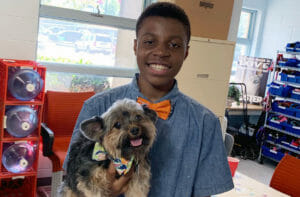
Darius Brown founded Beaux & Paws, donating handmade bow ties to animal shelters across the country to help pets get adopted. /Courtesy Darius Brown
What cause is closest to your heart?
The cause that’s closest to my heart is creating bow ties for shelter pets. I believe that every pet deserves love and attention, and a stylish bow tie can help them stand out and find their forever homes. It’s incredibly rewarding to see dogs and cats looking their best and finding loving families. It’s a cause that’s become a significant part of my life, and I’m dedicated to making a positive impact on the lives of shelter pets through my work.
I want to transform my passion for creating bow ties for shelter pets into an even more significant movement. My current work involves expanding my reach and partnering with more shelters and rescue organizations to help more animals find homes. I also aim to inspire others to get involved in similar initiatives to make a collective impact helping shelter pets find homes and saving them from euthanasia.
How does being connected to something bigger than yourself help you see light in the world?
Being connected to a cause bigger than myself, like my mission to help shelter pets, brings me a lot of joy and fills my life with purpose. I’m so extremely grateful that I can use my skills and talents to support a cause I deeply care about. It reminds me of the goodness and light in the world by serving as a reminder that even the smallest of efforts can contribute to a better future.
What is the transformation you’d like to see in the world?
The transformation I want to see in the world is a more caring and open-minded culture where compassion, understanding, empathy, kindness and equality are essential principles that apply to all living things, including shelter animals. I feel that the world would be a better place if the welfare and well-being of humans and animals were given equal weight.
Elijah Lee, president of Hear Our Voices, speaking at a Virginia protest where he talked about the importance of young people rising to the occasion and fighting back against injustice./Courtesy Elijah Lee
What cause is closest to your heart?
When I first started my advocacy, I focused a majority of my efforts towards bringing awareness to the issue of child abuse. As I grew older, that passion for wanting to protect all kids morphed into a passion to empower other young people to use their voices. For too long, we as a country have worked to silence our young people. Whether we have discounted their voice or excluded them from rooms where change is made, young people have always had to fight to make our voices heard. I would say that is what my work is today, showing others that we as young people are prepared to do what is necessary to bring progress and change our world.
I want to transform our perception of what our young people are capable of. I think starting at society’s views on young people, and proving that we are capable of anything we set our minds to, proving that there is power in our voice, proving that we deserve to be a part of making decisions that will impact us… I believe this is how we will achieve a world where young people feel heard.
How does being connected to something bigger than yourself help you see light in the world?
In this work, it is very easy to get saddened, burned out or simply feel like you should give up. However, I am honored to work with some amazing people that remind me I am not alone in this fight. Youth activism is a movement of young people, all dedicated to the same thing. We are united. We are together. We are connected because of who we are. This is enough to inspire me to keep doing my work. The love and care that is shared within this movement is enough to keep me going, and our hope, our willingness to see beyond the state we are in – that is what I remind myself every day.
What is the transformation you’d like to see in the world?
A long time ago, I would’ve said my perfect world is one without sexism, racism, homophobia, child abuse, school shootings and so much more. While that remains true, I think a larger part of that is hoping for a world where young people understand that we have the strength to move through anything. I want to see a transformation in our young people, one that gives us power, understanding, wisdom and fire for change. I think anything is possible when we bring together some amazing young people who dare to question the status quo, and that is what I want to see.
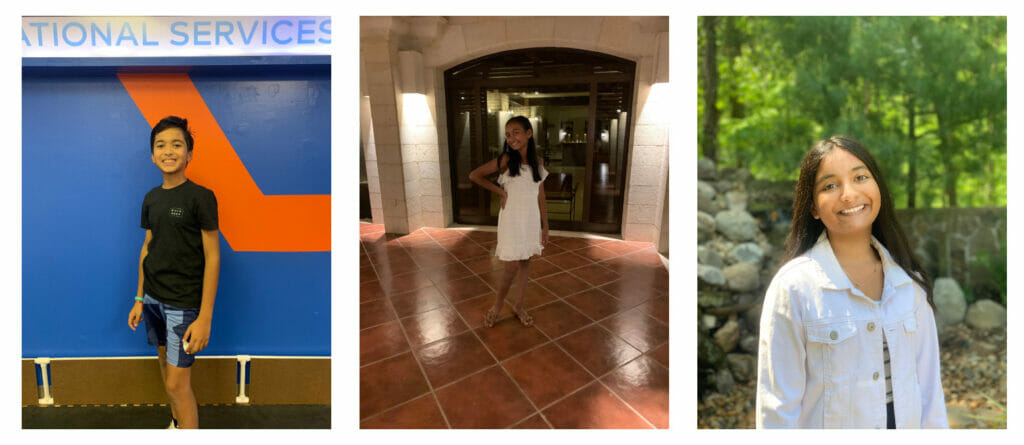
Armaan, Gia and Karina Gupta are triplets and co-founders of Little Mentors.
What cause is closest to your heart?
The cause closest to our hearts is friendship. Acknowledging and recognizing common humanity and the power of love in appreciating differences is fundamental to our organization. We want to transform how we communicate with each other. We want to make voices more accessible to others and make new opportunities for conversation possible for our community.
How does being connected to something bigger than yourself help you see light in the world?
Being connected to something bigger than ourselves helps us see the light in the world because we realize that there is hope and there are stories that are beautiful that are yet to be heard. The pursuit of these stories and listening to them to have a more enriched world is what we aim for.
What is the transformation you’d like to see in the world?
We want to see more humanization instead of demonization. We want more listening instead of assuming. We want more love than hatred.
Iwona Miller encourages others to slow down and appreciate the beauty in hospice care.
What cause is closest to your heart?
The most important goal for me is to show the joy of helping. Encouraging as many people as possible to have a beautiful attitude that values our lives and the inner need to be needed by other people. I would like to contribute to changing the perception of hospices only as places of dying. Beautiful things also happen in our hospice, there is life, conversations, smiles, small and great joys, performances by actors and concerts that make patients’ time more pleasant.
How does being connected to something bigger than yourself help you see light in the world?
My goal is to instill in people the desire to help others, to give them a chance to try, because I know that most often their awareness and willingness to help those in need increases enormously. To show how important being with another person is, how much talking and spending time together bring to our lives and how short and volatile life is.
I know that my work inspires them to stop in the rush of everyday life. It helps them find the joy of being with their loved ones and other people. When working with volunteers, I notice changes in their assessments and perception of the world. I often hear that volunteers reevaluate their lives and see a huge, positive change also in contacts with their loved ones.
What is the transformation you’d like to see in the world?
I would like people to focus more on other people than on things, to smile at each other more often, to respect each other, to be more understanding and empathetic. We are different, but in the end, we realize that nothing is more important than another person. The presence of our loved ones, family, friends, memory and time spent with them. That it is moments of shared conversation and short, beautiful moments that make their lives fulfilled and happy.
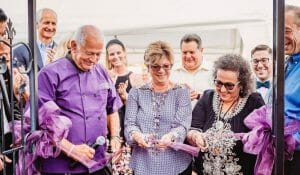
Maria Fundora, right, cuts the ribbon at the 2018 annual gala held to fundraise for Purple Pansies./Courtesy Maria Fundora
What cause is closest to your heart?
The cause most important to me is to provide emergency financial aid to patients and their families, grant scholarships to children from families impacted by pancreatic cancer and support groundbreaking research and clinical trials. My journey began with the devastating loss of my mother to pancreatic cancer, motivating me to turn my grief into a determination to make a difference.
I founded Purple Pansies in 2009, to date, we have raised over $5 million. We are a small, but mighty fully volunteer run organization, that has played a pivotal role in the development of key regimens employed in the treatment of pancreatic cancer today.
I want to transform the experience of individuals and families affected by pancreatic cancer, providing immediate support and empowering them, while also funding critical research and clinical trials to conquer this devastating disease. I would like to see the standard of care for pancreas cancer, like the annual mammogram for breast cancer, or the PCA test for prostate cancer, to have one of the blood tests that are available today be part of the standard of care when people go for physicals.
How does being connected to something bigger than yourself help you see light in the world?
Being connected to something bigger than yourself broadens your perspective, ignites a sense of purpose and meaning, cultivates empathy and compassion, fosters a supportive community, encourages gratitude and hope, promotes personal growth and inspires positive action. Ultimately, this connection helps you see the light in the world by recognizing the potential for positive change and the collective efforts that can illuminate the lives of many.
What is the transformation you’d like to see in the world?
I’d like to see the complete eradication of pancreatic cancer. I envision a world where individuals and families no longer have to suffer from this devastating disease, where early detection and effective treatments are readily available, and where the emotional and financial burdens caused by pancreatic cancer are eliminated. This transformation would bring about immeasurable relief, hope and an improved quality of life for countless individuals and communities worldwide.
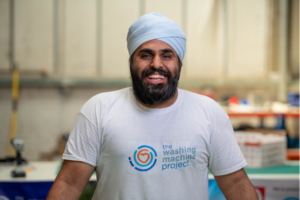
Navjot Sawhney provides hand-cranked washing machines, benefitting over 1,000 families.
What cause is closest to your heart?
Giving people the dignity of clean clothes is a cause that is so important to me. As it stands, 5.6 billion people have to handwash clothes. The burden of hand-washing clothes is disproportionately placed on women and children, who go to lakes, rivers and streams for up to 20 hours a week to hand-wash clothes. Alleviating this burden and back-breaking, unpaid labor is now my life’s work.
I want to transform the way people in developing countries carry out unpaid labor. Modern innovation has disproportionately focused on the comforts of the West and has transformed everyday life. I now want to unlock this for the next billion people around the globe left behind and are eager for high-quality, appropriate solutions.
How does being connected to something bigger than yourself help you see light in the world?
As an engineer, I have the skills and ability to help or hinder the planet. I know what side I want to be on for future generations, and this gives me incredible purpose for something bigger: spreading light into the world. Navjot means “New Light” in Punjabi; I want to be true to my name and live this every day of my life.
What is the transformation you’d like to see in the world?
In my lifetime, I would love a shift in focus of innovation from developed nations to developing nations. This, I feel, will have the most impact on our planet for centuries to come.
Rebekah Bruesehoff is a 15-year-old transgender activist working to improve LGBTQ+ inclusivity by speaking out publicly and fighting for policy change./Courtesy Jamie Bruesehoff
What cause is closest to your heart?
I believe in creating a safer world for LGBTQ+ youth of all ages. As a transgender young person, I have been able to thrive because of the support network I have. Everyone deserves that, but too often LGBTQ+ youth don’t have access to that support. I want people to understand that transgender and nonbinary youth, that LGBTQ+ youth, are just like other kids. They thrive with love, support and affirmation.
I want to transform the way people look at gender and the stereotypes that go with it so that all people are freer to show up as themselves. More people showing up fully as themselves makes the world a more vibrant and beautiful place.
How does being connected to something bigger than yourself help you see light in the world?
Being connected to something bigger than myself gives me hope. It shows me how many good people are out there doing good things. That’s so important when current events can be so overwhelming and scary. But we’re never alone, and together we can create a better future.
What is the transformation you’d like to see in the world?
I want us to move beyond labels and boxes so that we can see people around us as human beings instead of issues. When we see the humanity in each other, empathy and understanding grows.
Robert Quintero is an advisor, mentor and former board member of ELLAS a nonprofit facilitating academic and leadership opportunities for underserved Latina youth./Courtesy Robert Quintero
What cause is closest to your heart?
The cause that is most important to me is recognizing the importance of gender and cultural diversity in bringing new dimensions to any enterprise. This commitment has led me to volunteer my time, professional knowledge and resources to Embracing Latina Leadership Alliances (ELLAS), a nonprofit established in 2003 by L’Oréal Paris Women of Worth honoree Pilar Pinel that facilitates academic and leadership opportunities for Latina youth.
I want to transform the way the world thinks about gender equity. I am an advocate for the advancement of young underserved and underrepresented women. As such, my participation and involvement has been to serve as a mentor, advisor, ally and funder. The empowerment of women is all about rights and equitable societies. Empowerment includes the action of raising the status of women through education, awareness, literacy and training as we have done through ELLAS.
How does being connected to something bigger than yourself help you see light in the world?
Connecting the dots for young women. If you can’t visualize yourself in a certain career or role, you won’t pursue it. However, if you see someone of your own gender, ethnicity or background doing something you like, you relate to it. You think, “If they can do it, I can do it.” It’s important that these young ladies see themselves in their role models. That’s why most of our speakers and mentors are Latina, but not all. Again, I want to emphasize that men can also be excellent role models and mentors for young women. ELLAS serves as the “neck” that turns the heads of these young women toward careers that are aligned with their passions.
What is the transformation you’d like to see in the world?
We all have a purpose in life. Once you find that purpose, you fuel others’ passions by pulling them into participating in what they believe in. Being a voice of ELLAS, I’ve connected with people who say “Wow, I wish there had been something like this when I was in high school…” It’s a testament to what we do when some of our past young ladies come back as guest speakers, mentors, advisors, board members or volunteers. Giving back without expecting anything in return and putting in the time and energy commitments has extraordinary rewards.
Shrusti Amula, 16, is the founder of Rise N Shine Foundation Inc./Courtesy Shrusti Amula
What cause is closest to your heart?
The causes most important to me are food insecurity and climate change. These issues are becoming increasingly prevalent and are affecting more people globally. It is vital that these issues are addressed in the status quo.
I want to transform food waste management systems.
How does being connected to something bigger than yourself help you see light in the world?
Knowing that I am connected to something bigger than myself gives me a sense of purpose knowing that I am working to create a better world for everyone.
What is the transformation you’d like to see in the world?
I would like to see composting and food recovery programs implemented systemically in all schools and businesses.
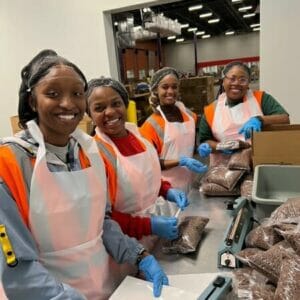
At the Mid-South Food Distribution, T’Kiyah [left] and fellow University of Alabama students package and seal many pounds of cereal for those in need./Courtesy T’Kiyah Threatt
What cause is closest to your heart?
Being a resource for citizens of the rural community is closest to my heart because there is no limit to the work we do in the community. We host back to school drives, fund scholarships for high school students and organize college tours, prepare and donate food boxes, offer a community pantry and resource closet of hygiene supplies, etc. The cause most important to me is bridging the gap between financial literacy and our citizens.
I want to transform the stigma of our rural area.
How does being connected to something bigger than yourself help you see light in the world?
I want it to be known as a town of citizens that work together for a purpose that is greater than us. Knowing that we are working for a purpose larger than ourselves has motivated me to be the change I want to see as I shine God’s light upon others.
What is the transformation you’d like to see in the world?
In this world, I would like to see other young men and women volunteering because sometimes investing time is better than investing money.
Getting Started with Pro Bono Volunteering
Pro Bono Week, an annual celebration of the talented volunteers who share their skills with nonprofits around the world, is about to kick off during the third week in October. For companies that have not yet thought about how their employees and their unique skills sets can contribute to pro bono volunteering, here’s a primer on getting started.
First, what is pro bono volunteering?
Often referred to as “skills-based volunteering,” pro bono applies the talents of professionals to challenges in communities or gaps in the skills and services needed by nonprofit organizations. Pro bono service is actually a type of skills-based volunteering (SBV) wherein volunteers contribute their professional skills — typically the same exact skills they use to perform their job every day.
Pro bono volunteers provide expertise that directly supports a nonprofit’s internal operations, which strengthens the infrastructure and capacity of the organization, and becomes a powerful driver of social impact. By leveraging all types of workplace skills — from IT support and strategic planning to marketing and HR consulting — pro bono volunteering helps nonprofits expand their reach and become more sustainable, while allowing employees an opportunity to build and practice their skills.
Where can you start with pro bono volunteering?
1. Assess Your Business Needs and Competencies
The right place to start is with a thorough internal review and discussion about what makes sense for your business and your colleagues.
Which unique skills and competencies do your employees possess and which might need shoring up? Although you may be in the marketing industry, consider the broad array of skill sets that professionals at your company can offer—ranging from HR and strategic planning to marketing and IT support.
How much time and resources do you have to manage and support a new volunteer program?
Will you have internal buy-in from management? If not, what might you need to obtain this?
Would employees volunteer on an ongoing basis or, perhaps to start off, should you consider a well-defined timeframe during the year?
Would the preference be to align your pro bono volunteer program with a strategic area of focus for your business (such as education, nutrition or healthcare), or would you allow employees to determine which causes they volunteer for?
Should you start small? Even some of the most successful pro bono programs at the largest corporations start modestly. If your business has a presence in multiple markets, think about piloting a project in one market and build from there.
2. Determine Nonprofit Partner Needs and Readiness
Next, begin to identify nonprofits that might be a good fit with your company’s goals. You might consider working with a member of
to connect you with an appropriate nonprofit, or you might partner with nonprofits your company or foundation already supports with contributions.
Once you’ve connected, ask the organization’s team if they have a need for the skills that you’ve identified as the right ones for your company to offer. This might be an area that is essential to the nonprofit’s mission but may be underfunded or under-resourced. Always let your partners guide the discussion around their needs rather than imposing your priorities on them.
Then, help your nonprofit partners increase their readiness to make the most of a skills-based project. Share the organizational readiness assessment with them available through Capacity Commons provided by Common Impact and the Charles and Helen Schwab Foundation. It’s a free, online tool with extensive resources to help build nonprofit capacity to navigate skills-based volunteering, including pro bono efforts.
3. Develop a Scope of Work
Once you’re collaborating with the right partner, you’ll need to work together to determine the project or projects you’ll be working on.
Agree to a set of deliverables, timeframe, project leadership and points of contact, and support for both the nonprofit and employee volunteer(s). Document them.
Work with the nonprofit to create agreed-upon expectations.
Mutually define what success looks like.
Determine how the project’s success and impact will be tracked and measured. Consider the difference the project will have on the nonprofit and the community they serve, as well as employee volunteers.
Discuss and draft a post-project support plan. This step will help ensure the sustainability of your efforts and will help the nonprofit maintain your pro bono recommendations or services after the project has ended.
4. Implement the project
You’ve got the right understanding of your employer’s goals, the skills you can provide, the right nonprofit partner(s) on board and projects mapped out, but now the real work begins.
Match volunteers to projects based on their interests and skill sets. A great way to do this is to develop a “job description” that will help volunteers better understand the skill sets and expertise, time commitments and leadership roles needed to complete the pro bono project.
Set expectations with partners and volunteers upfront and manage expectations throughout the project.
Organize regular check-ins with your partners and volunteers to discuss progress, challenges and future deadlines.
Monitor project milestones. Reassess and adjust the project’s scope if necessary.
5. Evaluate and celebrate success
Once the project is completed, measure the project’s success against the indicators and metrics outlined in the scope of work.
Issue a survey to your employee volunteers to gauge the outcomes and impact of their volunteer assignments on business priorities like skill development, leadership development and other factors important to your employer.
Issue a similar survey to your nonprofit partner to assess the outcomes of the volunteer assignment on the effectiveness of the collaboration, the efficiencies gained, how it will help them increase their reach and other factors important to them.
Reflect on what went well and what didn’t go well in the project and determine how that can be improved in the future.
Take time to recognize and celebrate employee volunteers for their work and the project’s results. Consider a pro bono volunteer spotlight in internal or external communications or as part of your employee volunteer recognition strategy.
Remember, you don’t have to go down the pro bono route alone. There are several great organizations that specialize in skills-based and pro bono volunteering like
. And if Points of Light’s Corporate Solutions team can be a resource to you as you think through how, why and when to mobilize your colleagues in pro bono volunteering, don’t hesitate to reach out. Happy Pro Bono Week!
Amplifying Change: The Inspiring Work of the 2023 George H.W. Bush Points of Light Awards
President George H.W. Bush left a legacy of shaping the United States into “a kinder and gentler nation” in the face of a dramatically changing world. In his Inaugural Address, he used his voice to pledge American strength as “a force for good,” and when he founded Points of Light in 1990, he continued that promise. As his legacy foundation, he envisioned Points of Light as a conduit for doing more good in the world by helping people become deeply involved with and connected to their communities.
Today, through
, we celebrate our 41st president’s enduring legacy of integrity, empathy, respect, optimism, conviction in the face of opposition, and belief in the power of the human spirit to create positive change. This event honors individuals who demonstrate the transformative power of service, and who are driving significant and sustained impact through their everyday actions and words that light the path for other points of light.
“We can find meaning and reward by serving some higher purpose than ourselves, a shining purpose, the illumination of a thousand points of light… we all have something to give.”
— President George H.W. Bush, founder of Points of Light
These honorees include leaders from various spheres — music, politics, business and grassroots activism — channeling their expertise and passion into arenas of social impact.
Mike & Jacquelyne Love: Philanthropy and Legacy in Harmony
, has channeled the fame and resources garnered over the years towards the uplifting of communities globally — focusing intensely on environmental and educational avenues. Jacquelyne, a force to reckon with in the realms of business and fashion, has joined hands with Mike, injecting fresh vibrancy and commitment towards philanthropic causes, and also touching lives across the world.
Their efforts have seen them at the forefront of critical initiatives, including their involvement in the Thousand Points of Light initiative launched by President George H.W. Bush. They took their commitment further by steering the Points of Light Awards in 2019, leveraging their influence to foster a culture of getting involved. Their sustained focus on education and environmental conservation has garnered them accolades, including the Seven Generations Award presented to Mike by City Year in 2013, signifying a legacy characterized not just by musical genius but by a deep-seated desire to nurture the next generations.
Condoleezza Rice: A Lifetime of Service and Education
, a steady presence in public service and education, boasts a career dotted with numerous high-ranking positions, including serving as the 66th U.S. Secretary of State. She made history, breaking racial and gender barriers to become the first Black woman to occupy such pivotal roles in government. Alongside her political career, Rice has nurtured a strong connection with Stanford University, evolving from a faculty member since 1981 to becoming the provost, to her current role as
, laying a pathway of dedication to education and public service.
Rice’s intellectual vigor is mirrored in her literary contributions, with a plethora of books and publications to her credit. Her entrepreneurship journey saw her becoming a part-owner of the Denver Broncos, showcasing her multifaceted persona. Beyond the political and business spheres, Rice has been a cornerstone in educational philanthropy, contributing to the upliftment of underserved communities through initiatives like the Center for a New Generation, a beacon for extended learning and after-school programs, representing a lifetime of dedication to fostering knowledge and service.
Robert F. Smith: Business Acumen Meets Generous Philanthropy
Founder, Chairman and CEO of Vista Equity Partners,
stands as a towering figure in both the business and philanthropic spheres. Beyond building a successful business through strategic technology investments, Smith has deeply invested in preserving Black American history, fostering environmental conservation and revolutionizing music education through the
. His business acumen and philanthropic endeavors have blended to create a legacy of liberating the human spirit through nurturing heritage and education.
His philanthropic journey reached a pivotal moment when he became the first Black American to sign the Giving Pledge, earmarking the majority of his wealth for philanthropic ventures. Smith’s gestures extend to practical empowerment, such as erasing the student loan debt for Morehouse College’s 2019 graduating class and their guardians. This monumental step inspired the inception of
(SFI), which supports students at Historically Black Colleges and Universities (HBCUs) and other Minority Serving Institutions (MSIs). Smith’s vision and commitment continue to bridge gaps and foster inclusivity, underscoring a mission to bring about tangible, transformative change in society.
Rebecca & Christyn Taylor: United in Hope and Resilience
embody hope and resilience, fueling their dedication to supporting children battling pediatric pancreatitis. Despite Rebecca’s personal health challenges, which involved numerous surgeries and considerable medical treatment, her spirit remained undeterred. Supported by her mother Christyn, Rebecca morphed her suffering into hope, initiating “
,” a nonprofit organization dedicated solely to pediatric pancreatitis, and launching a global movement for change.
The organization has broken ground in fostering research partnerships with global entities and facilitating advancements in medical care. Leveraging the power of storytelling through “Rebecca’s Wish: The Documentary,” they have showcased the courage and determination of young individuals battling the disease. The Taylor duo has infused hope into the community through medical grants, scholarships and awareness campaigns. Their journey stands as a testament to the transformative power of resilience, portraying the spirit of unity and the unyielding determination to foster change in the face of adversity, illuminating the path for many others.
The impact of these honorees resides in President Bush’s legacy of service and that we all have something to give. Every action matters, big or small. We can find meaning and reward by serving some higher purpose than ourselves. Each story –spanning art, politics and health – resonates deeply with a shared commitment to fostering goodwill. The experiences and actions of these individuals remind us of the power of President Bush’s vision for a better world.
We are honored to recognize these individuals at
work to create impact around the world. This innovative network operates with organizations, with 145 affiliates across 39 countries around the world. Together, we are inspiring, equipping and mobilizing more people to use their time, talent and resources to create positive change in their communities.
We spoke with Diana O’Neill, executive director at Long Island Volunteer Center, Inc., a Points of Light affiliate in New York, to discuss why volunteer stories matter and hear inspiring stories from their own work. The Long Island Volunteer Center is the regional center for volunteerism on Long Island, providing a central hub for individuals and groups to connect directly with nonprofit organizations, raising the profile of volunteerism in the region and increasing the number of new volunteers to meet community issues, while impacting the lives of neighbors in need and enriching the life of the volunteer as well.
How is your organization working with volunteers this year? Describe the activities and events do you have planned.
This is our 30th anniversary year, and we are working toward a celebration event in early fall. We connect with volunteers through networking events, volunteer fairs, street fairs, information provided to local libraries, articles in local papers, social media promotion, website promotion, e-newsletters and speaking engagements.
What resources or tools are you providing to volunteers to help them get involved in their community?
We have lists on our website homepage of volunteer opportunities across Long Island, split out by volunteer category. We have updated the list of youth volunteer opportunities. We are working toward increasing the number of automated volunteer opportunity posts on the website to facilitate search and connectivity. We are also updating our seasonal list of volunteer opportunities high in demand by libraries and high school guidance offices.
What role does volunteerism play in your organization’s overall mission and objectives?
The entire management team is all-volunteer, so each member is absolutely essential to mission and operations. We also have a very active board which participates in hands-on projects and planning around programming.
Share one success story of volunteers in your community who have made a significant impact.
LIVC volunteers Lisa Ziegler and Debra Cattani lead prom boutique logistics and are a well-oiled team that is remarkable to watch in motion. Done with a special blend of tender, loving care, they take thousands of donated gowns and accessories and sort them by size, style and intended purpose (i.e., gown for prom or dressy dress for graduation event), always ensuring quality while thinking about the impact on the intended recipient. They are very organized and manage logistics with incredible attention to detail, competence, professionalism and excellence among all the moving parts.
The Long Island Volunteer Center’s Prom Boutique gown giveaway program, originally created at the Junior League of Long Island and fully coordinated in partnership with the Nassau County Police Department, is now celebrating its 30th year. The NCPD hosts a distribution event at their Center for Training and Intelligence as a “pop-up” boutique which is supplied by the thousands of donations secured through LIVC’s collection efforts for new and gently used prom attire.
Donated gowns and accessories are distributed by invitation only—all girls are confidentially referred by underserved youth agencies, group homes, high school guidance counselors and church outreach leaders—and are provided free of charge to girls of families across Long Island who cannot easily absorb the expense of a new gown for their prom, awards ceremony or graduation. At the project’s apex, pre-COVID, over 5,000 girls benefited from the initiative which included ten additional events coordinated with the United Federal of Teachers. On average, 30 schools/at risk programs make confidential referrals; 383 volunteers participate; 25 groups and businesses donate gowns and/or host dress drives; and 18 locations have served as collection sites. Without this all-volunteer effort, many of these young ladies and young men would not have the opportunity to celebrate their successful completion of high school through the prom experience.
Lisa and Debbie were forced to pivot their mindset around logistics post-COVID and did so with incredible grace, aplomb and keen attention to safety protocols. The 2020 spring event was canceled so the inventory had been stored in anticipation of 2021 programming that would not allow for an in-person event. It was decided to create a hybrid distribution model that entailed online ordering by partner high schools and youth program agencies and fulfillment of those orders with curbside pickup by HS and program coordinators from our storage facility in Nassau County. This innovative approach was successfully employed along with distribution of dressy children’s clothing to youth program agencies.
Accumulating over 200 hours each year, Lisa and Debbie have been regularly assisted by Nicole Ziegler and Kyle Ziegler, and on an as-needed basis by Sandy Viola, Anne Sprotte, Kurt Sprotte, Kevin Sprotte, Pat Moynihan, Pat Force, Paul Salerno, Diana O’Neill and Simone Leo. They both lead by example and richly deserve being highlighted since they would never seek it for themselves. Lisa and Debbie are Volunteer Superstars, bar none.
Can you share any tips or best practices for other organizations looking to recognize volunteers?
Tell your volunteer stories!
What’s one piece of advice you’d give someone who’s looking to get more involved in their community through volunteerism?
Find out where your passion meets purpose and utilize the expertise of a local Points of Light affiliate to connect to community needs.
How CSR Programs Reduce Cost and Boost Impact
It’s well known that companies benefit from the halo effect that corporate social responsibility (CSR) provides, but did you know that social and environmental impact work and ethics policies can significantly reduce operating costs too?
Companies “do well by doing good” when they design and execute successful CSR programs that generate income through building brand awareness and loyalty, mitigate risk in the forms of expensive crises and fines, minimize the high costs of employee turnover and more.
Keep reading to learn how your company can use CSR programs to reduce business costs, and boost impact.
How to Use CSR Programs to Reduce Business Costs
Foster brand loyalty
From shareholders and investors to consumers and community members, stakeholders are increasingly prioritizing companies with proven social impact programs and ethical practices. Strong CSR strategies can have an outsized impact on companies’ reputations compared to how much they cost to implement.
CSR is great for brand building and marketing, but be mindful of not prematurely promoting CSR initiatives, overexaggerating your impact or engaging in misleading “greenwashing” practices. Any of these have the potential to backfire and erode hard-earned stakeholder loyalty.
Enhance risk management
Having a strong reputation across a variety of stakeholders can help insulate a company from the consequences of difficult situations like short-term underperformance, global economic uncertainty and pandemics. Those who feel a connection to a brand because of the good it does are more likely to forgive minor shortfalls and missteps.
Moreover, implementing solid CSR practices (social impact, sustainability, corporate governance, etc.) can position companies to prevent internal social and environmental crises, better respond to external ones, and comply with existing and future laws and regulations.
Reduce turnover and increase productivity
Effective CSR programs can significantly increase employee engagement, productivity and retention rates. According to
, turnover dropped by 57% in employee groups most deeply connected to their companies’ giving and volunteering efforts.
Satisfied, proud employees also provide a reputation boost for companies and incentivize valuable professionals to want to work for said companies. Case in point: the 2023
reported that for 69% of employees, having societal impact is a strong expectation or dealbreaker when considering a job. “By a six-to-one margin, on average, respondents want more societal involvement by business on issues such as climate change, economic inequality and workforce reskilling,” said CEO Richard Edelman in a
on the Trust Barometer.
Making sure employees are taken care of can itself be part of your company’s CSR strategy, one that pays dividends in employee engagement and retention. “Implementing new workplace policies shows social responsibility towards your employees by focusing on their needs and rights and making them feel valued and cared for,”
[time off] or providing daycare services for working [parents].”
Go green, save on overhead costs
Sustainability is a component of CSR that can directly reduce costs in the long-run, and notably so. Think: saving on overhead by installing more environmentally friendly smart thermostats and LED lights or investing in renewable resources amidst the rising or unpredictable costs of harmful fossil fuels.
“Environmental performance influences your bottom-line. Improving environmental practices such as reducing pollution and improving waste management can lead to better financial performance through both increased revenues (e.g., enhanced brand equity) and lower costs (e.g., operational efficiencies),” says the
Give nonprofit and community partners what they really need
Don’t make assumptions; ask your social impact partners how your company can best contribute: monetary and/or in-kind donations, grants, sponsorship, networking, volunteering, pro bono consulting or something else.
For grantmaking, we strongly encourage you to consider providing unrestricted grants. This allows your impact partner to direct funds to where they can have the greatest impact, whether that be programming, evaluation, research or essential capacity-building functions like marketing, HR, technology or finance.
Providing unrestricted grants also accelerates your collective impact by getting funds to where they need to be more quickly, without time and energy-consuming proposals, reports, reviews and approval processes. And it’s a meaningful show of faith in your social impact partner that recognizes their expertise, indicates respect and demonstrates true partnership.
Partner with small, local and grassroots community organizations
They know the needs of their communities and causes best. They are nimble, sometimes less encumbered by the bureaucracy that can afflict larger organizations and they oftentimes have innovative, highly effective tactics for delivering on their missions.
Measure, manage and multiply your impact
What gets measured gets managed. Track, analyze and evaluate your CSR programs in order to improve them and increase your impact in the long term. Set specific goals, benchmarks and milestones – and don’t forget to celebrate when you achieve them.
“Good disclosure practices can lead to greater visibility with stakeholders and financial partners,” says the Network for Business Sustainability. “The process of documenting and communicating CSR practices provides benefits to corporations, including the ability to formalize their position on CSR, identify organizational strengths and weaknesses, and manage stakeholder relationships and expectations.”
indicates several ways that CSR impact measurement can further social and business value. “Impact measurement provides evidence-based metrics to optimize CSR programs.
.”
Furthermore, “Impact measurement helps companies validate the results of their corporate citizenship efforts for ESG reporting. Employing a proper CSR impact measurement strategy ensures their ‘S’ metrics follow a methodology that ESG auditing and assurance providers can trust.”
Most importantly, “By regularly assessing and evaluating the impact of their CSR programs, businesses can explore new ways to achieve their goals using actionable insights from evidence-based data.”
Putting CSR Impact and Savings Into Action
Ready to start reducing costs and increasing your company’s impact through world-class CSR programs? Points of Light’s
include everything from self-managed DIY resources to customized CSR strategy support and program management.
Consulting and Strategic Planning: No matter where you are on your corporate citizenship journey, we can help with designing, expanding and supporting your growth. Utilize our expertise and established processes to evaluate, analyze, recommend, implement and prove the impact of your employee engagement programs.
DIY Employee Engagement Equipping: We’ll design a customized playbook for your employees or teams to independently plan and manage projects for a specific cause or range of causes that are important to them.
Direct Employee Engagement: Attain a customized solution to strengthen your corporate employee volunteer and civic engagement program, one that is aligned specifically to your company’s strategic objectives.
Contact Points of Light today to find out how we can work together to boost your CSR program impact.