A native of Atlanta, Stephany Cross met Juan Juliao through her daughter Maya. Maya and Juan met while she was serving in the Peace Corps in Colombia, and they have been together ever since. Originally from Barranquilla, Colombia, Juan moved to the United States in April 2021 to marry Maya. In Stephany’s words, that’s when she and Juan “became buddies.” The two grew closer as they planned Maya and Juan’s wedding together.
Their volunteer story began when Juan was looking for something useful to do while waiting for his work visa to process. Stephany suggested he try volunteering and Juan began helping Atlanta Transit Angels. He had such a great experience that he asked Stephany to join him.
, a collective of volunteers, greet refugees and asylum seekers at Atlanta bus stations with smiles, food and basic supplies. Most travelers only have their bus ticket, paperwork and a plastic bag filled with whatever a previous volunteer organization has provided at the border. It’s not uncommon for someone to have gone without food or water for close to 12 hours by the time they reach Atlanta.
What does an average day of volunteering look like for you?
Celebrate your civically engaged friend, family member or colleague this Valentine’s Day by sending a special e-card from Points of Light.
On Monday mornings, we get to the bus station and begin setting up water, fruit, soup and other supplies. We also have stuffed animals, coloring books and crayons for the children. Then we stand and wait patiently for the buses to come in.
The arriving refugees are apprehensive, tired and nervous, so we just want to make them feel comfortable. We often go out to them, helping to wave them into the station to rest and get some food and water. While at the station, we also hand out bags with hygiene supplies like toothbrushes and toothpaste and hand sanitizer, since most don’t have anything like that with them. We even have diapers for the babies.
Do you have a favorite volunteer or service memory together?
Juan:
Definitely the little kids. When they arrive, the children look so sad. Then Stephany gives them a toy or coloring book, and their whole attitude changes. They are really happy during the time they spend at the station. After all they have been through, it’s nice to provide a little bit of relief.
Stephany:
For me, it’s nice to spend time with my son-in-law. We’ve gotten to know the bus drivers, the staff at the bus stop and even people from the local businesses nearby. There is a mercado close by where we get tacos with the other volunteers and talk about the refugees and what we could do better or differently for them. Ultimately, it’s the little things we experience together – seeing someone smile who came in looking tired and sad.
Points of Light research uncovered that most people in the United States have the desire to help, but over 40 percent don’t know where or how to get started. What advice would you give someone looking to get more involved in their community?
, and it’s been helping me try new things and figure out what I am looking for in a volunteer opportunity. Try different things until you find what you like.
What can others learn from your experiences?
Stephany
: Helping people, even in a small way, can be a big thing in their lives.
Juan:
Although most travelers are using Atlanta as a jumping off point to their final destinations, we’ve created a community inside the bus stations with the manager, staff and neighboring businesses. We hope it gives them just a little feeling of home on their journey.
Valentine’s Day is the perfect time to honor friends and loved ones making a difference in your community with a gift in their name.
Your gift today helps our global network of 177 affiliates across 38 countries. Together we are inspiring, equipping and mobilizing more people to use their time, talent, voice and resources to create positive change in their communities. Because of your generous support, we can continue offering creative and impactful ways for people to take action to solve critical problems.
Food insecurity in the United States is a year-round issue, but during chilly winter months the situation can become especially fraught. From severe winter storms that leave grocery stores depleted and cause shipping delays, to food pantries that don’t have enough goods to serve unhoused populations, to increased utility costs that leave Americans pinching pennies, food insecurity is particularly problematic at this time of year.
Fortunately, a host of organizations and initiatives exist to shed light on this issue. You can join the effort to put an end to food insecurity by using a couple of key elements from Points of Light’s
Donate to Organizations Addressing Food Insecurity
There are countless nonprofit organizations devoted to ending food insecurity in the United States. You can donate money or food itself — just ensure that the organization is accepting the type of food you’re donating. Or you can take another creative route like Daily Points of Light
to spread awareness about food insecurity on social media, petitioning for funding for your local food pantry or promoting the organizations working to solve this issue. Volunteering and donating are just two ways of effecting change. Your voice matters, and how you use it can have a critical impact.
by food insecurity, which points back to the systems and structures that leave them unsupported. So if you’re able to donate, volunteer or use your voice to support a BIPOC-led initiative, you can help empower these organizations and their leaders with your time, effort and resources.
Express Your Love With Civic Action This Valentine’s Day
Valentine’s Day is the holiday of love. Whether you’re a parent helping your children make cards and cupcakes for their classmates or you’re sending your sweetheart flowers and chocolates, you can express your love and light through civic engagement.
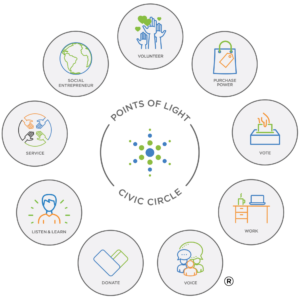
demonstrates that civic engagement comes in a variety of forms, from volunteering, to using your voice, to voting and more. This Valentine’s Day, here are three ways you can express your love for the people, the community and the causes you care about.
Donate in Honor of Someone Special
Honor a changemaker whose love for their community shines through their volunteering. Brighten their inbox with a special Points of Light ecard to let them know you’ve made a donation in their honor.
Cards and candy make wonderful gifts but for something truly unique, consider making a donation in honor of someone you love. Consider a cause you care about, and research the organizations that are working to impact it. Many nonprofits allow you to designate another person’s name on your donation. Some even issue certificates or e-cards that you can gift to the person as a memento.
about how donations impact the nonprofit sector, and ensure you’re contributing responsibly so that you support the cause.
Harness Your Purchase Power for Good
While you’re shopping for your loved ones, buy from local artisans or shop owners instead of supporting large chains. If you’re buying from a national or international brand, look into their corporate social responsibility efforts to see what they’re doing to support the causes that speak to you.
about advancing the causes you support, and create a personal action plan for using your voice.
Speaking up for every human’s right to love and be loved can be highly impactful. There are so many ways to support the LGBTQIA movement by using your voice, from starting a conversation with your family members at the dinner table to peacefully protesting at rallies to signing petitions advocating for legislative change. Your voice can be a powerful tool to help you serve as an ally and spur the change you wish to see.
that help you demonstrate your love for people, animals and the earth. To learn more about how you can express love and make an impact through volunteering,
However you express your love this Valentine’s Day, taking intentional action allows you to shine your light on the world’s biggest challenges and make our world a more loving place.
4 Ways to Make an Impact Together this Holiday Season
The holidays are an opportune time to slow down, reflect on the past year, enjoy quality time with loved ones and contribute meaningfully to our communities.
From using our purchase power to shop responsibly to exploring in-person and virtual volunteer opportunities, there are myriad ways for you and yours to get more civically engaged this holiday season. Points of Light’s Civic Circle is a framework that helps connect individuals to opportunities and show that doing good comes in many forms.
Here are some ways to get involved this holiday season.
Use your purchase power to make more informed decisions when shopping. Whether it’s shopping local, buying BIPOC-owned brands, supporting small businesses, or seeking out sustainable goods, where you choose to spend your dollar matters. You can greatly impact the causes you care about by doing a little upfront research and selecting products and brands that reflect your values.
Find in-person or virtual volunteer opportunities. Volunteering around the holidays can benefit everyone involved – the volunteer, the recipient, the nonprofit organization and the larger community. While some may opt to use their time and talents in person, like at a local food bank, others may feel more comfortable volunteering virtually. Fortunately, there are plenty of formal volunteer opportunities out there – and don’t forget about informal ones too, like shoveling snow on your neighborhood sidewalk or grocery shopping for an elderly neighbor.
Contribute with monetary or in-kind donations. Donating is one way to support the welfare of others, and donations don’t have to be large to be meaningful. You can choose to give money, goods (like coats, toiletries or food items) or services (helping with childcare, cleaning, car care or cooking).
Listening and learning about issues and cause areas is a year-round effort, but the holidays typically provide some extra opportunities. First, consider using some of your downtime to research the issues you care about. Listen to podcasts, read the news, watch conversations with experts. When you gather with friends or family, don’t avoid these topics. Dive in and discuss what you’re learning, listening to others’ perspectives respectfully as well. Often, it’s those times around the table that can help move us forward on an individual level, which then naturally extends outward.
, we’ve included a personal action plan. These worksheets are tailored to each facet of the Civic Circle and they help readers discover which causes they care most about, research organizations helping to solve these issues and then plan and prioritize their involvement.
Whatever ways you choose to get involved this year, sharing your light inspires others to do the same, and that collectively light can transform the world.
5 Ways to Use Your Purchase Power This Holiday Season
Giving the perfect gift is important, but giving an impactful gift makes it that much sweeter.
One of the ways you can support the causes you care about this holiday season is by using your
to make more informed decisions. Purchase power means choosing to spend your dollars in places that reflect your values or advance a social cause or issue that you care about.
Here are five ways to make an impact with your purchases.
Shop Small Business Saturday. You’ve no doubt heard of Black Friday and perhaps Cyber Monday, but the profits from these dedicated days of shopping often go to big box stores. Since 2010, Small Business Saturday — which takes place the day after Black Friday — has been a day dedicated to shopping at small, local businesses. To date, consumers have reportedly spent $140 billion across all 11 Small Business Saturdays. Most small retailers offer special deals and discounts, so look for a store you feel great about supporting!
Shop local. It can be quick and convenient to order products online and have them shipped straight to you. But spending your money with local retailers boosts economic wellbeing in your very own community. It also helps support shop owners and their families, as they get to keep more of their profits by avoiding shipping charges and overhead from distributors.
Shop BIPOC-owned. There are hosts of stores and services owned by people of color, but they’re not always the most widely advertised. When thinking about purchasing gifts for the holidays, pre-prepped food for your family gathering, or any services you need throughout the season (childcare, housekeeping, dry cleaning/tailoring, or professional family photos, to name a few) consider researching BIPOC-owned and operated companies.
Shop sustainable. It’s not just economic support that our communities need; it’s also environmentally-conscious spending. When we choose to purchase sustainable goods, which are environmentally-friendly in their design, manufacturing, distribution, or use, we help protect the planet and avoid causing further damage. Ethical fashion is also a part of the sustainability movement, focusing on worker’s rights and social good. Avoid one-time-use products and “fast fashion” this holiday season, and make the move toward zero-waste efforts.
Give Gifts that Give Back. Find businesses that are donating portions of proceeds to causes you care about. Websites like Social Good help you find gifts that can support a variety of causes, and many B Corps certified businesses give back as well.
Whether you’re buying from a local company, purchasing sustainable goods, or boycotting a particular product, how you buy makes a difference. You can read more about using your purchase power in our Civic Life Today magazine on the topic.
Ways to Celebrate Family Volunteer Day 2021
Collaboration among the generations is one of the most meaningful ways we can drive social change. And if we can take part in service opportunities with those we love most, we have an opportunity to impact each other and our communities for the better. Families bond through civic engagement — whether that be through donating, volunteering or simply learning about social issues together.
, a global day of service that celebrates the power of families who work together to support their communities and neighborhoods. The current landscape — from the ongoing pandemic to social unrest to climate change — offers opportunity after opportunity to meaningfully engage with causes we’re passionate about.
Here are some ways you can participate in Family Volunteer Day 2021 based on some of the elements from Points of Light’s
It’s crucial that before we dive into any volunteering or service opportunity, we take the time to fully understand the issue at hand. This also means understanding the community we’re walking into, and the best way to do that is through listening to the perspectives and lived experience of the people within that community.
, we can better come alongside those we’re seeking to help, involving and empowering them in the process. With your family, pick a cause that’s important to everyone. Spend time doing research on the cause and getting to know what work is already being done on it. Have conversations with your family members about it, sharing your thoughts and opinions. Then, find a local organization in your community addressing this cause in some way and reach out to them to see how you can best make a difference.
Volunteer
Once you’ve identified a cause area and are actively learning about it, you may find that you can get involved by
your time and effort. Volunteering gives you the ability to use your skills and talents to benefit other individuals and the community as a whole.
Volunteering is an activity that can be done in-person or virtually, so even if you’re unable to be on-the-ground with others this year due to the pandemic, you can still find longer-distance opportunities. Check out
, an extensive database of volunteer opportunities that allows you to filter and search within your geographic location, interest areas and preferred method of delivery.
Donate
Of course, donations go a long way when it comes to making an impact. Whether you
money, services, or goods, the act of contributing to a cause you care about can help drive change while also teaching family members some valuable lessons.
Ensure you do your homework before deciding to donate to an organization or cause. Donations have the potential to cause harm if not done well. For example, if you feel the pull to donate after a natural disaster like a
or an earthquake, you might be scouring the house for clothing, goods and personal care products. But did you know that the most effective way you can help in these types of crises is by donating money? Unless relief organizations are specifically asking for goods, these types of donations can cause a distribution bottleneck and may even go unutilized. Donating cash allows the relief organization to purchase exactly what’s needed and do their jobs more efficiently.
There are numerous ways to participate in Family Volunteer Day this year, even in the midst of a situation that presents challenges with traditional in-person volunteering. Don’t limit yourself and your family just because things might look different — see how you can best get involved, make a plan for impact and enjoy the bonding that comes from collaborative civic engagement!
Fostering Civic Engagement Among Your Millennial Workforce
After the past two years of nearly every sphere of society being upended by the COVID-19 pandemic, the world is wondering what will become our new normal. Millennials, with their voices, their involvement and their power, are shaping it.
While Gen Z are undoubtedly today’s trendsetters, millennials are the new power-holders driving societal change. Millennials make up the majority of the workforce. They hold most of the leadership positions within organizations. They often have the resources to help significantly move the needle on social issues. For business leaders to stay relevant in a post-pandemic world, we need to prioritize our understanding of millennials as the leaders of social change.
Points of Light teamed up with research and design firm INFLUENCE|SG to conduct a study on civic engagement among the millennial generation. We were interested in the perspective of this group in particular, for whom social issues prompting civic action have become highly personal. The research showed some interesting trends. Five of the six social issues millennials said were of most interest to them were pandemic-related. Of course, this is to be expected.
But the issues that millennials took action to support were not, in fact, their issues of highest concern. 93% of respondents said the social issue for which they performed at least one action in the past year was civil rights/racial discrimination/social justice. 92% said they performed at least one action in the past year for the issues of sexual orientation and gender identity.
As social unrest continues and as some workers begin to return to offices, companies and brands need to create a culture of civic engagement and—more importantly—opportunities to channel employees’ desire to act, especially as it relates to millennials.
In a recent Edelman Trust Barometer Special Report, 59% of people currently leaving their jobs say they want an employer that shares their values. Seven in ten employees say they expect opportunities for social impact from their employer. And 61% say they will not work at a company if they disagree with its stand on social issues.
Without a doubt, socially engaged businesses recruit and retain more employees. Providing employees with opportunities for civic engagement isn’t just about doing the right thing; it’s better for companies’ bottom lines. In order for companies to seize the moment, satisfy their workforce and maintain business continuity, there are some key strategies to start implementing.
Have a purpose and platform for civic engagement to drive social impact and leverage employees’ desire to make a difference. Our research in 2020 confirmed that not knowing where and how to volunteer are the biggest barriers for those who have not volunteered but are interested. Make it easy for employees to understand what’s important to the company and how to get involved. In November, our partners at RW Institute will release their 2021 edition of the Corporate Volunteering, Giving and Grants Technology Review for those looking for technology solution that makes social impact opportunities accessible to everyone across your company’s footprint.
Next, engage in meaningful dialogue with employees, partners and competitors about how we all can address old systems that don’t work for our new world order. The millennial research showed that the number one action taken to support social issues was spending time learning about them. We launched a partnership with Morehouse College called Listen. Learn. Act to End Racism on a diverse set of topics to inspire and educate. AT&T offered employees a 21-day challenge and Altria took up the mantle and created their own.
Educate employees and stakeholders about how they can get involved and what individual actions they can take to make an impact. We developed the Points of Light Civic Circle® as a framework to help individuals understand that doing good comes in many forms. Companies can use the framework to ensure they have opportunities that align with Civic Circle components and encourage employees to use their vote, their purchase power and their voice.
Provide opportunities for employees to be civically engaged and give them the time off to do so. Of the 2021 Civic 50 honorees, 88% provide employees with time off or flexible scheduling to vote, while 82% do the same for volunteering. Companies of any size can help facilitate civic action by offering opportunities to get involved, and making them easily findable.
Recognize individuals for their impact. Creating incentives for employees to be engaged, whether through internal communications spotlights or organizational awards or merits, shows that the company cares about civic engagement and wants to highlight employees making a difference.
Fostering civic engagement is critical for companies to reach, recruit and retain the millennial generation — the generation deciding what our future looks like. 47% of respondents in our study said the pandemic has made them think more than ever before that people like them should try to make a difference to improve our communities and our country. 38% said they have always thought it was important to get involved in social issues. And 69% said they’re now more likely to volunteer than ever before.
Finally, it’s critical that organizations — whether nonprofit or for-profit — are genuine with their communication. It’s not simply about asking for support with the latest issue. Organizations must recognize that they’re reaching out to a generation that feels personally affected by these issues. Asking millennials what they need and how you can partner with them to achieve the desired goal is going to have the biggest impact. In this way, organizations become a conduit for millennial civic engagement, influencing social issues to build back better as we forge ahead post-pandemic.
Finally, it’s critical that organizations — whether nonprofit or for-profit — are genuine with their communication. It’s not simply about asking for support with the latest issue. Organizations must recognize that they’re reaching out to a generation that feels personally affected by these issues. Asking millennials what they need and how you can partner with them to achieve the desired goal is going to have the biggest impact. In this way, organizations become a conduit for millennial civic engagement, influencing social issues to build back better as we forge ahead post-pandemic.
Finding Your Niche with Points of Light Board Member Jean Becker
is one of the few individuals who got the chance to work side-by-side with the organization’s founder, the late President George H.W. Bush.
She is the author of the compilation, “All the Best, George Bush: My Life in Letters and Other Writings” and her most recent publication, the
New York Times
Bestseller, “The Man I Knew: The Amazing Story of George H.W. Bush’s Post-Presidency,” published in 2021.
After serving as President Bush’s chief of staff for 25 years, Jean has ample wisdom to share with the world, and according to her, much of it was inspired by her time in the White House. Points of Light’s success and the legacy of the former president is deeply personal to her.
Jean first connected with the Bushes while reporting for USA Today during the 1988 election. One of her assignments was to edit weekly columns written for the paper by Barbara Bush and Kitty Dukakis (her husband, Massachusetts Governor Michael Dukakis, was the Democratic candidate for president). After the election, Jean was offered the job as deputy press secretary in the First Lady’s office. The offer threw her a bit – she loved being a reporter – but she quickly realized this was an opportunity and honor to which she must say “yes.”
When the President lost the election in 1992, Barbara Bush asked her to come to Houston with them to help research and edit her memoirs. Within a few years, she had grown close with the Bushes and eventually became President Bush’s chief of staff in 1994.
And while her roots in service were undeniably impacted most by watching the way the Bushes lived their lives, Jean has early memories of seeing service in the small Missouri farming community where she grew up.
“My mom and dad were both amazing volunteers in their community in their own way,” Jean said. She described watching her parents looking out for their neighbors — her mother taking casseroles to families who had lost a loved one, her father filling in to do planting or harvesting if another farmer was sick. “So I had this wonderful example of them pitching in, always helping, always being there. It was always informal — neighbor helping neighbor.”
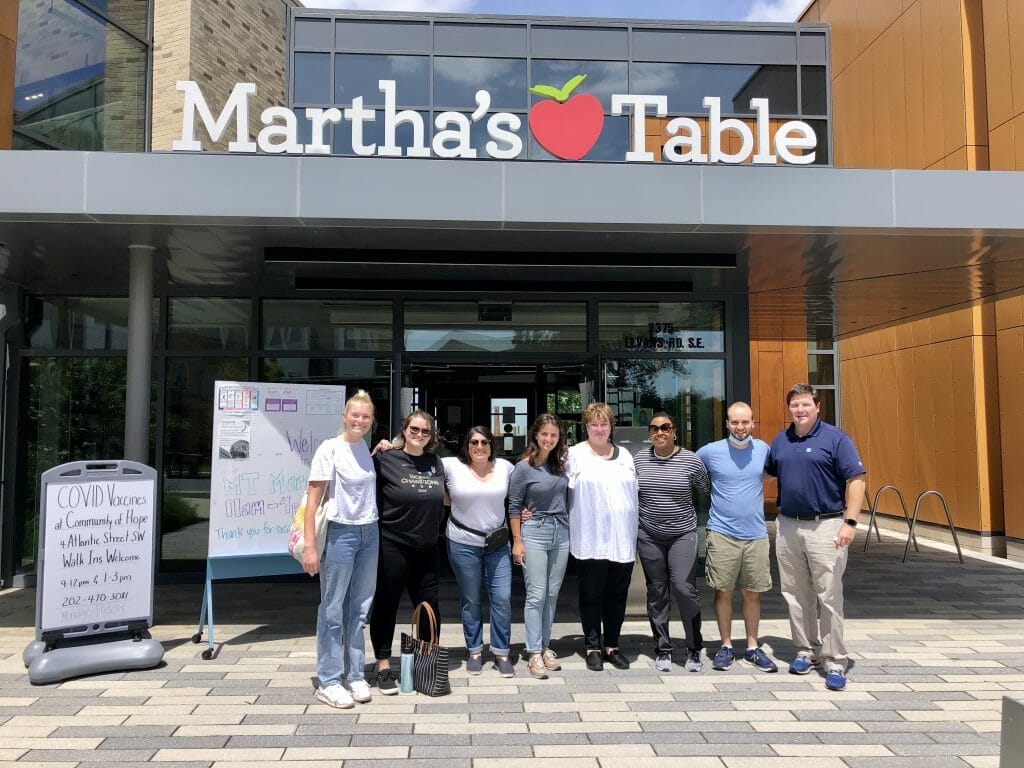
Jean Becker (center) and volunteers at Martha’s Table. Photo courtesy of Jean Becker.
Jean volunteered in various ways throughout her school years. She did a walk-a-thon for March of Dimes in high school. She was a candy striper at the local hospital. But after going to college for journalism and reporting for ten years, she landed the job of a lifetime, and one that would change her forever.
Jean’s trajectory of civic engagement, she says, was profoundly shaped by the Bushes. In her chief of staff role, she would watch the way the team responded to any sort of natural disaster or crisis with service. President Bush took immediate action, flying to the sites and stepping in where needed.
Jean (back left) and volunteers ride bus to deliver holiday gift bags.
The office would do a charity Christmas project every year, adopting a family impacted by Hurricane Katrina or military families, for example. For three years, the president’s office staff gave “Secret Santa” gift bags with Walmart gift cards, Christmas ornaments, household goods, and chocolate to people riding the city buses. “The Bushes showed me that getting involved and making a difference is something we need to make time for,” Jean said.
President Bush founded the Daily Point of Light Award in 1990 and Jean watched the award recipients become enamored with him. When the George H.W. Bush Presidential Library and Museum opened at Texas A&M in 1997, there was a celebratory event with 20,000 people, including former and current heads of state. President Bush invited the Daily Point of Light honorees from Texas and the surrounding states to join.
After the three-day celebration, the Bushes were absolutely exhausted from shaking hands, attending luncheons and dinners, and making speeches. They returned to their campus apartment to take a nap when Jean heard some commotion outside. She went to check out the source of the noise and found the Daily Point of Light awardees gathered together and asking to meet President Bush in person.
“And here he comes, after hearing all the commotion,” Jean remembers. “And they yelled, ‘Mr. President, we’re Daily Points of Light!’ And he stood out there and talked to them. He felt really connected to them. He felt they were all heroes.”
Today, Jean is adamant about carrying on this legacy of prioritizing service and volunteerism. She feels that President Bush left us a blueprint on how to lead a life well-lived through contribution to our communities.
Jean recalls, “President Bush used to say that somewhere in America every single problem is being solved. It’s not necessarily your government. Sometimes it’s your local United Way, your next door neighbor, your local nonprofit.”
Today, Jean supports multiple causes, including literacy, which was championed by former first lady Barbara Bush. She has participated in numerous events alongside the staff of the Barbara Bush Foundation for Family Literacy, recently spending the morning volunteering at Martha’s Table in Washington, D.C., packing food bank bags.
Besides Points of Light, she sits on the board of several nonprofit organizations, including one at The University of Missouri dedicated to teaching youth about the importance of the constitutional democracy. She is on another board with Lauren Bush Lauren that works to promote civility in today’s culture. One idea she has is to organize volunteers to help deal with the humanitarian crisis on the border between Texas and Mexico.
“This is the first time I’ve said this out loud. It’s been a crazy busy year for me as I’ve been doing a lot of book events and traveling a lot this fall, but in 2022, I’ve been thinking that I’d like to get even more involved,” Jean said.
To her, Points of Light’s goal is to help individuals and other organizations answer the question, “How are you solving a particular issue in your city?” Jean says she could have used Points of Light in her 20’s and 30’s because it would have helped her figure out what she was passionate about in terms of civic engagement, and how best to contribute her time and effort.
, in my mind, means nobody has an excuse ever again not to figure out a way of getting involved. If you can’t find your niche on that Civic Circle, what rock are you living under? It provides all the different portals you can march through.”
Jean recommends finding your passion or focus area and then getting involved, regardless of your situation in life. She says that volunteerism and service shouldn’t be about checking the boxes, and only through finding something that ignites you will you keep from growing tired, bored or frustrated with it.
Jean quotes President George H.W. Bush, “There can be no definition of a successful life that doesn’t include service to others.”
3 Ways Your Family Can Donate on Family Volunteer Day
is rapidly approaching, and while things might look a little different this year due to social distancing, there are still plenty of ways to get involved.
is Donate, and that doesn’t always mean a large financial contribution. Here are a few ways you and your family can donate as we celebrate Family Volunteer Day on Nov. 20.
Hold a non-monetary donation drive for a cause you care about.
Donating goods and services is an excellent way to make an impact without needing to raise money. If you’re interested in fighting food insecurity in your community, for example, you might consider holding a canned goods drive for a local food bank. Maybe you’re passionate about helping single mothers, and can hold a diaper or formula drive. If you’re donating clothing, furniture or electronics, ensure that they’re gently used, remembering the rule of thumb that if you wouldn’t use it, it’s best not to pass onto someone else.
Help a child donate a small portion of their piggy bank money to a cause they care about.
Donations don’t need to be big in order to make an impact. Getting younger kids involved can mean asking them what cause or issue area they want to donate to, and allowing them to give from their piggy bank or allowance money. This is also a perfect opportunity to explore the issue together, doing research on it and finding an organization to donate to. Have a discussion as a family about the issue and ask how your children feel and what their visions for a solution would be. This is all part of
Raise money for a cause you care about through a lemonade stand.
Combine donating with entrepreneurship and hold a lemonade stand! If you don’t feel comfortable mixing and selling lemonade to others, consider purchasing bulk quantities of canned or bottled lemonade, and then selling them at a markup and donating your profit.
Donating is an extremely impactful way to support the causes you care about. You can also look for great DIY projects and search for in-person or virtual volunteer opportunities. We hope you’ll get involved in Family Volunteer Day this year, and don’t forget to tell us about it on social using #FamilyVolunteerDay or #VolunteerTogether.
Millennials Have Spoken. Here’s Why CSR Professionals Need to Listen.
Over the past two years, with nearly every sphere of society upended by the COVID-19 pandemic, navigating toward a new normal at work and in communities seems almost impossible. But signals from Gen Z and millennials point to a workforce powered by their voices, their involvement, and their desire to tackle society’s toughest problems.
America’s millennials and their activist Gen Z peers are poised to reshape society to a greater degree than any generation since the Greatest Generation. As two million baby boomers retire each year, millennials are projected to constitute the majority of the workforce by 2025 while the number of
. These younger generations are savvy employees and consumers who are checking up on businesses and demanding more social value for their time and money than ever before.
Points of Light, in partnership with research and design firm INFLUENCE|SG, released their latest study on
, which studied the attitudes, motivations and barriers to civic engagement with a special section dedicated to Gen Z.
While it’s impossible to define any group of 72 million Americans, the data reinforce the need for business to evolve or get left behind.
One of the key insights we found was that millennials view social issues through a very personal lens. Whereas volunteering used to be seen primarily as helping other people, this generation sees themselves as among those affected. Businesses need to be social change leaders not just because it’s the right thing to do, but because their millennial workforce is counting on them for support.
And their own civic engagement is one of the primary ways they’re taking action to change their circumstances. Almost 50% of millennials believe more in civic engagement now than before the pandemic, 69% are more likely to volunteer, and 85% think people should help their community and the world.
Businesses that foster a culture of civic engagement know that it’s not just about staying current. It really does affect the tangibles — like recruitment, retention, productivity, and even the bottom-line.
From a consumer perspective, millennials believe companies should be actively involved in social issues, and two-thirds visit corporate websites at least somewhat often to learn about their efforts when making purchase decisions. Black American males, especially, think companies should meet with consumers about the effects of their products and services.
Here again, we see that being a social change leader is not only good for the planet and its people, but for the companies and their profits. Millennials are the largest generation on the earth right now. Chances are that they currently are, or will soon be, interacting with your products and services.
Corporate social responsibility is a symbiotic relationship between brand and consumer, between employer and employee, between big business and society as a whole. Companies have an opportunity to inhabit this space and drive change as we create our better post-COVID world.






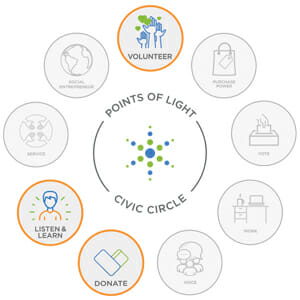 Listen and Learn