Engaging Gen Alpha to the Silent Generation: Volunteer Strategies for Nonprofits
Volunteering brings people together from all walks of life, strengthening connections in community. Each generation has unique motivations and preferences when it comes to volunteering and understanding these can help nonprofits engage volunteers more effectively.
Last week at the
2025, Points of Light’s Senior Vice President of Strategic Partnerships and Convenings, Beth Pann, gave a keynote address on strengthening volunteer programs from a generational perspective. As nonprofits recruit volunteers to support their programs, here are things to consider when engaging with each generation.
Gen Alpha (Ages 12 and Younger)
What defines them?
This group is highly empathetic. They’ve been exposed to global challenges early on, which has fostered a strong sense of empathy.
Tips for Engagement
Connect them with young mentors. While most Gen Alpha volunteers are likely to be volunteering with their families, seeing slightly older peers volunteering will continue to inspire them. Think about other ways in which you can connect these young volunteers with their classmates and/or other Gen Z volunteers who are deeply engaged. Cultivating an interest in volunteering early on can build a lifetime of civic engagement.
Gen Z (Ages 13–28)
What defines them?
This generation is the first to grow up as digital natives and saw millennials engaging in more activism than Gen X parents. They are driven by causes including social justice, healthcare, mental wellness, environmental causes and more. They prioritize tangible impact, community involvement, and mentorship.
Tip for Engagement
Lead with purpose and authenticity. Volunteering is often a deeply personal experience, and Gen Z has helped to shape this idea. Find the spark to connect your Gen Z employees, community members and patrons in volunteering. For young professionals, integrating volunteering with skill and career development will be highly appealing.
Millennials (Ages 29–44)
What defines them?
Millennials have a passion for global causes and learning about social issues on a deep level. They seeing volunteering as a lifestyle aligned with their personal values. Points of Light’s Millennial Perspective research found that personal experience deeply influences the causes they care about.
Tip for Engagement
Offer micro-volunteering and/or family-friendly activities that resonate. As many Millennials are parents, micro-volunteering opportunities that are short-term and flexible, fit well into their dynamic lives. And make sure you get to know them. Millennials are deeply driven by their experiences, and care about making meaningful change.
Gen X (Ages 45–60)
What defines them?
Gen X is highly independent and pragmatic, valuing independence, and holds a bit of bureaucratic skepticism. They often volunteer for causes related to children, youth, or health.
Tip for Engagement
Propose hands-on and results-oriented projects. Gen X values leadership; and like Millennials and Gen Z, they value opportunities that fit into their work-life balance. Seek to engage them in fundraising, campaign management, team and/or committee leading opportunities. Make it easier for them by offering toolkits and streamlined communication.
Baby Boomers (Ages 61–79)
What defines them?
This group values the social and emotional benefits of volunteering. They bring a wealth of experience, skills and leadership. They see volunteering as a moral obligation and many believe in service as a legacy, passing down the value of volunteering to younger generations.
Tip for Engagement
Involve them in long-term leadership roles. Through board service or committee/campaign leadership, Baby Boomers seek to find ongoing impact as they leverage their personal networks and model civic engagement as an infinite contribution to communities and society.
Silent Generation (Ages 80–97)
What defines them?
They see volunteering as a duty to serve the community. They value face-to-face interactions and long-term commitments as a social connection they can uphold and actively contribute to. Many serve faith-based, military and local charity organizations.
Tip for Engagement
Provide structured and reliable volunteer roles. Daytime volunteering is a great option, as most are in retirement. These seniors bring a sense of pride to serving their communities, that stems from their community building after World War II.
The Opportunities of Multi-Generational Volunteering
Rather than seeing generational differences as a challenge, recognize them as powerful opportunities. While some volunteer experiences and impacts are immediate and tangible, like delivering meals or mentoring a student; others unfold quietly over time, influencing mindsets, relationships and even life paths.
Volunteering is dynamic, and that’s what makes it powerful. It not only changes communities but also transforms the individuals who take part in it.
Multi-generational volunteering is a powerful strategy to strengthen capacity, connection and engagement for nonprofits. Focus on what motivates your volunteers.
, provide incentives, and offer support based on their generational preferences.
It’s imperative to continue adapting programs to meet the evolving needs of volunteers and the communities they serve. Younger generations are primed and eager to co-create the future of volunteering. Engage with them!
By involving volunteers from different age groups, we can leverage a diverse range of skills, experiences and perspectives. This approach not only enhances the effectiveness of volunteer efforts but also fosters intergenerational understanding and collaboration, strengthening the social fabric of our communities.
5 Ways to Make Disaster-Relief Donations Personal and Impactful
ID 319865667 @ Justlight | Dreamstime.com
When natural disasters strike, it can be overwhelming to think about how you can make a difference in disaster aid. For many people, there is a natural desire to do something substantial to help communities in need, but even the most ambitious recovery efforts and good intentions can go wrong in delicate environments. Some families, or even entire communities, lose everything after being hit by a devastating hurricane, super storm, flood, wildfire, landslide or tornado; we witness the stark reality of the word “disaster” come to life.
As the frequency and intensity of natural disasters increases, volunteer efforts must evolve. Clothing, food and stuffed animal donations can sometimes add to, rather than relieve, stress to a community. Instead of donating goods for disaster relief, experts and officials suggest that monetary donations have the greatest potential to address the specific needs of each person and community impacted.
Monetary donations are flexible and provide culturally beneficial support, and they can be used immediately in response to a crisis. Yet, we tend to view monetary donations as less impactful, less caring and compassionate. That’s not the case! Here are five ideas to make donations more personal.
Find Local Ways to Donate
Many reputable nonprofits and organizations, like those in
, are already working toward collecting and distributing funds in the area. Do some research to find trusted organizations using websites like Charity Navigator, GuideStar or
Corporations and organizations have immense potential to make an impact after a natural disaster. Check with your employer and ask if they are able to match funds donated by employees. Many companies have existing donation-matching programs already in place, and others are happy to set up such a program for specific circumstances. You can volunteer to be the campaign chairperson to get your colleagues involved.
Host a Disaster Relief Garage Sale
Do you have items that immediately come to mind for sending to disaster-affected areas? Instead of sending these items, sell them! Gather a few tables and advertise around your neighborhood for a disaster relief garage sale, then donate the proceeds to recovery efforts. Take it to the next level by organizing a community yard sale day, thus increasing the chances of multiplying your impact.
Use a Wish List
Many nonprofit organizations make Amazon wish lists for donors during a natural disaster. This tool allows you to fill in a specific and immediate need for a disaster-affected community. Browse the current wish lists, choose your items to purchase and encourage your neighbors, family and friends to do the same.
Think Long Term
Disaster recovery can take months or years in many communities. Think about the ways you can continue to support these communities over time as they continue to rebuild through a sustained giving plan to a local nonprofit.
have made throughout history. Their stories can serve to inspire others to find ways to take action that creates change – but you don’t have to be Susan B. Anthony, Vice President Harris or Greta Thunberg to make a difference by showing support for girls and women.
Here are four ways you can get involved:
1. Empower young girls and women by supporting girl-centric organizations
Be a mentor and role model for young girls, empowering them to become strong, independent and confident women.
2. Lend a helping hand to mothers through parent-focused organizations
Under the best circumstances, parenthood can still be a struggle. Those feelings can be magnified exponentially for low-income families or single moms. Help make things a little easier by getting involved with a local organization like
to turn her experience of being an unhoused single mother into support for other women experiencing similar situations. From community baby showers to seasonal clothing drives, the organization is always looking for donations.
will experience some form of physical violence by an intimate partner in their lifetime. Women’s shelters provide a necessary escape for these women and their children, and volunteers play an important role – through fundraising, community outreach, emotional support or simply contributing to keeping a shelter’s administrative functions running smoothly.
Contact your
to find out how you can volunteer to help women. In addition to supporting survivors of domestic abuse, you can join the fight to help put an end to the violence all together with an organization like
to write to your local and state officials, advocating for stronger legislation around domestic violence and fiscal support for organizations working to provide shelter to those who suffer from it.
4. Fill an unmet need by starting an initiative of your own
Create an initiative of your own that helps meet the needs of women in your community like
to help address the needs of homeless women – particularly their lack of access to feminine hygiene products. As Blythe says, “If something upsets you and makes you ask, ‘When is someone going to do something about this?’ know that others probably feel the same way. Find those people and advocate together.” Whether through volunteering or filling the role of a
recognizes the philanthropic achievements of ten nonprofit leaders from across the nation.
And for more ways to get involved through in-person or virtual volunteer opportunities, search the
efforts? Here are some exciting ways to include your dog in your next volunteering effort.
1. BRING YOUR DOG ALONG ON A CHARITY RUN
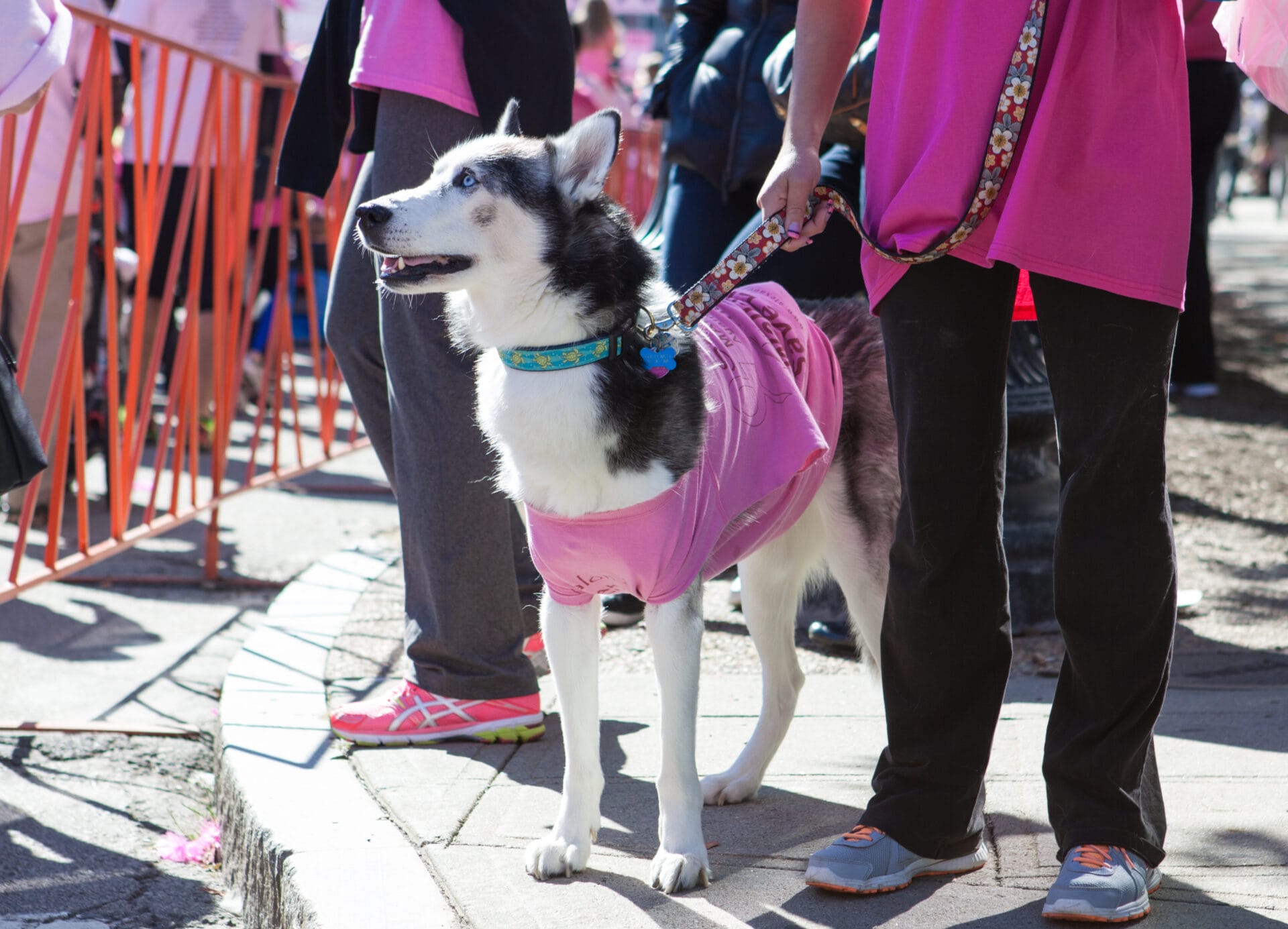
Many charity runs welcome (well-trained) dogs, providing a perfect opportunity for both of you to get some exercise and support a good cause. Look for dog-friendly charity events that support animal welfare.
2. ENGAGE YOUR DOG VOLUNTEER AS A THERAPY ANIMAL
Dogs can offer immense emotional support in various settings, including nursing homes, hospitals, schools and special needs facilities. Explore local or national organizations that train therapy dogs to understand how you can get involved.
3. FOSTER A DOG FOR SOCIAL SKILLS DEVELOPMENT
Many shelter dogs are adopted into families with other pets, but they may lack social skills. By fostering a dog, your own pet can help these shelter dogs learn essential social cues. Inquire at your local shelter about how you can provide a temporary home.
4. DONATE CANINE BLOOD TO HELP SAVE ANOTHER DOG’S LIFE
Just like humans, pets undergoing surgery may need blood transfusions. Veterinarians need fully stocked blood banks, too! When pets require surgery, they need donated blood. Contact your vet for more information on how to participate.
5. TRAIN YOUR DOG FOR SEARCH AND RESCUE MISSIONS
If you’re a first responder who owns a dog, consider training your pet in search and rescue. This specialized training, which can take up to two years, creates invaluable teams for disaster response. The American Rescue Dog Association offers resources for those interested in this path.
6. ORGANIZE OR PARTICIPATE IN A DOG WALKING CLUB FOR SENIORS
Start a community dog walking club specifically aimed at seniors. Walking dogs can be a great way for older adults to stay active and socialize. Your dog can provide companionship and joy to seniors who may not have pets of their own. Coordinate with local senior centers to establish regular walking schedules.
7. ENGAGE IN ENVIRONMENTAL CLEAN-UPS WITH YOUR DOG
Participate in local environmental clean-up efforts with your dog. Many community groups organize park, beach or neighborhood clean-ups, and having your dog along can make the experience more enjoyable. This activity not only helps the environment but also gives your dog a chance to explore new areas and enjoy the outdoors. Always ensure to keep the environment safe for your pet by following local regulations and cleaning up responsibly.
By integrating these activities into your volunteering, you not only contribute positively to the community but also strengthen the bond with your furry friend. So, why not start exploring these opportunities today?
Do you know someone who does extraordinary volunteer work with their dog, or who volunteers with service animals? Nominate them for a
, and they may be featured on our blog during National Service Dog Month.
9 Ways to Live Out MLK’s Legacy in Your Own Life
MLK Day of Service is a national day of service that focuses on human rights, racial equity and civic engagement. The third Monday in January is dedicated to the life and legacy of
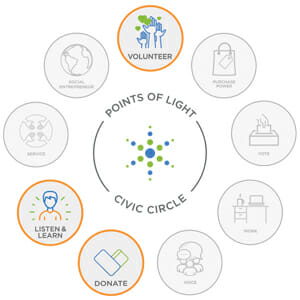
is a framework to help you realize all the ways you can lead, lend support and take action. Often, people think that civic engagement needs to look one specific way – when the truth is that there are multiple ways to get involved, no matter where you are or how much time you have.
This year, mark your calendar for Jan. 15 and make a plan to get involved.
Ways to Live out MLK’s Legacy
Volunteer
Make MLK Day “a Day On, not a Day Off” by finding a volunteer opportunity.
is always needed, but on dedicated days like MLK Day, there are typically additional opportunities available. Community centers, schools, places of worship, food pantries and shelters near you may be hosting extra projects. You can search
. When we hear from others about their perspectives and the life experiences that have shaped their identities, we can better honor who they are and where they come from. Plus, we have the opportunity to expand our own perspectives. You can also learn how to support and advocate for people of color through Points of Light’s
, coining the phrase “Give Us the Ballot” in his 1957 speech. The United States national elections will take place on Tuesday, Nov. 5, 2024, but that doesn’t mean it’s too soon to get involved. Voting is a crucial part of driving change at the systemic level. Start by
to vote, then educate yourself on the issues and the people on this year’s ballot. You may also dedicate time to protecting democracy by advocating for voting rights for all Americans. Then, don’t forget to mark your calendar to ensure you’re ready to vote in November.
is one way to support communities – like BIPOC business owners – or causes you care about. By doing your homework, you can find out which brands that you might buy from regularly are supporting communities of color and advocating for human rights. This may be reflected in their donations, certain projects or campaigns they lead, how they lift up their BIPOC employees and more. Research before you buy, so you can ensure your hard-earned money is going toward the causes you care about.
Work
You might find ways to champion human and civil rights
, even if your job isn’t directly related to these missions. For example, you could organize a group of coworkers who are interested in volunteering on MLK Days. Or you might do a project featuring the voices of
in the community and screen it after work or on a lunch break to help educate and start a conversation within your workplace. If you don’t receive MLK Day off from work, you can also advocate with your employer to make this a day of service for employees.
Voice
Dr. King was a powerful voice in the Black community and used his influence to organize rallies and protests, petition for change and speak with public officials when he could. You can
in your own spheres of influence. This can start around the dinner table, presenting a topic you’re passionate about and leaving space for respectful debate and sharing perspectives. You might find a specific issue you want to champion and create an online petition for it. Or maybe you join an organized rally to make your voice heard. There are plenty of ways to use your words to communicate what you care about and pave the way for change.
Donate
If you want to use your resources to advocate for human and civil rights, you can also
to a cause or organization. By donating financially, you can let an organization allocate funds where they’re most needed. But even donating goods like
can greatly impact an individual or group of people who may not have access to these items. Just check with the organization you’re donating to first, to ensure that you’re contributing items they need and can use.
Service
If you want to follow Dr. Martin Luther King Jr.’s footsteps in dedicating your life to championing human and civil rights, you might consider making a vocation out of it. Through a
. Social entrepreneurs find innovative solutions to the world’s toughest issues, like inequality and racism. These individuals identify a need that hasn’t yet been met by the existing traditional structures, which takes a lot of time, creativity and grit but can also be a supremely impactful career option.
How to Help Senior Citizens: 5 Ways to Lend Your Support
as you age are well documented. Aging adults can face a number of challenges, from loneliness to failing health, which is why volunteering with senior citizens is a great way to help them engage with the community. When multiple generations come together in service, it helps bridge the age gap and everyone can come away having learned something.
Why don’t we use the term elderly?
Rather than looking at situations or people from a deficit lens that prioritizes what’s missing or what’s wrong, Points of Light prioritizes language that focuses on strength and potential, known as asset-based language.
The term
elderly
can evoke negative connotations and contribute to bias and ageism. Therefore, we use the term
seniors
or
older adults
in our communications.
1. Visit an assisted living facility
Spend some quality time with someone who might not get a lot of visitors by planning a visit (or even better, regular visits) to an assisted living facility. Not sure what to do? Bring along a board game, a care package, a movie or a home-baked treat. You can also consider this time an opportunity to listen and learn. Hearing from perspectives other than your own not only helps broaden your horizons and make you a more educated person but it also helps seniors who are sharing their knowledge to feel heard and valued.
2. Assist with housework or yard work
It’s common for people not to realize that stopping by a senior neighbor’s house to see if they need support is a form of civic engagement. Simple things like helping with mowing the lawn, vacuuming or other household chores or projects can make a world of difference. If you notice that their home needs a specific repair, you could ask them if they’re wanting that task done soon and gently suggest calling a repair person. However, be mindful not to overstep, and respect the autonomy your neighbor has over their home.
3. Teach computer and internet skills
Help seniors stay connected by teaching them how to email their friends and family, check the news and use social media. You might also take this time to give tips on how to avoid scams and viruses.
Read about how Daily Point of Light honoree Esther Chan is helping spread awareness about internet scams in senior centers.
4. Help with errands and transportation
Once seniors can no longer drive, it becomes more challenging for them to maintain social lives or feel independent. If you can provide a safe and reliable means of transportation, you take them to the grocery store, hair salon, doctor’s appointments or anywhere else your senior friend or loved one may need to go.
5. Participate in an intergenerational service project
A great way to connect with seniors is to get civically involved together. There are many projects that people of all ages and abilities can do: sending care packages to military members, donating used clothes and books, participating in a community bake sale, gathering items for a back-to-school drive – the possibilities are endless!
To search for volunteer opportunities in your community or from home, check out Points of Light Engage.
5 Ways to Encourage Employees to Volunteer
One of my proudest work memories is not of a regular day on the job but of a service project I participated in. An hour or so into painting classroom walls, my supervisor pulled me aside.
“You draw, right?” she asked.
I said yes, and before I knew it, I was sketching the school mascot on the gym floor. Four years later, I still treasure the amount of responsibility I was given that day.
Volunteering can be a life-changing experience and an important chance for employees to build new skills. Plus, it’s a great way for your company to get involved in the communities where it does business. Not only can this activism demonstrably help community members and causes, but it can help the company’s social impact goals and potentially even its bottom line.
The data support the need for civic engagement and volunteerism in the workplace. According to Points of Light’s
on civic engagement, two-thirds of Americans believe companies should be involved in social issues. And more than half the public and 67% of small business owners agreed that
should take a stand on social issues. Consumers expect companies to act directly rather than asking customers to take action, and they will gauge the selflessness of a company’s efforts by the way it treats its employees.
But how do companies encourage employees to volunteer their time? The key is to build a culture of giving. Demonstrate that civic engagement and social good are priorities for your company. Here are five excellent approaches that will further engage your staff in volunteer work.
Not everyone can afford to volunteer off the clock, but that doesn’t mean they don’t want to give back to their community. Including paid time off for volunteering – or the option to volunteer on company time – in your company’s benefit packages is a great way to show your staff that you care about them and the community.
According to the
– a recognition of the 50 most community-minded companies – also offered paid time off to volunteer. It’s clear: the more socially conscious companies tend to support their employees more in their social engagement efforts.
2. Communicate about volunteer opportunities.
If your employees aren’t volunteering, it may be because they don’t know where to start. Communication is the first step. Let your staff know if you offer paid time off for volunteering, and be sure to advertise upcoming service projects.
But think beyond bulletin boards and emails because different people consume information in different ways. Make announcements during meetings. Post opportunities on social media. Show videos of past service projects to get employees excited. Make signing up easy, and discuss carpooling or other transportation options that alleviate the burden of driving.
See how Daily Point of Light Awardee Danielle Williams helps match Bank of America employees for mentorship and support.
3. Assign leadership roles.
Volunteering is a great way to build skills and take on more responsibility. Plus, extra responsibility gives employees a sense of pride and ownership over their work.
Nominating a volunteer coordinator is a good place to start, but there are also ways to give volunteers leadership roles. Determine your employees’ strengths and draw from those skills for leadership opportunities. Here are just a few examples:
Ash draws cartoons in her spare time, so you invite them to create coloring pages for the after-school program with which your company partners.
Sebastian’s kids have food allergies, so you ask him to make a list of allergy-friendly suggestions for the company food drive.
Fatimah spent several years as a camp counselor, so you make her a team leader at your annual beach cleanup.
With a little creativity, almost anything can become a leadership opportunity
“Pressure and expectation for companies to be socially responsible has never been higher. Points of Light’s research offers some insights into those expectations and can help business leaders identify where to start as they align employee engagement and retention with CSR and talent development programs.”
— Katie Stearns, chief global corporate solutions officer at Points of Light
4. Offer a variety of options.
If all your company’s volunteer efforts focus on physical labor like painting or gardening, some workers are sure to be unable to take part. From reading with kids to coding websites, there’s a volunteer option for everyone. Employees can even partake in skills-based volunteering, using their accounting or translation skills to help a nonprofit organization or specific cause.
As you put together volunteer opportunities, it’s also important to consider employees’ different schedules. When planning volunteer events, include a balanced mix of daytime, evening and weekend events. And consider volunteer projects that can be completed in a day or over the course of several months. This approach can help your employees feel accomplished and motivated.
Check out
to search hundreds of thousands of in-person and virtual volunteer opportunities around the globe.
5. Record and reward good deeds.
Don’t let your staff’s hard work go unrecognized. Tracking and rewarding volunteer hours is a great way to make volunteers feel appreciated and encourage other employees to join in.
Financial compensation is an obvious reward if your company has the means. Taking volunteerism into account when awarding raises, promotions and bonus pay will really demonstrate your company’s commitment to the community. You can also reward top volunteers by making a donation in their names to the nonprofits of their choice.
“We all know that what is celebrated is replicated, which is exactly why recognizing and celebrating your volunteers is key to inspiring other employees to get involved. A volunteer recognition strategy is a path to communicating impact, boosting participation, shining a spotlight on causes, and reinforcing your company’s commitment to community.”
— Katie Stearns, chief global corporate solutions officer at Points of Light
Personal thanks: Handwritten thank-you cards or personalized emails with photos taken of them while volunteering can boost volunteer morale.
Public recognition: Designate a Volunteer of the Month spotlight or highlight your top volunteers’ accomplishments in the company newsletter or social media.
Special meals or outings: Host a special banquet, picnic or activity night for employees who volunteer.
Volunteer appreciation day: Dedicate a day to honoring the volunteers at your company. Set aside time to publicly award certificates or plaques to your top volunteers.
Encouraging employees to volunteer may take some concerted effort, but the benefits to your company, staff and community are well worth it. Once you establish a culture of giving at your company, volunteering will become second nature to your employees, and your collective impact will support your community’s ability to flourish.
This post was originally written in 2016 by
Sarah Landrum, founder of
Punched Clocks
, a site dedicated to sharing advice on navigating the work world, and has been updated by Points of Light to include new research and resources.
3 Reasons to Honor Outstanding Volunteers with Presidential Recognition
is an opportunity to honor your most outstanding volunteers and recognize the impact they have on the community. This award honors people whose service makes a difference in every corner of the nation and inspires those around them to take action. Here are three reasons you should become an organization that is approved to provide the
President’s Volunteer Service Award to your volunteers.
1. It’s a prestigious award
The President’s Volunteer Service Award recognizes the United States’ most exceptional volunteers. Each volunteer receives a letter signed by the president that recognizes how their engagement has contributed to solving some of our country’s toughest challenges. That’s a pretty big honor and something that’s a once-in-a-lifetime special moment of recognition!
2. President’s Volunteer Service Awards motivate your volunteers and help with retention
Student Austin Sandel of Benton Central High School in Oxford, Indiana, helped his school become a Certifying Organization.
is a reward in and of itself, but it certainly feels good to be recognized. Your volunteers will appreciate the extra incentive and may be inspired to volunteer with your organization to earn a President’s Volunteer Service Award. Whether they are working towards a
, volunteers may feel motivated to be recognized with this special award. Plus, earning special recognition helps volunteers feel connected to your organization.
Student Austin Sandel of Benton Central High School in Oxford, Indiana, shares, “I helped my rural high school become a Certifying Organization in order to boost opportunities for recognition and provide extra motivation for service and activism among my friends and classmates. Our principal wholeheartedly supports PVSA and now invites any graduate who earns the award to wear their medallion at commencement. As I pursue my college major in music education, I will continue to look for ways to serve.”
3. Being a Certifying Organization gives your organization credibility
An organization that can give out President’s Volunteer Service Awards is called a Certifying Organization. Becoming a Certifying Organization means your organization has been granted authority through an application and review process to give out the President’s Volunteer Service Award to volunteers. Certifying Organizations verify and certify that a volunteer has met the
to receive a President’s Volunteer Service Award and may choose from certificates, pins, coins and medals to award volunteers. The process is simple and takes only about two weeks.
Becoming a Certifying Organization signals to your partner organizations that you are uniquely qualified to honor your exceptional volunteers with this prestigious award. It says to your volunteers that you put a premium on their meaningful contributions to building community and making the world a better place for all.
Lowe’s Grant Recipient Creates More Culturally Responsive School Campus
We sat down with Rachel Axelrad, one of the winners of the Lowe’s
Hometowns Partnership, to learn about her experiences as a grant recipient and how the project impacted not only her school but the community at large. As a full-time teacher, the project was a big undertaking for Rachel, and she discusses how Points of Light and
provided critical support and expertise to her team of parents and teachers.
T
ell
us
a little about yourself and how the project got started
.
It is my
eighth
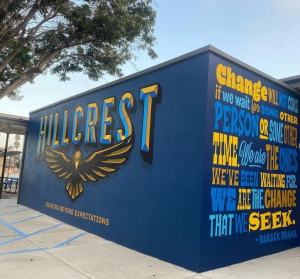
year teaching at Hillcrest Elementary, a public school in the Crenshaw District of Los Angeles
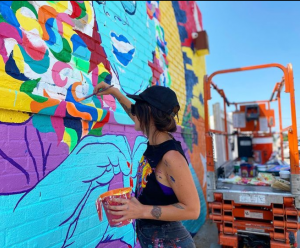
. Our school used to have murals, and the school district had some funding to redo them. We were offered two color choices: tan with brown borders or tan with gray borders. Those are not welcoming or inspiring colors! We believe that spaces define how you feel and act. Our new space needed to be warm, safe, welcoming, bright
,
and happy.
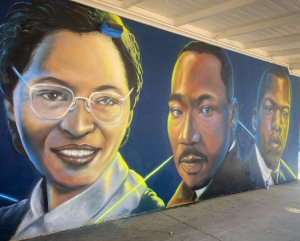
We wanted to use the murals as teaching points and to reflect our community. Our school is around 50% Latinx and 50% Black and
is
located in a historically Black neighborhood of Los Angeles. How wonderful it would be to have meaningful, intentional murals that included portraits of historical people of color who were changemakers.
Our team began fundraising and came across the Lowe’s
Hometowns grant. We were so fortunate to win $100,000
,
because that goes a long way.
The results are stunning and must have had a strong impact on the students. How did your colleagues react?
The final product is even more impactful on us, the staff. In our society, so many things about teaching are hard, especially in public school settings. I enjoy being in such a beautiful space and being able to use the murals as a teaching opportunity. When we started Black History Month, I printed pictures of murals and asked my students who they knew and who they did not know. At this point, I have taught
about
most of the individuals commemorated in our murals.
How daunting was it to take on a project like
this
during
a pandemic
,
while also tackling all the challenges teachers
were facing
?
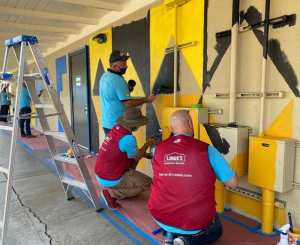
Honestly, I did not understand what I was getting into, and the size of the project was extremely tough on my work-life balance. When I first found out about our award, I was so excited. Quickly that turned into feeling overwhelmed because I have a full-time job, and this project was a second full-time job.
Luckily, Lowe’s and Points of Light connected me to a Points of Light affiliate, LA Works, and they took over a lot of the coordination and planning pieces. I could not have done what LA Works did with this project. They had a way of making this come to fruition by helping with all the communications and paperwork
,
along with sourcing equipment and finding skilled labor. It was a big relief that I was not left alone. They saved the day!
How does this project inspire the students to believe
that
they have the power to create change?
Our kids got to see change in action. They were witnesses to us taking agency over our situation. We did not like what we saw, so we made it better as a school community.
Points of Light’s Civic Circle shows how making a difference can go beyond traditional volunteering.
Intentional p
urchases, thoughtful donations, employment choices and posts on social media can all have an impact on their community.
Yes, I agree with you. One person who was as integral as LA Works was one of our muralists
,
Erin. She had never done anything like
this
before, but she felt like she needed to do this and help us. She was a full partner in emailing, scheduling, planning
,
and budgeting. That was how she gave her time and energy to support very deserving students.
So many people want to do good, and skilled volunteers like Erin are critical. Also, we needed people to give us funding. Lowes’ donation was essential. Companies come in with the best of intentions, but they often engageat the community and very rarelywith the community. This was the first time we felt that everyone was working with us and letting us make decisions since we knew what would be best for our school.
What would you say to a donor considering making a gift to Points of Light and our affiliate network?
I am Jewish, and in my faith, we believe in levels of charity. The highest form of charity is giving without being asked and helping someone you do not know. By doing so, you are showing respect and trust that the donation will be used for the highest and best purpose. State funding is not always attuned to our needs. If someone gives to Points of Light, and then Points of Light helps us, that person can know that the resources are being used effectively and in tangible ways that are meaningful to our community. That type of funding and support is transformative.
3 Ways to Support Relief Efforts in Ukraine Right Now
We have added trusted organizations seeking support that have activated local and international relief efforts.
Points of Light will continue to provide updates on new and developing opportunities for support. Follow us on Facebook, Twitter, Instagram and LinkedIn for updates on how you can help.
Points of Light and our Global Network stand in solidarity with the people of Ukraine who are being impacted by attacks of war that are placing millions of lives at risk. As images of people fleeing their homes and seeking refuge are broadcast across screens around the globe, it’s natural to feel an urgency to help. You can have an impact, no matter where you are in the world. Below are three ways you can support relief efforts, as recommended by Points of Light and our Global Network disaster committee.
Donate. Research and give to a reputable international relief organization or one of our network affiliates listed below. Cash donations offer flexibility for organizations to respond in real time to people’s developing needs. Organizations are able to direct your dollars to the most-needed resources and put them in the hands of experienced responders, giving them the tools they need to help people recover. Do your research first so you can be sure that the organization you plan to support is legitimate. See our list below of trusted organizations.
Register to volunteer. While there is limited access for humanitarian relief efforts right now, working in in the aftermath can be both dangerous and complex. It’s crucial not to self-deploy. Until a need has been identified and the impacted community has requested support, volunteers should not enter. In the meantime, there may be opportunities to support relief efforts from home or in your community. Find a Points of Light Global Network affiliate in your area to learn how local organizations are responding to the events in Ukraine.
Be patient. The recovery process of any crisis or disaster can last much longer than the news cycle. There will be a persisting need for donations and volunteers for years to come. Stay informed by listening and learning to find out what the community needs. You can also use your voice by sharing on social media to raise awareness about long-term recovery needs.
When a crisis unfolds, we know that acting globally means acting locally. That’s why we look to elevate and support our most valuable resources in the region, our Global Network affiliates. Our affiliates in the vicinity of Ukraine are positioning themselves to respond to needs as they arise.









 How daunting was it to take on a project like